.


With these three interpretations, three different translations can be offered, but the translation presented on this slide is that the prayer of every pious and righteous person draws one closer to God.
This translation contains no new information; for prayer is supposed to draw all human beings closer to God.
Logical Analysis
Paying Attention to the Requirements for the Phrase to be Meaningful

Surah Al-Anbiya, Verse 105: "And We have already written in the Psalms, after the Remembrance, that the earth will be inherited by My righteous servants."
Which part of the phrase contains new information? Suppose the audience is the People of the Book. They know the Psalms and they also know the Remembrance. They know very well that the Psalms were revealed after the Remembrance. The phrase "the earth will be inherited by My righteous servants" exists in the Psalms even now.
What new message does this statement intend to convey? The People of the Book already knew these things.
Now suppose the audience is the Muslims; although this supposition is unlikely. When we speak to a Muslim who is not at all familiar with the culture of the People of the Book, the whole matter is new to them; because the Psalms and the Torah are not books they ordinarily deal with, and they hear the statement "the earth" itself for the first time and want to know what the relationship between these things is. What does the first part of the verse say? Does it want to express the relationship between the Psalms and the Torah? Does it want to express the issue of the inheritance of the earth?
Therefore, we must look for a formula that can possess an epistemic differential, meaning that part of the matter confronts prior knowledge and part of it contains new information.
In the context of this research, the book of the Torah and all the books of exegesis have also been examined. This case I mentioned has been turned into an article. I was in a meeting with a dear colleague; they were planning to publish a journal and insisted that I give them a topic. Behind them was a plaque on which this verse was written. During that very meeting, I was thinking about the new information and old information in this phrase, and by the end of the meeting, I said I had found the topic. The title of the article is "An Analysis of 'After the Remembrance' in the Holy Quran."
The analysis begins based on this very logic I mentioned; that we determine, by looking at the context of this verse and what comes before and after it, that it speaks to the People of the Book and must contain new information for them. We took the word "Remembrance" as a basis, referring to the Pentateuch, the five books of the Torah. We also had the Psalms at our disposal. The phrase itself also existed in the Psalms. It was a relatively difficult task.
Initially, I searched the Pentateuch, and to ensure this search was conducted with peace of mind, in addition to the Persian text, the Hebrew text was also studied; because translations are not precise. In all instances, I was looking for whether there was any mention of inheriting the earth and who inherits it. I took the phrase "the earth will be inherited by My righteous servants" as the foundational component of my analysis and began to propose that "the earth will be inherited" and "who inherits it" are each a separate issue. If we look at the issue from the perspective of new information and old information, given what we know about the Children of Israel, the matter of which person will own the land has been, and still is, important to them. On this basis, considering "the earth will be inherited" as old information and "My righteous servants" as new information, I turned to the Torah.
I had to find instances where the old information “the earth is inherited” exists in the Torah but the new information “My righteous servants” does not. Interestingly, after examining the matter, I found six instances in the Pentateuch of the Torah where the inheritance of the earth is discussed, but those who inherit are not “My righteous servants.” In all six of these instances, either the Children of Israel or one of their forefathers, such as Abraham and Isaac, are the inheritors of the earth. So they were seeking to become the inheritors of the earth themselves, but the Qur’an informs them that it is not you.
The next step was to determine what new information this matter conveys within the context of the Qur’an, in relation to the People of the Book of the Prophet’s era (PBUH). For them, the fact that such a statement appears in the Psalms was old news; the part that could be significant was “after the Remembrance”; because it says: O Jews, who think you are the inheritors of the earth, Our righteous servants are the inheritors, but We have already said this in the Psalms. If you only read the Torah, read the Psalms for once and see that this is not just the word of Islam, and We have also said it there. In fact, it wants to tell the Children of Israel that the formula “the earth is inherited by the Children of Israel” has already been abrogated. We abrogated this ruling in the Psalms and are now announcing it. The news of this abrogation is the newest and most important part of the information. This is while, when you refer to Shiite and Sunni exegetical works, the part that has received little attention is precisely the “after the Remembrance” part, and it has been treated as a statement of the obvious; that is, everyone knows that the Psalms were revealed after the Torah, but this verse does not want to say that the Psalms were revealed after the Torah; rather, it wants to say that the ruling of the Torah has been superseded by the ruling of the Psalms, and this is new information and is terrifying for the People of the Book, and if we say that the Psalms were revealed after the Torah, that is old news.
Finding the Meaning of Delimitation with Old Information
Analysis of Delimitation

Many propositions set a limit for something, and we approach the analysis of delimitation from the perspective of new and old information to see how propositions that contain a limit should be analyzed.
One example of such propositions are those characterized by the pattern of restriction. The pattern of restriction was also examined in classical works on legal theory, and we even have a topic called the concept of restriction in the discussion of conceptual and uttered meaning, but now we are looking from the perspective of epistemic differential to see which part is new information and which part is old information?
At the beginning of verse 145 of Surah Al-An’am, it presents a composite list of four items that are forbidden to eat. A restriction is made here: “I do not find in what has been revealed to me anything forbidden.” Only these are the subject of prohibition in what has been revealed to me. We must see what the new information and the old information are?
I have marked the next verse in blue, and if we read it this way, we establish a better connection with the subject of the previous verse.
In this verse, it speaks of two prohibitions concerning the Children of Israel; therefore, the old news is this: you know that the fat of animals and animals with claws are forbidden to you. The new news is in the previous verse, which states: in comparison with the previous prophets, only these four things are forbidden. What does this restriction signify? If we do not look at the matter from the perspective of new and old news, and consider this restriction absolute, thinking that here the Quran intends to speak of the only prohibitions (in this subject, only one case pertains to a forbidden-meat animal), one could conclude that the only animal forbidden in the revelation to the Prophet is the pig, and no other animal has been forbidden. It is precisely for this reason that you find other forbidden-meat animals, and the first question that arises is whether this is a specification of the verse or an abrogation of the verse. If the verse had presented the matter in a general, absolute manner, you could call it specification, but since it is presented as a restriction, if the restriction is lifted, it is abrogation. With these arguments, I can help resolve this problem.
One must see what the restriction is in the context of exposition. It is not in the context of presenting a complete list of forbidden meats. This restriction is in the context of a dialogue with what the previous prophets had ruled as forbidden. "What has been revealed to you" is new news in relation to what was revealed to the previous prophets, and since there is old information about the prohibition of certain things in past religions, with the coming of "I do not find in what has been revealed to me," it intends to lift the ruling of their prohibition.
You may not agree with these analyses.
Another Example of Limit Analysis

The next example is verse 3 of Surah An-Nisa. In this verse, from the perspective of new and old news, there are several questions:
1- Usually, the part before this verse is not paid attention to. "If you fear that you will not deal justly with the orphans" is considered old news, and "then marry those that please you of women" is considered new news.
2- Another point is that when it sets a limit and says two, three, or four, is the limit restrictive or expansive? You might say that the pre-Islamic Arabs took many wives and this verse limits them, or that they took only one wife and this verse intends to say take more.
Dr. Safari: Does "two, three, or four" mean two by two, three by three, and four by four?
Apparently, linguistically, it means that. It is even reported that Dawud al-Zahiri al-Isfahani would add these three numbers together and arrived at the number nine.
Here we must decide, and the decision is based on new and old news. This limit that is set is certainly new news, but the old information part is decisive in clarifying the meaning of the verse. What is well-known, and what we usually prefer in dialogue with women, is to say that the pre-Islamic Arabs were inclined toward polygamy; but what the preceding and following verses show, and the issue of orphans and women whose husbands have been killed being raised, suggests there are also preferences on the other side. At that time, unaccompanied women had become a serious issue, and as a solution to this problem, addressees who had no interest in having more than one wife were asked to move toward expanding their spouses. Just as the tone of the verse begins with two, and makes the matter of having one conditional upon "if you fear that you will not be just," considering it a special situation, shows that the other option is also worth considering.
Dr. Safari: Does "that you will not deal justly" not play a role?
it plays a role, but if I wanted to bring it up, I would have had to cite more verses from Surah An-Nisa; because the first verses of Surah An-Nisa are not about marriage at all, but rather discuss determining the status of orphans and their property and preventing the misappropriation of their wealth, and the issue of marriage is raised in the midst of that; therefore, that itself also relates to the discussion of new information and old information.
Continuing the Analysis of Limit (Ḥadd)
The Shifting of the Meaning of Limit (Ḥadd) in Translations and Exegeses

Sometimes we are faced with phenomena where individuals have encountered a text, and the place of expansive and restrictive limit has been swapped. In this example, I have used blue for old information and red for new information.
Imam Reza (AS): صاحِبُ النِّعْمَةِ يَجِبُ عَلَيْهِ التَّوْسِعَةُ عَن عَيالِهِ
The new information is that if someone is well-off, it is obligatory upon him to provide better conditions for his family. In the translation, it has been rendered as: everyone must spend on their family to the extent of their ability. These have been swapped, meaning we are talking about the capability of individuals to spend on their household.
I jokingly told a friend that for many family-oriented men in our era, an inspector should be appointed to check on them in their offices, telling them not to spend everything you have. For such individuals, it is not necessary to say that it is obligatory to spend on your family. There was a period when men did not spend on their families. To them, you would have to explain that you, who are in good circumstances, should spend on your family. All these issues depend on the custom of that society. What happened in this narration is that the Imam was dealing with people who were being tight-fisted with their families, and the Imam, using the term "yajib" (it is obligatory), wants to compel them. Whereas in our time, "tawsi'a" (expansion/spending freely) exists, and people must be told to observe moderation.
Therefore, the phrase "the extent that they are able" can be understood in two ways: expansively and restrictively.
Finding the Meaning of Spatial Limit with Old Information

I have chosen a generative (takwīnī) and a legislative (tashrīʿī) example for it.
Generative Example
Verse 33 of Surah Ar-Rahman speaks about jinn and humans and their penetration into a spatial domain. In "the regions of the heavens and the earth," the limit of human penetration is discussed, and it says that if you wish to penetrate, it is only possible with a sultan (authority/power). The question that helps us understand this verse is: What is its old information? That is, what were the previous beliefs of the audience that now convey a new message? The current understanding of exegetes is expansive, and they have interpreted "sultan" as Apollo, and some have said it refers to technological tools and equipment for space travel, considering this verse a prophecy of the discovery of space.
One way of looking at the issue is to consider it restrictive. There are numerous verses in Surah Al-Jinn stating that a group of jinn used to penetrate the sky, eavesdrop, and bring news to soothsayers, and that we prevented them. Humans, through their connection to the jinn, also had a kind of access to the sky. This occurred up until the Islamic era. It is here that at the beginning of Surah Al-Jinn, it says that we used to go, but now we have been prevented. This is also rendering incapable (ta'jīzī), meaning now you cannot go. The old information part is that you used to go, and the new information is that now you cannot go. For those who hold a scientific exegesis, the old information is that previously you could not go, but if you have a tool, you can go.
A correct or incorrect analysis of this verse can change its message.
Dr. Safari: What is your opinion on this matter?
Regarding the first part, I have stated my opinion, meaning that the old information seems to be the issue of the jinn's infiltration into the sky, and the new information is that you cannot infiltrate. I do not consider "لاتنفذون الا بسلطان" as an exception; that is, I do not want to interpret it as meaning it wants to say only one state is possible. Rather, that authority (sultan) is also a negated matter.
A legislative example is this part of verse 115 of Surah Al-Baqarah. The Holy Quran says: "وَلِلّهِ الْمَشْرِقُ وَالْمَغْرِبُفَأَيْنَمَا تُوَلُّواْ فَثَمَّ وَجْهُ اللّهِ إِنَّ اللّهَ وَاسِعٌ عَلِيمٌ"
Here, too, a similar analysis exists regarding the limitation of direction; that is, the question is: what is the previous view? Was it that there was a direction and now it is being removed? Was there a Qibla and now it is being removed? Was there no Qibla and now a Qibla is being introduced? Precisely to understand what the verse says, we must examine what the relationship between the new information and the old information is. What was the audience's perception in the past, and what issue are they facing now?
In another example, the Prophet said: "اعطیت خمسا لم یوتها احد قبلی جعلت لی الارض مسجدا و طهورا"
The old information is that there were prophets who brought laws, and in their laws, it was specified where one could pray, and the new information is that one can pray anywhere. The old information for others was that purification must be done only with water, and the new information is that the earth is also sufficient. Precisely when can we say what this statement conveys? It is when we know the old information.
Determining the direction of speech

One of the issues that arises is the invocation of God's name (tasmiyah) upon the slaughtered animal, and not doing so causes the animal to become carrion (maytah). In religions, we have two separate subjects. One subject is that it was always customary for those who worshipped God—whether the true God or false gods—to sacrifice an animal for God. This was a religious act, requiring the intention of seeking closeness (qurbat), and one had to state for whom they were slaughtering the animal.
The other occurrence, which has always happened throughout history, is that people have killed animals and eaten their meat. Here, a religious issue is not raised, and if religion intervenes, it is from the aspect of legislation; however, in any case, by eating that animal, a person does not intend to perform a religious act, nor does he intend to draw closer to God by eating it.
There are also places where the subjects intertwine; that is, one slaughters for God and eats its meat.
In the first verse, it says: "وَمَا لَکمْ أَلاَّ تَأْکلُواْ مِمَّا ذُکرَ اسْمُ اللّهِ عَلَيْهِ" and in the next verse, it says: "وَلاَ تَأْکلُواْ مِمَّا لَمْ يُذْکرِاسْمُ اللّهِ عَلَيْهِ". Elsewhere, when mentioning forbidden meats, it uses this expression: "ما اهل به لغیر الله", meaning an animal slaughtered with the name of other than God, for instance, saying, "I slaughter this animal in the name of Lat."
The question is, when it says: "وَمَا لَکمْ أَلاَّ تَأْکلُواْ مِمَّا ذُکرَ اسْمُ اللّهِ عَلَيْهِ", which of these two occurrences is it talking about? If we are talking about sacrifice for God or gods, when it says: "لم یذکر اسم الله علیه", it means "ذکر اسم غیر الله علیه" and is equivalent to "ما اهل به لغیر الله". But if we are talking about meat for consumption, "لم یذکر اسم الله علیه" means that they have killed the animal and not mentioned God's name upon it, but they have not mentioned the name of any other god either, and have merely killed the animal to eat.
To understand that this issue has been raised since ancient times, I should mention that among the four Sunni jurists, Muhammad ibn Idris al-Shafi‘i, with an interpretation different from the well-known understanding of this verse, infers that it refers to the meaning of “that over which the name of other than God has been invoked,” meaning that if the name of other than God is pronounced over it, eating it is forbidden, and if it is merely for eating, pronouncing the name of God over it is recommended.
This entirely goes back to two different understandings of this verse, and these two understandings go back to the reception of new and old information. What was the old information that it is now presenting new information? At the beginning of the verse, it says: “Why do you not eat of that over which the name of God has been invoked?” What does this sentence mean? Is the addressee a Muslim or an unbeliever? Does a Muslim not eat of that over which the name of God has been invoked? Are the addressees the disbelievers? Even the disbelievers accepted Allah. We have a Quranic verse: “If you ask them who created the heavens and the earth, they will surely say, Allah.” Even the worshippers of Lat, Manat, and ‘Uzza said that these were the daughters of Allah; therefore, if something is slaughtered with the name of Allah invoked over it, who would be found who would refuse to eat its meat? Who is this verse speaking to?
It is precisely here that the issue of new and old information reveals itself. If someone is found who refuses to eat meat over which the name of God has been invoked, it is not because they have a problem with God; for we do not have such a person. This individual is either a Muslim, a Person of the Book, or a polytheist who accepts Allah as the Creator. This person’s problem is that they refuse to eat meat over which a name has been invoked.
Our attention is drawn to a story through whose lens we had not looked at the subject until now; that is, there is a group who think that if something has the aspect of a sacrifice, its meat should not be eaten. The reason is that they did not even eat sacrifices to idols. If the name of God is invoked over something, in their view it is like other sacrifices; because the old information for them is that sacrificial meat is not for eating. Now, as new information, this person is told to eat this meat. Subsequently, this issue is explained, and in the next verse it says: “And do not eat of that over which the name of God has not been invoked.” Does this part speak about slaughterhouse meat or sacrificial meat?
With this perspective, we can determine the direction of the discourse.
Decisive Signs

Up to now, I wanted to draw your attention to two issues:
1- There is a subject called epistemic surplus and the surplus between new and old information.
2- Sometimes this subject can resolve our disputed issues; therefore, we are not dealing with a futile endeavor and we are seeking a method to help us as a tool.
A third point, which perhaps could be addressed in a separate session, is that in logic and methodology, we have tools for distinguishing new information from old; thus, we can make maximum use of these tools. In this regard, some signs are decisive signs, and some of them are preferential and relative signs.
Signs in Epistemic Features: The Internal Matter as New Information
One of the discussions that exists regarding the decisive sign is that within epistemic features themselves, if we encounter two elements in a proposition, one of them relates to an internal matter of the human being and the other to an external matter of the human being. The internal matter is the new information relative to the external matter; for example, in everyday conversations we see that so-and-so in the meeting outwardly tried to appear cheerful, but inwardly was very tired. When we speak of two matters, internal and external, the external matter, due to its greater clarity, and the internal matter, due to its greater ambiguity, are always in a state of epistemic disparity; therefore, in propositions whose two elements are internal and external, the internal element is the new-information part of the proposition.
In verse 37 of Al-Ahzab, there are two points:
1- God brought Zaynab into marriage with the Prophet;
2- Zayd had satisfied his need from Zaynab.
That the Prophet married Zaynab is an external and definite matter, and everyone knows it, but what is in Zayd's heart is not known to everyone, and perhaps even Zaynab herself does not know. This is an issue that relates to the internal affairs of an individual. The verse does not intend to say, "O people who have eaten the wedding feast of the Prophet with Zaynab, that His Holiness married Zaynab." This is old news and everyone knows it. The new information is that when Zayd had become sated with Zaynab, We gave her to you in marriage. It wants to say that no immoral event occurred, and it was not the case that Zayd was still attached to Zaynab and we wanted him to divorce a wife he loved. Here, where it informs about an internal matter, it is a defensible rule, and we can use it as one of the signs for distinguishing new information from old.

An occurrence close to this example is the relationship between intention and the realization of an action. That a person jostles us, we understand, but what his intention was? we do not know. The realization of the action is old news, and the intention is new information.
In verse 264 of Surah Al-Baqarah, that a person spends his wealth is a realized action, but that he does so with the intention of showing off is new information and conveys new knowledge to the audience.

If a universal matter and a non-universal matter are placed in relation to each other, the non-universal matter is the new information; for example, you say, "The Prophet is closer to the believers than their own selves, and his wives are their mothers." Among the universal matters is that individuals have ties to blood relatives and have spouses. The non-universal part is where it becomes specific to the Prophet. Or when it says in Surah Al-Imran: "So if they deny you, [O Muhammad], already were messengers denied before you," the fact that messengers were universally denied is the old part, and the new part is the "So if they deny you" part.
Relative Signs

There are also a series of relative signs in which one can use syntactic matters such as emphasis, definiteness, precedence, and delay. These are relative signs.
Of course, the discussion of signs itself was to the extent that it could have been an independent discussion, and my aim was only to make a reference to it.
.
.
Click to receive the following files:
Audio File
Text File
Presented Slides
.
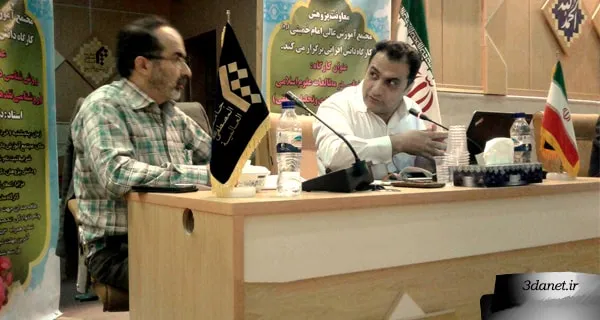
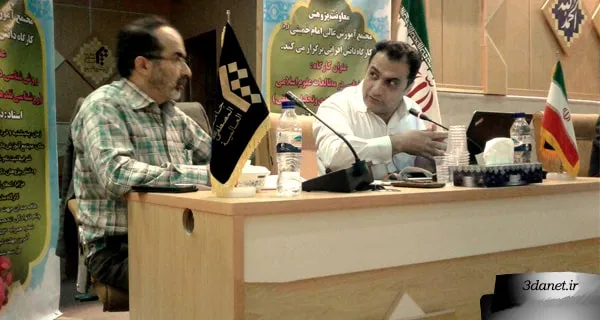
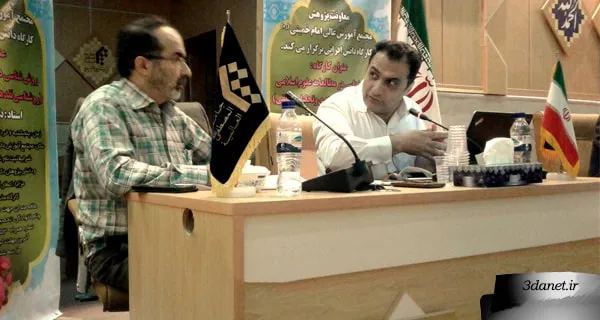
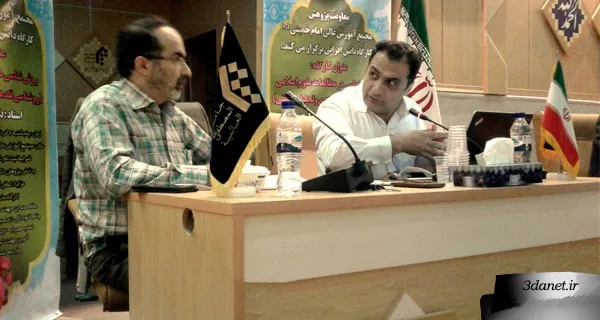
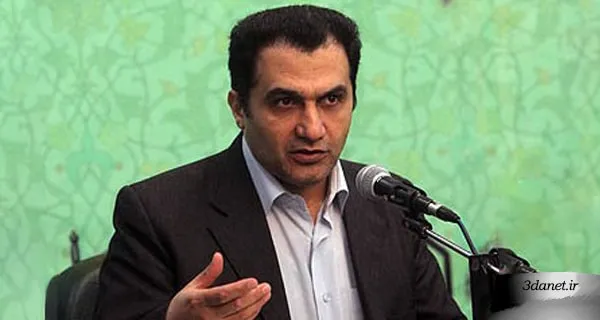
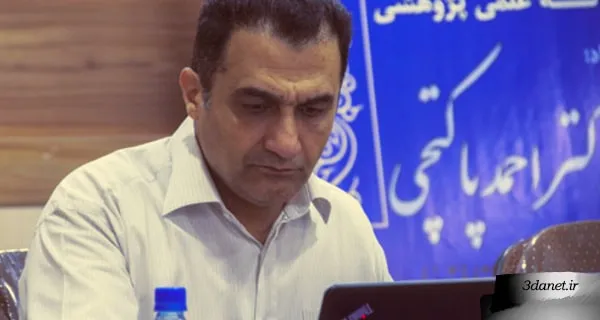
Session Three of the Workshop on the Methodology of Intellectual Critique and Logical Analysis, Dr. Ahmad Pakatchi
Source: Muslim Woman Encyclopedia Website
.
.
Related Content:
Session One of the Workshop on the Methodology of Intellectual Critique and Logical Analysis
Session Two of the Workshop on the Methodology of Intellectual Critique and Logical Analysis
Session Three of the Workshop on the Methodology of Intellectual Critique and Logical Analysis
Session Four of the Workshop on the Methodology of Intellectual Critique and Logical Analysis
.
.

Discussion0 comments
No comments yet; let yours be the first voice.