.
Critique of Intellectualism and Types of Rules
Method or Habit

Methods of thinking and habits of thinking are different. Their commonality is that both follow a path. Their difference is that method is conscious, while habits are unconscious.
Habits of thinking may be the habits of a people; for example, Mr. Mohammed Abed al-Jabri has conducted an extensive study on a subject he himself has referred to as the Arab Reason; that is, the thinking habits of Arabs. This does not mean that their brains are structured differently from others' brains, but rather that different peoples have become accustomed to certain thinking habits. Mr. al-Jabri's work is very interesting and can serve as a good study for becoming familiar with the thinking habits of a people.
Thinking Habits within a Discipline

Thinking habits within a discipline are supposed to be developed through education and instruction, but they may not be conscious. Individuals who have studied jurisprudence have different thinking habits from those who have studied philosophy. For example, if you place someone with a jurisprudential thinking habit in charge of a department in the Ministry of Foreign Affairs dealing with international issues and say we do not know which country has malicious intent towards us and what we should do, they will apply the principle of precaution or the principle of exculpation. Their thinking habit is to immediately resort to a principle. Someone who has studied in a jurisprudential environment becomes accustomed to a series of arguments. If you have noticed, especially those with a philosophical education, upon encountering the smallest issue, will ask you whether you are speaking at the stage of affirmation or the stage of proof?
In gatherings where individuals with different educational backgrounds are present, you can clearly see these thinking habits, and their ways of entering and exiting a discussion differ from one another; because from the beginning of their studies, they have become accustomed to a certain set of classifications. This is where the concept of discipline emerges. Europeans use this concept in the sense of intellectual order. In Persian, we translate this word as 'reshteh' (field), but in its original meaning, it does not have this aspect and precisely refers to the thinking habits of a science. In this regard, there is a book titled *Contemporary Ways of Thinking* by Józef Ochenkowski, which provides a complete classification of different sciences and the thinking patterns they use as their habits.

Regarding the discussion of method and habit, I want to outline four states. The reason I have used the terms common sense and specialized sense in this part is for the sake of approximation to the mind, and this is the same thing we used in classical logic:
1- Method, for a people, is inherently negated; because method is conscious, and its meaning is that a people would, from the very beginning, establish a series of units for their children to become familiar with the thinking habits of that people. Nowhere in the world is a class held for method as a conscious path within the common sense sphere.
2- Method in a discipline (specific convention) is desirable; classes are formed for it, and it is viewed with desirability.
3- Habit among a people (general convention): There are various judgments on this matter; some habits may be condemned or praised. The Holy Quran itself, when speaking of the intellectual habits of the pre-Islamic Arabs, repeatedly refers to the intellectual habit of "this is what we found our fathers upon" and condemns it. Conversely, there may be an intellectual habit among a people that is evaluated positively; for instance, a people might engage critically and meticulously when encountering problems.
4- I have marked habit in a discipline (specific convention) in red; because it is practically common and theoretically negated; meaning that individuals working within the space of a discipline naturally develop habits, but these are not codified; therefore, they are not taught in any university, yet practically, they completely frame the mind of the audience. It is something akin to shamm al-fiqahah (jurisprudential intuition); for example, we ask, where in the science of Usul have you discussed shamm al-fiqahah? We do not have such discussions at all, yet it exists as a subject. It is the same in other sciences. A physician friend of ours said that we habitually learned from old times that the appendix is a vestigial organ, and if for any reason we open a patient's abdomen, we also remove their appendix. Also, if as a physician I come to a patient whose abdomen has been sutured, I infer that they do not have an appendix, and if there is inflammation in their abdomen, I rule out the possibility of appendicitis and look for another cause. This is not taught in medical texts, but it is a habit of inference.
From the perspective of intelligent critique, one of the most dangerous parts is inference; for the reason that theoretical explanation has not been provided for it, yet it is practiced. It is precisely in these places that many errors can occur. These are paths traversed by way of habit, and regarding them, there exists compound ignorance. By the end of this workshop, I will present numerous examples showing that our inferences are based on habits.

We said that in this workshop we are focused on speech and text. Speech and text are within the framework of language; therefore, we must note that natural language and the sciences each follow their own paths. The sciences, for speaking, use a language that they themselves did not produce; rather, the general convention produced it, and the sciences are compelled to use this product, which in many cases creates a kind of distortion.
Although the sciences create terminologies, a significant part of the discourse of the sciences is within the framework of the general convention, and it is there that the critical junctures reveal themselves. A European researcher examined one of Aristotle's books from this perspective, looking at where Aristotle uses words as philosophical terms, and concluded that words used by the general public were employed; for example, the word existence, essence, and human, in the sense a philosopher intends and the sense used by the public. Aristotle never specified that where we say existence, it is existence in the philosophical sense, and in such-and-such a place, we mean the sense used in the street and marketplace. The texts that are produced constantly oscillate between the general convention and the specific convention. Our religious texts are the same. There is a vast volume of the sayings of the Infallibles in our sources. A huge portion of the expressions used are terminologies belonging to the specific convention of the Infallibles themselves; that is, a concept they themselves defined and elaborated upon; for example, the concept of Hujjah (Proof) has been formed as a term. The book Al-Hujjah by the late Kulayni emphasizes this subject. At the same time that Hujjah is used in this sense, it is also a lexical item, and ordinary people also use this word, and in some places, the Infallibles also use this word in its lexical meaning. Who performs this differentiation?
Therefore, one of the issues we face is the relationship between the language of common convention and specialized convention, and because the combination of two languages is practically used, it is unavoidable and there is no other way. One can only escape this in mathematical logic, where everything is defined within a specialized convention, but the world cannot be defined with mathematical logic.
In this situation, we encounter the relationship between natural language and logic. We must pay attention to where these concepts are used in the sense of specialized convention and where in the sense of common convention. The issue of common and specialized convention is not limited to language; we also have common and specialized convention regarding the rules of composition themselves.
In traditional logic, when we wanted to define something, we used the terms complete essential definition (ḥadd‑i tāmm), incomplete essential definition (ḥadd‑i nāqiṣ), complete descriptive definition (rasm‑i tāmm), and incomplete descriptive definition (rasm‑i nāqiṣ), but even there we said that some definitions are merely explications of the word (sharḥ‑i lafẓ). However, when common convention defines something, it is a sharḥ‑i lafẓ.
These two models, which we can distinguish from one another, have been distinguished by our scholars since ancient times; for instance, in jurisprudential books, we have encountered the phenomenon of distinguishing between conventional reason (ʿaql‑i ʿurfī) and philosophical reason (ʿaql‑i falsafī). In many instances, the uṣūlī scholars have been criticized for involving philosophical reason in jurisprudential inferences, because jurisprudence pertains to conventional matters and philosophy does not. This separation of conventional reason and philosophical reason relates precisely to the issue of the critique of reasoning. The scholar who criticizes the author of Dhakhīrat al‑Maʿād for introducing philosophical foundations into jurisprudential discussions is precisely trying to say that these two logics must be separated, and each has its own rules.
For example, suppose we talk about intention (niyyat). The question arises: should intention be examined as an act, or merely as purposiveness and directedness? A person goes to the tap, washes their face, washes their hands, and performs the wiping (masḥ), and then says, "Did I form the intention or not?" The kind of analysis we have of intention can be a philosophical analysis or a conventional analysis. Many of our early scholars paid attention to this matter.
Therefore, language can create a distinction in the relationship between the logic of common convention and specialized convention not only at the level of terminology and vocabulary but also in methods of reasoning.
Dr. Safari: Do you have a specific meaning in mind for the word ʿaql (reason)?
The word ʿaql itself means the use of tools for reasoning and defining matters. In fact, it is the very rules of thought. I use it in the same sense as logic, and when they say philosophical reason and conventional reason, they mean philosophical logic and conventional logic.
The reason why discussions of words (mabāḥith‑i alfāẓ) became an important topic in the science of uṣūl was that they felt the issue of language and the relationship of common convention to specialized convention is important in understanding texts and scriptures (nuṣūṣ). They paid attention to the point that in order to have a proper understanding of scriptures, we must rely on common convention, and it is precisely for this reason that our uṣūlī scholars directed us to common convention. It was not the case that they had a discursive logic separate from the discursive logic of common convention. This was contrary to the science of philosophy, where individuals were taught from the very beginning to use specific terms and to employ words exactly in their defined meanings. This is how one could object to a student of philosophy for having deviated from the definition.
Question: In your discussion, there is no place for innate reason (ʿaql‑i irtikāzī). Sometimes, common convention is acting upon the very same reason that specialized convention merely codifies. In the example of essential and descriptive definition (ḥadd and rasm) that you mentioned, common convention does not understand what the difference is. This work of the science of logic is not the creation of a specialized convention in opposition to common convention, but rather the codification of an innate understanding (irtikāz) that common convention employs. The discussions of words (mabāḥith‑i alfāẓ) are also codified.
This is precisely one of the discussions concerning habits of thought. The difference between habits of thought that arise from our having studied in two different environments. I have not looked at the issue in this way. My view is that we are faced with an unformed dough. Innate reason is a form that exists and has not yet been shaped in a mold.
Your view is a kind of Platonic view that says there is something and I must unveil it. Another view is that we are faced with a cloud-like, as yet unformed phenomenon that we are to give shape to. That Platonic view leads us toward a theory like innate reason, but the other view does not wish to speak imaginatively about things whose demonstration is impossible. The point is that it exists like a cloud and must rain. If we speak of God having given humanity an epistemic system and a faculty of speech, and humanity begins to use those facilities, these facilities lead to the gradual formation of a series of specific molds. Our view is precisely that at one stage we are having a series of unformed activities until we reach a point where we mold them.
We look at the matter with two scenarios.
The Authoritativeness of the Lexicographer's Word
In books of jurisprudence and legal theory, the issue of the authoritativeness of the lexicographer's word is raised; that is, there is no such view among legal theorists that the jurist and legal theorist is the authority for ascertaining the meaning of a word; rather, they refer these matters to the lexicographer and grammarian. What property does this have? This discussion is very important from the perspective of intelligent critique. Sometimes we say people speak, and God created them as speakers; they reason and construct sentences. Sometimes you want to give this a codified scientific form; thus, the sciences of lexicography, morphology, syntax, and logic are constructed from these conversations of the people.
I want to enter into the issue of who does this? The jurist himself could have done this work and been self-sufficient, but it has been placed on the shoulders of another group. One specific convention refers to another specific convention about the general convention; that is, we are faced with a three-way referral. Here we are faced with a two-model system, and when one specific convention refers to another specific convention, it has recognized its system of thought. Its meaning is the acceptance of parallel and co-existing models of study and different forms of intellection.
Dr. Safari: Was this done intelligently or out of necessity?
In brief, it can be said that it was intelligent and volitional, but in detail, it must be examined within a field of study.

Given that their audience is the general public, through which path should religious texts be understood?
Method in a discipline
Habit among a people
Habit in a discipline
Having separated habit from method with self-awareness, the question Dr. Safari raised affects this part; in the sense that whether the jurists considering the lexicographer's word authoritative in deducing word meanings was based on a detailed knowledge of the lexicographers' methods in their own mode of reasoning, or did they make such a decision in brief? Is this a habit of thought or a method?
Where in the science of legal theory do we enter into the critique and evaluation of the thought patterns of the lexicographers, examine them, prove their authoritativeness, and thereafter refer to the lexicographers? Such a thing has not been done at all. It seems we have taken this discussion as settled, but it makes a great difference whether this was done self-consciously. I think a significant part of these referrals is a habit in a discipline, not a method.
For example, there is a very old dispute between the lexicographers and grammarians of Kufa and Basra. The Kufans considered analogy (qiyās) in language to be authoritative, whereas the Basrans did not. When we say the statement of a lexicographer is authoritative, we never ask which lexicographer we mean. And we never ask: if analogy is not authoritative in jurisprudence, is it also not authoritative in lexicography? Given that language is not of the nature of religious law; language is of the nature of customary practice. If we clarify our position on this matter, we can say that we can get along with this group of lexicographers and not with that group. But, considering that the science of lexicography follows its own principles, when we refer to the statement of a lexicographer, we do so in an unqualified manner and do not specify on the basis of which lexicographer's statement we are speaking. It is here that we can say these references can be subject to criticism.
The Interaction Between Subjectivity and Objectivity
Correcting Subjectivity with Objectivity

This is one of the important issues in the critique of intellectualism. We all know that one of the predicaments in the field of knowledge has been the issue of the relationship between objectivity and subjectivity. Any kind of discussion raised in the field of the critique of knowledge focuses on this relationship. What is the process of correcting subjectivity with objectivity? How can we take a path that makes our subjectivities more closely correspond to objectivity and saves us from being thrown into the subjectivity of the text?
One of the scholars of the early twentieth century, named Jakob von Uexküll, addressed the issue of the relationship between subjectivity and objectivity. He believed that in everyday life, we are constantly in a dialogue between subjectivity and objectivity; that is, with every subjectivity we arrive at, subsequent events prod us to correct our subjectivity. For example, I concluded that a certain person is my well-wisher. As soon as I see inappropriate behavior from them, I correct my subjectivity. We humans are constantly in a challenge between objectivity and subjectivity throughout our lives.
In this section, I want to bring this challenge into the space of the critique of intellectualism in the field of Islamic studies. We have all heard that jurists who hold the position of judgeship have a more realistic jurisprudence than others, and the reason for this is precisely this interaction between subjectivity and objectivity. Someone who is not involved in people's problems and encounters an issue like nushūz (wife's disobedience) raises many hypothetical branches in their own mind, but when they go to court, they only then realize that there were many issues they had not paid attention to.
We pass by some matters very easily; for example, talking about tamkīn (wife's conjugal obedience) is easy on paper, but when it is raised at the court level, it becomes very complex. The issue of tamkīn is not a matter of the receipt of property where the judge can compel the party to return the property.
The issue of governance is one of these cases. If you compare these few decades of the Islamic Republic's governance with hundreds of years of Shi'ism without governance, it becomes very different. Many of these rulings must be implemented, and their difficulty becomes apparent in implementation. Judiciary and governance play a very important role in correcting subjectivity with objectivity. It is a constant testing of subjectivities against external objectivity and reduces the gap between them.
Dr. Safari: The issues you are raising are inductive, and other things could be added to them. Your own thinking habits have been influential in this regard.
The part that relates to the issue of the relationship between subjectivity and objectivity itself is not my thinking habits but matters that have been written down. Cases like judiciary and governance, which I mentioned as examples, are my own examples and could have other instances.
There are individuals who, when they reach the book Bay‘ al-Ḥayawān in their studies, say with regret that the issue of slaves and bondmaids as one of the rulings of Islam has been suspended, and even that, based on the principle of “do not consume your wealth among yourselves unjustly,” we must train specialists to examine people’s genealogies and determine whose ancestors were slaves whose owners did not consent to their freedom and whom the state forcibly freed. They say that a mixture of licit and illicit occurs. This is precisely a position where it is as if the speaker has nothing to do with external events and pays no attention at all to what can be done and what cannot be done. Has the Holy Lawgiver asked such a thing of us?
The distancing of subjectivity from objectivity is a pathology. For this reason, the issue of realism versus formalism has manifested itself. One of the instances where I felt this difference was the issue of the dissolution of undifferentiated knowledge into differentiated knowledge in the discussion of the problematic hermaphrodite. Formalism is quite evidently seen in this issue. Through a line of reasoning, they conclude that a woman and a man must examine the specific organ to see which is original. Contrary to expectation, based on the dissolution of undifferentiated knowledge into differentiated knowledge, we assign the examination of each genital organ to the opposite sex. When we examine the reasoning, it is formally correct, but if we look at it with common sense, it would be more appropriate if each sex examined the organ corresponding to its own sex; that is, we have become so entangled in reasoning that anyone who hears it is astonished and thinks a mistake has occurred on the part of the author. Whereas, when the issue of the dissolution of undifferentiated knowledge into differentiated knowledge is explained in the discussion, we realize that if a woman looks at a female organ, she has committed a forbidden act in either case, and if a woman looks at a male organ, she has committed a forbidden act in one of the two cases; therefore, where we have differentiated knowledge of a forbidden act, it must be abandoned, and we should go to the state that is doubtful. This is the reasoning, and apparently there is no problem with it, but we are faced with an extreme formalism and have become excessively formalistic.
In a collection of articles entitled Reflections on Islamic History and Culture, I have an article titled “Formalism and Realism,” and there I explained with many examples how formalism becomes a blight. Martyr Motahhari, in his discussion, has pointed to instances of formalism.
Some of these instances turn into strange and bizarre hypothetical situations. In my early seminary days, I used to study Shafi‘i and Hanafi books. Among the glosses of “Qalyūbī and ‘Umayrah” on Nawawī’s book Minhāj al-Ṭālibīn, there is a very interesting subject. There, when discussing animals whose meat is licit and illicit, you see a clear example of formalism. It examines various situations, including: if a sheep and a pig were to mate and a offspring were born from them, would it be judged as inherently pure and its meat licit, or judged as inherently impure and its meat forbidden? That is, is it annexed to the pig or the sheep? Then it turns to practical principles and seeks to prove its point with them. Does it not matter at all whether such a thing is possible? Even more horrifying is that in some of these glosses they write: if a sheep and a human were to mate and a offspring were born, is that offspring annexed to the human and subject to the rulings of obligation, or is it a sheep and can its head be cut off? How far can formalism go? This is a textbook, and students of the Shafi‘i school read it, and these individuals reason in this way, and their other reasoning is influenced by this model.
Here too, we are faced with extreme formalism, and the relationship of thought with the real world has been severed, and the individual roams in an imaginary world.
Dr. Safari: Is the role of prior sciences effective in the process of reform? That is, what if someone’s prior sciences are subjectivist and they enter into these sciences? Or what if someone has always dealt with the concrete and enters into these discussions?
Undoubtedly, a person's education or the place where they studied is influential. It has long been known that the jurisprudence of Najaf differs from that of Qom, and it still does. Individuals educated in Najaf reason in a different way. It is the same everywhere. In Europe, too, Oxford thinking differs from Cambridge thinking in England.
Study Focused on the Incomprehensible

Sometimes, without having resolved our issue with the subject and without the subject having become comprehensible to us, we discuss it and apply logic to conceptions that are vague or entirely illusory; for example, the author of Jawahir, in the section on the three types of water, says: I do not know what wadhy is? But it is pure. The opinions vary, and most lexicographical books do not contain such a word, and it may even be a type of wady. Why is it pure? Because we have general principles, and by referring to them, you can prove this. Issuing a ruling of purity regarding a liquid that exits the body, when we do not even know from which part of the body it exits, is precisely an example of distancing oneself from the real context. The result is that we come to terms with the idea that my job is to prove, using my own methodology, that this thing is permissible and pure.
Over the past thirty years, in the seminary environment, we have encountered the phenomenon of turning to subjectology. Whereas in the past, they used to say that subject-orientation is not the concern of a jurist. The reason for paying attention to the subject is that these matters are intended to become applicable.
Another example concerns khazz. There are two opinions about it: 1- It is an animal skin. 2- It is a fabric similar to silk. Someone who thinks it is an animal skin discusses the animal's eligibility for ritual slaughter and praying in it, while someone who considers it a silk fabric thinks about whether it is pure silk or mixed with wool and cotton. Does the prohibition of wearing silk and praying in it apply or not? In any case, skin and fabric are different, aren't they? They even differ in terms of the basis of the ruling? Ultimately, they have said that one can pray in khazz, but we do not know whether khazz is fabric or skin? I understand that it is not the jurist's concern to deal with the subject, but this is a kind of logic and a way of thinking that allows me to easily separate the realm of conceptions from the realm of assertions and arrive at correct reasoning about conceptions while I have not resolved my problem with its conceptions.
We are precisely faced with a model similar to Aristotelian formal logic. This logic said that I have a first-figure syllogism, which is the highest form of syllogism, and syllogism is the highest form of reasoning, but I have nothing to do with its premises; rather, I tell you that this form is productive, but as for what materials you place in this form, they can be corrupt materials or sound ones, each yielding its own specific result. This model is similar to the model I am talking about and is discussed under the title of formalism, because we have nothing to do with the materials and only deal with the form of reasoning.
Logocentrism

In the distancing of subjectivity from objectivity, an issue arises that has particularly attracted the attention of thinkers in the last fifty years. This term is known as logocentrism, as opposed to anthropocentrism. I have defined logocentrism as drowning in those numerous minutiae and expanding theory based on theory without testing it against the real world. In the conversations we have, we encounter examples of this subject.
Suppose someone wants to speak on the subject that some thoughts are uncodified and some are codified. This is the first step. Now let us discuss what aspect this statement and the example you gave have. A critique is leveled against this example. I, in a manner of speaking, begin to dialogue and defend this example in its defense. The other party says let us discuss the typology of examples and whether the examples we give are correct in the first place. Again, someone raises objections regarding the typology of examples, and after a while we see that we have become entangled in numerous discussions and have strayed from the main subject.
For example, around the year 300 AH, the Kharijites had a government in Oman, and their Imam was a person named Rashid ibn Nazar. It was the custom of the Kharijites that if they had a problem with an Imam, they would withdraw their allegiance from him. At one point, a discussion arose about Rashid: had he committed an act that required repentance or not? A dispute arose. Those who believed he had committed an act and saw that he did not repent arrayed themselves against him and pledged allegiance to another person. Another group supported him, and two different governments were formed.
Up to this point, it was a simple story. The supporters of Rashid wrote books to defend him, and his opponents wrote books in opposition to him, theorizing. After a while, they turned into two sects. The Rustaqiyya were the supporters of Rashid, and the Nizwaniyya were his opponents. Thereafter, a multitude of books were written on this subject. The Kharijites have a series of declarations of allegiance (wilāya-nāma) stating who is our ally and from whom we dissociate. Each of these two groups had their own declarations of allegiance and dissociation.
In the fifth century, a group that had grown weary of this dispute in the city of Sohar, Oman, decided to settle the matter and said we have adopted a position of suspension (tawaqquf); we dissociate from neither and accept the allegiance of no one. They became known as the Sahariyya and produced works. From then on, the Rustaqis and Nizwanis, while writing refutations against each other, also wrote refutations against the Sahariyya, arguing: how is it possible to suspend judgment on this matter?
This story continued until the tenth century, and the lifespan of this story was seven centuries. Truly, about half of what has been written in the history of Oman is about this very story. They expended half of all their energy on this subject. A subject whose origin is lost and the initial dispute has been completely forgotten.
This is a very apt example of logocentrism and an instance of al-kalām yajurru al-kalām (speech draws speech). Something was very brief at first, but an enormous amount of discussion has taken place around it.
As another example, one can point to the custom of writing commentaries. The same example of Minhaj al-Talibin, upon which several people write commentaries, and then another group writes glosses on that commentary. If you refer to Haji Khalifa's Kashf al-Zunun, you will see that his practice is to introduce a text and mention all the glosses there; you lose the thread and cannot tell whether this gloss is on the original text or a gloss on another commentary? These indicate logocentrism. In this method, instead of seeking to understand the original text, we become entangled in the question: what did so-and-so say? What point did his statement have that I must unpack? And another person says you did not unpack it correctly, and his meaning was such-and-such. Suddenly, we are faced with an inflation of commentaries and glosses.
It is not always the case that the original text is ambiguous and requires a gloss. In many instances, commentary writing arises from the principle of "one word leads to another." In some works, you see the logic of "one word leads to another" within the text itself. When we used to read Mirza-ye Qomi's Qawanin, we encountered many "I said, he said" exchanges. At one point, Mirza writes that night turned into morning and he was still writing: "I said, he said"; meaning, in the margins of that discussion, a new doubt comes to mind, and we answer it, and this process continues, and we deviate from the main discussion. It is mostly "one word leads to another" that carries us away, rather than having a plan and striving to advance that plan. One of the reasons we see that seminary students show interest in the works of Martyr Sadr is that the main plan drives the work forward, and wherever Martyr Sadr feels the text is being drawn into digression, he quickly closes the discussion. When the reins of affairs stray from the initial plan and reality, we suddenly face an inflation of content that has distanced itself from the main discussion. This is also one of the topics considered in the critique of intellection as one of the defective forms of intellection.
Dr. Safari: From another perspective, can't the impact of these on the growth of science be examined? From the viewpoint that it opens new horizons.
This is a foundational discussion. For example, you might say that without the commentaries on Akhund Khorasani's Kifayah, its content would not be well understood. I say that here we are paying attention to the effect, not the cause. Whereas Akhund wrote Kifayah in this way because this style of writing had become established at that time; meaning, the system had moved in a direction to write in a way that commentaries could later be written on it. Therefore, I suggest we examine from this perspective why we ended up on this path. Of course, there is no difference between us and the Sunnis; we have traveled the same path.
I myself was among the seminary students who read the glosses, but in the book itself, the Hashiya of Mulla Abdullah, which is a gloss on the book Tahdhib al-Mantiq by Sadr al-Din Taftazani and is read as a text in the seminary. Various glosses were written on the Hashiya of Mulla Abdullah. Also, at the Institute for Humanities, we have a course called "Theories of Muslim Linguists" for the doctoral program in linguistics, and in one session, I explained a theory of signification from one of the glosses on the gloss of Mulla Abdullah Yazdi.
This is not a correct and appropriate path for the systematic development of science. Today, this is called a brainstorm. As a brainstorm, this work is very useful, but how much proportion is allocated to each compared to the systematic development of science? How long do we continue the brainstorm, and shouldn't we gather it in? Regarding the issue of Mulla Abdullah's Hashiya, many of its glosses may never be read; it is a statement that has been made and bears no fruit. The rain of ideas must be controlled and utilized.
Therefore, we are not opposed to the principle of the matter, but our critique is that this becomes the body of our system, and the development of our science, instead of falling on the path of scientific growth, moves within the realm of "I said, he said" exchanges. At some point, these "I said, he said" exchanges must be gathered in. The discussion of logocentrism versus anthropocentrism (where the researcher's problem is pursued) has received attention in the last fifty years, and the individuals who raised these discussions did so to critique their own cultural issues, but it seems we can also make use of this topic.
Mythologism

One of the discussions raised in the issue of the interaction between subjectivity and objectivity in the matter of intellection is mythologism. Mythologism means analyzing matters based on unconventional rules and generalizing the real world to the logic of understanding the world; that is, events always happen in the real world that are incomprehensible to us, but we generalize them; in the sense that the world must be understood in this way. Instead of connecting with reality, we look at events more with a mythical view.
Mythical thought does not always have a negative aspect. Its positive aspect is that the mythical outlook helps human beings break free from the routine of everyday life. Even today we see how certain mythical stories broaden a person’s horizons. A professor could talk for dozens of hours about computerization without producing the same effect as someone watching the film The Matrix. That film is myth. Our aim is to examine: what is myth good for?

Dr. Safari: Is myth synonymous with fable?
They differ. A myth may have an eye on external reality but explain it according to unconventional rules; for instance, we might create a myth about Avicenna that has no basis in reality. Ibn Sina is not a fable; he has external reality.
Dr. Safari: Can rules be unconventional?
That is precisely the point. When we seek a rule, that rule is situated in an unconventional space. The mythical space seeks rules, but unconventional ones; for example, when we talk about the Greek gods, rules exist. There is a division of labor among the gods. Zeus does not directly intervene in matters concerning the seas. He grants a kind of practical autonomy to Poseidon, the god of the seas. If someone encounters trouble at sea, they know they are dealing with Poseidon. The Odyssey myth depicts a famous seafarer named Odysseus who, out of arrogance, refuses to bow his head before Poseidon but has no problem with Zeus. He tries to take shortcuts to escape Poseidon’s cunning, but every time he nears the shore, Poseidon stirs up a storm to send Odysseus back to the middle of the sea.
Those who constructed this myth were precisely seeking to establish rules; but these rules are unconventional, meaning they do not resemble the rules of everyday life.
For example, in our popular culture, things are said about jinn that have no connection to the Quran or the Infallibles but are superstitions and notions current among the common people. These belong to the category of myth, yet they have rules; for instance, if a woman gives birth to a child, she knows that the Āl threatens this child. The Āl are keen to steal the newborn and substitute another infant. So she must confront that Āl, and she knows that the Āl have a problem with metal, and if you place a piece of metal above the woman in labor, the Āl will no longer come after the newborn. These are rules, but they are unconventional rules; that is, they are not like the rules of our everyday life. Wherever we encounter such matters, a mythical world takes shape.
If someone makes positive ethical use of these myths, it can possess ethical value, but if we mix the logic of myth with the logic of reality, from that moment we encounter problems. I draw your attention to a phrase from the book of Muqatil ibn Sulayman in his own exegesis. He died in 150 AH. In his commentary on the noble verse “Indeed, your Lord is Allah, who created the heavens,” he writes: “yawm al-aḥad wa yawm al-ithnayn,” meaning on Sunday and Monday God created the heavens. “wa-l-arḍ yawm al-thulāthāʾ wa yawm al-arbiʿāʾ,” on these two days He also created the earth. “wa mā baynahumā yawm al-khamīs wa yawm al-jumuʿa,” what is between the heaven and the earth He created on Thursday and Friday. In which realm are we speaking? There is a world whose rules are incomprehensible to us. It is clear from the Quranic expression that we are not meant to be informed of how many days this creation took, and if it were necessary, God would have said so.
We cannot understand, with our conventional logic, on what basis a "day" exists. This is while the heavens have not yet been created for a day to have meaning. So we are in our own world and are speaking about time in a different sense, not in that conventional sense. But Muqatil ibn Sulayman has applied this matter to the days of the week and defines a day precisely as 24 hours. The situation became more complex than it was; that is, the naming of days is a matter of conventions, and humanity itself has decided that we should have seven days in a week. Many peoples, such as the Iranians before Islam, did not have anything called a week for a long time. More interesting than all of this is that "what is between them" finds meaning when I do not want to logically separate the earth and the sky. The earth is a sphere, and if something is not the earth, it is the sky, and what exists in between? This is fundamentally the result of a kind of perspective where I am not supposed to separate the earth and the sky decisively, but Muqatil ibn Sulayman not only separated them but also believes that God, after creating the earth and the heavens, created "what is between them" on Thursday and Friday. The entire heaven was created in two days, and "what is between them" also in two days.
Here, two logics have been mixed together. One logic speaks of a time that is not of the same kind as our conventional times, and another logic is of the same kind as our conventional times, and the result is what we have seen.
.
.
Click to download the following files:
Audio File
Text File
Slides Presented by the Instructor
.
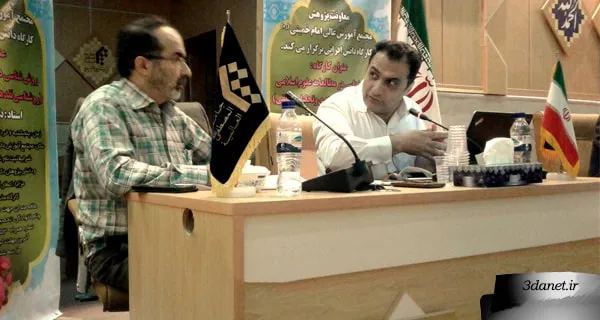
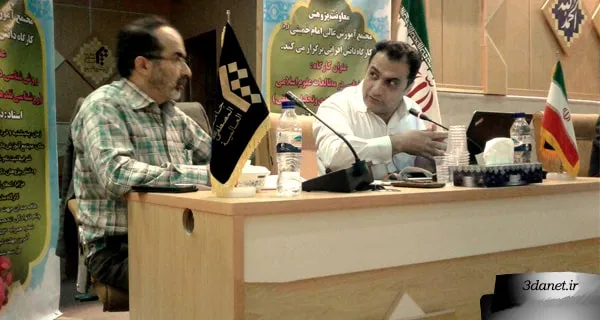
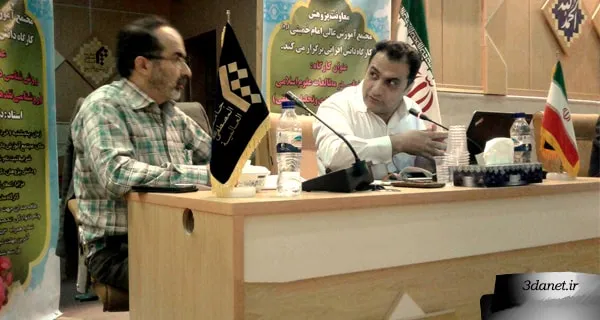
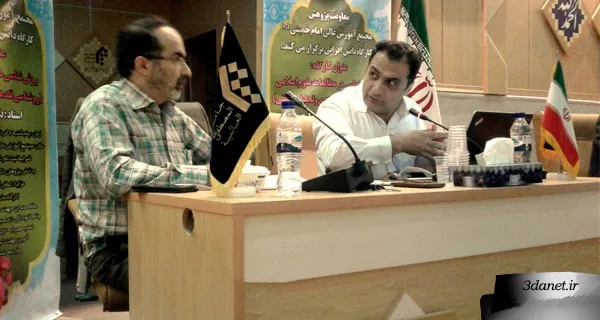
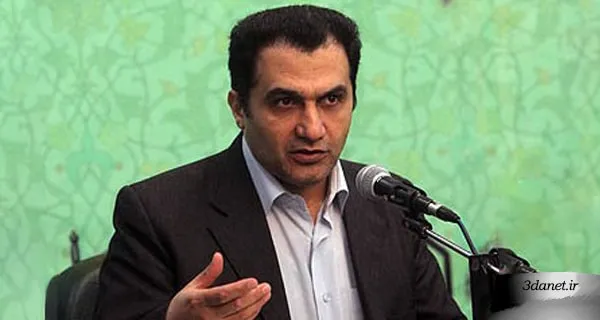
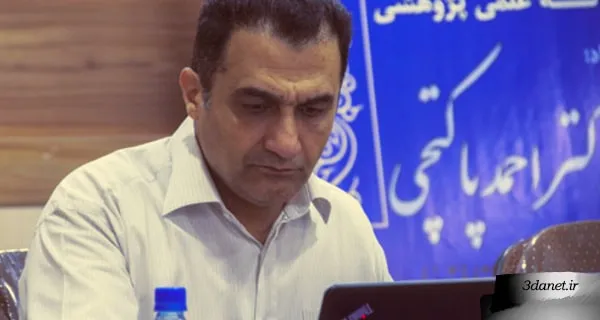
First Session of the Workshop on the Methodology of Intellectual Critique and Logical Analysis, Dr. Ahmad Pakatchi
Source: Muslim Woman Encyclopedia Website
.
.
Related Content:
First Session of the Workshop on the Methodology of Intellectual Critique and Logical Analysis
Second Session of the Workshop on the Methodology of Intellectual Critique and Logical Analysis
Third Session of the Workshop on the Methodology of Intellectual Critique and Logical Analysis
Fourth Session of the Workshop on the Methodology of Intellectual Critique and Logical Analysis
.
.

Discussion1 comments
با سپاس از تلاشهای شما در جهت ارتقاء دانش و فرهنگ ایران زمین. لطفاً فایلهای بیشتری از دکتر پاکتچی در سایت پرپیمانتان قرار دهید. قطعاً ایشان یکی از اندیشمندان ناشناختۀ سرزمین ما هستند. تا جایی که می دانم ایشان از استادان دانشگاه امام صادق هستند و می توانید فایلهای متنوع درسی ایشان را از آن جا جویا شوید. به درود