Religion
Hassan Mohaddesi and Alireza Qaeminia Debate: Evaluating Religion's Record (1)
Hassan Mohaddesi and Alireza Qaeminia examine why the record of religion is being critiqued in a debate; Mohaddesi: As religion's presence has grown more prominent, questioning it has become more serious, and religion has shifted from being the speaker to a subject of political inquiry.
Religion plays an influential role in the formation of beliefs, feelings, and emotions, and in many historical events, the role of religion can be regarded as an indisputable one. From the Tobacco Protest to the Islamic Revolution, the more we have advanced, the more prominent and serious the political and social role of religion in our society has become. But the more prominent the political and social presence of religion becomes, the more harms it will consequently entail. Hence, a critical examination and evaluation of religion's political and social record can analyze the strengths and weaknesses of religion's presence in the sphere of politics and society.
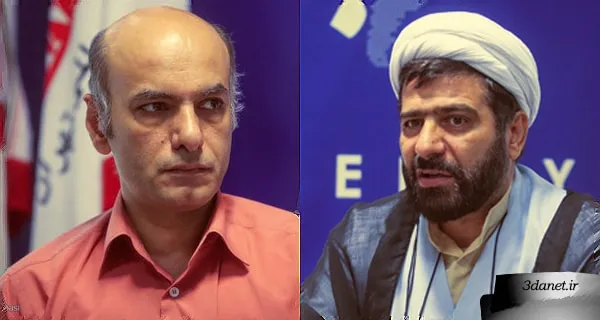
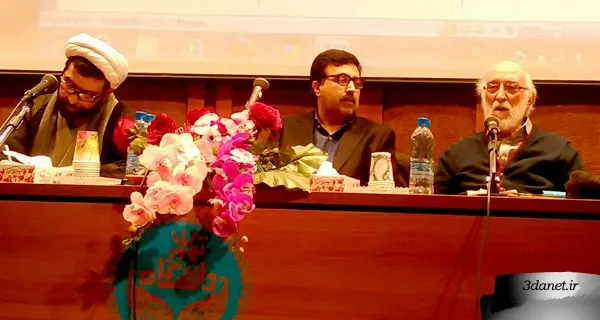
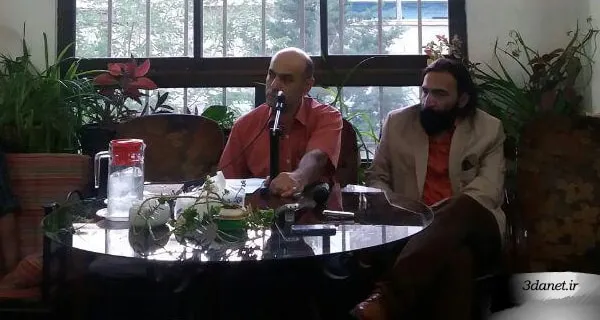
But examining religion's performance itself requires preliminaries. Some time ago, during a conference at the Faculty of Engineering of the University of Tehran dedicated to commemorating Dr. Ali Shariati, a debate titled "The Social and Political Record of Religion" was held, in which Alireza Qaeminia, a faculty member at the Research Institute for Islamic Culture and Thought, and Hassan Mohaddesi, a sociologist of religion and faculty member at the Islamic Azad University, presented their views. However, due to lack of time, this debate remained unfinished, and we decided to continue this debate with the presence of both parties under discussion. The necessity of examining religion's record and from what standpoint and with which rationality one can critique it with regard to religion's performance is the subject that has been examined during this debate. You will read the first part of this debate below;
*Can religion's record be measured and evaluated? If the answer is yes, should such an assessment be intra-religious or extra-religious?
Mohaddesi: What has happened to religion in the modern world has changed the situation of religion in the world. Religion has become a subject. For many centuries, religion was the speaker. Religion was the answerer of various questions of human beings. Different humans asked their questions of religion. I mean religious forces, because religion in itself is not an entity with a personality; rather, I mean the forces that speak from the position of religion and have answered various people.
Therefore, religion has usually played the role of a speaker in history and has been able to provide solutions and set standards for all human activities. But what happened in the new centuries was that religion ceased to be a mere speaker and became a subject of examination. In fact, religion experienced a new characteristic and a new history, which we call the subjectification of religion. Religion became a subject from various dimensions in the new world. The religion that made everything its subject and spoke about it was subjected to various questions in the new world, of which I can speak of at least four types of subjectification of religion.In the modern world, religion became a subject and was questioned.
One of these subjectifications is rational subjectification. Religion was questioned as to whether what it offers is rational. Are religious beliefs rational? Also, from a political perspective, religion became a subject: fundamentally, if religion wants to enter the political arena and guide society, is it constructive or destructive? The multitude of problems, such as the religious wars in the world that religion caused, led many thinkers to question whether it is better for religion to exit the public and political sphere.
This was a question asked about religion from a political perspective, and religion became a political subject. Religion also became a subject in terms of the texts it presents. Are sacred texts beyond criticism? Should we accept what has been presented from the words of the prophets without criticism? Or should they be subjected to rational examination, and fundamentally, what interpretations can be given of these texts? In fact, in the eighteenth and nineteenth centuries, religion became a subject from the perspective of hermeneutics and textual understanding. This process of subjectification reached a stage where sociologists and psychologists examined religion scientifically: overall, do the psychological and social effects that religion creates contribute to a better life? Or does it have more harmful psychological and social effects?
Thus, religion also became a subject from a scientific standpoint. Hence, religion entered a new phase in its history where it now had to be accountable. This accountability of religion, which is in fact a new phenomenon occurring in the modern era, has usually been taken more seriously and religion has been questioned more when religion has actually created a socio-historical role and entered various arenas, including the political arena and the management of society.
Therefore, the question of whether religion is a beneficial thing? Is religion to the benefit of humanity? What problem arises if we set religion aside? What is the condition of people who do not live according to religion? Is their situation necessarily worse than societies that are religious? Thus, at certain stages of history, and especially in the modern era, whenever religion has played a more prominent social and political presence, these questions have increased. Whenever in history religion has caused more destruction, it has been subject to more doubt, which is a completely natural matter.
In the period we live in, after September 11th, under the titles of Islamic terrorism and fundamentalism, specific events occurred that seriously drew attention to religion, and these questions—whether religion is fundamentally a beneficial thing? What has been the record of religion? and so on—were raised once again, and various thinkers around the world have addressed this subject.
At certain stages of history, and especially in the modern era, whenever religion has played a more prominent social and political presence, these questions have increased. Hence, the question arises as to how religion can play a destructive role? How is it possible to explode oneself and a group in the name of God and in the name of one's religious beliefs? How is it possible to kill innocent people in the name of God and behead them in front of a camera?
Therefore, various thinkers entered the discussion, and various works about religion were published. Especially the individuals who became known as the New Atheists, people who propagate and evangelize atheism in the world, strongly opposed this face of religion and wrote works that were among the best-selling English-language works in the world from 2004 to 2007.
The fact that these topics have today become one of the important subjects of religious studies in the world stems from the expansion of religion's social and political presence. Whenever religion steps out of the private realm and enters the public sphere, and enters the political and governmental realm, these questions become more frequent and more serious.
Shariati desired for religion to have a serious socio-political presence and played a great role in contemporary history. But today, I imagine that in the continuation of the path pursued by Dr. Shariati and our other religious thinkers, the question of the efficacy and critique of religion is a continuation of those very works. Today, when religion plays a much more serious role in our society, has a more comprehensive presence, and shapes our destiny, the question of religion's efficacy is a more serious question.
Perhaps it was beyond Dr. Shariati's imagination that religion would enter the political realm and the arena of governance so quickly. Perhaps we can say that it did not fit into his conception that these events would occur with such speed and that our contemporary history would be shaped in this way.
Another point is the new idea that has been raised in the modern world: the issue of quality control. In the modern world, we never entrust ourselves entirely to an organization or a system of thought and ideas; rather, we must examine its efficacy, quality, and effects. It is meaningless for a person to build their entire existence upon a system of thought for a lifetime and never ask whether this system of thought is correct or not? Is it efficient or inefficient?... We only live once, and therefore, because life is very important and we want to build our lives based on religion, we must take religion very seriously and subject it to questioning.
*Dr. Qaeminia, Dr. Mohaddesi raised the discussion of religion becoming a subject; if you have any comments on his remarks, please share them.
Qaeminia: This is a very important discussion. The age and era we live in is vastly different from the era in which Dr. Shariati lived. The questions of our time are not the questions of Dr. Shariati's time. I do not mean to say that figures like Dr. Shariati, Dr. Beheshti, Motahhari, Bazargan, and others have no role in our present day. Our times have changed, and the questions posed today have consequently changed as well.
The issue of religion's record, the functions of religion, and these questions are questions that were not much raised in the time of these great figures; the atmosphere was different, and certainly all these personalities need to be re-read. A re-reading that is appropriate for our present day. If a thinker merely remains in the past, they will be buried in that same history. A thinker remains alive if questions can continually be found in their works for the era in which later human beings live.
Issues raised today, such as lifestyle, and Shariati's view on it, are themselves an issue that must be addressed. Or, in a religious government, what is meant by a religious lifestyle? Perhaps today we have no more important issue than this: what, fundamentally, is the answer? We must find an answer to this question that is appropriate for our own era.
First, I should say that I take the word din as equivalent to the word religion to clarify the focus of my discussion. As you know, this word itself, in its contemporary meaning, is no more than two or three centuries old. That breadth in the meaning of religion, from the Abrahamic faiths to Buddhism, Taoism, and so on, we call all of them religion. In demonstrative functions, it does not have such a meaning.
The problems we face today mostly relate to our encounter with the modern world. This is the difference between us and our predecessors. The encounter we have found today with the modern world certainly did not exist before the revolution. What is modernism that has raised so many questions for us? What is the characteristic of modern reason? What happened over the past few centuries in the Western world was that a specific reason and rationality came to dominate, which is usually described as autonomous reason. That is, a reason that placed itself at the center, and by centering and founding itself, questioned everything. The emergence of modern reason meant the absence of God and led to the rise of secularism and the schools of thought we see today.
The emergence of modern reason meant the absence of God and led to the rise of secularism and the schools of thought we see today
Perhaps some of these issues are not new and have existed throughout history. For example, the issue of religious wars and religious pluralism is not a new issue. But the fact that movements like ISIS and Wahhabism constantly emerge in the guise of religion is a phenomenon that, even if we look at it from the perspective of the Quran, is the same as human history. The Quran says: People were one community and had natural differences; God sent prophets to resolve these natural-social differences. Subsequently, differences emerged among the religious themselves, and individuals appeared and emerged in the guise of religion.
If we look at the issue from a divine perspective, the Quran itself presents the confrontation between God and Satan in human history, and what happens in human history are the shifts that occur between God and Satan. Satan also changes his stance, presenting different positions in the guise of reading religion, in the guise of religiosity. This is not a new perspective in human history; rather, religious conflicts have always existed in human history, and they cannot be eliminated from it.
The Quran presents the confrontation between God and Satan in human history, and what happens in human history are the shifts that occur between God and SatanSome have realized that this is the destiny of human history and that it can be evaluated. But that religion cannot be removed from the sphere of human life, and religion is a dimension of human life; rather, an appropriate analysis and connection of this phenomenon must be provided, and proper analysis requires that our view of the issue be changed.
Perhaps in the early eighteenth century, many figures like Durkheim and Comte and others who came and raised discussions of the sociology of religion and the like had an eliminative view of religion and wanted to transform it into another phenomenon, change the nature of religion, and interpret the essence of religion. But subsequently, other currents such as phenomenology emerged in social discussions and the sociology of religion, arguing that religion itself must be considered, and fundamentally, what does religion have and what does it lack? We must change our view of religion. If we look at religion with that perspective, perhaps many of our judgments and assessments of religion would change.
Autonomous reason emerged, and in the Western world, religion went into eclipse and experienced a kind of absence. That interpretation of Nietzsche's statement, the death of God, is that he seeks to interpret the essence of the modern world. You see that in the twentieth century, simultaneously with the peak of modernism, the Islamic Revolution emerges, and figures like Shariati and others come and emphasize the role that religion has in human society. This role cannot be eliminated, but we must discuss religion's past and religion's future. In any case, the role of religion cannot be eliminated, and the role of religion in both the social life and the individual life of human beings is inevitable. What happened in the West and led to the death of God was that religion was eliminated from the social, legal, political, and epistemic spheres...
The role of religion cannot be eliminated, and the role of religion in both the social life and the individual life of human beings is inevitable
What happened in the Islamic world and in Iran was the maximal presence of God. That is, you must reread the current of the revolution as a current that these thinkers founded, and in fact, the comprehensiveness that the Imam possessed in leading this affair and rereading it as a living current. Because there is a movement among the religious that throughout history has always strived to achieve a suitable religious government. This is not unique to our era; rather, it was only the confrontation that arose with the modern era that necessitated this point, that a religious government, based on the thoughts that occurred within Shiite religion and the efforts that were made, caused this to happen. This was a different movement in the world, which sociologists and psychologists began to reread to see what was happening in Iran.
Now, the Western world is the world of God's absence. In the Islamic world (Iran), too, efforts have been made to resolve the conflict between modernism and the Islamic world and to reconcile the two. The West itself has realized that the conflicts must be transferred into the Islamic world itself and be based on readings of Islam that are violent and exclusivist and do not accept other sects. I think the West itself has realized this and is drawing lessons from events that have occurred throughout history. Of course, my effort is to provide an epistemological analysis and not become entangled in a kind of politicization, which I believe is a blight that our universities have suffered from for three decades. We need an epistemic and sociological analysis to evaluate the presence of religion.
We need an epistemic and sociological analysis to evaluate the presence of religion
I emphasize again that things being done in the name of religion are not unique to our era. In our era, it has become prominent because it is natural that where a religious government is formed, conflicts intensify, and this does not mean that a religious government should not be formed. The Prophet (PBUH) himself formed a government, and we know that the existence of the hypocrites in the Prophet's era and many of the events that took place in that period were unprecedented compared to previous periods, and God did not come to suspend religion and government, and the Prophet also considered it his duty to continue the religious government. The first claim is that these conflicts are inevitable in human history.
The second claim is that we must arrive at a particular awareness of these differences and undertake an epistemological root-cause analysis of them. I believe in this type of analysis, and we cannot eliminate these things. But perhaps awareness of them can, to some extent, alter the complexion of these differences, and the necessary awareness must be fostered among the various sects in the modern world.
I separate religion in its definitional sense from religion in its realized sense. Religion in its definitional sense is what exists in the Book, the Sunnah, and so on. A definition of religion is presented in the Book and the Sunnah—though I confine my discussion to Islam, because our problem is the problem of Islam, and the problem of the contemporary world is also Islam.
I separate religion in its definitional sense from religion in its realized sense. Religion in its definitional sense is what exists in the Book, the Sunnah, and so on, but Islam in its realized sense is what has come to be realized in history.
Religion in its definitional sense consists of those elements found in the Book and the Sunnah concerning the definition of religion, and those goals that the Book and the Sunnah have defined for religion, which we have in the Qur'an and the narrations. That is, religion in its definitional sense is that which has been realized in human history up to now. Islam in its realized sense is what has come to be realized in history. Furthermore, I differentiate between the religious and religion itself. The religious cannot be equated with religion itself. I also distinguish between partisan religiosity and the religiosity attributed to the mainstream of religion itself. Partisan religiosity (or party-based religiosity) may emerge within religion.
If we look at religion in its realized sense, this part of religion pertains to the founding period. It was founded in early Islam by the Prophet and the Imams themselves. This part of religion is foundational. That is, in the rereading and the stage of rereading religion, you are compelled to reread the dialectical relationship between religion in its definitional sense and what happened during the era of the Prophet and the Commander of the Faithful (peace be upon him) in a back-and-forth manner. I assign the historical view of religion to that part of the realized sense of religion that emerged in later periods. These can be examined in terms of their proximity to and distance from the founding era. To what extent did those elements take shape in later periods, and to what extent did they not?
Mohaddesi: When we speak of religion, it is clear that religion itself has no independent personification. In reality, religion has carriers, producers, and consumers. All cultural systems are like this. Likewise, even when we speak of Marxism or the like, this is what is meant. Of course, religion also has a doctrinal system. When I speak of religion, I mean a total cultural system. A total cultural system means that the human being generally has three domains: the cognitive domain, the expressive domain, and the normative domain.
The manifestation of the cognitive domain is the human brain and mind. The manifestation of the expressive domain is the human heart, and the manifestation of the normative domain, in the parlance of Muslims, is the “limbs” (jawāriḥ), meaning the organs with which we perform actions. Religion manifests itself in these three domains. From this perspective, religion is like ideology, myth, and mysticism. In fact, to explain and elucidate the world and for the oughts and ought-nots it presents, religion connects to the sacred and, in reality, offers a transcendental interpretation of the world.
But in any case, we are compelled to examine the performance of religion based on what religion manifests in history. Whenever we wish to speak of religion, the history of religion, and the supra-historical aspect of religion, we have no choice but to examine religion in its very historical context; otherwise, that which is not present to us is not examinable at all. That which is with God is of no concern to us. We must, in any case, test religion in its historical manifestations.
We are compelled to examine the performance of religion based on what religion manifests in history.
Later in the discussion I will point out that we have repeatedly experienced throughout history that the words and deeds of religious people often differ in various historical experiences. Religious people, in the position of propagation, put forward certain ideas, and in practice, what they have propagated and promoted is often not realized. How should we evaluate this? Do we have the right, in fact, to question religion itself and cast doubt upon it? Or should we only question religious people? Is it not the case that these religious people and the forces that have sought to realize this religion were trained within that system and are products of that very intellectual apparatus? Is there no relationship between the cadre that religion nurtures and religion itself? This seems to be a very serious issue. Among the indicators and criteria that Dr. Shariati proposes regarding religion is that we should see what kind of people that religion has nurtured.
Islam has various types and kinds, and I have repeatedly emphasized that religion is like a river. Religion is not a fixed matterIslam has various types and kinds, and I have repeatedly emphasized that religion is like a river. Religion is not a fixed matter. Religion transforms throughout history. Even our own religiosity transforms within this short lifespan. It is not the case that my religiosity now is like my religiosity twenty years ago. We too transform, and so Islam also undergoes transformation. When Islam enters Iran, it creates Iranian Islam. When it enters Africa, it creates African Islam, and when it enters Europe, it creates European Islam... and even this very Iranian Islam itself sometimes has various types and kinds.
Dr. Qaeminia stated that the issue of religious conflicts and the misuse of religion is not a new matter. This statement is correct, but the point is that modern humanity allows itself to question religion. To ask whether this cultural system, which can sometimes be so destructive, is fundamentally beneficial? Why should we rely on it at all?
Contrary to his view, I do not believe that religion is inevitable. Today, when we look at any book on religious studies, we see on its first pages that it is written that nowadays 800 million people in the world openly and explicitly declare that they have no religious belief and do not live based on any religious thought. It seems that a multitude of the world's people live based on irreligiosity and atheism.
A multitude of the world's people live based on irreligiosity and atheism
Therefore, it seems that in the new world, religion is presented as a possibility and not as a necessity. It seems that one can live without religion, and then modern humanity asks: are those who do not live based on religion worse off than us? That is, this rational calculation in the new world is a very, very serious matter.
Of course, I myself am religious until further notice and am not a propagator of atheism. But I think religion can be evaluated from two perspectives; one from an extra-religious perspective. As a rational human being, I ask myself: I want to build a short life upon religion, and because I am religious, I must refrain from many pursuits. Sometimes, because I am religious, I must endure great suffering. Sometimes I want to live ethically and must forgo many options available to non-religious people.
It is natural for me to ask myself: when I build a life, for which I have only one chance, upon religion and pay such a high cost for it, what if we are being completely fooled? What if there is nothing to it at all? What if I am fundamentally mistaken and am laying this precious life upon an unsuitable foundation? This question is a rational and wise question, and a wise person asks and raises it and tries to give a rational answer to it.
However, another point is that we can also question this efficacy of religion from within a religious framework and critique it. In fact, one of the positive elements of Shariati's thought is the critique of religion and the critique of Islam. One of the greatest and most brilliant intellectual resources of Shariati are those works that critique religion, which, in my opinion, we have still not sufficiently benefited from this intellectual heritage. Another figure I am very much interested in is Imam Musa Sadr.
Dr. Qaeminia stated that the misuse of religion is perennial. The point here is that we, as religious people, should not ask what we must do so that religion does not become destructive, and how we should protect this institution that we possess we, as religious people, should not ask what we must do so that religion does not become destructive?and believe to be constructive, so that it does not go astray? One of the brilliant points of Shariati's thought is precisely this. He was concerned that if religion enters the arena, then this movement that is supposed to bring about transformation might itself become anti-transformation.
He tried, to the best of his ability, to answer this question, which of course must be examined critically. Let me just mention that another exalted human being, whom I regret becoming acquainted with late, is Imam Musa Sadr. He is one of the greatest Muslims and thinkers whose existence, as a Muslim in my era, I take pride in. While critiquing religion, he says: one of our problems is how religion becomes destructive in history. We who want to bring religion into the arena, what if this very religion becomes a scourge upon us and ensnares us.
In his book *Religions for Man*, he says: "Many are the crimes that have occurred in the name of religion, and how many manifest injustices have been founded in the name of religion. Some rulers called themselves the shadow of God on earth, which meant that servitude to them was, in Quranic terms, an obligation and obedience to them was mandatory, and opposition to them was opposition to God. Our interpretation of the phenomenon of tyrants hiding under the cloak of religion and their efforts to gain the support of deviant religious clerics is that the earthly gods who had fought religion, and against whom religion had fought, when they felt they were collapsing, realized that securing their rule, tyranny, and enjoyment was only possible if they changed their clothes and donned the garb of religion."
As a great religious figure, he is concerned with how religion can once again become a garment for wolves. This is a potential of religion, that it can create a justifiable cloak for wolves. This is one of the serious harms of religion. Why should I not question it? He states that we need a guarantee. I emphasize, Imam Musa Sadr says: "We need a guarantee so that these troubles and calamities are not repeated and religion is not misused again. Or, in the words of some who have concerns, among whom I count myself, we need a guarantor so that religious feudalism does not replace political feudalism. We need a guarantee, and this guarantee must be a religious guarantee." That is, he discusses the issue from an intra-religious perspective.
Qaeminia: I constantly fear that the realms of theory and practice will be conflated. That one can judge a religion in terms of its definition and assess its validity is something that has existed throughout history. But that one can judge the actions of religious people is an occurrence that has happened throughout history. That religion has been pitted against religion throughout history is nothing new either. We know that Imam Hussein (AS) was martyred in the name of religion. That is, those who stood against Imam Hussein claimed to be Islamic and said that this individual had rebelled against the religious government, did not hold Islamic beliefs, and did not even pray. The prayer that Imam Hussein performed on the day of Ashura was to emphasize that we adhere to this fundamental principle of religion and do not deny it.
That religion has been pitted against religion throughout history is nothing new either. We know that Imam Hussein (AS) was martyred in the name of religion
The event that occurred on the day of Ashura and is interpreted by our thinkers—one of Dr. Shariati's main works is also in this area. The very "religion against religion" that Dr. Shariati discusses, is that the question of our time? Is the "religion against religion" we have today different from that time? Throughout history, the episode of Imam Hussein (AS) did not only mobilize opponents but also raised the self-consciousness of the Shiites, and for fourteen centuries Shiism has been re-reading it. What happened that an infallible Imam was killed in the name of religion? This is the central issue for Shiism. Therefore, there is no doubt that religion itself can be assessed by certain criteria. Religiosity can be evaluated.
But my emphasis is on two points; first, the question raised today is influenced by modernism, and in modernism, self-founded reason becomes sovereign. The reason found in pre-revolution thinkers is not self-founded reason. They are not influenced by modernism. They are re-reading within the space of Shiite thought and the events that have occurred throughout Shiite history, not from the perspective of the emergence of modern reason. The difference that some post-revolution thinkers have with pre-revolution ones is that those who try to offer a reading of religion in the name of religious intellectualism after the revolution are influenced by modern reason. Modern reason is in conflict with religion, because in modern reason, reason itself is the sole arbiter, and it is a specific meaning of reason, not the totality of reason.
In it, instrumental reason is taken as the basis, and when instrumental reason is the basis, you can ask whether I accept religion or not? This question was also raised in the old world; everyone asked whether I become religious or not? But now the mode of questioning has changed. In an era that is the era of the absence of gods, the era of communications, the internet, and globalization, what role does religiosity play? This is the question of modern reason.
To what extent can religiosity have an impact, and I, in the position of modern reason, can question religion—this is the development that emerged in our world and our new thinking from Iqbal onwards. Iqbal himself addressed this issue in his books on the reconstruction of religious thought. He says that, in my opinion, great religions can be assessed by two criteria. One is the criterion of ethics, because no religion can be opposed to ethics. Every religion is a proponent of ethics. The other is by the civilization it creates and the fruit it bears.
I have the right to ask whether you are considering religion in its realized state or in its definition. Moreover, religion in its realized state is not the same as the religious people. When it becomes a historical current and sect, you can make a historical evaluation of what this sect has done throughout history and what relationship it establishes with that founding period. Therefore, the main issue is not whether religion can be evaluated. Rather, the main issue is whether religion can be questioned with modern reason or not?
I emphasize again that modern reason does not question. We must trace the presuppositions of modern reason. On what presuppositions is it changing? If your presupposition is that religion must come and change my social life in material terms, we should not have this expectation of religion, and it is natural. This is the functionalism that governs modern reason. Francis Bacon said that two things happen in modern reason; one, reason has become earthly and no longer seeks its goal in the heavens, seeing everything on earth and considering the path to salvation as scientific, and science is the instrument that makes an earthly paradise possible for us, and reason has become soiled and lost its sanctity. Does this reason expect religion to change my life? Whereas religion belongs to a world that is the traditional world and sees the goal and ideals of humanity in the other world.
What license is there for me to come and critique religion based on modern reason and accept the presuppositions of modern reason? Otherwise, you can examine the record of any religion, any religiosity, and any government, and in this examination, perspectives certainly have an influence. It must be discussed whether your intention is that religion should bring economic prosperity? Has religion itself claimed this?
If we pose the question in such a way that religion must provide the best economic welfare, we are looking at it from the perspective of modern reason. We must see what goal religion itself presents in economic change and transformation. For example, it says that your economy should not be a usurious economy. Therefore, attention to the type of question is important. My point is not that atheism does not exist; atheism has existed throughout human history. When I say that religiosity is inevitable, I am looking at the issue from the very same perspective that Dr. Mohaddesi looks at it.
In human society, you cannot eliminate the life of religion; whether you want to or not, it will also have a political role. But thinkers in the world today have realized that this is precisely the difference between the sociologists and psychologists of two centuries ago. Today, they have realized that religion is a phenomenon in human life and is not removable. Despite the fact that atheism also exists. Ultimately, it exists as a force and power in society and disrupts the equations that exist in human society, and we cannot eliminate it.
The debate is not about whether you can also have atheism. But note that now the majority of conflicts occurring in the world belong to the religious. Moreover, there are very few who are atheists, and I believe that a true atheist cannot be found; it is possible that an individual does not believe in a specific religion.
Religion is an ineradicable power in the modern world, and today power equations are based on the distribution of the religious. Discussions are based on the distribution of different religions. Therefore, in my opinion, we cannot discuss it from a social perspective either.
Religion is an ineradicable power in the modern world, and today power equations are based on the distribution of the religious.
The intra-religious and extra-religious debate is, in one sense, correct and, in another sense, incorrect. If we think we can set aside all the claims that a religion has within itself and just look at it, for example, from the perspective of sociology or epistemology... it must be said that although some have done this, the very nature and essence of religion is such that you cannot do this. The theorist who acts on this basis will encounter a problem. One cannot have an eliminative view of religion; rather, one must understand religious beliefs. Understand religious acts and rituals. Have an extra-religious view based on that.
In other words, there is a relationship between observation and theory. Does observation come first and then theory arises, or theory first and then observation? This is an important discussion, and now they have reached the conclusion that it is not at all the case that you can separate these. In practice, the distinction we make between theory and observation is not a decisive distinction, and their boundary is very slippery. The distinction between the external and internal view is also like this.
You can have an external view, provided that the presuppositions of this view do not destroy the very nature and essence of religion. You can have an internal view; naturally, it is not a purely internal view, but you have a series of metaphysical, sociological, etc., presuppositions, and that itself has a series of implications. Wherever you start, whether from an internal view or an external view, you can arrive at certain presuppositions and discover congruence and conflict somewhere. The idea that we can have a perspective that is influenced by nowhere and say that I am free and devoid of any prejudice and am judging the phenomenon of religion is, in my opinion, debatable.
Perhaps in the eighteenth century, based on the philosophy of science of that time, we could have made such a claim, but today's philosophy of science does not permit us to do so. Truly, no scientist is free of prejudices. These prejudices must be chosen appropriately. In a manner appropriate to the space of religion and the nature of religion, you can look at religion from an external perspective, and you can also look at it from an intra-religious angle. The issue is to choose that perspective appropriately. For example, if I say that I will present a reading of the Islamic Revolution based solely on the social division of labor that Durkheim speaks of, that is wrong. The emergence of the Islamic Revolution is not merely an effect of the social division of labor; one must see the cultural elements. If we are in the position of a true researcher, our theories must, to some extent, also pay attention to the content of religion itself.
Mohaddesi: Dr. Qaeminia raised the discussion of autonomous reason and the fact that these are indeed new questions. I also said at the beginning of my discussion that the thematization of religion is a modern phenomenon, and as it happens, I consider this one of the blessings of the modern world, that human beings allow themselves to critique everything, including questioning reason itself and the limits of reason.
My impression is that the old view which told us to accept the claims that religion makes and later, in the next world, you will benefit from its fruits, is not a reasonable or acceptable claim. In this sense, religion gives us a promise on credit, and a wise person, as Khayyam said, when you want to give us paradise there, what need is there when we have these things here? Does a wise person exchange cash for credit? This statement that you should accept religion because it will ultimately have benefits, and you do not understand now but will receive its fruits later, is not a statement pleasing to reason, and a rational human being cannot base their life on this statement. They desire that if religion has transcendent, otherworldly effects, it should at least have some characteristics in this world as well, so that we humans can live better. Therefore, I think one of the achievements of autonomous reason is precisely this.
As it happens, I think that in the tradition of the Abrahamic religions, whether in the message of the prophets of the Children of Israel, in Christianity, or in Islam, religion is severely criticized. In the words of the prophets, we repeatedly see that they criticized the religion of their time. The worst insults and aggressive words against the scholars of religion are found in the Bible and the Quran. The scholars of religion have been likened to donkeys carrying books. Those who distort the word of God.
In the tradition of the Abrahamic religions, whether in the message of the prophets of the Children of Israel, in Christianity, or in Islam, religion is also severely criticized.
When the Jewish clerics objected to Jesus, asking why he constantly sits and talks with deviant (prostitute), wretched, poor, and destitute people, he answered them by saying that these prostitutes might enter the Kingdom of God, but you clerics of the Jewish religion will not enter the Kingdom of God. In other words, we see serious critiques directed at religion in the tradition of the Abrahamic religions. We see that critical gaze of ours from the religions, which in fact directs the greatest critiques at religious forces, and those blights, those harms, and the destructive role that religion can play, can be realized in Islam itself, and as it happens, has been realized.
We see the critical gaze regarding the branching out of religion mentioned in the Quran, that within Islam itself, religion has branched out, and then sectarian conflicts between Shia and Sunni are constantly claiming victims in the world. While humanity desires a peaceful planet.
I believe that modern reason, as it happens, helps us to recognize and reflect upon the destructive aspects of religion. Modern thought helped some potentialities within religion, which could not be realized in ancient times, to be realized.Therefore, I believe that modern reason, as it happens, helps us to recognize and reflect upon the destructive aspects of religion. Modern reason no longer accepts that we merely hear promises without examining them. Whereas now, we will also evaluate after realization. We want to assess whether word and deed correspond. In my view, this is a wise thing. You wish to attribute this to modernism. I have no problem with living modernly and thinking modernly in this respect, and as it happens, I think that modern thought helped some potentialities within religion, which could not be realized in ancient times, to be realized and to find a ground for presence and emergence.
I imagine that modern reason is not necessarily anti-religious. This has been discussed by numerous thinkers, including Cassirer in his book The Philosophy of the Enlightenment. Many modernists are religious people. Many great modern philosophers are likewise; Kant is an extraordinarily religious person.
Therefore, there is not necessarily an antagonism between modernism and religiosity, and as it happens, contrary to Dr. Qaeminia, I think that Shariati is more modern than traditional, and the religious intellectuals after the revolution continue his path in another way. Although among our religious intellectuals we can speak of left and right wings, and Shariati is in fact a critical religious intellectual. But as for his relation to modern thought, I think he thinks modernly and strives to offer a rational, humane, and emancipatory interpretation of religion, and as it happens, he is a figure who articulates an extra-religious criterion for religion.
Modern reason is not necessarily anti-religious; many modernists are religious people. Many great modern philosophers are likewise; Kant is an extraordinarily religious person.
Contrary to Ayatollah Motahhari, who emphatically says that the Islamic Revolution means we must measure the revolution by Islam, Shariati says quite the opposite and speaks of a revolutionary Islam; an Islam that can bring about transformation. Here, the criterion is not religion; the criterion is an external matter. If religion and Islam are revolutionary, they are acceptable, and if they are justificatory, they are not. That is, he offers an extra-religious criterion. Or Imam Musa Sadr says religions are for humanity, not humanity for religions.
That is, we judge and evaluate religion by external criteria, whether it is humane and ethical or not. The very discussion is that we must engage in pathology and not entrust ourselves wholesale to religion. We, the religious, more than anyone else, must watch over religion so that it does not become corrupt, for religion is also susceptible to corruption.
How long do we want to say that the realm of realization is separate from definition? Ultimately, the question arises: is there a relation between what has been realized and what has been defined, or not? If I say no, Islam in its essence has no flaw / Any flaw there is comes from our being Muslim, how long do we want to utter this saying? The point is that you speak of an essence that is non-existent. This religion has a religious record, and when it is realized, it sometimes yields negative results.
This cannot be appealing to the religious, and it gradually comes under doubt, and gradually humanity reaches the point where we say, "We'll forgo its blessings to be rid of its troubles." Or that we be religious in our private solitude. If we want religion to endure, to be effective, and to still have its thriving market, we must subject it to pathology. We must pathologize the aspects that can be destructive and be careful that the cultural commodity we offer does not fall prey to such dangerous blights. We cannot say that it has always been like ISIS, and ISIS is not Islamic. No, sir, ISIS is also a part of Islamic history. It is a reading of Islam that is so destructive; Islam itself gives a group the possibility to play such a destructive role.
If we want religion to endure and be effective and continue to have its thriving market, we must pathologize it
Qaeminia: I will separate a few points from Dr. Mohaddesi's remarks. I did not enter into the content, and it seems to me there was a kind of misunderstanding of what I said. In the confrontation between modern reason and religious reason, I brought up Islam, not Christianity; because Kant wanted to change religion, he changed Christianity, and the Protestant denomination emerged. Protestantism is, in one sense, a consequence of the emergence of the modern world.
Protestantism is the model of modern religion; the absence of God is fully demonstrated in it. Protestantism is a religion in which there is a maximal absence of God. In Islamic thought, we have a maximal presence of God. Therefore, our discussion must focus on Islam itself. Christianity has a different story. The emergence of Protestantism and the like, and the things Kant, Hegel, etc. say, require another phase, which I will not enter into.
Kant wanted to change religion, he changed Christianity, and the Protestant denomination emerged. Protestantism is, in one sense, a consequence of the emergence of the modern world
My discussion focuses on this point: ideology, thought, and anything that asserts the maximal presence of God. Does this religion separate the afterlife from this world? That is not my discussion at all. When I explain Francis Bacon's words, I do not mean that religion has no regard for the world. Not at all; in Islam, and especially among thinkers before the revolution, there were readings that believed religion pertains to the afterlife. Some came and made a worldly assessment.
Religion also has a worldly dimension, and from Islam's perspective, it cannot possibly be concerned only with the afterlife, and Dr. Mohaddesi rightly pointed out that throughout history, religions themselves have been critics of one another. I also accept this point that modernism is good for us, in the sense that it gives us awareness, and this is one of the benefits of modernism.
Modernism is a double-edged sword; on the one hand, reason has become all-powerful. This reason is not traditional reason; it grants itself the right to everything—the right to determine all human goals—and thus stands in opposition to religion. But religion, in one respect, belongs to the traditional world. Religion offers a goal in light of which it also sees the world; the goal of religion is not to make the economy, for example, a capitalist economy. We should not look at it in a functionalist way. Functionalism, as well as pragmatism, are the main characteristics of modern reason. The pragmatic nature of modern reason, which wants to evaluate everything very hastily and in a short period, is problematic in my view.
That statement by Hegel, who sees dialectic in history, is a good point in one respect. Religion and religiosity themselves, throughout the history of religions, have criticized each other, and each religion that came sought to solve the problems that had arisen in the previous religion. Therefore, we also see this type of dialectic in the history of religions.
Functionalism, as well as pragmatism, are the main characteristics of modern reason. The pragmatic nature of modern reason, which wants to evaluate everything very hastily and in a short period, is problematic in my view
But the problem I have is that Dr. Mohaddesi considered ISIS to be among the capacities of Islam. My question is: what do you mean by Islam? Do you see that which has been established in the external world and human history as Islam? Does your meaning of Islam refer to this back-and-forth between Islam as defined and as realized in the founding period? One must separate the realm of theory from practice.
Suppose, for example, we now come and say that Marxism failed because its socio-political ideas were wrong. Well, we must separate the realm of practice from the realm of theory. If we want to examine Marxism from the standpoint of theory, we must examine it based on the criteria of the realm of definition, and if you want to examine it in the realm of practice, you must examine it based on the criteria of the realm of practice, and these should not be conflated. Each is a separate space, and conflating these two spaces leads to repeating the very fallacies that are repeated in today's world, and even to considering the Taliban and ISIS as Islam. One must find the locus of epistemic validity. The problem of the conflict of interpretations is this.
I accept the conflict of cultures and distinguish between these two. The conflict of interpretations has the same problem as interpretations; it sets aside epistemic validity and does not discuss epistemic validity at all. It discusses social manifestations. When we speak of the conflict of cultures, your hands are free and you can assess its epistemic validity. Where in this is the Islam that the Prophet spoke of? Would the Prophet, who was a prophet of mercy, have said this? Once you say that Islam itself has the potential for ISIS to emerge, when you look at that back-and-forth between the realm of theory, religion in the realm of definition, and the founding period, a reference period has been formed for us. Everything that appears in history must be reconstructed based on that period. Epistemic validities are found.
For example, if we want to examine Marxism from the standpoint of theory, we must examine it based on the criteria of the realm of definition, and if you want to examine it in the realm of practice, you must examine it based on the criteria of the realm of practice, and these should not be conflated.
If we return to the point I made at the beginning, that external view is accepted to the extent that room remains for the subject of religion itself. If you question religion, your questioning must not destroy the nature of religion. Religion has its own claim. Therefore, at whatever stage you assess religiosity or religion itself, you must also take those claims into account. We have the right today to evaluate these different Islamic currents that have emerged and claim to be Islamic. Just as Dr. Shariati also did. He contrasted Alavid Shiism with Safavid Shiism.
Shariati does not belong to modern reason. If it were modern reason, it would ask Dr. Shariati: What right do you have to even bring revolution into the domain of religion? What is revolution, anyway? Shariati defines value for religion and religiosity. He considers being revolutionary a value. Why should we make a revolution? What need do I have for revolution? I must build the world. What need do I have to offer political analysis? What need do I have to even refer to religion? That is, it has been eliminated, which creates a problem.
In modern reason, religion has become absent, and it is from this perspective that I emphasize that Shariati belongs to the traditional world and possesses some manifestations of modernity within the traditional world. At one time you say he is reinterpreting modern reason in the traditional world; another time you say he is reinterpreting the manifestations of modern reason. My belief is that pre-revolution thinkers had not yet encountered modern reason. Perhaps we too have not yet encountered it in that form, but we have encountered its manifestations more, which I have referred to.
Therefore, in my opinion, if Shariati were alive today, the main issue for him would be this very globalization. He is a sociologist and wants to solve the problems of the religion of Islam from a sociological perspective. ISIS would be a problem for him. How do we trace the emergence of ISIS in the Islamic world? What happened that ISIS emerged? The main problem of traditional reason was not these issues. It was confronted with certain manifestations of the modern world, such as revolution and... specific values, which it pursued within that same traditional thought, and the disagreements among pre-revolution thinkers stem from this perspective.
Mohaddesi: I think we need to pay a bit more attention to the epistemological foundations of the discussion. My impression is that if we say there is an essence of religion somewhere that never manifests in reality—to borrow Marx's expression—this is, I suspect, a kind of false consciousness. Discussing something whose manifestations we never see and which has no historical emergence or manifestation is, in my view, a kind of false consciousness. It consoles us with something to which we have no access whatsoever.
Therefore, I do not much agree with the idea that there is, in fact, no relation between the realm of realization and the definition of religion. We cannot say that there is no relation between religious teachings and the effects those teachings produce. We cannot say that belief in God has no effects. This belief has effects, including psychological and social ones. It also has doctrinal effects.
Commanding right and forbidding wrong has effects. One cannot say this teaching has no effect. A relation exists between the effects of teachings and the teachings themselves. Hence, I can establish a connection between the effects of teachings and the effects of religious beliefs, and I can also critique the teachings themselves. We cannot say that our beliefs have no impact on our lives. If they have an impact, these impacts stem from those beliefs. So, following the critique and evaluation of the effects of beliefs, I can critique the beliefs themselves as well.
Moreover, our discussion is not about ignoring the epistemic validity of the teachings. We must certainly examine religious teachings from an epistemological perspective as well. But this criterion is not sufficient for evaluating and assessing religion. If we content ourselves with examining the teachings only from an epistemological standpoint, I think this is not enough. We must also examine the external effects of the teachings. We must see in what direction the lives of those who hold these beliefs have moved, how they have lived, and what creations this teaching has produced. Has this life been positive on the whole, or not?
In a general sense, I think Shariati's philosophical thought can be divided into two broad categories: the thought that says truths must be sought only in propositions, which is called logocentrism, speech-centrism, or knowledge-centrism. I seek truth only in the word, or speech, or logos. I imagine that Dr. Qaeminia's claim falls into this category—that we should examine religion solely in terms of its teachings, epistemologically, and that's it. But I think Shariati's intellectual framework is, in fact, opposed to this view. He is counter-logocentric; that is, he believes that teachings manifest themselves in the realm of action and realization.
Not that I should content myself with examining the teachings epistemologically. Indeed, Shariati's conception of religion, as I have understood it, is that he believes in religiosity, religious knowledge has precedence—meaning we first attain religious belief and religious faith—but action, or in his terms, praxis, has primacy. That is, where does this faith and belief manifest itself? In action, in changing human lives, in liberation, in improving the human condition. This is why he says that a religion which is of no use in this world is of no use in the hereafter either.
This does not mean he wants to ignore or eliminate the otherworldly aspect of religion; rather, he says we must see what effects religion has in this world. Even in his own prayer, he says: 'God, deprive me of all virtues that are of no use to people.' This intellectual framework is anti-logocentric; that is, it says belief and faith manifest themselves in action. Instead of orthodoxy, Shariati posits orthopraxy. Instead of correct belief, he speaks of righteous action. The measure of human faith and religiosity is righteous action.
In his understanding of action, he emphasizes that the Quran says: “those who believe and do righteous deeds.” He stresses that “believe” and “do righteous deeds” are placed together, and that faith is tested in action. Therefore, we must see how religious teachings manifest in the realm of realization, and if we posit a separation between these teachings and life in the realm of realization, we are speaking of an imaginary matter and a false consciousness; and whatever negative effects and destructive consequences arise from it, we say it has nothing to do with the teachings. Whereas, no, it is indeed related to the teachings.
I generally divide religious tendencies in the contemporary world into three categories: religious conservatism, which, like ISIS and the Taliban, believes that we must preserve the heritage exactly as it is and return to ancient times. This is the religious conservative tendency. They believe that what was practiced in the time of the Prophet must still be implemented exactly as it was. If a thief's hand was amputated back then, we must do the same today, and they do not seek any change in Islamic actions, rulings, and teachings.
The second view is Islamic reformism, which I call religious restorationism. This view believes that a series of superstructural changes should be made in religion; figures like Mr. Motahhari, Beheshti, and other personalities who fit into this view seek superstructural changes. But in my opinion, Shariati and other religious intellectuals fall within the religious reconstructionist approach and believe that we must reconstruct religion in a way that is appropriate to modern conditions. Almost everyone believes that we must practice ijtihad in the fundamentals to avoid falling into Talibanism and ISIS. Talibanism, ISIS-like extremism, and this type of thinking all stem from that conservative perspective.
*Dr. Qaeminia, please summarize the discussions that have taken place.
Qaeminia: Some of the points Dr. Mohaddesi made were not my views, and I do not know how he arrived at these conclusions. My point is not that the realm of definition does not appear in the realm of realization. Rather, my point is that not everything that appears in the realm of realization bears a relation to what is in the realm of definition. Firstly, we must assess the realm of definition based on its own specific criteria, and assess the realm of realization based on its own specific criteria as well. Furthermore, I am not saying that we should evaluate religion solely in terms of doctrine. We must also look at its function. Indeed, the point I quoted from the late Iqbal seems to me a good starting point for discussion.
We must consider ethics; ethics plays a key role in religion. Also, we must take into account the social fruits of religion. Enjoining good is a social fruit of religion. You can examine the social implications of religion and this belief or ruling; therefore, I believe that beliefs have an impact on life. Perhaps we agree on this point. The only difference is that I refrain from making modern reason sovereign over religion.
Religion is based on a specific rationality; when you make modern reason sovereign, the very subject of religion disappears.
Religion is based on a specific rationality; when you make modern reason sovereign, the very subject of religion disappears. This reason that evaluates religion must be specified as to which reason it is. At the same time, a social evaluation must be conducted. You must examine the social record and the psychology of religion.
The point the doctor made about Dr. Shariati I will express in a different way. I consider Shariati's approach to Islam to be influenced by existentialism. In the West, two modes of thought took shape in opposition to one another; one was metaphysical thought throughout history, and existentialism was a kind of revolt against metaphysics. That is, the existentialists came and said that throughout history philosophers debated whether the external world exists or not. Do we have free will or not? Is existence primary or essence? All of these are metaphysical discussions. The existentialists countered by asking: Who am I and where do I stand? Do I have freedom or not? ... Here you are transported to yourself, to the questions that Dr. Shariati raised.
Perhaps the dispute that the late Motahhari had with Dr. Shariati was not unaffected by these matters. Because Shariati saw the metaphysical ideas of religion as diminished, he had a purely existentialist view and perhaps did not see them at all. The late Motahhari said you cannot see Islam without its metaphysical ideas. Religion has a dual identity. Perhaps our entire discussion with the doctor also comes back to this: that religion has two aspects, metaphysical and existentialist; it deals with the existential problems of human beings and also has metaphysical beliefs. Belief in God and the afterlife and so on... These two aspects must be seen together in a dialectic. That is, it solves those existential problems of human beings in connection with metaphysical problems, and its own specific metaphysics, which is certainly different from the metaphysics that have emerged throughout history. It sees its own metaphysics and supernatural beliefs in connection with a particular way of life.
Look at the point Dr. Nasr makes in his critique of Dr. Shariati and Martyr Motahhari regarding the matter of Imam Hussein (AS) and comparing him to Che Guevara. Dr. Nasr's point was that Imam Hussein (AS) belongs to the traditional world; Che Guevara is not like that, rather the former relies on a specific metaphysics. It has sanctity, and you cannot reduce it to a specific figure of the modern world. Why? Because metaphysics becomes diminished. Therefore, you can critique religion both from the angle of metaphysics and from the angle of its existential problems. In my view, these two perspectives in Islam must be brought together in the examination of religion, and you must engage in metaphysical discussion as well.
The movements that have emerged in the modern world within the Islamic world, like many modernist movements, have ignored the role of Islam's metaphysics; religion has a specific metaphysics that guides your daily life.
In my view, this is a correct statement that the traditionalists make: the movements that have emerged in the modern world within the Islamic world, like many modernist movements, have ignored the role of Islam's metaphysics; religion has a specific metaphysics that guides your daily life.
The categorization the doctor made, in my view, is preceded by another categorization. In the modern world, several movements have emerged, some of which appeared after Dr. Shariati and even after the revolution. Traditionalism also has precedence. And there are the modernists. The modernists take modern reason as their foundation. In my view, one of the things that must be done is to rescue Dr. Shariati from the modernist current. Because incorrect interpretations of Shariati have emerged.
In one respect, Shariati was the starting point of the modernist movement, but the interpretations that subsequently emerged expropriate Shariati. Do not allow Shariati to be confined to a specific current. These are trans-current and trans-factional figures, and they should not be confined to a single faction. These are trans-factional issues. We can observe modernism, traditionalism, and the critical current. We can observe the Heideggerian current. The current that Martyr Motahhari represents is, for various reasons, a critical current. Therefore, several currents are visible in the Islamic world: traditionalism, modernism, the critical, the Heideggerian, and so on.
Mohaddesi: Shariati distinguished between two Islams: the Islam of culture and the Islam of ideology. I believe we must distinguish between Islamic culture and Quranic culture. The Islam presented in the seminary is Aristotelianized and scholastic Islam. I hold that figures like Motahhari think within the framework of a Greek intellectual apparatus, and their metaphysics is Greek metaphysics. What Shariati presents says that we must move beyond this culture, which is mixed with Greek and other ideas, and arrive at Quranic culture. In my view, this is one of Shariati's serious insights. The metaphysics Shariati sees in the Quran is a metaphysics of promise, a visionary metaphysics. In other words, he says the Quran speaks of a world that is to be realized in the universe. God, resurrection, and all the elements religion speaks of are to be realized in this world in a different way.
The divine promise is to shape the world and history in a new way. This metaphysics is a metaphysics that says do not submit to what is, because the divine promise tells us that a new creation is on the way. Therefore, the metaphysics Shariati speaks of is a transformative metaphysics, and in fact, when he speaks of Tawhid, he does not say that God is not multiple but one; rather, he asks what use such talk is at all?
He says Tawhid has a social equivalent. Tawhid has two aspects: a negative aspect, meaning I rely on no power but God, and a positive aspect, meaning I change the world and create transformation in it solely by relying on God. When he speaks of Tawhid as the fundamental principle of Islam, this belief is to shape a new history, and as a monotheist, when I enter history, I do not submit to what is. It is based on this very thinking that he says even if I become the loneliest of the lonely, God is still there.
Qaeminia: The seminary today is a miniature of Shiite thought. Figures like the late Imam (Khomeini) and the Supreme Leader have emerged from this very seminary, and they are different. I do not want to say that these figures were always in the original state; the seminary itself has undergone change and evolution. I know two Motahharis: one is the Motahhari who wrote the footnotes to *The Principles of Philosophy and the Method of Realism* when he was young and came to Tehran, and the Motahhari of *Islam and the Necessities of the Time*. Firstly, Motahhari's thought is not like this, and it is a mistake to say he is Aristotelianized.
I pointed out that regarding the metaphysics present in religion, these individuals tried to discover that metaphysics and are not bound to ancient Greece and Aristotelian ideas. Motahhari's thought is a multifaceted thought. The main concern of Martyr Motahhari is confronting specific manifestations behind which he apparently saw a particular kind of rationality that presented an incorrect interpretation of religion.
Secondly, I do not consider Motahhari's thought to be centered on Greek metaphysics, but rather a specific metaphysics, and my effort has been to show that the very identity of religion is a metaphysical identity. In fact, I accept Dr. Mohaddesi's point that we cannot separate Tawhid from the realm of action, and I do not think Martyr Motahhari ever said such a thing. This separation of scholastic Islam and, indeed, the culture of Islam from the culture of the Quran seems to me to be based on a kind of anti-realism. That is, a kind of anti-realism; whatever you do, the Quran is present in Islamic culture, but the mode of its presence differs.
To be continued ...
.
.
Hassan Mohaddesi and Alireza Qaeminia Debate: Evaluating Religion's Record (1)
Source: Mehr News Agency, Religion and Thought Group_Khodadad Khadem
.
.
Related Content:
Hassan Mohaddesi and Alireza Qaeminia Debate: Evaluating Religion's Record (2)
.
.

Discussion2 comments
سلام وعرض سپاس فراوان۰ لطفا قسمت دوم را عرضه بفرمایی۰
سلام و خسته نباشید صوت مناظره موجود نیست ؟!