Religion
Lecture by Dr. Hassan Mohaddesi on the Critique of Religion
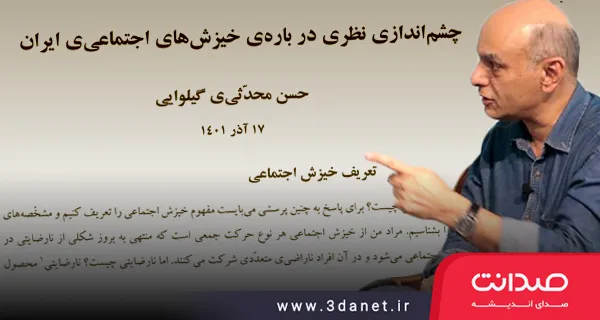
Dr. Hassan Mohaddesi Gilvaei distinguished the critique of religion from its negation, arguing that the refinement of religious thought depends on the critique of religious components. He described the social critique of religion as rooted in the prophetic tradition and considered the mistreatment of critics an obstacle to a better life for human beings.
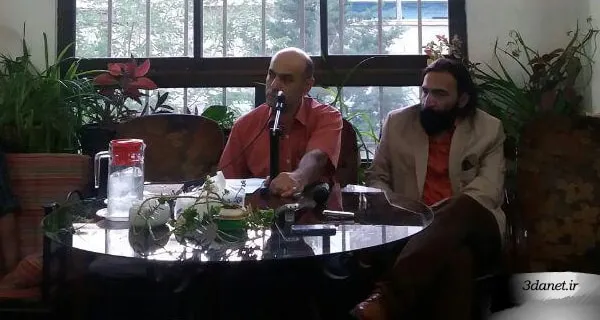
Lecture by Dr. Hassan Mohaddesi Gilvaei titled The Social Critique of Religion and Its Necessity
Dr. Hassan Mohaddesi: The critique of religion is valuable from both a religious and a humanistic perspective, and it must be noted that this manner of dealing with critics of religion is highly undesirable. Therefore, we ourselves must foster the critique of religion. As a result, critics should also take a prominent place, and with their help, we can shape a better life for human beings. So, if we ourselves refine religious thought, it will enable us to present religion in a more desirable and enduring way.
At the beginning of his lecture on "A Discourse on the Necessity of Critiquing Religion," held at the Andisheh Club, Dr. Hassan Mohaddesi Gilvaei stated: One of the concerns that has preoccupied me for a long time is the critique of religion. In past experiences, we have seen that critics, both in the past and today, are not met with a good reception. In this discussion, I have two personal concerns. We know that there are always motivations behind our discussions.
Expressing his two concerns, this university professor said: First, the humanistic or humanitarian issue regarding the responsibility we all have towards other human beings and our own society. The other concern is a religious motivation and interest, because I see myself as a religious person; for this reason, the issue of critiquing religion is of special importance to me, and what duties we have towards critics of religion from a religious standpoint and how we should encounter them.
Stating that a distinction must be made between the critique of religion and the negation of religion, this researcher noted: The critique of religion does not necessarily lead to the negation of religion. The critique of religion can have multiple outcomes; sometimes it may be so fundamental and radical that it leads to the negation of religion, and at other times, the critique of religion is undertaken from a religious standpoint and not only does not negate religion fundamentally but seeks to critique a form and content of religious thought. Thus, a distinction must be made between these two.
Some Forms of Radical Critique Lead to the Negation of Religion
Pointing out that there have been views that equated the critique and negation of religion, he added: One of the errors that commonly occurs is that the critique of religion leads to the negation of religion. Some forms of radical critique also lead to the negation of religion. Some critics of religion are negators of religion, but not every type of critique of religion entails its negation.
The head of the Sociology of Religion Group at the Iranian Sociological Association continued: Another issue that must be addressed is that the critique of religion is equated with anti-religionism. This means that anyone who wants to critique religion intends to have a practical confrontation with religion; so, the critique of religion and anti-religionism are not the same. In a sense, anti-religionism has a practical aspect and pursues specific intentions.
Critics of Religion Seek to Evaluate the Performance of the Religious and Discover the Truth
Considering the distinction between the critique of religion and anti-religionism, this sociology professor at the Central Tehran Branch of Islamic Azad University stated: Someone may critique religion in the capacity of discovering the truth, in the capacity of evaluating the performance of the religious, but the work of a critic of religion is not anti-religionism. Anti-religionists usually confront religion with forms of hatred and in a practical manner.
Mohaddesi clarified regarding the critique of religion: The critique of religion takes a religious component as the subject of its discussion and critiques that component; this critique may be epistemic or non-epistemic. For example, we can critique religious propositions and teachings, or go beyond that and critique religious rituals, the history of religion, and religious behavior, or all components and all dimensions of religion can be subjected to critique.
Offering a definition of the critique of religion, this researcher in the field of the sociology of religion said: The critique of religion is an intellectual act that subjects one of the religious components or the totality of religion to critical discussion and seeks to analyze them. But the critique of religion is generally divided into several categories: epistemic and non-epistemic.
Regarding the epistemological critique of religion, he added: The epistemological critique of religion is directed at the propositions of religion, such as the examination of doctrines and beliefs. This critique has nothing to do with the external or historical aspect of religion and pays more attention to religious propositions. The non-epistemological critique of religion, on the other hand, focuses on the social and psychological effects and functions of religion; doctrines, rituals, religious behavior and life have their own specific psychological effects. Many criticize these doctrines from a psychological standpoint.
Concerning the social critique of religion, this university professor emphasized: The social critique of religion examines what religion has brought about within society and scrutinizes the social and historical effects and functions of religion; of course, sociologists and social thinkers pay considerable attention to social critique. The literature of sociology and social thought, especially in the new century, is replete with such critiques.
Mohaddesi said: One Christian theologian named Gregory Baum underwent about two years of academic training so that he could use sociological ideas to refine Christian religious thought (fortunately, his book has been translated by Dr. Abbas Kazemi and his colleague, and I hope it will be published as soon as possible).
Noting that one can speak of two major approaches to the critique of religion, this researcher in the field of religion stated: First, the extra-religious approach, which often possesses a humanistic stance and inclination (humanism in the general sense of the word) and critiques religion from an extra-religious position with human goals and humanistic values; here, the critic has human concerns. The other is the intra-religious critique.
The First Social Critics of Religion Were the Prophets of the Children of Israel
Explaining the intra-religious approach to the critique of religion, the director of the Sociology of Religion Group at the Iranian Sociological Association elaborated: This form of critique has a very long history, and we must say that the first form of religious critique dates back to several thousand years ago, to the time of the prophets of the Children of Israel, and they were the first critics of religion. They were the first to critique the social order from a moral standpoint; since religion was the main element and social life in such societies, their critique was in practice directed at religion. It is not just me saying this; Michael Walzer, the prominent American philosopher, introduces the prophets as the first social critics.
He stated: This view reminded me of Dr. Shariati; he used to say that intellectualism is the continuation of prophethood, and it was the prophets who engaged in social critique, and intellectuals continue it. Therefore, the second approach, namely intra-religious critique, is deeply rooted, and examples of this method of critique can be seen in the Holy Scriptures; for instance, in the Torah, there were the prophets of the Children of Israel like Jeremiah and Isaiah who criticized the existing society and religion.
Regarding the necessity of criticizing religion, this professor at Islamic Azad University remarked: One of the reasons for criticizing religion is precisely that human necessity. If something unjustifiably restricts human beings, creates inhumane constraints and shackles for them, or takes away a part of their God-given talents and potential, we are obliged to critique it from a human or religious standpoint.
Religion Must Be Examined Seriously
Pointing out that religion must be taken very seriously, this researcher in the field of religion stated: Religion is present in all aspects of our lives. Therefore, we must pay attention to it very critically because religion interferes in all dimensions of our lives; it not only dictates what we eat and wear, and not only encompasses the style, behavior, and social life of individuals, but it also directs our inner states, emotions, and thoughts, and provides rules, commands, and prohibitions for them. There is no realm of social life in which religion does not interfere. Therefore, we must engage with religion seriously. Thus, religion cannot be taken lightly. Religion must be dissected and examined so that we know what religion does to us and our lives. Because human life happens only once, anything that has such an impact on human life must be subjected to critique.
Mohaddesi continued: For example, throughout history religion has intensely affected the lives of Muslim women, so the question of religion must be examined continuously.
The director of the Sociology of Religion Group at the Iranian Sociological Association stressed, regarding the harms of religion: Religion can suffer from numerous harms and afflictions. The religion that exists in the text must be separated from religion at the level of society. Likewise, religion as it is must be distinguished from the religion that ought to be. Throughout history, religion has strayed far from that ideal conception of religion. Unfortunately, when we speak of religion, we recall the religion found in texts, or when we speak of religion, our gaze is directed toward the ideal religion.
He asserted: We usually do not deal with the ideal religion and the religion in the text throughout history and in society; in our own lives, we are confronted with religion as it is. Religion undergoes various transformations throughout history, and this change in religion is sometimes a change from zero to one hundred.
Likening religion to a river, the university professor added: Here, religion can be likened to a river, because a river may begin from a particular spring and travel its long course to reach the sea; certainly, along its path, it brings prosperity to some cities and destruction to some regions. Thus, religion also begins in a cultural and social context and, of course, contains elements of that context within itself; then it enters different lands. So religion has different effects on different cultures and societies, and it receives different influences.
Religion is continuously evolving in its historical process
This researcher in the field of religion asserted about the impact of religion on different societies: When Islam entered Iran, as some say, it created a new form of Islam that some call Iranian Islam (it is the title of a book by Henry Corbin), and this same Islam in Europe creates an Islam that, according to (Tariq Ramadan), is called European Islam. When Islam enters Africa, an Islam takes shape that some call African Islam (an article by Azim Nanji), and when it enters East Asia, it creates East Asian Islam. Religion is like a river, and wherever it has gone, it has also taken on different forms and characteristics. Therefore, we need to know what characteristics, fruits, and effects the religion present in society has. So religion is continuously evolving in its historical process.
Mohaddesi stated: Some religious scholars, in their statements, point to the destructive effects of religion. One can speak here of Imam Musa al-Sadr. He critiques religion and also pays attention to the destructive effects of religion. In his book “Religions for Man,” Imam Musa al-Sadr asks: If we bring religion back to the fore, will it not become a tool for tyranny? We need a religious guarantee that the re-entry of religion does not aid forms of tyranny and feudalism.
Referring to a statement by Ayatollah Taleghani, the member of the Sociology of Religion Group at the Iranian Sociological Association said: He also says that if despotism finds religious justification, the worst form of despotism takes shape. The late Ayatollah Taleghani also paid special attention to the destructive effects of religion. As religious human beings, from a religious standpoint, we are obliged to take a critical look at religion, identify its destructive elements, and contribute to the refinement, thought, reflection, and religious life.
This professor of the sociology of religion explained about patriarchy in Islamic societies and added: Sometimes religious rituals become so intertwined with tradition that separating them from one another is not easy, and we see to what extent religion in Islamic societies has contributed to the consolidation of patriarchy. How many ideas have entered, mixed with religious thought, that were not present in religion from the beginning, but have become mixed with religion, found religious justification, and produced destructive effects.
Stating that we must know what our duties as religious people are toward critics of religion, he added: If the critique of religion is valuable from a religious and human standpoint, we must note that this manner of treating critics of religion is highly undesirable. So we ourselves must foster the critique of religion. As a result, critics should also sit at the head of the table, and with their help we can shape a better life for human beings. Certainly, by attending to the critique of religion, we will encounter a better outcome in this field. So if we ourselves refine religious thought, it will enable us to present religion in a more desirable and enduring manner.
Mohaddesi pointed out: We must seek to understand what causes critics of religion not to have a desirable standing. In my opinion, the main source of opposition to the critique of religion and critics of religion is not the motive of truth-seeking. That is, the main force that causes religious people to oppose the critique of religion is not that the opponents of the critique of religion are truth-seekers. Whenever religious people are intellectually dominant and have self-confidence, they have a good encounter with the critique of religion and do not fear the critique of religion.
The Infallibles (AS) engaged in critical dialogue with opponents of religion
The member of the Sociology of Religion Group of the Iranian Sociological Association, regarding the method of the Infallibles in dealing with atheists, stated: We have always heard of the methods of the Infallibles (AS) in encountering atheists, how they would welcome their opponents and engage in critical dialogue with them, because they had no fear of the ideas of opponents of religion and saw no need to suppress religious opponents; rather, they held them in respect. Therefore, it can be said that truth-seeking is not the source of opposition to the critique of religion and critics of religion, especially since it has always been claimed that the principles of religion are rational and must be accepted rationally.
The university professor identified two main sources as the cause of opposition to the critique of religion and critics of religion, and stated: The individual source of opposition to the critique of religion and critics of religion is religious dogmatism. In one respect, I divide believers into three categories: dogmatists, reflexivists, and critical thinkers. A dogmatist is someone who cannot tolerate opposing speech. Reflexivists are those who respect opposing speech and have opened a window for hearing the words of dissidents, although at the starting point they try to oppose. But this very window that reflexivists leave open for hearing opposing speech causes them to search and dialogue to find the truth. This window sets the engine of search and dialogue in motion within them, provides the possibility for their intellectual growth, and distances them further and further from dogmatism.
The researcher in the field of religion, regarding the thinking of critical thinkers, emphasized: The peak of reflexivity reaches critical thinking. Here, even a religious person may set aside some of their past beliefs and perform a kind of doctrinal refinement, but dogmatists, because religion has an identity aspect for them, are strongly opposed to the critique of religion. They suppress this force and stimulus of reflexivity within themselves.
He pointed to the social source of opposition to the critique of religion and continued: The social source of opposition to the critique of religion and critics of religion is a phenomenon that in sociology we call the tendency toward boundary maintenance (a concept from Berger and Luckmann). Boundary maintenance means that every force, organization, and power in society strives to set up a thought system to protect its positions and interests, to propagate this system of legitimation, and through this, to stabilize and protect its territory. For this purpose, it also resorts to the instruments of power.
Boundary maintenance is not only related to religion; forms of it are seen in all institutions
Mohaddesi stated: For boundary maintenance, it becomes necessary to confront various forms of dissidence. Therefore, the custodians of that institution, who in practice also create a hierarchy, strive to create a belief system as the correct belief system (the set of correct beliefs or orthodoxy) and to label anyone who presents opposing speech or opinion as deviant, heretic, and misguided, and to endeavor to eliminate and negate dissidents. This boundary maintenance is not only related to religion; rather, forms of boundary maintenance exist in all institutions.
This professor of the sociology of religion, regarding modern ideologies and the protection of their own domain, stated: In modern ideologies such as Marxism, there are also those whose job is to protect the domain and eliminate dissidents. One of the tools of the custodians of domain protection is excommunication, and in the Islamic world, unfortunately, this tool has been used extensively and remains a powerful weapon. The official custodians of the religious institution continuously use the tool of excommunication to protect their domain, in order to eliminate, exile, or silence critics of religion. Therefore, these two sources I mentioned have been the main sources of opposition to the critique of religion. The motivation for opposing the critique of religion has never been truth-seeking or concern for guiding people; rather, these have mostly been a guise and a pretext to cover other motives and goals.
The Critique of Religion Differs from the Critique of the Religious
This researcher in the field of religion drew a distinction between the critique of religion and the critique of the religious, noting: Another point I must emphasize is that the critique of religion is distinct from the critique of the religious. Critics of religion must separate these two. The critique of the life and behavior of the religious, to the extent that it originates from religion, is also a critique of religion. But not all existential dimensions and aspects of the lives of the religious are related to religion or have religious justification. Moreover, the religious, as human beings and citizens, are respectable. They, like the critics themselves, possess life and livelihood and have rights. So, critics of religion must pay attention to this matter, avoiding insult and hate-mongering, and regard the religious with respect. Unfortunately, hostile critique (meaning hostility towards the religious) and hate-mongering in the Islamic world, including in Iran, has led to the formation or at least the strengthening of terrorist and violent currents.
The member of the Sociology of Religion Group of the Iranian Sociological Association, noting that the critique of religion also has its own etiquette and decorum, said: Critics of religion must pay attention to the etiquette of critique. They must be more mindful than others that hostility and hate-mongering regarding religion and the religious further closes the door to the critique of religion. Enlightened and humanistic critique (even if radical) of religion has certain effects and consequences, and hostile and hate-mongering critique of religion has other effects. Therefore, it seems necessary to pay attention to both sides of the matter: to tell the religious to be open-minded in the face of the critique of religion and its critics, and to know that the critique of religion is fruitful; and also to tell the critics of religion to observe the decorum and etiquette of religious critique. Unfortunately, this criticism applies to some Iranian critics of religion, whose language is often tainted with hatred, hostility, insult, and even verbal violence.
Following the session, a detailed critique and question-and-answer session ensued among the expert attendees and the speaker, and a critical dialogue continued in the meeting.
.
.
Audio of Dr. Hassan Mohaddesi's Lecture on the Critique of Religion
.
.
Lecture by Dr. Hassan Mohaddesi on the Critique of Religion
The Social Critique of Religion and Its Necessity
Dr. Hassan Mohaddesi
May 30, 2016
.
.


Discussion2 comments
سلام اگه آثار شریعتی رو بررسی کرده باشید با دید بهتری این صحبت ها رو درک می کنید
سلام این صحبت ها خیلی پراکنده است دقیقا ایشان چی میخاد بگه واقعا مشخص نیست