Religion
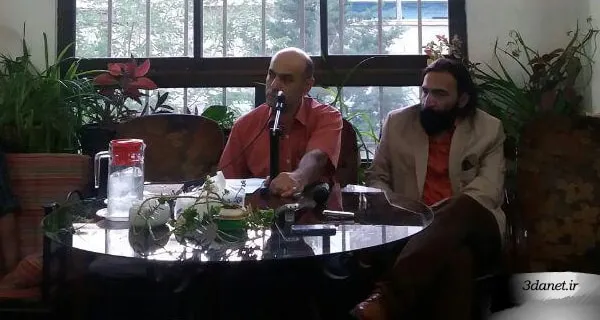
Hooman Dorandish in Conversation with Mohammad Mansour Hashemi: Critiquing Religion Is Not the Same as Hostility Toward Religion
Criticism of religion is a rational reflection that does not necessarily lead to the negation of religion, whereas anti-religionism is an aggressive, psychological stance. Mohammad-Mansour Hashemi stresses that extremism and an emotive tone have constricted the space for reasoning and, in the long run, do not benefit society.

Hooman Dorandish in Conversation with Mohammad Mansour Hashemi
Mohammad Mansour Hashemi: Critiquing Religion Is Not the Same as Hostility Toward Religion
Source: Asr Iran News and Analysis Website | July 16, 2012
Let us begin with this question: what is the relationship between the critique of religion and hostility toward religion?
Hashemi – Of course, the answer to this question depends entirely on the meanings we assign to these terms, but in one sense, as logicians would say, the relationship between the two is one of absolute generality and specificity. That is, if we assume that hostility toward religion means having a radical critique of religion such that it necessitates its negation, and the critique of religion means rational reflection on religion and the assessment and evaluation of the claims of a particular religion or religions in general—the German term that became common after Kantian philosophy—it is clear that hostility toward religion falls under the critique of religion, but not every critique of religion necessarily leads to hostility toward religion, just as, in fact, it has not.
For example, within that aforementioned current of the critique of religion, as one of the instances of the critique of religion, we generally have the thought of Kant and Hegel and the European theologians of the twentieth century, who are not hostile to religion, and we also have Marx or Feuerbach, who can be considered hostile to religion—and of course, there may again be a difference between their critique and views on religion and more vulgar, religion-hostile critiques and views. In the traditions of various religions, too, there have always been those who critiqued other denominations or religions, while naturally, far from being hostile to religion, they were themselves staunchly religious believers.
In the Islamic world, various denominations have at times sharply critiqued each other's history and beliefs, and in confronting other religions, they have offered critiques ranging from fundamental to specific, depending on the case. Just as an example, allow me to mention Ibn Hazm of Andalusia[1] and Ibn Qayyim al-Jawziyya[2], both of whom engaged in a historical critique of the Christian Bible. It is clear that, as Muslims, they believe in the religion of Jesus Christ, but they critique historical Christianity and its scripture.
I think with these descriptions it is clear that not every type of religious critique is necessarily synonymous with hostility toward religion. Within a single religion or denomination, too, some may raise intra-religious or intra-denominational critiques, while not only are they not pursuing hostility toward religion, but they seek to refine and strengthen that religion. This is the work that reformers in every religion typically undertake.
The term "hostility toward religion" seems to be more of a non-scientific and provocative term. At the very least, it has more of a practical aspect than a theoretical one.
Hashemi – Yes, it suggests an aggressive state. Having a critique and a view is one state, and enmity and antagonism is another. When you speak of hostility toward a phenomenon, it is as if decisions have been made in advance and a verdict issued, and now one must seek to eliminate the object of hostility. Whereas criticism is, in principle, a fair assessment, and such a situation requires one to be open to the matter; openness and a receptiveness to continuing the discussion are prerequisites for proper criticism.
The fact that the term "hostility toward religion" is prominent and bombastic in our culture is perhaps to a large extent due to archaic nationalism and the hate-filled writings of people like Sadegh Hedayat about the religion of Islam.
Hashemi – I do not know if such a situation exists or, if it does, what exactly it stems from, but since you mentioned Hedayat, allow me to refer to him. As you know, I have written a book about Hedayat; I am an admirer of his The Blind Owl as a turning point in the history of our intellectual encounter with modernity, and I am among those who admire Hedayat's literary taste and knowledge. But I consider this aspect of Hedayat to be his weak point.
Hatred is a psychological state and has nothing to do with critique, which is a rational condition. Critique requires moderation and fairness, and to achieve these one must strive to transcend one's conscious and unconscious emotional reactions. Resentment or, for that matter, affection—in other words, hatred and love, which are two sides of the same coin—are both psychological passions that diminish the possibility of fair evaluation. According to the testimony of his friends and biographers, Hedayat possessed such a state, and this state did not result in literature that is considerable and thought-provoking.
Hedayat's works are valuable despite these states, not because of them. Such states only intensify reciprocal psychological states and radicalize the atmosphere, and such atmospheres are a fertile ground for all kinds of misunderstandings and extremisms, which constrict the space for critical evaluations and wise path-seeking.
Professor Mohammad Ali Movahed had an article in one of the issues of Negah-e No about Kasravi. At the end of the article, he had said (I am paraphrasing from memory and hope I convey the gist correctly) that Kasravi's words gave rise to the Fadaiyan-e Islam group. They killed Kasravi, but even after killing Kasravi, their thought and method remained. In other words, "extremism begets extremism," and it may not only fail to lead to reform and improvement but may itself create further destruction.
From a human rights perspective, can one tell someone not to voice their criticisms? If we make such a recommendation, does it carry legal weight or is it merely a moral recommendation?
Hashemi - No, one certainly cannot say do not voice your criticisms. Our discussion was not about mere criticism anyway; it was about extremism, which also contains a kind of dogmatism.
I think it can be said that in voicing criticism, the manner of its expression also has relevance and impact. Moreover, if the intention is to enlighten and reform society, it is rational to also see and gauge the capacities and contexts even when expressing criticisms. You live in society A, and the people of that society have certain beliefs.
Let us assume you correctly think that the beliefs of the people in that society are wrong and you intend to reform those beliefs. Now the question is, if you attack people's beliefs with a harsh tone, will the people's beliefs be reformed, or will they become more entrenched in their beliefs, which according to our assumption were also incorrect? It makes no difference whether the society in question is religious or non-religious; people react instinctively and psychologically to attacks and assaults on their way of life and beliefs, and the latter scenario typically occurs.
In fact, employing a harsh tone, which is mostly for the conscious or unconscious psychological gratification of the user, fuels emotional and affective confrontations and reactions and constricts the space for reasoning. This process benefits no one; neither the religious nor the non-religious.
But extremists benefit from this atmosphere.
Hashemi - Yes, extremists on both sides—the religious and the non-religious—whose interests depend on the radicalization of the atmosphere may benefit in the short term, but in the long term, no one benefits from the constriction of the space for rationality, reasoning, and the exchange of knowledge, and the dominance of sensationalism and emotional manipulation, which leads to the weakness and decline of a society.
But you said this atmosphere benefits no one.
Hashemi - I meant it is not to the benefit of society. As I pointed out, extremists might also get something out of it in the short term; otherwise, in the long term and when we look at it within the context of society and history, as citizens of society, they have lost greater benefits.
You essentially believe that spreading hatred against religion in a religious society is not rational.
Hashemi - Spreading hatred is not rational at all!
Is hateful criticism of religion in a non-religious society, for example in Northern European societies, also irrational?
Hashemi — Yes, such an act is irrational there as well. Let me put forward a utilitarian argument: suppose there is only one true proposition in a religion. When you spread hatred against that religion, you deprive yourself of that one true proposition as well. It is clear that this is not a rational choice. When you hate something, you have already made up your mind (and, as I said, you have made this decision in a state of psychological passivity). When you have made up your mind, it means you no longer re-examine your view and you do not go to that religion or that book to see what true propositions might possibly exist within it.
In those same Northern European societies, someone might have a very affluent life coupled with freedom of expression, yet have spiritual needs, of the kind, for example, that Jung raises concerning the human psyche. What harm is there if such a person can go to religious environments and make use of these reserves as well?
From an atheist's perspective, the problem is that religion is the opium and deception (!), and one should not deceive people or encourage the injection of opium.
Hashemi — To avoid entering into a lengthy discussion about this famous Marxist phrase, let us proceed with the discussion by explaining the analogy itself. If someone uses the aforementioned opium for addiction, it has one ruling, and if someone uses it to make medicine and relieve a patient's pain, it has another ruling. It is the rational atmosphere and critical evaluation that allows us to distinguish between these two uses, and the emotional atmosphere and a priori judgments can also preclude the possibility of correct use.
In Iran's contemporary history, the stance of clerics toward critics of religion has at times been very different (from Navvab Safavi to Motahhari). What are the main sources of such differences (psychological-personality or intellectual-ideological sources)?
Hashemi — Both factors can be influential. People's psychological states differ from one another. For example, if you have high self-confidence, you are less likely to become agitated in the face of others' criticism, and if your self-confidence is low, you may become agitated or react disproportionately. Your doctrinal approach, in turn, is both influenced by this state and influences it. In addition to these, environment, upbringing, and the like are also influential.
I think one of the differences between Mr. Motahhari and some others can be seen in this very aspect. His psychological personality shows an individual with self-confidence and assurance, and through his engagement with philosophy, this argumentative aspect of his beliefs was strengthened, and in terms of social life, he had intellectual exchange with scholars of differing beliefs and, relative to some of his peers, experienced a larger environment. Of course, Motahhari was not an exception.
In our traditional clergy, examples of open-mindedness toward others have not been few. Going further back, confirmations of this open-mindedness are not scarce, just as in the realm of beliefs, we have the rationalist theology of the great Shiite theologians like Sheikh Mufid, Seyyed Murtaza, Sheikh Tusi, Khwaja Nasir, and Allama Hilli, and in the realm of social practice, the openness of Islamic civilization toward religious minorities, and even the fact that in certain periods, some religious minorities preferred to live in Islamic lands where their basic rights were observed rather than in Europe.
In the sudden encounter with modernity and the feeling of dread from this powerful, uninvited guest, it seems that self-confidence and self-belief diminish, and sometimes that open-mindedness gives way to retreating into oneself and withdrawing into one's shell, and sometimes to aggression and condemning the surroundings.
In my opinion, these reactions should be seen and understood more within this historical context.
In the critique of religion, the boundaries between "insult" and "critique" are sometimes merged or confused. That is, the critic says something that is merely their belief, but sometimes their words are considered an instance of insulting their beliefs.
Hashemi — It is a serious problem that requires constant effort to prevent it from growing beyond a certain limit, because it can lead to dangerous misunderstandings.
The fact that a jury is needed to address certain accusations may also stem from this problem and represent an effort to better resolve it. After all, the conventions of a society influence whether an expression is considered insulting. Furthermore, in the case of insult, the intent to insult is also relevant, and there is a difference between someone who intends to insult and demean and expresses this intent, and someone who has no such intention.
Each individual can more or less discern for themselves whether what they are saying also has psychological causes and is mixed with resentment and rage, serving the function of releasing psychological pressures, or whether it is a comment aimed at raising awareness. The less a person is in thrall to their unconscious and the more they can bring their unconscious into the realm of their awareness, the better they can discern this.
Our moral and linguistic intuitions also help, meaning that, for example, an individual can gauge with their own conscience whether, if they were in the other person's place, they would consider that expression an insult or not.
If you will allow me, let me add two more points: the larger a person's world is, and the more diverse the utterances and behaviors they have witnessed, the greater their capacity and magnanimity will inevitably become, and they will be slower or less likely to become agitated in the face of others' expressions, utterances, and behaviors; and the smaller their world, the quicker and more likely they will be.
We now live in a global village, and to continue living in this global village, we must enlarge our world in accordance with living in such a space and understand its inevitable plurality and diversity.
Another point is that even if someone is mistaken or in error, in the words of our predecessors, one must see whether they are "qāṣir" (one who falls short without fault) or "muqaṣṣir" (one who is culpably negligent), and consider the differences between the two.
If, in a society, the premise is that most people are morally corrupt and do not seek truth, then seeing others as muqaṣṣir (culpable) is more common; and if the premise is that humans are mostly moral and lovers of truth, and, in our traditional terms, have a pure primordial nature (fiṭra), then seeing others as qāṣir (falling short without fault) is more common. It is clear that these two approaches give rise to two different types of treatment, and I imagine it is also clear that the latter is more constructive and more conducive to finding a way forward.
Now, if the beliefs of the religious and the non-religious truly appear ridiculous in each other's eyes, do they have the right to mock each other's beliefs in the course of critique? Especially considering that some individuals have recently spoken of a "right to mock."
Hashemi - Mockery is an act like demeaning and insulting. No ethical system permits you to do such a thing. Of course, writing satire and drawing cartoons (which is a kind of visual satire) and the like are not mockery. In satire, you highlight an aspect you consider incorrect or worthy of critique with subtlety and humor. These are not instances of mockery, and understanding them requires a culture of appreciating linguistic or visual satire. But, as literary scholars say, one can differentiate between satire (ṭanz), jesting (hazl), and other forms of expression.
Let us return to that term mockery you mentioned. If we have no disagreement on how this word is used and we distinguish between satire and mockery, where the latter involves the intent to demean a matter or a person, I do not think any disagreement remains that mockery is ethically impermissible. In addition, this act is also not useful.
Suppose someone has a style of dress that another person dislikes and considers incorrect. If the second person ridicules and mocks the first, regardless of having committed an ethically reprehensible act, their action also has no benefit for strengthening their own view and does not lead to their desired outcome.
Of course, perhaps it is useful, meaning it serves the purpose. For example, suppose in an Islamic society, the general public mocks a woman wearing a miniskirt, or the general public in Canada mocks a woman wearing a chador. It is very likely that these two women would change their attire in these two societies.
Hashemi – In social phenomena, the desire to conform to society is more or less influential, but when it comes to people's beliefs, the matter becomes complicated. That chador-wearing woman in your example might, due to social pressure, appear less in society and set aside her chador, but it is not unlikely that the same person, under the pressure of this humiliation, would raise her child in such a way that they become a fundamentalist terrorist. Substitute that chador-wearing woman and that society with that miniskirt-wearing woman and another society; it makes no difference to the core issue.
Humiliation leads to resentment, and resentment leads to a desire for retaliation and violent means. Humiliation with the intent to change does not seem like a wise solution. Any lifestyle and any belief that faces mockery and humiliation will be met with suppressed anger and resentment. And suppressed anger and resentment will eventually manifest themselves in the most violent way possible.
If someone deems the mockery of what is wrong to be morally permissible and says that in our ethical system, such an act is allowed, what is your response to them?
Hashemi – The shared moral intuitions of human beings are one of the foundations upon which ethics is built. Why do we consider unjustified killing a bad thing? No one argues to condemn this act. As humans, we morally intuit that unjustified killing is bad. Our moral conscience tells us that mocking others is bad because, according to the famous golden rule, we do not like to be mocked ourselves.
Let us suppose someone says they want to do such a thing, or have such a right, with the intention of fighting superstition.
Hashemi – Let us suppose such a person is a materialist and considers the beliefs of others to be superstition. One can ask them: what does the belief in what they consider superstition stem from? Is it not, according to their own foundations, derived from the material conditions of those believers? Now one can ask: will those conditions change through mockery?
For example, if you are a Marxist and consider the economic and social substructures of a certain religious person to be the cause of the emergence of their beliefs, if you ridicule their beliefs, will their substructural conditions change? I mean to say that according to the foundations of such an individual, there is still no room left for mockery.
What if the person is a non-Marxist materialist?
Hashemi – Again, it makes no difference to the core issue. In any case, when one does not believe in a God who guarantees human free will, they must explain how they escape the circle of determinism and causal necessity. Such a person can say that economic or social conditions must be changed, that schools must be built and science made accessible to more people, but they cannot explain why mocking the beliefs of others—who, in principle, had no role in choosing them—is ethical.
They could say that I have no respect for these people and I mock their beliefs.
Hashemi – They mock these people and call them ignorant. In return, those people consider them ignorant and mock them.
Where does this game ultimately lead?
Meaning a dangerous door is opened?
Hashemi – Yes, a path lies before human beings whose end is nothing but force. There is no place for ethics on this path.
If this claim that the right to mock is one of the derivatives of the principle of freedom of expression is accepted, should we not logically also grant the right to use profanity as one of the derivatives of this principle?
Hashemi – As I mentioned, if we have no disagreement over the meaning and usage of the term 'mockery,' mockery, as I understand the connotations of this word, is an instance of insult and has nothing to do with freedom of expression; the same goes for profanity. Freedom of expression of opinions and thoughts is different from the permissibility of insult. The former is praiseworthy and beneficial, and the latter is condemned and harmful in all societies.
Of course, someone who mocks others might not use vulgar words.
Hashemi — It doesn't matter. What matters is the psychological state our words create in the other party. A word can, in a friendly context, carry an affectionate meaning, suggesting closeness and camaraderie, and in another context be an outright insult, offensive. The issue isn't the word! The issue is the intent to humiliate and insult, the issue is the context and setting of the discussion and the connotations it acquires.
So you agree that opening the door to ridicule can also open the door to profanity?
Hashemi — I say ridicule is not morally permissible. And when you engage in an immoral act, whatever immoral reaction you encounter, you have no right to object. I must treat you politely if I expect polite behavior from you. If I say I have the right to ridicule you, you might say you also have the right to curse me, and another might say they have the right to beat me. In that case, nothing remains of morality!
If some people claim the right to ridicule others for themselves, it is not unlikely that others will claim the right to hit them for themselves, and so on. When we arbitrarily change or interpret shared moral principles, ultimately nothing remains of them that can be cited or relied upon.
Sometimes the boundaries between art (caricature, satire, song, etc.) and ridicule become intertwined. How can this problem be resolved? Is there an a priori solution?
Hashemi — It is a complex matter because, as I mentioned, ridicule depends on contexts and connotations (for example, due to historical contexts, the issue of racial discrimination in America or anti-Semitism in Europe are more sensitive issues compared to other places), and visual and linguistic satire also has its own culture, and thus the culture and history of different societies are brought into play, and on the other hand, today, in the age of information explosion and the electronic revolution, we all live in a global village as well.
As I mentioned, on a legal level, they usually try to resolve the issue by relying on a jury that is a true cross-section of society. On an individual and cultural level, people must also strive to increase their knowledge and breadth of outlook and understand other cultures, spaces, and times. When these conditions are met, the complexity of the issue is reduced.
That European individual who had drawn cartoons about the Holy Prophet tried, in a panel discussion, to explain that depicting the Prophet of Islam is not considered bad by all Muslims, citing that he had seen a portrait of the Prophet in Iran. He had heard something about the prohibition of depicting the Prophet, but for him, having grown up in a different cultural context where drawing cartoons and caricatures is not considered an insult, understanding that what upset Muslims was the "caricature" nature of those images was incomprehensible, and he said he had also drawn a caricature of Jesus Christ! In such an atmosphere, there is a mutual misunderstanding. Efforts must be made to reduce these misunderstandings.
On one hand, one must understand different cultures and various arts, and on the other hand, everyone must truly try to avoid humiliating, insulting, and ridiculing others.
You may have read the story of that philosopher-mathematician who became mayor of one of the crime-ridden cities in Latin America and succeeded in lowering the crime rate. One of his famous actions, alongside buying back weapons remaining in people's hands and so on, was hiring a group of actors to reenact and represent the illegal acts of others throughout the city via pantomime, in a city where law-breaking had become normalized. For example, if someone ran a red light and other such acts, those actors would perform this, and after a while, people joined them, and gradually, law-breaking in the city genuinely decreased.
This is a famous example of the cultural dimension of many behaviors, but the use I want to make of it in this conversation concerns our own discussion, namely the difference between satirical art and mockery. Suppose that instead of actors and pantomime, we were faced with real mockery and humiliation in that violence-prone social context. Would that successful outcome have been achieved? And doesn’t this mean that, ultimately, the difference between satirical expression and mockery can be discernible even to the masses?
In a democratic society, someone can file a complaint that this gentleman has insulted my beliefs with his article or caricature. Sometimes we might complain that we ourselves have been insulted. But can we also complain about an insult to our beliefs?
Of course, this is a legal question and you should ask legal scholars. In any case, the wounding of public sentiment is something the legislator takes into account. I said that insult is fundamentally an immoral act, and insulting others’ beliefs may, in a sense, be an insult to them as well. But restricting others in expressing their beliefs and critiques is equally immoral, and one cannot prevent the expression of a disagreeable statement without proving that it is insulting.
Among Iranian intellectuals, Mostafa Malekian advocates the “necessity of avoiding unnecessary pain and suffering.” How can necessary and unnecessary pain and suffering be distinguished? Who is the authority for determining this?
In fact, by raising this question, you are moving the issue from the legal level to the ethical level. That is to say, you are raising his concern about the articulation of truth and the reduction of suffering. This is an ethical issue and concerns the responsibilities of the individual.
If I think proposition A is true, and I also think that expressing proposition A will cause others more pain and suffering, which course should I take? Should I articulate the truth and state proposition A, or should I think about reducing suffering and conceal that proposition? Suppose I know someone’s illness is incurable; is it better to tell them so they know, or not to tell them so they remain hopeful? One answer could be that if knowing is beneficial to them, I tell them, and if not, I do not.
Let me give the example of two literary characters, each of whom makes different choices. Saint Manuel the Good, the Martyr—our acquaintance with whom and his suffering creator Unamuno we owe to Professor Bahauddin Khorramshahi [3]—takes the path of not telling, while Jean Barois, the hero of the novel of the same name by Roger Martin du Gard, translated into Persian by Professor Manouchehr Badiei[4], in his youth takes the path of telling at any cost. One sees that way as more beneficial, and the other sees this way as more beneficial. Personally, I think that if we proceed with moderation, it does not make much difference which path we take. But if we are extremist, in either case we may proceed in such a way as to cause unnecessary harms and pains; whether through silence and not expressing the truth, or through making a fuss about what we consider to be the truth.
Extremism in the notion that the truth is in our grasp?
Yes, if I always think that all truth is with me, I may fall into excess. In the film “The Ghosts of Goya,” there is a priest who, for me, embodies such a state. When he is a priest, he is a strict and merciless religious man, and when he becomes irreligious and revolutionary and participates in the French Revolution, he is a strict and merciless revolutionary. He is fundamentally not a righteous person, but he always thinks he is in the right. Fairness can be a condition for discovering truth. Fairness is not a proposition; it is a psychological state and an ethical disposition, the product of intellectual and psychological maturity and ripeness.
Ultimately, should the intellectual speak the truth or not? Who is the authority for distinguishing necessary from unnecessary pain and suffering?
The authority for distinguishing is our own conscience and moral intuitions. Let me also add that very often, this concern about articulating the truth and the pain it may cause others is an intellectualist concern that has little connection to reality. The majority of people in the world have not chosen their beliefs based on reasoning, so our reasoning in negating their beliefs is not as painful for them as we think it is.
Thought, analysis, and reasoning are only one of the factors that shape the human mind, and for many—or unfortunately, most—people, the influence of other social and psychological factors is such that there is little cause for concern about expressing the truth without emotion, because the vast multitude of people whose suffering we worry we might increase by stating a truth will probably not pay any attention to that speech in the first place! Difficult questions of this sort are more indicative of the suffering that intellectuals endure, not the suffering that people might endure.
Some say that vulgar atheism should be accepted alongside vulgar faith, and that one should not, in principle, be sensitive to the critical style of the common people.
Who should accept vulgar atheism and vulgar faith?
Traditional and modern elites, whether religious or irreligious, should accept the critical style of the common people.
I agree with open-mindedness in encountering the criticism of others, whether common people or the elite. But in the statement you quote, I also see something worrying. The intellectual's task is to strive to reduce vulgar ignorance, and it makes no difference which stratum this ignorance and vulgarity belongs to. There are common people in every stratum and culture, but the task of thinking people is enlightenment, not affirming the common people.
Can it be said that mockery inherently contains a kind of de-authorization, and that de-authorization lays the groundwork for (or is one of the necessary conditions for) a more democratic human life?
Mockery, as I said, is ethically an ugly act, and a bad act, as dear Hafez says, it is advisable not to make absolute. Also, given the resentment and rage it creates, as I mentioned, mockery may lead to the weakening of an authority, and it may also, indirectly and based on the reaction it provokes, lead to its strengthening.
Democracy means the rule of the majority while preserving the basic rights of the minority to dissent and be different, and its distinction from the dictatorship of the majority lies precisely in this latter condition. In a democratic system, minorities can express their vote and opinion, and no one has the right to stop them. As it happens, mockery may provoke the majority and lead to the strengthening of the dictatorship of the majority and the weakening of democracy. The other side of mockery, as I pointed out, if it is not mutual, is resentment and hatred. This matter should not be underestimated.
Even if we were to achieve democracy through mockery, if mockery is inherently bad, can it be said that we have reached a desirable goal through an undesirable method? That is, those who prescribe such a thing have the thesis that the end justifies the means implicit in the core of their view.
Yes, that is a very good formulation. But in my opinion, the end and the means are of the same nature. That is, you cannot reach a correct goal with an incorrect tool. Those who hold such a view believe that through de-authorization and, for example, mockery and criticism of religious sanctities, one can achieve democracy, and there is no other way!
I have stated my view on both the ethical and social aspects of the issue. If you will allow me, I will not repeat them in answering this question and will briefly touch upon the political aspect of the issue. Regardless of the issue of mockery and insult, whose status is clear in my opinion, the proposition that the path to democracy is the critique of religion is, in principle, a dubious one. Did the Soviet Union and China, which were anti-religion, achieve democracy? And is it not the case that American society is democratic while, among social scientists, it is a prominent example of a religious society?
Thus, can one not conclude that the critique of religion is neither a sufficient nor even a necessary condition for achieving democracy? The realization of democracy depends on many intellectual, cultural, social, economic, and political conditions. Tocqueville, in his classic work on American democracy, which is based on direct observation, described some of these conditions. If those conditions exist, society will be governed democratically, even if the people are religious; otherwise, even a non-religious society will lead to despotism, and the ruling ideology will take the place of religion, as happened in communist societies.
From any religion, one can have both undemocratic and democratic understandings, and which understanding prevails in society also depends on other societal conditions, including economic and social ones. There appears to be a relationship between development and democracy, and also between certain readings of religion and certain social conditions, but I do not think that, for instance, whether you are a Twelver Shia or an Ismaili in terms of belief has any bearing on achieving democracy.
Intellectually, and regarding the relationship between religious thought and democracy, it can also be said that a prerequisite for achieving democracy is upholding human rights, and from various religions and denominations, both interpretations incompatible with human rights and compatible ones are possible, and which interpretation becomes dominant is more related to other societal conditions than to the supernatural content of that specific religion or denomination.
.
.
Footnotes:
[1] Ibn Hazm, Abu Muhammad Ali ibn Ahmad ibn Sa'id, was a jurist, hadith scholar, philosopher, scholar of religions and sects, writer, and poet in Andalusia; present-day Spain. He lived between 994 and 1064 CE.
[2] Ibn Qayyim al-Jawziyya, Shams al-Din Abu Abdullah, Muhammad ibn Abi Bakr ibn Ayyub al-Zur'i, a scholar of the Hanbali school, who lived between 1292 and 1350 CE.
[3] The story collection "Abel and Several Other Stories" - by Miguel de Unamuno; the Spanish writer - translated by Baha' al-Din Khorramshahi – Amir Kabir Publications – 1977 and also Nahid Publications; 2006.
[4] The novel "Jean Barois" - by Roger Martin du Gard; the French writer - translated by Manouchehr Badiei - Niloufar Publications – 2001
.
.





Discussion1 comments
با سلام و احترام از بیانات جناب محمدمنصور هاشمی لذت وافر برده و استفاده فراوان کردم! آری؛ خون به خون شستن مُحال آمد مُحال و باید گفت: هر که باد می کارد طوفان درو خواهد کرد راه و تنها راه شاید همان "گفتگوی انتقادی" است که تمام ملزومات و بایسته های اخلاقی در آن نهادینه و رعایت شده باشد! با تشکر از سایت صدانت یا حق