Psychology
Lecture by Dr. Mitra Kadivar on “Psychoanalysis and Religion”
Emphasizing the competence of psychoanalysts to enter the discussion of religion, Mitra Kadivar considers psychoanalysis a method for investigating mental processes that are inaccessible by other means, because Freud regarded religion as the highest achievement of culture.


Mitra Kadivar
SpeakerMitra Kadivar: For an Iranian audience, such a title for a lecture provokes a biphasic reaction—biphasic, and not the bipolar beloved of psychiatrists!
In the first phase, their reaction is a kind of aversion that can be summed up in the sentence: Oh, for heaven's sake, they want to talk about religion again.
In the second phase, which immediately follows the first, contrary to the initial reaction, a kind of curiosity and interest emerges in the audience, because they are keen to know what psychoanalysis's final judgment and verdict on religion is. They know very well—that is, they think they know—what "religion's" final judgment and verdict on psychoanalysis is, and consequently they are eager to know what psychoanalysis thinks of religion and what its judgment is.
This very biphasic reaction is enough to necessitate an in-depth analysis of the issue. This in-depth analysis—this probing of the depths—must first of all address the two sides of this relationship, namely religion itself and psychoanalysis itself.
All people, without exception, believe that they know what religion is, and this fact alone is one of the curiosities of this world. Even more interesting is that everyone who—at least everyone who has set foot in a university—believes they know what psychoanalysis is. A point which, if not stranger than the previous one, is at least equally astonishing.
And... psychoanalysis deals precisely with such beliefs and, as the young people say, "it's its bread and butter"! And as the French say, Son délice, or as the English say, His delight!
So let us begin right here.
One
Now, another question arises here that someone who considers themselves an adherent of Freud cannot shirk from answering, and that is the issue of "competence." Ah yes, competence! After all, how is it possible that someone who, for a quarter of a century, has questioned the relevant and irrelevant pronouncements of those who consider themselves adherents of religion—from Hassan Abbasi and Ali Shariati to such-and-such an Ayatollah—who readily permit themselves to opine on Freud and psychoanalysis, someone who for a quarter of a century has questioned the competence of these individuals to opine on psychoanalysis, how is it possible that this same person now grants themselves the competence to speak about religion?
Throughout these 25 years, I have questioned the competence of these individuals because I knew full well that their studies on psychoanalysis and Freud were virtually nil. Virtually nil, even if they had actually read several dozen books. For the study of any science or any subject requires certain prerequisites and a methodology, which I will not delve into now.
Freud—as he himself acknowledged—placed an immensely high value on his discoveries. He was well aware of the vast expanse of the science he was founding, and equally demanding of those who were to be the agents of this science. He expected psychoanalysts, each one individually, to be an encyclopedia. He expected them to be knowledgeable in numerous domains of human knowledge, and he enumerated a number of these domains, the most important of which, in my opinion, is the "history of religions." (We are addressing the issue of competence).
Now, to what extent psychoanalysts—I mean real psychoanalysts—have met these expectations of Freud is a subject that requires another lecture.
But let us suppose that some—however few—have engaged with this highly exciting domain of religions and their history. And this is something that becomes clear at the end of the work.
Freud also believed that religion was the highest achievement of humanity in the realm of culture and civilization; consequently, it is entirely logical that he would expect those pursuing his path to know a great deal, and well, about this "highest" thing.
So, let us begin with an inquiry into the nature of religion.
Two
But before that, it is necessary to explain my methodology and consequently to enter into the nature of psychoanalysis:
In an article written in 1922 for publication in an encyclopedia—an article titled Psychoanalysis—Freud introduced psychoanalysis as follows:
Psychoanalysis is the name (1) of a procedure for the investigation of mental processes which are almost inaccessible in any other way, (2) of a method (based upon that investigation) for the treatment of neurotic disorders, (3) of a collection of psychological information obtained along those lines, which is gradually being accumulated into a new scientific discipline.
Almost everyone who has heard the name psychoanalysis knows it through Freud’s second and third definitions of this knowledge: that is, a therapeutic method and a new scientific discipline. But for Freud himself, what he placed in the first position was far more sublime and important, namely: a procedure for the investigation of mental processes which—pay close attention—are almost inaccessible in any other way. Of course, in 1922 Freud exercised caution and used the word “almost,” but today, a hundred years after writing this article, we can boldly remove the word “almost” and say “access to these mental processes in any other way is impossible.”
Therefore, do not be surprised if the material I present today about religion is entirely novel and is being offered for the first time.
Of course, it is an overstatement to say that those who have heard the name psychoanalysis know it through Freud’s second and third definitions of this knowledge: that is, a therapeutic method and a new scientific discipline. In fact, only because I am a guest of the Philosophy Association today did I include the third definition—that is, a new scientific discipline—within this “knowing”; I made this remark considering the level of awareness of my hosts. Otherwise, I am the very person who went all the way to the Revolutionary Court to make this very point clear to psychiatrists, psychologists, and the Ministry of Health! This very simple point that psychoanalysis is a new scientific discipline, completely separate from and at the same time completely in contradiction with psychiatry, psychology, and psychotherapy—even and especially its analytical(!) type.
Ah, Freud’s famous saying: Doctors begin by fighting every new truth, after which they try to monopolize it.
We spoke of the study of mental processes. Religion is one of these very mental processes, and what is more, one of the deepest and most sublime of these processes. And since “access to these processes in any other way is impossible,” it is no wonder that only a psychoanalyst could have gained access to them.
I say “only a psychoanalyst” because being a psychoanalyst must first be defined. And defining a psychoanalyst is far more difficult than defining psychoanalysis itself. In fact, this is the most fundamental question of psychoanalysis itself: Who is a psychoanalyst?
It is clear that if psychoanalysis itself has been grappling with this question for decades, the situation for those outside this field is even more obvious. It was answering this question that separated Lacan from the IPA, in a way whose scandal remained with the IPA forever. He told them, “The path you are taking leads to Turkestan.” Meaning that with the type of education and training that was current in the IPA—and still is—a psychoanalyst is never produced.
Lacan says: Psychoanalysis is what a psychoanalyst does. In this way, he made the definition of the nature of the psychoanalyst prior to the definition of the nature of psychoanalysis, and made the first definition the cornerstone of the second.
Not everyone who tilts their cap and sits sternly / Knows the art of rulership and the custom of sovereignty.
Therefore, I repeat: Religion is one of these very mental processes, and what is more, one of the deepest and most sublime of these processes. And since “access to these processes in any other way is impossible,” it is no wonder that only a psychoanalyst could have gained access to them.
Perhaps it would have been better to title this lecture “The Psychoanalyst and Religion.” Other titles were also proposed for this lecture, which I will address later. These titles included “Lacan and Religion” and “Psychoanalysis and Theology.”
Three
Now let us return to the inquiry into the nature of religion.
The word din (religion) comes from the Avestan root Daena. That is, the word din—which appears dozens of times in the Quran—is in fact an Iranian word. A word that has been so thoroughly Arabicized that I myself just now used its broken plural form, adyān (religions).
But what did this Iranian word mean in our language, for us Iranians, in the distant past?
The word din, like many very ancient words, as Freud noted, possesses two antithetical meanings. This term signifies both the deepest depth and the highest peak. Freud enumerated a number of such words for us in his famous essay, "The Antithetical Meaning of Primal Words," published in 1910.
The deepest depth: We still have the expression "to go to the din of a matter" in Persian, which means to get to the very bottom of something. Din, in fact, means the deepest depth.
Who knew better than the great Ferdowsi that the "palace" of language is far more enduring than any edifice? When he sings:
I have laid the foundation of a lofty palace of verse / That shall not be harmed by wind and rain
The highest peaks: But that the word din also means the highest peak can be proven with the help of the famous peak "Dena." Yes, the name of this peak is in fact "Daena." Even more astonishing is that this point can be proven twice. The second time is in the name of the more famous peak "Daenāvand," which is used today as "Damavand."
Our present knowledge does not permit us to specify what differences exist between "Daena" and "Daenāvand," just as we do not know how the words "Khodā" and "Khodāvand" are differentiated from one another. In truth, this is knowledge that has been lost, not knowledge that has yet to be acquired. But this very lost knowledge—just like any other unconscious knowledge—will one day be recovered if… a psychoanalyst attends to it.
You see, much has been said about religion, but who, until today, has told you that din means the deepest depth and the highest peak? Or who, until today, has deciphered the names of the peaks Dena and Damavand?
I think this much presentation of knowledge is sufficient to answer the question about "competence"! I have just now, by offering a mere dram of knowledge, added heaps to the knowledge of scholars of religion regarding their own subject of study. And right here I challenge them: the day they are able to add a single grain to the knowledge of psychoanalysts about their subject of study, then let them open their mouths and speak about psychoanalysis, and especially about Freud. Otherwise, any charlatan knows how to bewitch the utterly uninformed masses.
Of course, in what follows I will offer far more than a dram, to the point that many of them will be forced to cast their notebooks into the water!
Today—in our common Iranian tongue—we apply the word ra'is (chief) to a person who is at the very peak of a group of people, but in English this word is still called "Dean," which carries a far deeper and weightier meaning than the words President, Chief, Commander, or other similar terms. The word Dean is used for a spiritual leader and today is applied only to the heads of universities, colleges, think tanks, and libraries.
Let us return to this verse by Hafez:
Not everyone who tilts his cap and sits with arrogance / Knows the art of crown-wearing and the rites of lordship
Here too, the word sarvar (lord) means leader, or the English "Dean." In our modern Persian, for example, we use the phrase "the sarān (heads) of the three branches," but, surprisingly, instead of using the phrase "the sar (head) of the judiciary," we say "the ra'is (chief) of the judiciary." In English, however, they use the word "Sir," which is the same as "sar," in the present-day obsequious sense of the Persian "sarvar." These are the wonders of language. Wonders whose secrets and mysteries are unlocked solely and exclusively through that same Freudian method of investigation.
In Persian we also have the word افسر (afsar), which is actually آفسر (āfsar), meaning the sun-marked leader. In English they have the word Officer. But since they have lost the roots of words, they write the word Sir with an S and the word Officer with a C! I will explain the word آفسر or sun-marked leader on another occasion. But I will add this point, that the word “آفتاب” (āftāb – sun), like the word “مهتاب” (mahtāb – moonlight), is a compound word consisting of āf + tāb.
Four
Let us return to the subject of religion:
Let us imagine something that is both at the very bottom and at the very tip. Can you? This is precisely religion, of which human beings have no conception. Yes, we today – with our present-day knowledge – know nothing of religion.
How interesting, human beings also know nothing of the unconscious, and especially their own unconscious!
Of course, this does not mean that we today know nothing of mazhab (the path/creed) either. No, rest assured, mazhab is what has emerged in the vacuum of our knowledge of religion and is a very effective phenomenon because it completely conceals from us that we know nothing of religion. It is interesting to note that, as far as I know, the word mazhab does not appear in the Quran.
Humankind has not fallen short regarding itself either! Now that it knows nothing of its unconscious, it has an Ego instead that – poor thing – is afflicted with the delusion of knowledge!
And just as the “delusional” ego is nothing more than an “image” compared to the unconscious, the “treasury of signifiers,” to the same extent, each and every mazhab, compared to the original religion, is merely a set of worn-out masks.
The human being is a wretched animal whose access to the very bottom or the core of its being has been severed. It can only, after traversing a very long path – I emphasize, very long – rediscover this very bottom at the very tip. This long path is precisely mazhab, from the root ذَهَبَ (dhahaba), meaning to go. Pay close attention to this root meaning to go. Going a very long path. One is reminded of psychoanalysis itself, which is in fact the “going” of a very long path.
Freud, however, hated for psychoanalysis to be seen as a mazhab. He was right, because in his language there are not two words for this category, din (religion) and mazhab. But Lacan compared the psychoanalyst to a Saint.
We said that going from the very bottom to the very tip is a very long path, and this path is mazhab. Mazhab is merely a path to reach the peak whose name is din (religion). One can well understand that going from the very bottom to the very tip can have multiple paths. This very fact is the reason for the existence of different mazhabs. But it is only traversing this path to the very tip that brings you to din, and not merely standing on this path or even taking a few steps. Now, we are not concerned that many of these paths lead nowhere and are in fact misguidance rather than a way.
Paths that have shown in practice that they ultimately reach the peak have remained as the great mazhabs, and paths that lead nowhere are abandoned after a while and fall out of circulation.
Of course, not all who travel the paths that have proven their efficacy in practice reach the peak either. This is why one can have a mazhab but no din, or conversely, have din but no mazhab. If someone mistakes the path itself for the destination and dawdles on it, it is certain they will never reach the peak. In fact, the more one entangles oneself in the marginalia of the path and makes them central, the less the possibility of reaching the peak becomes, because this very act is itself a misguidance. Yes, becoming excessively occupied with mazhab is one of the most effective methods of “resistance” against din, one of the best tactics for not reaching the peak.
A very remarkable point is that until one has reached the summit, one has no conception of religion whatsoever. This is why the very name of the religion of Islam comes from submission. Since the wayfarer has no conception of the summit, he must simply submit to the guide’s instructions in order to make any headway. In the Quran, however, there are signs of reaching the summit. For example, the Quran says: the believers have neither sorrow nor fear. I think this single sentence is enough to inform you of the nature of the summit.
I heard a very fine point from a Christian scholar of religion: you cannot worship God in any way you please. Either you carry out God’s commandments as they appear in the Holy Book, or you are a devil-worshipper, even if you think to yourself that you are a Christian and worship God.
In the Mazdayasna religion, daevas are enumerated such that if even one of them exists within a person, it means that person is still far from the summit. These daevas are: the daeva of Greed – the daeva of Need – the daeva of Falsehood – the daeva of Wrath – the daeva of Envy – the daeva of Sloth. These are the six chief daevas from which the other daevas originate. Just as the six Amesha Spentas are the close companions of Ahura Mazda, these six daevas are the close companions of Ahriman.
Is it any wonder that the daeva of Drought rules over our country today? Let us not concern ourselves with incompetent officials; let us look within ourselves and see how many of these daevas hold sway over us.
I find it necessary to enumerate the names of other daevas here as well, to facilitate this inner exploration: the daeva of Fear – the daeva of Evil Thought – the daeva of Not Listening – the daeva of Denial – the daeva of Slander – the daeva of Forgetfulness – the daeva of Procrastination – the daeva of Heavy Sleep – the daeva of Malice – the daeva of Suspicion – the daeva of Lust – the daeva of Vanity, and so on. And of course, the daeva of Bad Harvest (Dushyari – Drought).
It is interesting to know that ultimately, it is the existence of these very daevas that prompts a request for psychoanalysis! That is, it is the existence of these very daevas that have disrupted a person’s life to such an extent that they seek refuge in psychoanalysis.
Lacan has only one name for all these daevas: jouissance! And Freud speaks of primary gain and secondary gain. It may not be too difficult to accept that the daeva of Sloth is a jouissance, but when we come to, say, the daeva of Envy, imagining that this too is a jouissance becomes truly difficult. Much has been said of the hell that constitutes an envious person’s life, but that the envious and jealous person is enjoying themselves…! It is enough to recall how much Lacan spoke of the jouissance of sorrow.
Regarding the daeva of Falsehood, too, everyone sees only its secondary gain and that this lie is supposed to bring a material or non-material benefit. But that lying in itself brings pleasure…! And as for the daeva of Procrastination, which all obsessionals have cultivated within themselves!
Lacan says: “Shared jouissances bind people together more than shared goals.” People’s daevas are in communication with one another, and it is only the blind “consciousness” of humans that fails to see these bonds.
It is here that we understand why Lacan compares a psychoanalyst to a saint. When all these daevas have departed from someone’s being, they have reached the summit and religion. The language Lacan spoke also lacks two words for religion and faith, and therefore Lacan could not find a better word than saint.
To realize that the “saint” is leagues away from what you imagine and, for example, is not something on the order of a monk, ascetic, worshipper, or recluse, we refer again to Lacan himself. In his year-long seminar on “The Ethics of Psychoanalysis,” Lacan selects the character and act of Antigone for study and teaching, and highlights this truth about her: “She is without fear and without pity”! Alas! Without fear and without pity! Highlighting this very characteristic of being without pity suddenly transports us to the pre-Messianic world and hurls us into Aryan Hegmat (Hegmat is the name of that which, in its Arabized form, is Hikmat [wisdom], and from which only the word Hegmataneh [Ecbatana] remains for us as a memento). The Hegmat that, throughout the entire Aryan world, from Greece to the whole of Greater Iran, was the criterion for people’s thoughts, deeds, and words.
You see? When it comes to battling the demons, one must of course be fearless and ruthless. Here it is not merely a matter of a personal struggle with the demons within oneself. If these demons are not simultaneously fought within the rest of humanity—and in human society as a whole—the inner, individual struggle will lead nowhere. The Aryan Hegmat—or the Khosravani Hegmat—is entirely a battle, an eternal and everlasting battle. It is not without reason that from it is born the greatest epic book in the world, the Shahnameh.
Elsewhere, Lacan gives a very clear definition of a psychoanalyst: he is someone who compels others to cry out in astonishment, “Aha, this is someone!”
How far we are from the wretched and pitiful world of therapy’s functionaries and merchants!
Five
But by introducing the category of drought, we have inevitably arrived at a category that today is called “the environment”—a very inadequate phrase—but which in ancient Persian writings is called “vatan” (homeland).
For the Persian Sufis, only three sciences were worth acquiring: the science of the self—the science of the homeland—the science of God. And the science of the homeland encompassed all those sciences that today are fragmented and have lost their existential philosophy. The science of the homeland included not only the history and geography of the homeland but also biology, mineralogy, astronomy, meteorology, and all the “natural sciences,” and was ultimately a science that taught humanity how to behave with its surrounding environment so that the demon of death and destruction would not come to rule over them.
So even if we drive away all those demons I enumerated from our own existence, yet at the same time strengthen the demon of death around us, we are still far from the summit. A country that has created such a deplorable “environment” for itself cannot claim to be “religious.”
We said that in the Quran, God enumerates signs of the summit, the most expressive of which is this: the believers have neither sorrow nor fear. That is, we can have signs of the very peak. But regarding the very bottom, not much information is available. Perhaps we can assume that the category of “fitrah” (primordial nature) in the Quran is a reference to this very bottom. With such an assumption, the Quran has only alluded to “fitrah” and moved on. For the simple reason that whatever we say about it, it remains incomprehensible. The various commentators of the Quran, great and small, have also tried very hard to explicate “fitrah,” but in vain, because all of them have been and are captive to the phantasm of “humanity being the noblest of creatures,” and, above all, they have little provision from the science of the homeland.
Sweet-tongued Sa’di has encapsulated his wisdom about “being human” in these three couplets:
Human beings are members of a whole, / In creation of one essence and soul.
If one member is afflicted with pain, / Other members uneasy will remain.
If you’ve no sympathy for human pain, / The name of human you cannot retain.
Here, Sa’di has defined “being human” solely and exclusively in relation to other humans.
This alone shows that even in Sa’di’s time, we had already distanced ourselves greatly from the world of the Amesha Spentas. From the world of Amesha Spenta Vohu Manah, who is the guardian of animals, and from the world of Amesha Spenta Spenta Armaiti, who is the guardian of plants.
But “fitrah” must be sought beyond humanity and the “science of the self.” Fitrah must be recovered and recognized in the “science of the homeland.”
One day I placed a container of water in my garden so that in the summer heat, the animals living around us in this suffocating city would not go thirsty. The first days, cats came and drank the water, and a few birds also came, trembling with fear, to drink. After a few days, I saw a commotion of birds around this water container, and moreover, they were drinking without fear. Two or three more days I kept that water container under observation and saw that no more cats came to drink water from it. It was then that I understood the cats had left that water container for the birds and gone. This is while I am certain the cats must now travel a long distance to access other water. Cats and all animals have direct access to their very bottom, and their science of the homeland is complete!
And woe to humanity if it has no religion at all and cannot find its innermost depths at the furthest heights. This is precisely what we are witnessing today in our “religious” country. In a country where the budget of its religious institution—I emphasize religious, not spiritual—is dozens of times the budget for environmental protection.
We see that today we are not only hundreds of light-years away from the world of the Amesha Spentas, but we have also fallen dozens of light-years behind even the world of Saadi. The world of Saadi, in which he said:
To the discerning eye, the green leaves of trees / Each leaf is a book of knowledge of the Creator
Yes, I have nothing to do with “theology.” My theology is in the fresh leaves, the smiling flowers, the intoxicated birds, and the sauntering cats, not in the endless and futile debates over whether the world is pre-eternal or originated. What difference does it make how a world that is dying before my eyes was born?
.
.
Audio file of Dr. Mitra Kadivar's lecture on “Psychoanalysis and Religion”
.
.
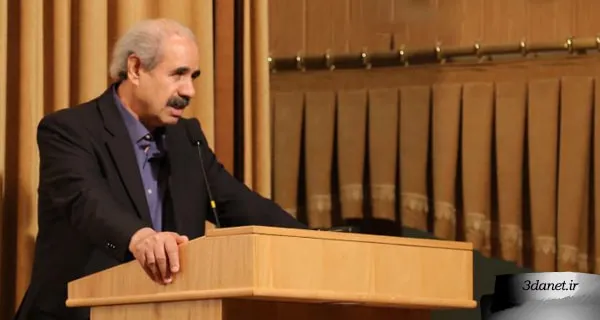
The lecture by Dr. Mitra Kadivar, titled “Psychoanalysis and Religion,” was delivered at the invitation of the Philosophy Association of Shahid Beheshti University at Shahid Beheshti University on April 30, 2018.
Text source: Freudian Association
.
.



Discussion9 comments
بحث جالب بود اما چند نکته قابل تامل است: 1. دکتر کدیور با ریشه شناسی لغات به سویه هایی از معانی مستتر اشاره داشتند که در مواردی ممکن است تصادفی بوده باشد و لذا بنیان محکمی به دست ندهد. 2. میزانی از گسیختگی در موضوعات مطروحه دیده می شود که می توانست با تمرکز بیشتر بر موارد برطرف گردد و مجال سوءاستفاده به برچسب زنان (پیروان راستین DSM 5) ندهد. 3. بهتر می بود ایشان به مسائل مردم شناختی و جامعه شناختی امر نیز توجه مبذول می داشتند و با شتاب موضوع دین را به ناخودآگاه محدود نمی ساختند و در عوض به مسئله ی پیدایش زبان، آگاهی، وتقسیم کار نیز در این زمینه توجه می داشتند. 4. اینکه در دید ساختارگرایانه ی افرادی چون لکان و لوی استروس ادیان در نهایت دارای ساختاری مشابه می باشند نمی تواند بدین معنی باشد که همه ی ادیان یک چیز می گویند. حبس معنا در ساختار و استفاد (آنهم) تنها یک معنا از آن بدان گونه که صورتگرایانی همچون یاکبسون دنبال می کردند دیر زمانی است که به فسانه بدل گشته است.
اگر از پارادایم تفکری سخنران به پدیده ها نگریسته شود، می توان با این چارچوبی که اصلا چارچوبی ندارد هر چیزی را به هر چیزی منصوب کرد، برعکس ادعای ایشان در نقد انسانهای مذهبی که یکی از مشکلاتشان تحلیل تمام مسایل پیچیده جهان با ایات است، از دید من ایشان نیز کاملا مذهب زده با ژست تفکر مدرن هستند. همچنین من هر چه جستجو کردم در این متن سخنرانی تا یک مطلب علمی درمورد روانکاوی ببینم تا کمی از ان یادبگیرم چیزی جز ذکر سخنان ابتدایی از بزرگانی مثل فروید نبود و انتظار یک سخنرانی فنی را داشتم نه احساسی!
کاملا حق با آقای محسن است و این بیانات در جلسه 17 تحلیل فلسفی ارئه شده است وبسیار دقیق و قابل استفاده است. علاوه بر آن یک رایحه مشمئزکننده ای که در کلام ایشان وجود دارد که از آن تعبیر می شود به غرور علمی باری استنادهای بی اساس زبان شناسانه نیز محوریت یافته که در مجموع آمیزه ای بدمنظر در نظر آمد
به نظر میآید بزرگترین اشکال این فرمایشات در خلط امور واقعی با واقعیات زبانشناختی است نمی شود از اینکه در زبان کلمه ای به معنایی آمده است فهمید که واقعیت نیز همان است دوستان میتوانند در این مورد به فرمایشات استاد ملکیان مراجعه نمایند
حوصله ی پرداختن به سخنان خانم کدیور را ندارم . مثلا این اشکال که سعی دارند تکلیف دین را با یک رویکرد اتیمولوژیک تمام کنند ، و موارد دیگر ... . آنچه توی ذوق میزند خودستایی آزارنده ( و کاملا بی وجه ) ایشان است . خودستایی یعنی کمبود . خوب است که ایشان بجای لاکان خوانی و اینها کمبودهای خودشان را بشناسند .
با احترام به سخنران محترم، باید بگویم متاسفم. متاسفانه بوی کسالت به مشام می رسد. سالاد کلمات، خودنمایی، و جذب مخاطب، نشانه های کاملا مشخصی از اختلالِ شخصیتیِ شبهِ روان گسیخته گیِ سخنران محترم است. متاسفم. نگاه کنید به قوت استدلال و تعمیم عجولانه ی نتیجه گیری از یک مشاهده ی شدیدا مشکوک به تصادفی بودن (مگر این که در هزاران مشاهده ی مستقل دیگر در نقاط مختلف تکرار شود): «روزی من ظرف آبی را در باغچه ام گذاشتم تا در گرمای تابستان حیواناتی که در اطراف ما و در این شهر وانفسا زندگی می کنند تشنه نمانند. روزهای اول گربه ها آمدند و آب نوشیدند و تک و توکی هم پرنده با ترس و لرز برای نوشیدن آب آمدند. پس از چند روز دیدم غلغله ای از پرندگان در پیرامون این ظرف آب هستند و مضافاً این که بدون ترس مشغول نوشیدن هستند. دو سه روز دیگر آن ظرف آب را زیر نظر گرفتم و دیدم دیگر هیچ گربه ای برای آب نوشیدن از آن ظرف نمی آید. آنجا بود که فهمیدم گربه ها آن ظرف آب را برای پرندگان گذاشته اند و رفته اند. این در حالی است که مطمئنم گربه ها حالا باید راهی طولانی را برای دسترسی به آبی دیگر طی کنند. گربه ها و همه حیوانات دسترسی مستقیمی به ته ته خودشان دارند و علم وطن آنها کامل است!» نیت خوانیِ گربه ها، مسیر طولانی برای آب خوردن، و بالاخره وطن شناسیِ گربه ها. بهتر است احتیاط کرد. پیشنهاد: بهتر است مدعی من، را هر کس، با دو خواننده ی دیگر مقاله طرح کند تا نادرستی سنجی شود. و نتیجه در همین جا ثبت شود. بهتر است همگان، این هشیاری تازه یاب را فراموش نکنیم که همه ی نهاد های بشری، و یکی از مهم ترین های شان، یعنی دین، فقط از سوی بشر برساخته شده اند. حالا چگونه یک علم تحصیلی، برای این محصول عظیمِ برساخته، می تواند ته ته و نوک نوکِ ذاتی قایل شود و پی در پی هم، از متن مقدس برای ادعای مان فاکت بیاوریم، والله اعلم. اشارتی هم به کیفیت علمیِ کار های فروید: کی بود کی بود؟ ص. 192 و تمام همان فصل، نشر گمان با احترام.
متاسفم برای سایت صدانت که فحاشی و بیاحترامی به افرادی که مطالبشونو منتشر میکنه بازنشر میکند، صدانتی که همه اعتبارش از بازنشر زحمات افراد دیگر است ولی اینقدر معرفت و شعور در گرانندگان آن نیست که توهین و فحاشی مشتی بیمار عصبی به آنها را منتشر نکند. بیخود نیست سوشهرت کسب کردهاید به عملکرد خودتان توجه کنید.
این بندگان خدا یادشان نیست که بعضی از آن بچه دانشجوهای حاضر در سخنرانی چقدر قاطی کرده بودند که خانم دکتر کدیور مطالبی را توضیح دادند که در مغز آنها نمی گنجید. حالا حرف از "جذب مخاطب" می زنند؟!! من در آن سخنرانی بودم و واقعاً یکی از بی همتاترین (اگر نگویم تنها سخنرانی) سخنرانی هایی بود که درباره دین گوش می کردم.
مطالب پر محتوا نو و قابل تاملی در کلام نافذ دکتر کدیور هس ، اولا پیرو کلام ایشان در ارتباط با واژه دین با قله کوه و ذکر مصادیق دنا و دماوند خوب است اشاره کنم که در جایی با نام پهله زرین آباد واقع در استان ایلام کوهی است که بر صحرای عراق استیلا دارد و آن را کوه دنه می نامند و دوم اینکه این ژرفا و عمق و ته ناگزیر باید برای هضم در دستگاه زبان به صورت نماد و نمونه و رمز و اسطوره درآید که مذاهب و نحله ها خالی از این وجه نیستند و سوم بشر امروزی با هر سرعت و خواستنی که برای خلق دنیای ملایم با طبع خود باشد و نیز با تمام موانع راه این دنیا ناگزیر از پاسخ به سوالات درونی لاینحل که ذاتی انسان می باشد هست ، هر چقدر الاهیات در این زمانه و زمین نامتعارف باشد اما عبور از هرم نیاز ها برای همیشه متصور نیست ، راهی نیست جز تعمق و هموار کردن سبیلهای گوناگون و بعضا مختلف برای رسيدن به افق مشترک و بت همان قله ها