Life and Thought
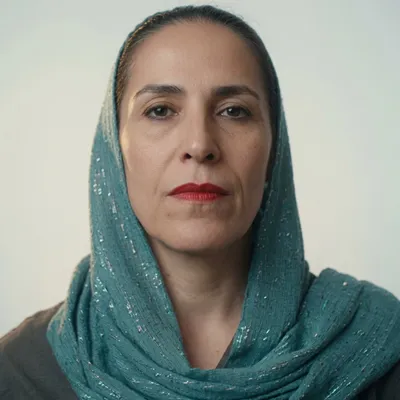
Mitra Kadivar is an Iranian physician and psychoanalyst known for introducing and teaching the Freudian-Lacanian tradition in Iran. She is the founder of the Freudian Association in Tehran and has played a significant role in transmitting contemporary psychoanalytic discussions, particularly the thought of Jacques Lacan, to the Persian-speaking world.
Mitra Kadivar, born in 1954, is an Iranian physician and psychoanalyst. After completing her medical studies in Iran, she went abroad to continue her educational and professional path, spending years in Paris and New York. Kadivar trained in the Freudian and Lacanian psychoanalytic tradition and, after returning to Iran, continued her educational and therapeutic work in Tehran.
The central focus of her work is the introduction of psychoanalysis in its precise Freudian-Lacanian sense; a psychoanalysis that emphasizes the unconscious, language, desire, transference, the subject, and the relationship between speech and psychic suffering. In her lectures and writings, Kadivar has strived to build a bridge between clinical psychoanalysis and Lacan's theoretical discussions, making it accessible to a Persian-speaking audience.
She founded the Freudian Association in Tehran; an institution that, through organizing educational sessions, lecture series, and programs such as "Freudian Thursdays," has focused on teaching the works of Freud and Lacan. The book "The Lacanian School: Psychoanalysis in the Twenty-First Century" is one of her well-known works in Persian and is considered part of her effort to explain Lacan's place in contemporary psychoanalysis.
Kadivar's cultural significance lies in the fact that she has introduced psychoanalysis into Persian intellectual discourse not merely as a therapeutic technique, but as a way of thinking about language, desire, the subject, and human suffering. Her works and lectures are important for those interested in psychoanalysis, continental philosophy, critical theory, and cultural studies.