Foreign thinker
Jacques Lacan
Jacques LacanPsychoanalysis and PhilosophyFrench1901–1981
The unconscious is structured like a language.
In their times
Open in the Timeline of ThoughtInfluenced5


Influenced by3


Teachers1

Critics1

Contemporaries3


Life and Thought
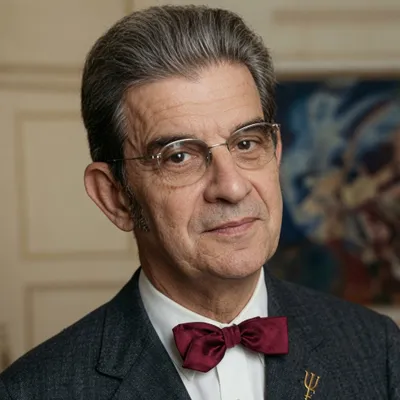
Jacques Marie Émile Lacan (1901–1981) was a French psychiatrist and psychoanalyst, and one of the most important theorists of psychoanalysis after Freud. He is known for the slogan 'return to Freud' and the idea that 'the unconscious is structured like a language.'
Jacques Marie Émile Lacan, born 13 April 1901 and died 9 September 1981, was a French psychiatrist and psychoanalyst, and one of the influential figures of contemporary French thought. After Sigmund Freud, he is considered among the most important theorists of psychoanalysis and is known for the slogan 'return to Freud.'
Lacan was born in Paris and pursued his studies in medicine and psychiatry. He focused on psychiatry at the Sainte-Anne Hospital, while simultaneously showing interest in philosophy, literature, linguistics, and contemporary thought. His acquaintance with the works of Freud, the linguistics of Ferdinand de Saussure, the structural anthropology of Claude Lévi-Strauss, and the philosophy of Hegel and Heidegger played a significant role in the formation of his theories.
Lacan's most important idea is that 'the unconscious is structured like a language.' Drawing on language, the sign, desire, lack, the Other, and symbolic structures, he offered a fresh reading of Freudian psychoanalysis. Concepts such as the 'mirror stage,' the 'Imaginary,' the 'Symbolic,' the 'Real,' and the 'big Other' are key terms in his thought.
Lacan's cultural significance is not limited to psychoanalysis. His theories have had a broad impact on philosophy, literary criticism, cultural studies, film theory, semiotics, and post-structuralist thought. His complex language and pedagogical style, especially in his annual seminars, have made Lacan one of the most controversial and influential thinkers of the twentieth century.
Bibliography
Writings and transcribed lectures13 titles
Writings / Écrits
Other Writings / Autres écrits
The Four Fundamental Concepts of Psychoanalysis, Seminar Book Eleven
The Seminars of Jacques Lacan, the Annual Lecture Series
The Mirror Stage as Formative of the Function of the I
The Function and Field of Speech and Language in Psychoanalysis
Sample Letters in the Unconscious, or Reason since Freud
Psychoanalytic Ethics, Book Seven Seminar
Transference, Book Eight Seminar
Anxiety, Book Ten Seminar
The Logic of Phantasy, Seminar Book Fourteen
The Other Side of Psychoanalysis, Seminar Book Seventeen
Still, the Twentieth Book Seminar
.webp)