Foreign thinker
Slavoj Zizek
Slavoj ZizekPhilosophy, Psychoanalysis, Critical TheorySlovenianb. 1949


Life and Thought
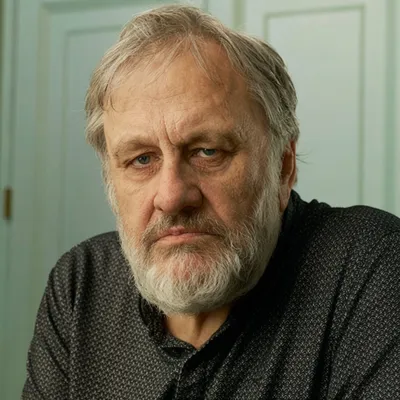
Slavoj Žižek, born March 21, 1949, in Ljubljana, is a Slovenian philosopher, social theorist, and cultural critic. His works lie at the intersection of philosophy, psychoanalysis, critique of ideology, and popular culture, and have been translated into numerous languages.
Slavoj Žižek, born March 21, 1949, in Ljubljana, is a Slovenian philosopher, social theorist, sociologist, and cultural critic. He is one of the most widely read and controversial figures in contemporary philosophy, and his works lie at the intersection of philosophy, psychoanalysis, critique of ideology, cinema, popular culture, and social theory.
Žižek received his doctorate in philosophy from the University of Ljubljana, and a significant part of his intellectual work is grounded in the connection between Hegelian philosophy, the psychoanalysis of Jacques Lacan, and the critique of ideology. With a sharp, humorous, and allusion-rich style, he links complex philosophical concepts to examples from cinema, literature, everyday politics, and popular culture.
Žižek's global fame began with the book "The Sublime Object of Ideology" in 1989; a work that played a key role in introducing the Ljubljana School and a fresh reading of Lacan to English-speaking audiences. In his subsequent works, he has addressed topics such as the subject, desire, ideology, truth, violence, capitalism, cinema, postmodernism, and the place of popular culture in understanding the contemporary world.
Žižek's cultural significance lies in his taking philosophy out of the purely academic sphere and connecting it with film, media, literature, and everyday experience. It is this very quality that has made his works read both in academic circles and among general audiences in the humanities.
Bibliography
Writings and transcribed lectures13 titles
The Sublime Object of Ideology
Event: A Philosophical Journey from the Heart of a Concept
The Objectivity of Ideology
Looking Awry: An Introduction to Jacques Lacan through Popular Culture
Enjoy Your Symptom!: Jacques Lacan in Hollywood and Out
The Fright of Real Tears: Krzysztof Kieślowski Between Theory and Post-Theory
Welcome to the Wasteland of Truth
The Art of the Vulgar Sublime: On David Lynch's Lost Highway
Critique of Western Beliefs
The Coronavirus Pandemic Is Shaking the World
Paradise in Disorder / Chaos
"The Rancière Lesson" and "Political Subjectivation and Its Vicissitudes" in the book Aesthetic Politics
"The Scarf as an Architectural Parallax" in the book Theories of Aesthetics