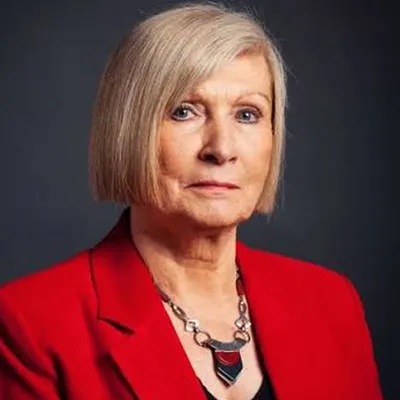
Foreign thinker
Chantal Mouffe
Chantal MouffePolitical philosophy, democratic theory, discourse theoryBelgianb. 1943
Democracy requires acknowledging and legitimizing conflict rather than eliminating it.


Life and Thought
Chantal Mouffe is a Belgian political philosopher and one of the prominent figures in contemporary political theory. She is especially known for developing the theory of “agonistic democracy” and the concept of agonistic pluralism in discussions of democracy, politics, and collective identity. Together with Ernesto Laclau, she played an important role in the development of discourse theory and the rethinking of contemporary left politics.
Chantal Mouffe was born in Belgium in 1943. She pursued her studies at universities in Belgium, France, and Britain and worked in political philosophy, social theory, and discourse analysis. She has taught at various universities and is regarded as an important thinker in post-structuralist traditions and contemporary political theory.
Mouffe is best known for her intellectual collaboration with Ernesto Laclau. Their joint book, “Hegemony and Socialist Strategy” (1985), was an influential work in political discourse theory and the reinterpretation of Marxism through contemporary theories. They emphasized the role of discourse, political identities, and struggles for hegemony in the formation of social orders.
In her later works, Mouffe criticized approaches that understand politics through complete consensus and the elimination of conflict. She argues that conflict and disagreement are inseparable from political life, and that democracy should transform antagonism into legitimate competition among adversaries. This view is central to her theory of agonistic democracy.
Among her important works are “The Return of the Political” (1993), “On the Political” (2005), and “For a Left Populism” (2018). Her ideas have influenced studies of democracy, political theory, social movements, and contemporary politics.