Philosophy
In Defence of Clarity and Plain Speech
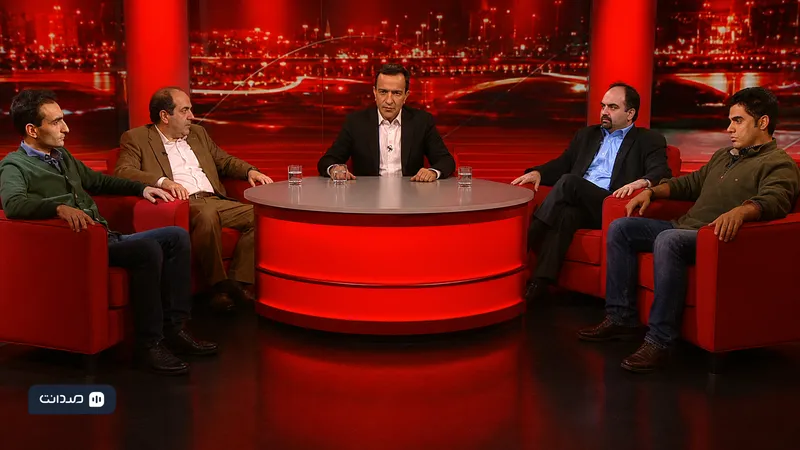
The debate between analytic and continental philosophy in Iran seems ironic when philosophical work itself is viewed with suspicion by those in power. One hopes that through this discussion, the predicaments of the institution of philosophy will become more visible and its role in society's challenges clearer.

The analytic-continental discourse seems ironic given the current state of philosophy in Iran, a situation in which philosophical work itself is viewed with suspicion by the rulers of society and decision-makers have openly set out in various ways to eliminate philosophy as an academic discipline. Nevertheless, there is hope that through this discussion, some of the problems of the institution of philosophy in Iran may become clearer and the role of philosophy in relation to the challenges of Iranian society may better reveal itself.
In Defence of Clarity and Plain Speech
1) Continental or Analytic
For some time now, a debate has been underway among those engaged with philosophy concerning the comparison of two philosophical currents, one continental philosophy and the other analytic philosophy. Examples of this debate can be seen both in the broad and dynamic realm of philosophy in the world[1] and in the narrow and lifeless realm of philosophy in Iran.[2] In Iran, analytic-continental quarrels can be seen at various levels among those engaged with philosophy, from junior students to those occupying professorships. Many philosophy students, even before entering the arena of serious and respectable research—if they ever do—each take the side of a philosopher or philosophical current and defend it dogmatically; each tries to show that the philosopher they have chosen, for instance for their thesis, is the best, is more useful for Iranian society, and so on. With increasing experience in one current of thought, those engaged with philosophy seem to empathize and find common ground ever more with a particular philosopher or current, and thus it often happens that someone beats the drum for a single philosophical idea solely because that idea is the only thing they know and teach, and by which others recognize them. It is clear that such an attitude toward philosophy is not very compatible with philosophy itself but rather seems to be a kind of reduction of philosophy to ideology. Yet, these tasteless quarrels are not uncommon even among philosophy professors.[3]
Furthermore, another aspect of the analytic-continental discussion relates to educational choices. Which philosophical schools should be emphasized in education and which should not. Of course, Islamic philosophy must also be considered here. It is interesting that in Iran, some consider Western philosophy a rival to Islamic philosophy. Thus, in the competition between Islamic philosophy and Western philosophy, and amidst political interventions in favor of Islamic philosophy and against Western philosophy, a portion of the time for teaching philosophy is allocated to each of these two very long-standing philosophical traditions, and within each of these two traditions, a portion of teaching time is allocated to each philosophical school, some less and some more. It is worth asking to what extent analytic philosophy and continental philosophy should each have a share in the teaching of philosophy in Iran.
But, before anything else, the analytic-continental discourse seems ironic given the current state of philosophy in Iran, a situation in which philosophical work itself is viewed with suspicion by the rulers of society and decision-makers have openly set out in various ways to eliminate philosophy as an academic discipline.[4] Nevertheless, there is hope that through this discussion, some of the problems of the institution of philosophy in Iran may become clearer and the role of philosophy in relation to the challenges of Iranian society may better reveal itself.
2) The Displacement of Philosophy in Iran
One reason for these quarrels may be the placelessness of philosophy and its practitioners in Iran. On the one hand, although intellectual debates still more or less continue in Iran, philosophical critique and theory in the true sense do not exist — there is neither a suitable foundation for philosophical critiques to take root, nor a community of philosophical experts with genuine specialization who can critique one another on a dynamic ground. On the other hand, Iran's philosophers are often not capable or up-to-date enough to conduct research at global standards, and, because they cannot enter the arena of global competition, they gain no name or recognition through this path. Hence, each tries, within the narrow circle of the Persian language and at the same low level of philosophical work, to consider their own work valuable, as if they hold the talisman of Iran's happiness in their hands. Thus, philosophy is more or less reduced to intellectual work. This is, of course, the best possible state, for there are many who do not even reach this level and whose work does not go beyond academic corruptions.
So one issue for the people of philosophy in Iran must be considered the "problem of identity," the problem of place, the problem of feeling useful! The stagnation, placelessness, and futility of serious philosophical work in Iran becomes clear with a comparative glance at the business of philosophy in the developed world. By examining the "institution of philosophy" in developed countries, the place of philosophy's practitioners can be well recognized. Experts in every branch of philosophy publish their views with high standards in relevant journals, and critics critique them. At any given time, in every branch of philosophy, heated and prominent debates arise, and specialists enter into them. The directions of research are determined by these very research activities and leading researchers. Some discussions may be proposed in article form for a long while and then, once the boundaries of the debate have been somewhat defined, emerge in book form. Some discussions are pursued by several researchers at various levels through group work and in the form of research projects, which may last several years. With the passage of time and attention to the complexities and entanglements of various domains of human knowledge, philosophical discussions, and consequently research activities, become increasingly interdisciplinary, a fact that demonstrates the inadequacy of individual research activities and the necessity of group research work. Research outputs are most often published in the form of articles in philosophical journals whose rankings are more or less known. Philosophical writings go through stages of review and evaluation for publication in journals. The review process for philosophical writings, as in other domains of knowledge, is designed to be as objective as possible, that is, to show the real value of the work. Globalization has made it possible that in every area of philosophy, a number of specialists are available for the relatively precise evaluation of research products and for bringing objectivity to the evaluation process. The process of recruiting philosophy researchers and instructors is also carried out through processes with very precise criteria.
The above conditions either do not exist in Iran or obtain in a farcical manner. Writing in Persian has made possible literary theft in the form of translation-compilations — compilations that are in truth nothing more than translations. With perhaps one or two exceptions, it can be said that Iran's philosophers have absolutely no serious engagement with this global arena of research. What is the matter? Do they "not want" their names to be known in the global philosophical sphere? Do they not feel that, as high-level specialists in a domain of human knowledge, they "ought" to step into the arena of global thought? Or are they fundamentally "unable" to transcend narrow local boundaries? The answer is clearly the last option. Iran's philosophers are not trained in such a way that they can operate at a high philosophical level in the world, and therefore their work seldom goes beyond translation, even when it bears the name of authorship. Of course, many of those who have secured university professorships and made a name for themselves in Iran may cover up this inability; they might say that they fundamentally do not believe in such work but rather wish to "serve" the Persian-speaking audience! Here, too, ideas such as "nativism" become a pretext to conceal incapacities and illiteracy. The reality, however, is that even those philosophy graduates from Iran who have gone abroad with the help of government scholarships and studied are still not capable enough to have a name and standing in the world of philosophy. But here the blame must be fairly divided between them and the existing mechanism.
Nevertheless, philosophy in Iran has still not been able to turn its critical gaze upon itself. It is only a short while that, with the exposure of scientific-research corruptions, some within philosophy have fallen into thought. Undoubtedly, our philosophical work is not separate from the impasses of our undeveloped and underdeveloped lifeworld, and this means we are caught in a vicious cycle such that even our thinkers, who are supposed to critique and reform the status quo, are themselves complicit in the disarray.
3) Plain Speech
In one sense, the modern era and modern thought began with an attachment to clarity. Let us recall Descartes, who insisted on "clarity" and "distinctness," and after him we encounter a fertile period in the history of thought renowned as the "Enlightenment." A central theme in analytic philosophy is that philosophical questions may simply arise from our language, in which case these questions are automatically dissolved by untangling linguistic knots. This attitude is a key part of what has been called the "linguistic turn" in the history of philosophy.
Moreover, a characteristic of analytic philosophy must undoubtedly be considered plain speech. The point is that it is thought that plain speech more or less leads to clear thinking. Clarity and plain speech are, of course, an ideal that is not achieved all at once and for all time, but rather a process we must constantly strive to advance, a task that always rests on the thinker's shoulders — a perpetually unfinished work.
This characteristic, of course, varies from one philosopher to another, and perhaps even within the analytic tradition we might find some who are, as it happens, not very plain-spoken, or perhaps we might find someone in the continental tradition who strives for plain speech. Nevertheless, a more or less pervasive tendency in the analytic tradition is for language and expression to be clear. One meaning of this plain speech is the use of concepts and notions that are clear and comprehensible to others, the use of notions that are at least understandable to the ordinary person.
Another meaning of plain speech is that the connections and relations among the speaker's claims are clear, and this relates to the domain of logic. It must be clear upon what assumptions and presuppositions the speaker bases each view, and what they conclude from what, and how they conclude it. The idea is that reason and logic are the final arbiters of correctness or incorrectness, and therefore someone who has nothing to hide clearly reveals their presuppositions, premises, and the path of their reasoning to the audience.
4) Plain Speech and Its Impasses
Plain speech in philosophical works is undoubtedly appealing, and perhaps it is this very feature, above all, that draws and inclines some of us toward the analytic tradition. Yet those who turn away from and shun this tradition use precisely this same feature as a pretext. One objection is that the methodology of analytic philosophy is self-absorbed and leads nowhere. In other words, the objection is that nothing comes of all that dissecting and clarifying. Especially regarding some of the most important dimensions of human life—such as the historical, cultural, and social dimensions, the existential dimensions, and the practical and applied dimensions—it is said that the methodology of analytic philosophy is hamstrung and achieves nothing.
Undoubtedly, adherence to argument and insistence on clarity and lucidity tie the analytic philosopher's hands and prevent him from soaring ambition; the analytic philosopher must always proceed cautiously, refining his theorizing as precisely as possible. The obsession with analysis and dissection takes hold of the analytic philosopher and sometimes drives him, in a compulsive manner, toward precision and minute scrutiny. Setting aside his cumbersome methodology, it seems that analytic philosophy, due to its particular methodology, fundamentally cannot enter many domains; analytic philosophy is built upon dissecting and ever-finer parsing of problems, and for this reason, it is fundamentally incompatible with holistic and ambitious perspectives. 5) Chomsky versus Žižek
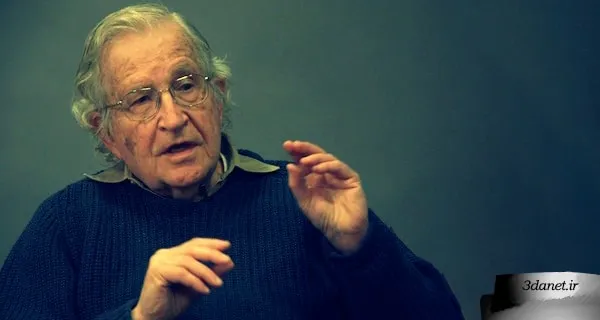
Should clarity and precision be sacrificed for holistic and ambitious explanations? Or, conversely, should epistemic ambitions be renounced in favor of clarity and precision? In the two quotations that follow, the contrast between the two traditions, Continental and analytic, is well illustrated: two quotations, one from a prominent representative of the analytic tradition, Noam Chomsky, and the other from a renowned representative of the Continental tradition, Slavoj Žižek. In response to a question about certain theories in Continental philosophy, Chomsky says:
What you referred to is something called "theory." And when I said I have no interest in theory, I meant I have no interest in posturing—using fancy words like polysyllabic words and pretending you have a theory when in fact you have no theory. So, if you take "theory" in the sense that anyone in the sciences or any serious field is familiar with, there is no theory in any of these things. Try to find, in all the works you mentioned, principles from which you can deduce conclusions, empirically testable propositions that go beyond what you could explain to a twelve-year-old in five minutes. See if, once you decode the fancy words, you can find anything like that. I can't, and that's why I'm not interested in that kind of posturing. Žižek is an extreme example of this trait. I find nothing in his talk. I knew Jacques Lacan and kind of liked him. We met occasionally. But, to be quite frank, I thought he was a complete charlatan. He was just posturing for the television cameras, like many Parisian intellectuals. I don't know why such things are influential. I find nothing in them that is influential. [5]
Žižek responds to this blunt critique as follows:
I think it can be convincingly shown that the Continental traditio%


Discussion0 comments
No comments yet; let yours be the first voice.