Environment
Noam Chomsky: The Crisis Is Deeper Than We Think
Noam Chomsky considers climate change and nuclear weapons the gravest threats to human survival, attributing the failure of the Paris Agreement to opposition from American Republicans, whose denial of climate science blocks binding action.
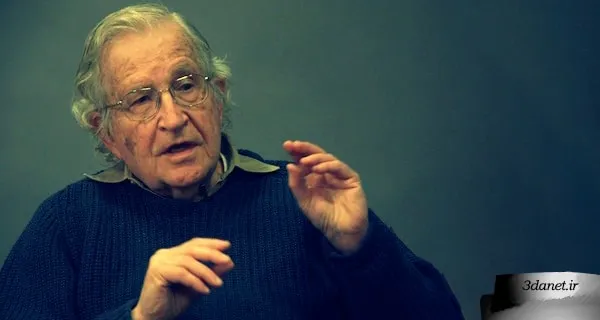
The danger of the climate change crisis has today become a serious discussion in the global community. That is why numerous international summits and conferences are held to discuss the mechanisms for curbing it, but apparently no clear outcome has yet been deduced from them. Noam Chomsky, the American philosopher, linguist, and theorist, in a recently published book, has addressed this issue as the primary future crisis of humanity, alongside the danger of nuclear weapons.
The professor emeritus of the Department of Philosophy and Linguistics at the Massachusetts Institute of Technology, in his new book titled Who Rules the World?, pointing to the sterility of the international summits and conferences held so far regarding this crisis, asserts that one of the main obstacles to the fruitfulness of such conferences is Republican American politicians. He emphasizes that climate dangers are not considered a primary and important issue for global politicians.
An excerpt from this book has been translated by the website "Tarjoman" with the translation of Seyed Ali Naghavi Nasab, which you can read below.
In January 2015, the Bulletin of the Atomic Scientists moved the hands of its famous Doomsday Clock (the Doomsday Clock is a symbolic clock that represents the countdown to the last possible global catastrophe. Catastrophes such as climate change or nuclear war. This symbolic clock was first established in 1947 by members of the Bulletin of the Atomic Scientists) to three minutes before midnight, meaning we are now facing a threat unprecedented in the last 30 years. The Bulletin cited two main reasons for this that threaten human survival: nuclear weapons and "unchecked climate change." In its statement, the Bulletin condemned world leaders for failing "to act with the speed or on the scale required to protect citizens from potential catastrophe... Today, every individual on earth is at risk of destruction because world leaders have failed to perform their most important duty—ensuring and preserving the health and vitality of human civilization." Therefore, we have good reason to turn our attention to the dirty hands that have brought us to the brink of apocalypse. The Crisis Is Deeper Than We Think At the end of 2015, world leaders gathered in Paris to discuss the acute problem of "unchecked climate change." With each passing day, new evidence of the severity of this crisis emerged. Just before the Paris meeting, NASA's Jet Propulsion Laboratory published the results of one of its studies. These results were both an alarm bell and a source of astonishment for scientists studying polar ice. According to this research, "the massive Greenland glacier known as Zachariae Isstrom, which was stable from a glaciological standpoint until 2012, has now lost its stability and entered a phase of accelerated retreat," meaning an unexpected and deeply ominous phase. This glacier "holds enough water that, if it were to melt completely, it could single-handedly raise global sea levels by about 18 inches (46 centimeters). The glacier is now in a state of collapse, losing roughly five billion tons of its mass annually. All the disintegrating pieces of this glacier are entering the North Atlantic Ocean." Nevertheless, few expected world leaders "to act with the speed or on the scale required to protect citizens from potential catastrophe." Even if a miracle occurred and world leaders did so, their actions would be of little value, because the crisis is far deeper than we think. When the Paris Agreement was concluded, Laurent Fabius, the French Foreign Minister who hosted the meeting, declared that the agreement was "legally binding." This statement might seem hopeful, but there are not a few obstacles that require careful attention. The Presence of the United States at the Paris Meeting Prevented Its Implementation It could perhaps be argued that among the mass of news the media published about the Paris meeting, the following few sentences were the most important. These sentences were hidden at the end of an analysis in The New York Times: "Traditionally, in such meetings, negotiators seek to conclude an agreement that is legally binding, and this requires the participating countries at the meeting to sign the agreement so that the accord has enforcement power; but due to the presence of the United States, reaching such an agreement at the Paris meeting is impossible; because Republicans hold a two-thirds majority in the Senate and will oppose it as soon as the agreement reaches Capitol Hill. Therefore, voluntary plans replaced mandatory top-down targets." Voluntary actions mean nothing but the failure of the agreement.
Nuclear Weapons and Climate Change Are the Most Important Threats to Human Survival
The most unprecedented threats that have endangered human survival in the last 30 years have been nuclear weapons and "unchecked climate change." More precisely, because of the Republicans, who have now become a serious danger to the survival of humanity.
Republicans Openly Deny Climate Science In another Times article about the Paris summit, one can see the outcome of this meeting. The author of the article, after much fanfare and praise for the Paris summit, writes that the system agreed upon at the Paris summit is "largely based on the views of future world leaders who are supposed to implement these policies." In the United States, all Republicans who have declared their candidacy for the 2016 presidential election have either openly denied or questioned the science of climate change and have objected to Obama's policies to combat climate change. In the Senate, Mitch McConnell, the Republican leader, is leading the objections against Obama regarding the climate change action plan. He says of this: "Obama's international partners should know that this agreement is impractical because it is based on a domestic energy plan that is likely illegal and is not only opposed by half the states but has also already been voted down by Congress." A Base That Is Out of Control
In the neoliberal era of the past generation, both parties have shifted to the right. The mainstream of the Democratic Party can now be called "moderate Republicans." The Republican Party has crawled to the far end of this spectrum and has become something that well-known conservatives like Thomas Mann and Norman Ornstein call a "radical insurgency," which in its final outcome is nothing less than a farewell to conventional parliamentary politics. With the Republicans rising from the far right, the party has so dedicated itself to wealth and deception that its current policies cannot appeal to voters. To remedy this, it has sought a new populist base formed around other axes: evangelical Christians awaiting the Second Coming of Jesus; nativists who fear "they" will take our country from us; reactionary racists; the afflicted who do not know the real cause of their misery, and others who are little more than lean prey in the snares of demagogues and easily become radical insurgents. In the past few years, the Republican core had decided to suppress the noise from their own camp, but this is no longer possible. By the end of 2015, the party's core was terrified and desperate over their inability to manage the situation; the Republican base is now out of control.
Some US Officials and Presidential Candidates Disavow the Paris Summit Officials and rivals selected by the Republicans for the next presidential election openly disavow the results achieved at the Paris summit and are not even willing to participate in related negotiations. The three leading Republican candidates at the time of the Paris summit, namely Donald Trump, Ted Cruz, and Ben Carson, adopted a largely evangelical stance: even if we accept global warming, humans still play no role in it. Obama's Pledge for America to Be at the Forefront of the Fight Against Global Warming
The remaining candidates believed that this issue was none of the government's business. In Paris, Obama promised that the United States would be at the forefront of the fight against global warming. Immediately after these remarks, the Republican-controlled Congress voted against his recent plan for the Environmental Protection Agency to reduce carbon impacts. As the media reported, "The move sent a provocative message to more than a hundred world leaders: the U.S. government cannot fully support Obama's climate change policies." Of course, this statement cannot fully capture the nature of this congressional action. Meanwhile, Lamar Smith, the Republican chairman of the Committee on Science, Space, and Technology, was locked in a struggle with those government scientists who had dared to state the facts. The message is clear: American citizens now bear a heavy responsibility at home. What do the American people think about climate change? According to another New York Times report, two-thirds of Americans support the United States joining a binding international treaty to reduce greenhouse gas emissions. The "Essentials of Deterrence in the Post-Cold War Era" doctrine reserves the right of preemptive nuclear strike for the United States, even against non-nuclear countries.
Three out of five Americans believe that the issue of climate change is more important than the economy, but this does not matter to politicians. Public opinion is consistently ignored. This reality once again sends a powerful message to the American people. It is their duty to do something about this chaotic political system in which the vote and opinion of the people are considered secondary and a luxury. The difference between public opinion and current policies, in this particular case, has extraordinarily important implications and consequences for the fate of the world. Of course, we should have no illusions about a past "golden age." Nevertheless, the developments we have pointed to can bring about major changes. Neoliberalism, in the past generation, has organized a full-scale revolt against the public across the world by destroying the foundations of functioning democracies. This has not only happened in the United States; the impact of neoliberalism in Europe has been even more horrific. The Growing Threat of Nuclear Weapons Let us turn to another of the long-standing concerns of the atomic scientists who created the Doomsday Clock: nuclear weapons; the growing threat of nuclear weapons justifies these scientists' decision to move the Doomsday Clock forward by two minutes in January 2015. What has happened since then has revealed that this growing danger is closer than we imagined. In my view, this issue has not attracted sufficient attention. The last time the Doomsday Clock reached three minutes to midnight was in 1983, during the Able Archer 83 exercise under the Reagan presidency. These military maneuvers against the Soviet Union were intended to test their defense systems. Documents recently released from Russian archives show that the Russians were deeply concerned about the NATO operation and had prepared themselves to react. This meant only one thing: the end. Today we have more information about these hasty and reckless military provocations that pushed the world to the brink of destruction. Melvin Goodman, an American military and intelligence analyst who was then head of the Soviet affairs section and a senior CIA analyst, writes about this maneuver: "In addition to the mobilization of forces during the Able Archer exercise, which set off alarm bells in the Kremlin, the Reagan administration authorized military officials to undertake offensive and unconventional military actions along the Soviet borders. These actions, in some cases, extended into Soviet territory." Among the Pentagon's dangerous actions, the following can be cited: sending strategic bombers toward the North Pole to test the power of Soviet radars, warlike military actions on Soviet maritime borders, the entry of American warships into areas they had not previously entered, and covert military operations to simulate a surprise naval attack on targets on Soviet soil. We know that in those terrifying days, the world was saved from nuclear catastrophe; and that was by the decision of the Russian officer, Stanislav Petrov, who decided not to relay the report of the automatic radar detection systems about a missile attack on Soviet territory to higher authorities. With this act of his, Petrov stands alongside the Russian submarine commander Vasili Arkhipov, who, during the perilous moments of the Cuban Missile Crisis in 1962, did not authorize the firing of Russian nuclear torpedoes; at a time when his submarine was under attack by American destroyers that had placed Cuba under naval quarantine. Recently, another example of such cases has been revealed, thickening the terrifying file of these kinds of moments. Bruce Blair, a nuclear security expert, writes: "In 1979, the President of the United States was on the verge of making the most negligent possible decision to launch missiles. At that time, the radars of the North American Aerospace Defense Command (NORAD), as a result of a computational error, warned that the Soviet Union had launched an all-out missile attack on the United States. That same night, Zbigniew Brzezinski, the National Security Advisor, was immediately called twice and told that the Soviet Union had attacked America. Brzezinski was about to pick up the phone and convince Carter that he must immediately order an all-out attack; but he was called and told that the warning was a mistake." This newly revealed news is reminiscent of a very dangerous incident in 1995, during which the trajectory of an American-Norwegian rocket carrying a substantial amount of equipment closely resembled the trajectory of a nuclear missile.
This greatly worries the Russian officers, and they quickly contact Boris Yeltsin so that he can decide whether or not to launch a nuclear missile. Blair has also spoken about similar instances; for example, during the 1967 war in the Middle East, mistakenly, “the crew of an aircraft carrying a nuclear bomb is given an attack order, while this order was supposed to be a test/exercise.” A few years later, in the early seventies, a US Strategic Air Command unit in Omaha “transmitted a test attack order to units as an actual attack order.” In both cases, the code control centers made mistakes, and human intervention prevented an attack. Blair continues: “Let me put you at ease. Screw-ups like these happen frequently.” Blair made these remarks in response to a report by John Bordne, a US Air Force officer. This report was recently made public by the US Air Force. In 1962, when the US was embroiled in the Cuban Missile Crisis and tensions were also high in Asia, Bordne was one of the American officers in Okinawa. On October 28, the nuclear warning system declared “Emergency Condition Two,” which means authorization to launch nuclear missiles. At the height of the Cuban crisis, the nuclear missile crew in Okinawa mistakenly received authorization to launch a nuclear missile; but they decided not to do so. Thus, they prevented a nuclear war and, alongside Petrov and Arkhipov, join the group of men who disobeyed protocols and saved the world. Nuclear War as an Invisible Black Swan As Blair says, such events are not at all unusual. One recent study shows that in the period examined, between 1977 and 1983, such mistakes occurred dozens of times each year. According to this research, the range of annual mistakes fluctuated from 43 to 255 cases. Seth Baum, the researcher of this study, concludes his report with fitting words: “Nuclear war is a black swan that we never see, except in that fleeting moment when it kills us. We delay eliminating the risk, and the smoke from this will ultimately get in our own eyes. Now is the time to recognize this danger, because we are still alive.” War Is No Longer Impossible As we saw in the Able Archer incident, sometimes threats are not accidental or coincidental; rather, they arise because of countries’ adventurism. The most dangerous nuclear threat occurred during the Cuban Missile Crisis in 1962; that is, when catastrophe brushed past humanity’s ear. The way the Cuban Missile Crisis was managed, as well as the interpretation generally given to this crisis, are both shocking. Now that we have glanced at these terrifying moments, it is not a bad idea to also look at the strategic planning and discussions that have taken place in this regard. One of these very ominous plans can be seen in a United States Strategic Command study, conducted under the title “Essentials of Post–Cold War Deterrence” during the Clinton era. This plan reserves the right of preemptive nuclear attack for the United States, even against non-nuclear countries. This plan states that nuclear weapons must constantly be employed; that is, they must be used as a tool that “casts a shadow over any conflict or crisis.” This plan calls for the United States to wear a mask of irrationality and vindictiveness to frighten the rest of the world. The current US doctrine in this area can be found in an editorial in the journal International Security; this editorial is one of the main references in the field of strategic doctrines. The authors of this article explain that the United States is obliged to maintain its “strategic supremacy”; that is, securing itself against retaliatory attack. This point expresses the same logic that lies behind Obama’s “new triad”; namely, strengthening submarines, land-based missile bases, and bombers, as well as strengthening missile defense to counter retaliatory attacks. The authors of the article express concern that America’s desire for strategic supremacy might lead China to abandon its “no-first-use” policy and expand its limited deterrence program. The authors of the article imagine that China will not take such an action; but the future remains shrouded in uncertainty. It is clear that implementing these policies in a region embroiled in conflict and tension would be extremely dangerous. The same applies to NATO's eastward expansion. At the time of the Soviet Union's collapse, Western leaders verbally promised Gorbachev that NATO would not be extended eastward, and in return, he allowed German reunification and its accession to NATO. When we reflect on the history of this century, we realize that Gorbachev granted a very great concession to the West. NATO suddenly expanded into East Germany. In the years that followed, NATO continued its expansionism on Russia's borders. Now that NATO wants to incorporate Ukraine, Russia's geostrategic heartland, the situation has become far more dangerous than before. Imagine for a moment that the Warsaw Pact still existed, that many Latin American countries had joined it, and that Canada and Mexico were awaiting membership. How would America react to this issue? Regardless of these considerations, Russia and China, as well as American strategists, know full well that the US missile defense system on Russia's borders is primarily designed for a preemptive strike and aims to establish American strategic dominance so as to be immune from retaliatory attack. Perhaps, as some experts say, the mission of these systems is entirely impossible; but the countries targeted by this system can never be certain of that. NATO interprets Russia's military reaction, which is entirely natural, as a threat to the West. A prominent British-Ukrainian researcher has used the phrase "fateful geographical paradox" in this regard: "NATO exists to eliminate the dangers it has itself created." These threats are now very real. Fortunately, the downing of the Russian plane on a military mission in Syria by a Turkish F-16 in November 2015 did not lead to an international conflict; but considering the current situation, this may not be far-fetched. The Russian plane entered Turkish airspace for only 17 seconds and was then turning back into Syrian territory when it was shot down. Shooting down this plane seemed an unnecessary, provocative, and reckless act that certainly has its consequences. In response to this action, Russia announced that henceforth it would escort its bombers with fighter jets and deploy advanced anti-missile systems in Syria. According to Russian Defense Minister Sergei Shoigu, the country moved its missile cruiser, the Moskva, closer to the coast along with its long-range defense system to "quickly destroy any aerial target that poses a potential threat to its aircraft." All of this is a prelude to a conflict that could be deadly. The security of the people is not among the main concerns of politicians Tension on the NATO-Russia borders has become a permanent issue. This tension has been accompanied by maneuvers on both sides of the border. Immediately after the Doomsday Clock moved closer to midnight, the American press reported that "US Army military machines rumbled into Russian territory from a city in Estonia on Wednesday." A symbolic move that, amidst the worst tensions between the West and Russia since the Cold War, further inflamed the conflict. Shortly before this incident, a Russian fighter jet nearly collided with a Danish passenger plane. Currently, both sides are practicing the rapid military deployment and positioning of forces on the NATO-Russia borders, and of course, they believe that war is no longer "impossible." Chances of Survival If the situation is like this, then both sides have gone beyond the brink of madness; because war can destroy everything. For decades, the general belief was that a preemptive attack by one of the great powers, even without retaliation from the rival and solely due to the effects of nuclear winter, could cause the destruction of the attacker. But the world today is exposed to such a danger, and not just today, but for seventy years we have been grappling with this danger. The arguments put forward to justify this situation are truly remarkable. As we have seen, the security of the people is often not among the main concerns of policymakers. This has been true since the earliest days of the nuclear age; that is, when in political decision-making centers, no effort, and apparently not even any spoken idea, was made to eliminate the only serious potential threat against the United States of America. This is why these problems, as briefly described, continue to this day. The World's Capacity to Combat Global Warming This is the world we live in; the world we live in "today." Nuclear weapons have placed us under the constant threat of instantaneous annihilation; but at least in theory, we know how to neutralize and even eliminate the threat. A necessity that the world's nuclear powers, which have signed the Nuclear Non-Proliferation Treaty, at least, and perhaps, ignore. The danger of global warming is not an immediate danger; however, in the long term, it is a more serious threat, and moreover, it is a danger that could suddenly intensify. Whether or not we have the capacity to combat this crisis is not entirely clear; but there is no doubt that the longer the delay in response, the greater the severity of the catastrophe will be. The outlook ahead for human survival does not seem very hopeful; unless we make fundamental changes in our trajectory. Great responsibilities weigh upon our shoulders, and unprecedented opportunities lie before us.Climate Change, the People, and Politicians
Two-thirds of Americans support their country joining a treaty to reduce greenhouse gas emissions. Furthermore, three-fifths of the people believe that the issue of climate change is more important than the economy; but this does not matter to politicians. All the Republicans who have become candidates for the 2016 presidential election have either denied the science of climate change or questioned it, and have objected to Obama's policies to address this crisis. Subsequently, members of Congress, by declaring their opposition, sent a provocative message to world leaders: the U.S. government cannot support Obama's policies.
Saving the World During the terrifying days of the Able Archer maneuver, the world was saved from nuclear catastrophe; that was thanks to the decision of the Russian officer, Stanislav Petrov, who decided not to pass on the report of the automatic radar detection systems about a missile attack on Soviet soil to higher authorities. With this act of his, Petrov joined the ranks of the Russian submarine commander Vasili Arkhipov, who, during the perilous moments of the Cuban Missile Crisis in 1962, did not authorize the launch of Russian nuclear torpedoes; at a time when his submarine was under attack from the American destroyers that had placed Cuba under naval quarantine.
.
.
The Crisis Is Deeper Than We Think
Noam Chomsky
Source: Etemad
.
.



Discussion0 comments
No comments yet; let yours be the first voice.