Environment
New York Times Report on Iran’s Water Crisis: Half the Country Is Drying Up
The New York Times reports that groundwater tables in twelve Iranian provinces will dry up within the next fifty years, triggering mass migration—a crisis experts attribute to water consumption three times the ecological capacity and the export of water-intensive products.
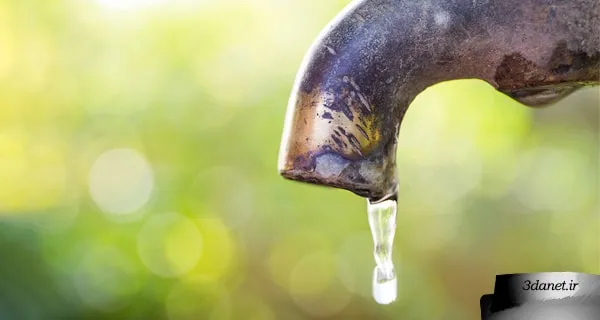
Twelve of Iran’s 31 provinces will lose all their underground aquifers within the next 50 years. This is the shocking report of the American newspaper The New York Times. With nearly half of Iran’s provinces drying up completely, a large population will be forced to migrate.
A population that former Agriculture Minister Issa Kalantari previously estimated at 50 million, saying that the acceptance of this large population by other countries will certainly face many troubles and problems. This is happening while Hedayat Fahmi, a water resources expert at the Ministry of Energy, also says it is already too late to reform water consumption patterns.
He explains: “For our current water consumption, we need three Irans.” Because Iran consumes water at three times its ecological capacity. He emphasizes: Demand consumption management is no longer a choice, but an unavoidable necessity. The Ministry of Energy, although late, has now launched a project called “Reducing the Water Footprint.”
The men of the Niayesh Building now want to compensate for some of the backwardness of past years. A project that Energy Minister Reza Ardakanian announced the implementation of at the World Water Summit a few days ago. As Hedayat Fahmi, a water resources expert at the Ministry of Energy, says: The goals of this project are clear and have been communicated to all related agencies, and according to it, per capita water consumption must be reduced by 21 billion cubic meters. Based on what is stated in this plan, water consumption in the agricultural sector must decrease from 90 billion cubic meters to 55 billion, and drinking water from 8 billion to 6 billion cubic meters. Of course, the conditions for industrial units are slightly different, and 90 percent of the water consumed in them must be reused.
Virtual water imports, 2.5 times its exports
Over the past three decades (from 1986 to 2011), the volume of virtual water exports in the world has increased from 438 billion cubic meters to 989 billion cubic meters. As statistics show, the United States, with 34 percent, has the largest share of virtual water exports, and African countries, which are struggling with a water scarcity crisis, are at the bottom of the virtual water export table with a 3.8 percent share.
Why do you think the European Union tries to source products like yarn, fabric, and cotton from countries like Uzbekistan or India? Or why does the powerful company Apple produce its famous iPhone in China? How much pollution does making a mobile phone really cause? Or how much cheaper are Chinese workers' wages compared to the smart robots on American production lines?
In fact, the main reason is that every smartphone contains about 1,500 liters of virtual water, and by exporting millions of iPhones, China is actually exporting a large lake of its country's water every year! But this trick has not only been played on other countries, and Iran has also become one of the victims of this water economy. Although Fahmi, the water resources expert at the Ministry of Energy, says that our virtual water imports are 2.5 times our exports, in a country with 130 billion cubic meters of renewable resources, at best, this figure should increase to at least 5 times.
He, who believes the export of water-intensive products should be stopped and their supply should be met through imports, even at a higher final cost, continues: Due to the cheapness of water in Iran, the agricultural production approach in our country has moved towards producing the cheapest and most water-intensive products, and of course, these products also account for the largest share of exports. According to him, preliminary studies show that in the medium term, it is possible to reduce the water footprint (including virtual water) by 32 percent, and through this, Iran's water scarcity pain can be alleviated to some extent.
We exported 3 times the capacity of the Karkheh Dam
A look at the available statistics shows that the experts' statements are not far off the mark. For example, in the year 1393 (2014–2015), roughly 833,000 tons of watermelons were exported from Iran. Research has established that every kilogram of watermelon contains 400 liters of virtual water. This concept means that in 1393, the equivalent of 333,200,000,000 liters of virtual water was exported from a country grappling with a water crisis; that is, according to Reza Raei-Ezzabadi, Director General of Iran's Office of Water Resources Studies, we exported seven times the capacity of the Karkheh Dam through watermelon exports alone.
55 billion cubic meters: agriculture's share of water resources
Ministry of Energy statistics show that the country's renewable water resource potential is, at best, 130 billion cubic meters, 93 percent of which is consumed in the agricultural sector with a worrying efficiency of only 35 percent. This is while irrigation efficiency in developed countries reaches up to 70 percent. So, fundamentally, in today's world, the main cause of water crises is improper consumption, not a lack of sufficient water. The main culprit in Iran's water scarcity crisis, by its own admission, accounts for 90 billion cubic meters of gross water consumption per capita and 70 billion cubic meters of net water consumption per capita; meanwhile, this official at the Ministry of Energy believes that consumption in this sector can be reduced to 55 billion cubic meters. According to him, the current global average for agricultural water productivity is 1.1 kilograms of product per cubic meter of water; a statistic that performs far lower in Iran.
Underground water tables in 12 Iranian provinces to dry up within the next 50 years
"Twelve out of Iran's 31 provinces will face the complete drying up of their underground water tables within the next 50 years." Pointing to the role of water scarcity in political and social developments, the New York Times wrote: Nigeria, Syria, Somalia, and now Iran—in each of these countries, the emergence of a water crisis has, in various ways, led to a series of social unrest, mass migration, turmoil, and even war.
In an era of climate change, the lessons these countries have learned can be used by many other nations. The World Resources Institute warned this month about the spread of water stress across the globe: "It is predicted that 33 countries worldwide will face extremely high water stress in the year 2040."
Elsewhere in its report, the New York Times noted that water shortages can lead to street protests. For instance, access to water has been one of the common causes of unrest in India. This factor can also be exploited by terrorist groups; for example, the al-Shabaab group has sought to use drought-stricken communities in Somalia for recruitment. Water shortages can also cause mass migrations from marginal areas to densely populated cities. Iran is the latest example of a country where the occurrence of a water crisis has led to public discontent. This is especially true in the country's smaller cities. Farms have dried up and lakes have turned into salt flats. Millions have migrated to provincial capitals and major cities, and unemployment has led to increased discontent among the youth. Iran has been facing drought for nearly 14 years. In short, the occurrence of a water crisis, whether as a result of natural factors, human mismanagement, or both, can be an early warning of serious trouble in the not-too-distant future.
A group of retired U.S. military officials warned in an article last month that water stress (a shortage of clean water) will become "a growing factor in the world's sensitive and conflict-ridden areas."
The article also stated: "With the increase in the world's population and the impacts of climate change, the challenges of water stress will increase over time." According to predictions, climate change will make Iran hotter and drier.
Issa Kalantari, Iran's former Minister of Agriculture, once said that if water shortages are not managed, they will force 50 million of Iran's population to leave the country.
Iran, like many countries from India to Syria, adopted a policy of self-sufficiency in food production after the victory of the Islamic Revolution. This policy was not a bad goal in itself, but as Kaveh Madani, a water expert in Iran, says, this goal means that the government encourages farmers to cultivate water-intensive crops such as wheat across the country. According to Claudia Sadoff, a water specialist at the World Bank, (the result was that) 25 percent of all water withdrawn from aquifers, rivers, and lakes has exceeded the amount of water that can be replenished (by nature) back into these sources." The rate of groundwater depletion in Iran is now among the fastest in the world, such that according to Michel's calculations, 12 out of the country's 31 provinces "will have their groundwater reserves completely dried up within the next 50 years."
Source: Shahrvand






Discussion5 comments
همه میدون آب کم ولی کسی عین خیالشم نیست
"ومن الماءکل شیئ حی" حیات هر زنده ای وابسته به آب یااز آب است. اگر جامعه اسلامی ما تنها به پیام این یک آیه احترام می گذارد واز این ناحیه بر دوش خود مسئولیت اجساس می کرد به یقین اکنون اوضاع بهتری می داشتیم. چه قدر سخاوتمندانه منابع بی بدیل زندگانی راحراج کردیم!!!وقت آن رسیده قدر قطره قطره این یگانه اکسیر حیات را بدانیم.
دلت خوشه ها!همین جامعه اسلامی فاتحه اب و آبادانی را خونده
اینکه به این موضوع مهم پرداختید جای سپاس و تقدیر دارد اما در هرصورت صرفه جویی ضروری و موثر خواهد بود، ما نباید پیامی را انتقال دهیم که افراد را از گام بر داشتن در مسیر اصلاح ناامید سازد. اگر در همین تهران چمنکاری متوقف شود میزان قابل توجهی آب ذخیره خواهد شد، هرچند از زیبایی شهرکاسته شود.
سالها پیش طرحی ارایه شد برای پر کردن دریاچه های مرکزی ایران از آب دریای عمان. اینک هر چقدر هم این طرح مشکلاتی داشته باشد، گویا اجرای آن تنها راه نجات ماست. بالا آمدن سطح آب اقیانوس مساحت ارضی کشورهایی را تهدید می کند. از همان کشورها می شود وام گرفت برای انجام این کار بزرگ.