Philosophy
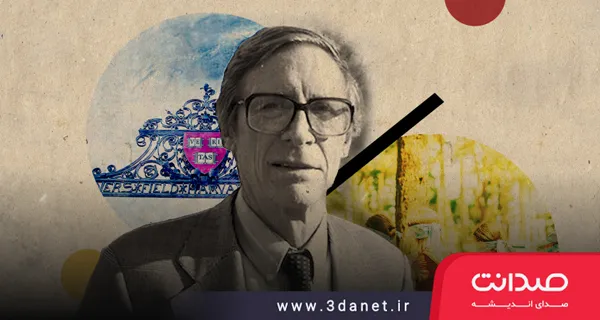
Dariush Shayegan: We Still Think in Myth
Dariush Shayegan says we still think mythically, and Iranian thinkers prescribe remedies before diagnosing the illness. He considers the translation of Western classics and bilingual education essential, drawing on his experience in publishing and the dialogue of civilizations.
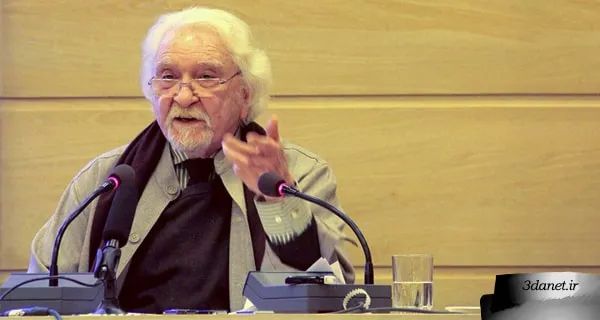
If I were asked to set up a center, the first thing I would do is systematically translate all the Western classics—not translate a bit of Agamben, a bit of Adorno, and a bit of some other philosopher. Heidegger, for instance, is poison for Iran. Someone without a Western intellectual background, when they read Heidegger, ends up like Fardid. One must translate the classics, the Greeks, the Romans, then the medieval thinkers and the thinkers of the modern age. This takes time, because in Iran the translations are so jumbled that even the terminology is inconsistent. Good translators are also scarce. When I was in Japan, I asked the Japanese how they managed to translate 500,000 books after the war. They said that apart from the top-tier professors who all went to Europe and studied there, the rest of the translations are all bad. Translation is very delicate, and sometimes even translations from French to English or German to French are not good. I believe that in Iran, children should learn a foreign language from school and kindergarten so that Iranians grow up bilingual. Because as long as we are monolingual, no matter how much we translate, we will still be behind. These are things that can be done, and beyond that, I don't know. We need a major mental housecleaning, because our minds are very cluttered. Then we must also examine why we keep repeating a series of mistakes. When you compare Seyyed Jamal al-Din Asadabadi with Shariati, you see that although Asadabadi is over a hundred years older, he is in some ways more advanced; for example, he speaks of the "philosophical spirit" of a nation, by which he meant "science"; but Shariati writes prescriptions. Our thinkers all write prescriptions and hand them to us before diagnosing and identifying the illness.
.
Dariush Shayegan: We Still Think in Myth
Mr. Shayegan, apart from your standing as an intellectual thinker, you were also involved in publishing for a time, along with other figures like Baha'oddin Khorramshahi, Kamran Fani, and others. Knowing your character and that of these friends, your presence as a publisher seemed somewhat unexpected. What idea led you to publishing, what were you pursuing?
When I returned to Iran in 1991 after a 12-year absence, I stayed for a month, right at the time the first Persian Gulf War had begun (the war where the Americans attacked Kuwait and drove out the Iraqis). At that time, my cousins were restarting my father's construction company. I helped them, and an income was generated. I thought, now that I have acquired a little capital, I should establish a publishing house in Iran. That is how, with Mr. Homayounpour, Khorramshahi, and Fani, we founded Farzan-e Rooz Publications. But one of the main reasons our work did not continue was that publishing is largely a commercial enterprise, and we were not, so to speak, in that line of work. In any case, we managed to work well for a period and published about 350 books. Once the publishing house was established, we organized a series of meetings and lectures on Iranshahr Street, opposite the current Artists' House, which were held once a month. At that time, the Artists' House did not yet exist, and that area belonged to the army. We rented the upper floor of Mr. Edward's office—an Armenian friend—and held meetings there for two or three years, which were very good. That was until Edward wanted his upper floor back, and we moved from there. To succeed in this business, one needed a bookstore, which we did not have. Later, Mr. Ettehadieh came along and continued the publishing work. Of course, the publishing house still exists, and I occasionally drop by, but it is no longer very active.
Given that your group at the publishing house were all thinkers in the field of culture, there was naturally an expectation that you would select and publish books that would somehow contribute to contemporary intellectual currents. How was the selection of books made, and was it different from current publishers?
We were mostly interested in publishing books that had theoretical aspects and were controversial. But finding a translator was difficult; that is, we had few good translators. Of course, I had had such an experience before; before the revolution, I was the director of the "Iranian Center for the Study of Cultures" (the equivalent of the dialogue of civilizations).
Was the dialogue of civilizations also taking place before the revolution?
Yes, long before these events, an organization for the dialogue of civilizations had been formed within a cultural foundation. Of course, there were other organizations as well, such as the Center for History, Mr. Shirvanlou and the Niavaran Cultural Center, Mr. Majid Tehranian, and others with whom we collaborated at that time. In any case, since I was the director of that organization, I was more in contact with intellectuals and had gathered everyone together, and we collaborated. For this reason, I had this experience from that time, although it was different from publishing work, as it had a government budget. Although its budget was not large, it was, in any case, a more extensive undertaking. Later, Mr. Reza Ghotbi, who was also the director of television, said: We have a budget of one million dollars for purchasing books; you go and buy these books. So we went and within a year, we purchased the best books in the humanities and arts in various languages—Persian, Arabic, French, and English (around 40,000 volumes)—and created a large library.
Who did you collaborate with on these projects?
There were many, including Shahrokh Meskoob, Dariush Ashouri, Jamshid Arjomand, Adib Soltani, and Saghafi, each of whom worked with a large team. My idea was to collaborate with various institutions instead of competing. For example, we signed a contract with the newly established Open University, under the supervision of Mr. Meskoob, to write 50 volumes on the history of Iranian culture. At that time, almost all important thinkers and institutions had signed contracts with our organization.
With this organization and the prominent figures you had invited to collaborate, what goal were you pursuing?
We wanted to prepare a collection for every global culture. Our main goal was to re-establish connections with Asian civilizations—with which our ties had been severed—civilizations such as China, India, Japan, and so on. For this purpose, Iran was supposed to establish a branch in Cairo, a branch in Delhi, and a branch in Tokyo. The directors for the branches in Japan and Cairo had even been selected; Mr. Osman Yahya for Cairo and the famous Mr. Izutsu for Japan, but it did not materialize.... Of course, within two years, many contracts were signed and about 40,000 volumes of books were purchased, which are still at the Center for Cultural Studies. After the revolution, I resigned and went to Paris, and I was away from Iran for many years.
What did you do in Paris? Did you pursue those same ideas?
After I had been in Paris for seven or eight months, Mrs. Corbin—Henry Corbin's wife—came and said: Karim Aga Khan wants to see you. I went to see him; he wanted us to establish an institute in Paris where we could publish Corbin's unfinished works and then continue the work. So an institute was founded in Paris with funding from the Aga Khan. I also asked Mr. Shahrokh Meskoob to collaborate with me, and he came from Iran. Later, at that same institute, we would hold lectures and Iranians would gather. After the institute closed, I went to Washington for a period, managed the Irannameh institute, and gave it some shape and form. Then I decided to return to Iran; from that very time, the idea of founding a publishing house was on my mind.
So, with those same intellectual infrastructures, you pursued that current, this time on a smaller scale, and Farzan Rooz Publications was a small model of those grand ideas?
Exactly. It was a model of grand ideas that would have expanded if they had continued.
Let's go back to before the revolution. During that era, you were pursuing a project in a focused manner, which, although it experienced a rupture for a period, was later continued in a way with Farzan Rooz. Where did you want to reach with this idea?
Let me first clarify this intellectual project a little: I began with India and was an Indologist. In 1967 I published the book Religions and Philosophical Schools of India, which was the result of five years of work; to write this book I read Sanskrit and the ancient texts, and unfortunately, in all these years, no new book has yet been published in this field. Besides Indian civilization, I was also interested in Asian civilizations, the West, and their interconnections. Before the Westerners came and colonized Asia and its countries, there was a great deal of contact among Asian countries—between Japan and China, China and India, India and Iran. But after a certain period, this contact was severed, and my plan was to re-establish connections among the great Asian civilizations to see what our commonalities and shared issues are, what similarities our historical destinies bear, and that the fundamental issue is the relationship with modernity—how we want to come to terms with this modernity, what path each of these countries has taken in its encounter with modernity, and matters of this sort...
After the revolution, the discourse of the dialogue of civilizations became linked with an Islamic culture. What was the relationship between your intellectual project and the discussion of the dialogue of civilizations that was raised, especially during the Reform era?
There wasn't much of a relationship. You see, after writing the book Asia Against the West, because I took up residence in France, I was compelled to change languages; I no longer wrote in Persian and wrote only in French, and this has continued to this day. That is, after the revolution, in the roughly 12 books I wrote in French, I pursued this issue: that the entry of tradition into history and its transformation into ideology changes its nature. This was an issue that arose for me under the new conditions.
Did the foregrounding of Islamic culture affect the idea of creating a connecting chain among Asian cultures?
Islamic culture was always there. We were Muslims in Iran before the revolution too. Of course, the spheres were separate. That is, at that time, the religious scholars lived in their own specific sphere. But with the revolution, a displacement occurred, and then, as you mentioned, the discussion of the dialogue of civilizations was raised during the Reform government, though I never grasped their policy line. We had a very clear thesis. In Denmark too, when they awarded me the Dialogue of Civilizations prize, I said in a speech what our goal had been: We are Iranians, and Iran has always been an empire since ancient times; it has also always been situated among the great civilizations, meaning it has always had one eye on the Far East and another on Mesopotamia and the West. Hence, Iranians have always been situated between two worlds and have been a connecting bridge. It is remarkable that all of Iran's empires have been connecting bridges. For instance, the Achaemenid Empire stretched from India to Central Asia and Greece, and other empires like the Parthians and Sasanians also played this role to a greater or lesser extent. So the historical mission of Iranians is to take the lead in connecting cultures. That is why we proposed the project of the dialogue of civilizations at that time; we also had the means for it.
Did the extension of this idea in Farzan Rooz Publications influence the process of selecting books? Did you have a specific intellectual current in mind, or a particular framework, based on which you would not publish certain books?
No, we selected good books. Books that contained "thought" and prompted people to think, that adopted a critical stance toward everything and against any kind of dogmatic thinking, and that raised issues pertaining to our society. For example, because I was very interested in art, the first book I published was The Arts of Iran, followed by the book Gardens of Imagination: Seven Centuries of Miniature in Iran. Or, among books with critical thought, we published Zweig's The Awakened Conscience, though they no longer permitted it to be reprinted. Or, for instance, I liked to translate the works of Octavio Paz, because many of the issues this Mexican thinker raised were similar to our own, although they were articulated from different perspectives. These were all thought-provoking and controversial books. But on the whole, I did not insist that only my favorite books be published.
Contrary to the prevailing image of a philosopher, it seems you are also interested in the novel (literature), and you yourself have a novel...
Yes, I read a great many novels. I also have a novel titled The Land of Mirages, which is the kind of novel the English call an epistolary novel—that is, a novel in letters. It is in fact a literary genre that was customary in eighteenth-century France. The novel The Land of Mirages is an account of letters between an Iranian man and a French woman, and it was published in France with a translation by Jamshid Arjmand.
Unfortunately, in Iran we have read very little of the books you have published in France. For that reason, at least from Asia Against the West and, of course, the translation of New Disenchantment and Patchwork Identity—which are among your authored and important books—we are not very aware of your intellectual developments...
Of course, in the book The Confluence of Horizons, which Mr. Mansour Hashemi published, there are pieces from the book The Shattered Gaze and parts of What Is a Religious Revolution? that appeared in France.
What major change has occurred in your outlook since Asia Against the West?
I am constantly evolving; my thought is not static. Of course, in Iran, accepting "intellectual evolution" is very difficult for our compatriots, which is why we still read Hafez and Rumi, and our greatest thinkers still belong to hundreds of years ago. It is very strange to me that our greatest thinkers are still our poets, and the most recent of them, Hafez, is 700 years distant from us. Not that these are not great people—let there be no misunderstanding. But I have both moved past Asia Against the West and not moved past it. The latest evolution was Disenchantment and Patchwork Identity. After those, I wrote my novel in France, and a new book called Hybrid Consciousness, which came out in France this January, is again a continuation of those same themes.
Does Hybrid Consciousness deal with multicultural individuals?
Yes, the entire problem of today's world is that everyone has become multicultural. But the foundation is modern culture. If you do not accept this modern culture, everyone will be at each other's throats. It is modern culture that clarifies the rules of the game.
Let us return to Farzan Publishing and its sessions. In the period when those sessions were held, there was no internet or satellite in the sense and scope they have today; hence, such sessions had a special meaning and status, because people spoke at these sessions who were rarely seen in the public sphere and were mostly in the minority. How were decisions made about the sessions and the selection of topics and speakers?
We would sit down ourselves, talk, and choose. Once we invited Aydin Aghdashloo to speak about Picasso; he came and spoke very well indeed. Or, for example, Babak Ahmadi, Iraj Afshar, Mr. Atabaki, Zarrinkoub, and Zaryab Khoei each gave lectures in their own fields of thought. I remember we also held a session in '75 or '76 [1996 or 1997] about Flaubert's Madame Bovary at which Azar Nafisi spoke. Goli Emami, Goli Taraghi, and in fact all our thinking women were also present, and it was one of our very good sessions. Another of our notable sessions was one we held about Gandhi.
Why did you choose Gandhi?
I myself have always liked Gandhi. I chose him because he is a person who thinks that not every means justifies the end. That is, one cannot say that because I have a lofty goal, I can use any means. There must be a kind of qualitative correspondence and homogeneity between the end and the means; for example, one cannot reach a good result through killing.
Considering the timing of the sessions—which coincided with the beginning of the reform era—the activities of "Farzan-e Rooz" publishing were regarded as being, in a sense, within the reform project; the prevailing view was that your activities found meaning within the space of cultural pluralism. Now that some time has passed since those years and the possibility for a more critical re-reading has been provided, what is your view of that era?
Of course, the publishing activities and meetings began a little before the reform era. “Reforms” were in our minds before the reform government came to power. Not, of course, in the sense they put forward, but in the sense of the “question of dialogue,” that is, establishing dialogue between civilizations on the threshold of entering modernity. As I said, I worked on this very issue before the revolution and afterward in Paris, and I continued it when I returned to Iran. So, our “Dialogue Among Civilizations” began before the reforms.
You mentioned that your Dialogue Among Civilizations project differed from the current the reforms pursued, yet the recent reform project, at least in its generalities and the form of its concepts, seems to be a continuation of your project. Could you speak a little about this difference?
I only know that the Dialogue Among Civilizations turned into a large institute with a vast organization and a high budget, but I did not understand what they wanted. In that era, we only held one seminar in Isfahan between the “Center” and the “Periphery,” where Mr. Mohajerani, Ramin Jahanbegloo, Kamran Fani, and others were also present. In fact, we had no direct connection with the Center for Dialogue Among Civilizations.
The category of “culture” was the main discourse of the reform era, so, concurrent with the opening of space, culture was emphasized more than politics. The main thrust of your thinking has also been “culture,” which is why you have even been called a “philosopher of culture.” Mr. Shayegan, do you believe in the separation of culture and politics?
The reform government placed great emphasis on the category of culture and considered itself a cultural government. With this very program, it allocated larger budgets to cultural works; with the start of the reforms, many books were published, which is why some believe that it was in the wake of this opening of space that the possibility for those activities at “Farzan” publishing arose. In France, there are cultural institutions that the government funds; in America, there are also institutions whose funding comes from the private sector. There, people invest a great deal in the cultural sector. American capitalists are very active in this sector; all of America’s museums have been built by private individuals, not the government. But in countries like ours, the government must help. So, I see no problem with the government allocating a budget for research, but on the condition that it does not interfere...
You mentioned that one of your criteria for selecting books was the centrality of the book’s problem, that the book should relate to the existing situation. On the other hand, in the book Under the Skies of the World, you say you do not much agree that politics and culture are intertwined; in a way, you say you have little to do with politics and have focused on culture. Don’t you think these are contradictory?
In a certain era, one cannot avoid being political at all, because everything is political. There was a time when one could stay away from politics. For example, before the revolution, I was never a leftist, which also has a reason: my mother was from an old Georgian family that the Bolsheviks had destroyed, so we were raised anti-Bolshevik from childhood. Ultimately, all of this affects a person...
In that same book (the conversation with Ramin Jahanbegloo), when you refer to the events of May ’68, you in a way affirm your distancing yourself from politics...
I arrived in France in 1989. I was just about to enter university to defend my doctoral thesis, but the university was under siege. Look at the French Revolution; about two hundred years have passed since then. On the occasion of the bicentennial of the French Revolution, they conducted a review; on French television, they held a trial for Louis XVI and Marie Antoinette with a public prosecutor present, and the people also voted, with the result that they were acquitted. This shows that the public's view of the revolution and the Reign of Terror that followed it has changed. But in any case, the French Revolution was very important because it created all the models and the culture of revolutionary terminology. So, from this perspective, as the originator and founder of many new concepts, they are naturally important, but like most revolutions that begin with fervor, as José Ortega y Gasset said: every revolution first has a reaction, and after a while, a revision.
At least in the modern era, aren't we compelled to adopt a critical perspective for change and for confronting modernity?
One hundred percent.
Mr. Shayegan, so in your view, where does a perspective that seeks to be critical, yet is simultaneously opposed to change and wants to maintain a distance between culture and politics in any case, stand?
My critical work in the books I have written so far has been the deconstruction of concepts. In the book
If they had told me to set up a center, the first thing I would have done is systematically translate all the Western classics, not translate a bit of Agamben, a bit of Adorno, and a bit of some other philosopher. For example, Heidegger is poison for Iran. Someone without a Western intellectual background, when they read Heidegger, ends up like Fardid. We must translate the classics, the Greeks, the Romans, and then the thinkers of the Middle Ages and the thinkers of the modern age. This takes time, because in Iran the translations are so jumbled that even the terminology is not consistent. Good translators are also few. When I was in Japan, I asked the Japanese, how did you manage to translate 500,000 books after the war? They said that apart from the top-tier professors who all went to Europe and studied there, the rest of the translations are all bad. Translation is very delicate, and sometimes translations from French to English and German to French are not good either. I believe that in Iran, children must learn a foreign language from school and kindergarten so that Iranians grow up bilingual. Because as long as we are monolingual, no matter how much we translate, we will still be behind. These are things that can be done, and beyond that, I don't know. We need a major mental housecleaning. Because our minds are very cluttered. Then we must also see why we keep repeating a series of mistakes. When you compare Seyyed Jamal al-Din Asadabadi with Shariati, you see that although Asadabadi is over a hundred years older, he is ahead in some respects; for instance, he speaks of the "philosophical spirit" of a nation, by which he meant "science"; but Shariati writes prescriptions. Our thinkers all write prescriptions and hand them to us, before diagnosing and identifying the illness.
.
.
Interview of Shargh newspaper with Dariush Shayegan | September 2012
pdf of this conversation
.
.


Discussion0 comments
No comments yet; let yours be the first voice.