Philosophy
Entekhab News Agency Report on Haaretz Interview with Alain de Botton
In an interview with Haaretz, Alain de Botton argues that the modern illusion of controlling nature left us blindsided by COVID-19, and, drawing on Stoicism, he suggests that accepting the worst-case scenario is a way to reduce anxiety. He also calls the crisis in global leadership a major catastrophe.
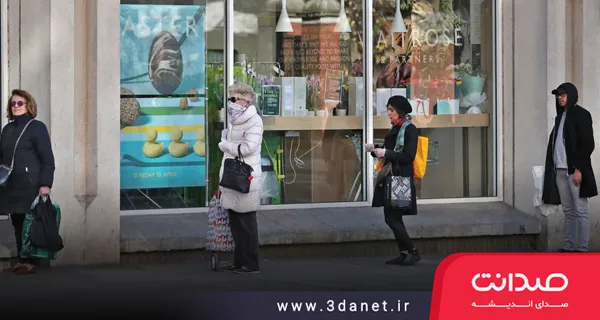
Ayelet Shani, a reporter for the Israeli newspaper Haaretz, conducted an exclusive interview with Alain de Botton, the Swiss-British author, philosopher, and essayist, about the state of the world in the age of Corona.
Ayelet Shani: Alain de Botton, just a month ago, when things were not yet like this, we arranged to meet you at your office in London.
Alain de Botton: Unfortunately, over the past few weeks, I have read many medical articles and reports about the coronavirus pandemic; there was a common thread in all of them, and that is that the situation, at least in London, is very bad.
There are several points I want to make to you about this crisis. When you live in the modern world, you essentially have to believe that science and technology can overcome nature. This deep belief is, in fact, the foundation of the Enlightenment, and we who live in this world as modern people are convinced that we have conquered nature, that we are the apex predator species and the entire world is under our control. In fact, we feel so in control of our environment that we allow ourselves to do anything to it, even if our behavior ends up destroying it.
We are now upset about the fate of trees and beaches. This is the way we typically live, but the truth is quite different. First, we do not really understand our environment. Our mental resources are very limited. We are experts on specific topics, but at the same time, we remain ignorant in various domains.
Ayelet Shani: Ignorance or negligence?
Alain de Botton: Both, alongside foolishness and arrogance, of course. We are truly very flawed, or rather, strange animals. The ancient Greeks, Jews, Christians, and Buddhists knew this well, so one could say this issue is encoded in our cultural DNA. The truth, however, is that we are biological beings. We are, in fact, vulnerable to many harms. At the same time, the good news is that we all know how to die!
Ayelet Shani: Do you really think it is good news that we know how to die?!
Alain de Botton: We go to the doctor, and he says, I'm sorry, it's cancer, you have no more than three weeks to live; at that moment, we are terrified, but we simultaneously accept it, because we know how to die, and this is something we must remember.
Ayelet Shani: Regarding the Stoic insight, do you consider it a kind of consolation?
Alain de Botton: Yes. Even if it is a kind of consolation, the Stoics are still my favorite philosophers. The Stoics believe that the path to tranquility is not to think that everything will eventually work out. On the contrary, all the people who tell us, smile, everything will be fine, are in fact simply torturing us. The only way to achieve true tranquility is to focus on the worst-case scenario; then it no longer matters what happens, because you are prepared for anything. Seneca thought that we should begin each day by meditating deeply on all the torments of body and mind that life can inflict upon us. We must think about everything and expect anything.
Let us look at the current pandemic with a Stoic view. Well, what could the worst-case scenario be? That it encircles the globe, takes the lives of millions, possibly tens of millions of people. Life returns to the harsh conditions of the past, and we might even lose many of those we love.
Let us be even more pessimistic: the Stoics believed that when life becomes too important to you, you might kill yourself. Suicide is an option. Unlike the Christians, they saw nothing shameful in this. Seneca writes that to prove how simple and perishable everything is, all we need to do is grasp our wrist and look at the delicate veins through which our blood flows.
Ayelet Shani: Doesn't Stoicism, or even Buddhist thought, only increase anxiety?
Alain de Botton: What is anxiety, anyway? This feeling is actually the mind's desperate attempt to control the unknown. The attempt to control reality is doomed to failure, especially now that reality is the outbreak of a pandemic.
Ayelet Shani: Fat on the bones
Alain de Botton: We are all suffering right now. We seem to have nothing to cheer us up at the moment and are incapable of coping with such absolute and multifaceted uncertainties.
My friends usually ask me what will happen? Where will we be in September? I tell them in philosophical language: let us imagine the worst-case scenario. At present, optimism gets us nowhere. In the meantime, of course, one can think that this disease will probably no longer exist within the next 18 months.
Of course, the economy will face a terrible recession that will ultimately cause a decline in growth of 5, 10, or even 15 percent. Although this amount is large, there is still plenty of fat on the bones. Under these conditions, we might have to live according to the standards of 15 years ago, but it is not the end of the world.
What really creates anxiety is when your friends call and say, did you see what was written in the article? Even British Airways is going bankrupt. Well, in these conditions, everyone sinks into a kind of anxiety. Yes, many airlines will run into trouble, and rather than turning on the television in a few months, seeing companies go bankrupt one by one, and being shocked then, it is better to accept it now.
Ayelet Shani: I was surprised by Boris Johnson's remarks when he said that many families will lose loved ones. How do you interpret that?
Alain de Botton: It is completely unacceptable. In my opinion, Boris Johnson is not a suitable leader. He is a very flawed individual, and it is a great tragedy in British politics that we must witness someone like him managing a crisis.
Ayelet Shani: But Johnson's assessment aligns with your advice to prepare for the worst-case scenario.
Alain de Botton: Certainly, but the manner of speaking is very important; for instance, telling our children to be quiet and leave me alone, or telling them, darling, mommy is a little busy right now, makes a huge difference. Boris Johnson's remarks caused fear and anger among many people.
This crisis has revealed the extent of the leadership crisis around the world. It is terrifying to know that our fate is in the hands of such individuals. There are very few competent leaders at the moment.
We are forced to come to terms with the fact that we expend considerable mental resources denying the transience of our existence. Our identity, our ability to live a proper life, depends to a large extent on our ability to suppress our mortality.
I think there is such a thing as a good death and a bad death. Let me tell you what my philosophy in life is. I am now 50 years old. I have certainly lived longer than many people throughout history. I have been able to do many things. Over all these years, terrible and wonderful things have happened to me. I have seen many countries. On the one hand, like many people my age, I would like to live forever, but in any case, if this is the end of the road for me, I am content. I think we must set aside the idea that says we should live forever.
A 50-year-old person has been able to do many things in their life. I apologize if my words sound very pessimistic, but at this age, the probability of a stroke is 1.5 percent. Besides this, there is also the probability of cancer and heart attacks. There are many terrifying diseases, while there is also the possibility of car accidents. We might be tempted to wish we could be everlasting, but the reality is something else.
In general, we are only visitors in this world. We are so fragile that we seem as vulnerable as a piece of paper and can be torn very easily. We are accustomed to living, which is why we think death is not for us.
Ayelet Shani: Our fear of death is an important subject in philosophy
Alain de Botton: Spinoza, who greatly admired the Stoics, said that we have the ability to examine the world from another perspective. Philosophy can help us look at the world from this perspective. To step away for a moment from our selfish thoughts and consider the fact that ninety-nine percent of the species that have ever existed have long been extinct. It is difficult for us to grasp how small and temporary we are, but our brain is capable of understanding abstract things. We are the only species capable of understanding the universe, even in a limited way.
Ayelet Shani: We cannot live without hope
Alain de Botton: Life brings with it prolonged sufferings, but art is full of hope. Beautiful paintings, the bright sun, blossoming trees, people's smiles and dancing. Sentimental artists think that life is beautiful, but realistic and hopeful artists, like Matisse, know that life is full of pain and suffering, and that is why hope is so important. Of course, hope must not be empty.
Report by the Entekhab Analytical News Agency on the Haaretz newspaper interview with Alain de Botton; In the coronavirus debate, the only way to reach peace is to focus on the worst-case scenario; then it no longer matters what happens / All the people who tell us everything will be alright are torturing us / We are accustomed to living, which is why we think death is not for us / Looking at it stoically will make facing the coronavirus easier
.
.
To Find Peace in the Time of Coronavirus, Be Very, Very Pessimistic, Says Philosopher Alain De Botton
The only way to achieve inner peace at times like these is to focus on the worst-case scenario, claims British philosopher and author Alain de Botton
Alain de Botton, in our previous life, just a month ago, we arranged to meet in your office in London.
Unfortunately, in the past few weeks I’ve read every paper and medical report I could find on the pandemic, and the conclusion of all of them was clear: It’s going to be very bad. At least in London.
It’s amazing how easily a dull, incidental routine morphs into a dystopia. It’s so weird. What shall we talk about? How’s the weather over there?
There are a number of things I’d like to say about this crisis. When you live in the modern world, you believe, essentially, that science and technology can overcome nature. That’s the profound belief that underlies the Enlightenment, and we, who live in that world as modern people, are convinced that we have conquered nature, that we are the dominant species, the supreme predator – that the environment is subject to our authority. In fact, we feel so much in control of our environment that we allow ourselves to feel sorry for it, even as we destroy it.
We weep over the fate of trees and beaches. That’s the way we live routinely. But the truth is radically different. First, we don’t really understand our environment. Our mental resources are very limited. We are experts on certain topics, but at the same time we are afflicted with vast islands of ignorance.
Ignorance or neglect?
Both. And also stupidity and arrogance. We are truly very flawed animals. Tragic animals. The ancient Greeks knew it. The ancient Jews knew it. The Christians. The Buddhists. It’s been encoded into our cultural DNA from time immemorial.
But we don’t actually acknowledge this. And now we are all choking on this huge slice of humble pie. We’re not capable of swallowing it.
Now we must all eat that pie, and we are stunned and shocked, even though it’s always been there. The human animal, regrettably, raised itself up to believe in perfection, in security, in control. But we are biological creatures; we are actually thin membranes, exposed and vulnerable to every pest and every accident. At the same time, the good news is that we all know how to die.
That’s the good news?!
Of course. That’s the only thing we’ve been doing efficiently and systematically, for years now. Well, maybe in Israel it’s different, but here in London we can talk for hours, say, about how we went to a restaurant and they put the gravy on the side and not on the food. “Can you believe it? They put my gravy on the side. Outrageous!” Or we quarrel with our partner over a hair in the bathtub. The things that make us get angry and complain are incredible.
And then we go to the doctor and he says, “I’m sorry, it’s cancer, you have three weeks to live” – and we get frightened, but simultaneously we accept it. Because we know how to die. And that’s something that is important to remember, even if we want to live: that we know how to die.
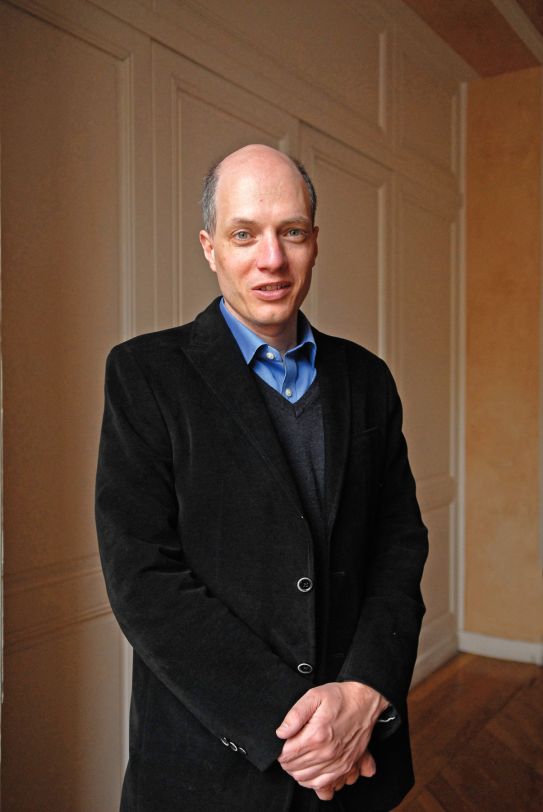
Stoics’ insight
You find consolation in that?
Yes. Even if it’s a dark sort of consolation. My favorite philosophers are the Stoics.
I’ve also tried to calm myself by reading Seneca, the philosopher of the people who suffer from anxiety.
Exactly. The Stoics believe that the way to tranquility is not to think that everything will work out. On the contrary: All these people who tell you, “Smile and everything will be okay” – they’re simply torturing us. The only way to achieve true peace of mind is to focus on the worst-case scenario, because then, no matter what happens, everything will be all right, because you’re ready for it.
Seneca thought we should start every day by thinking deeply about all the torments of the body and the mind that life can inflict on us. One must think about everything, expect everything.
Let’s examine the epidemic like Stoics would. It will encircle the world. It will take the lives of millions, possibly tens of millions. Everyone will live off a pittance. Everything will collapse. We’ll return to basics. That could be what will happen. We will all lose people we love.
Let’s be even darker: The Stoics also believed that when life becomes too much for you, you may commit suicide. It’s an option. Unlike the Christians, they didn’t see anything shameful in that. Seneca writes that to prove how little is needed for everything to turn to naught, all we need do is grab our wrists and look at the delicate veins through which our blood flows.
There is freedom at every point along the way – let’s hope we won’t have to get there, but I find that thought very appealing. That darkness. It goes well with laughter, with black humor, gallows humor. It’s very important. We have to laugh with the shit storm swirling around us. When you know what the bottom is, when you understand how bad it could get – you’re ready for it.
A happy Sisyphus
The knowledge that we’re fragile, that everything hangs by a thread during a period like the present, in which we are all so fearful – won’t Stoicism, or even Buddhist thought, only heighten the anxiety?
What is anxiety, actually? It is the mind’s desperate effort to achieve control over the unknown, over the uncontrollable. The attempt to control reality is doomed to failure, certainly when the reality is a pandemic.
The second possibility is to try to “teach” the anxiety that what it’s trying to achieve is impossible. Everything is in doubt. There is nothing that confers security upon us; security doesn’t exist. [French philosopher Michel de] Montaigne once said, "What a good pillow doubt is for a well-balanced head.” That’s what we have to do. Sleep on a pillow of doubt. That is the sort of philosophy we need now. Texts like “The Plague” by Camus, or his writings on Sisyphus.
“The Myth of Sisyphus,” known popularly as “why not commit suicide”?
Camus wonders: Just a minute, why wouldn’t Sisyphus be happy? It sounds like a peculiar thought. But Camus – and this is so sweet of him – thought that we need to focus on simple pleasures: sex, swimming, soccer, literature. These and other pleasures are still available to us, on our journey to darkness. I know there are people who say it’s only a little virus, that everything will be okay – and in many senses that is correct: Humanity will survive.
But what will become of us as individuals? We all have one common fate, which is death. And before it, suffering. I think the solution for us now is humor, is love – in the sense of understanding that other people are also afflicted by the same suffering now, and need the same thing we need: love and friendship. Not friendship based on fun, but friendship in a time of sadness, difficulty and fear.
For some reason we are habituated to believe that friendship is for sharing the good times, but the opposite is true. Friendship is for sharing the pain, the fear, the anxiety, the misery. We will need our friends very much in the months ahead.
As an anxious person, I was surprised to discover that there is no consolation in the fact that everyone is anxious. Perhaps there is after all a subterranean current underlying the irrational anxiety that makes us actually realize that it is irrational anxiety. Now that anxiety is synchronized with reality; it’s a bottomless pit.
Indeed, during these times we need, above all, role models. Someone who is capable of displaying behavior that is difficult for us to display, someone who captivates us because of such abilities. We are generally enchanted by people who have succeeded in making a great deal of money or who always know how to be the life of the party – but at the moment, that is pointless and useless nonsense. Actually, it always is.
At the moment we need to look up to people who know how to live in conditions of grim suffering, so that we can tell ourselves that this is the way, this is how we should behave. Buddhists, for example, are constantly asked to imagine what the Buddha would do or say. That is an effective and good framework of thought.
What would the Buddha say now about the coronavirus? What would Michel de Montaigne say? Maybe I can learn to think and behave like them. There is no doubt that our models for identification, at the moment, are extremely bad. We should choose others.
‘Fat on the bones’
We are all in a state of suffering at the moment, and I think that the most tortuous dimension of it is the uncertainty. We have nothing to cling to, and we are not able to cope with such absolute, multifaceted uncertainty.
My friends keep asking me: What is going to happen? Where will we be in September? I tell them, philosophically: Let us imagine the worst-case scenario. There is no use in being optimistic at the moment. We can assume that within 18 months science will be able to overcome all this. I assume that we will not be in lockdown for 18 months. Probably we will be alternately locked down and released.
The economy will be a total disaster, of course. Very likely there will be a recession that will cause growth to plummet by 5, 10, 15 percent. Those are huge numbers, but still, there’s plenty of fat on the bones. We might have to live at the standard of living we had 15 years ago. We didn’t go to so many restaurants then. It’s not the end of the world. And when you make that scenario your anchor, your home – out of the uncertainty you find a place to reside in.
What truly generates anxiety is that your friends call and say, “Did you see what they wrote in the paper? Even British Airways will go bankrupt.” And everyone sinks into a tailspin of anxiety. Yes, many airlines will go bust. And instead of turning on the television and seeing that BA has gone bankrupt and then fainting, we should accept it now. You can see where this is headed. When they will announce that there will be 40 million jobless, you’ll be the one who already grasped that. Those are, of course, not my forecasts, just guesses I make about the worst-case scenarios.
I assume that most people would be happy to buy into the possibility that it will all end for them with only an economic catastrophe. I was astonished by Boris Johnson’s statement: “Many families will lose their loved ones.” In Israel that wouldn’t work. With all due respect to the ethos of the Blitz, to “keep calm and carry on,” how is it possible to swallow a comment like that at a time like this?
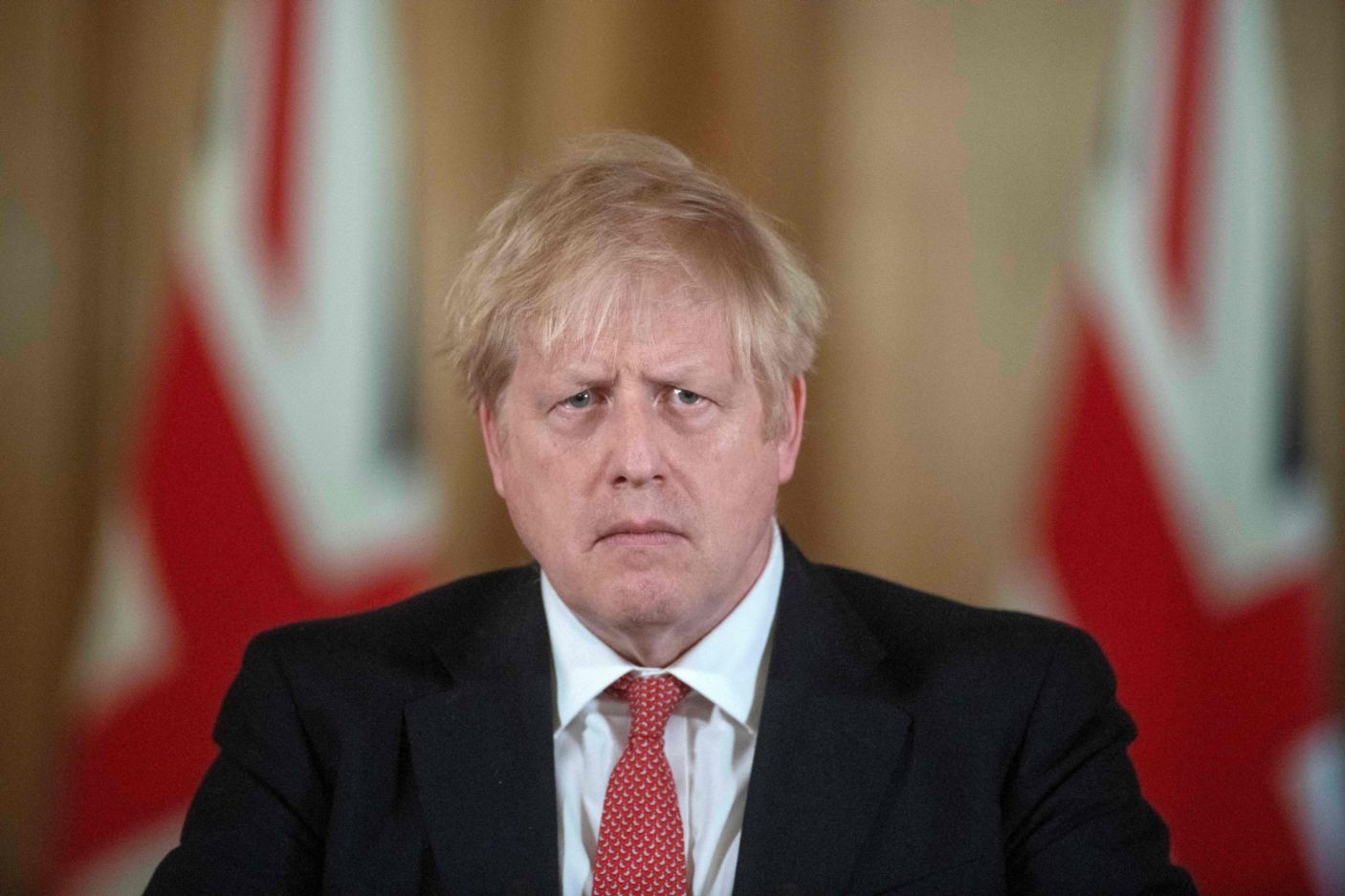
It is totally unacceptable. In my opinion, Boris Johnson is not right in the head. He is certainly not fit to be a leader. He’s an extremely flawed person, and it’s a great tragedy of British politics that he is the person managing this crisis.
In large measure, that blunt assessment fits in with your recommendation: to go for the worst-case scenario.
Certainly, but what’s more important is how we say things, not what we say. You want to tell your children now, “Be quiet already, and leave me alone,” but you tell them, “Sweeties, Mom is a bit busy now.” Same message. Part of the work of leaders at this time is to mediate things properly. Boris Johnson’s statement frightened and angered so many people.
Now our government is changing its policy, because it turned out that they relied on mistaken numbers. They changed their policy within a few days, because they understood that it would simply kill millions of elderly people. It’s so scary to think that the decision makers can’t do the math, don’t know how to choose a proper mathematical model. The human animal is, after all, the human animal.
Good vs. bad death
This crisis has exposed the acuteness of the leadership crisis all over the world. It’s frightening to realize that our fate is in the wrong hands. You see worthy leaders, such as in France and Germany, say, and long for that.
There are very few worthy leaders at this time. We are living in a decadent era, and one of the signs of that decadence is that we allow ourselves to take risks, because that makes life more exciting, and we are already bored by the familiar. We see that attitude underlying the voting in the United States and in many places in Europe.
People tell themselves: Let’s take a chance with this colorful character, it’ll be interesting. The result is that in many countries, there are leaders ruling who would not be elected today, because they lack the qualities required of leaders, certainly in this period.
We are being compelled to cope with the fact that we invest considerable mental resources in denying the transience of our existence. Our identity, our ability to conduct life correctly, relies in large measure on our ability to repress our mortality.
I think there is such a thing as a good death and a bad death. I will tell you what my philosophy is in life. I am 50 years old now. I have lived quite a bit. Certainly more than many people throughout history. I have managed to do a lot. Truly terrible things have happened to me; wonderful things have happened to me. I have seen many places. Like many people my age, and older, I would like to live forever. But if this is the end – okay. I think we need to abandon the thinking that says we need to live forever.
A person of 50 has been able to do many things in his life. Sorry if I sound too dark, but at this age my chance of having a stroke in the next year is 1.5 percent. And there’s cancer. There are heart attacks. There are horrific diseases. There are traffic accidents. We are tempted to believe that we are lasting and solid, like the trees, like the buildings, like the world outside. That is not the case.
We are, all in all, just visitors. We are as vulnerable as a piece of paper, we can be torn very easily. We are used to living, that’s all we know; we have never died before. Only others die. Every time we go to the doctor, he has less and less good news for us. At a certain point the doctor will no longer tell us, “This is the situation and this is what needs to be done,” but “I’m so sorry.” We always perceive that as news intended for someone else. As narcissists, we’re tempted into believing that all will be well. But that is simply not true.
We believe in continuity. In stability. We perceive reality as being based on those principles. Tomorrow will look like today.
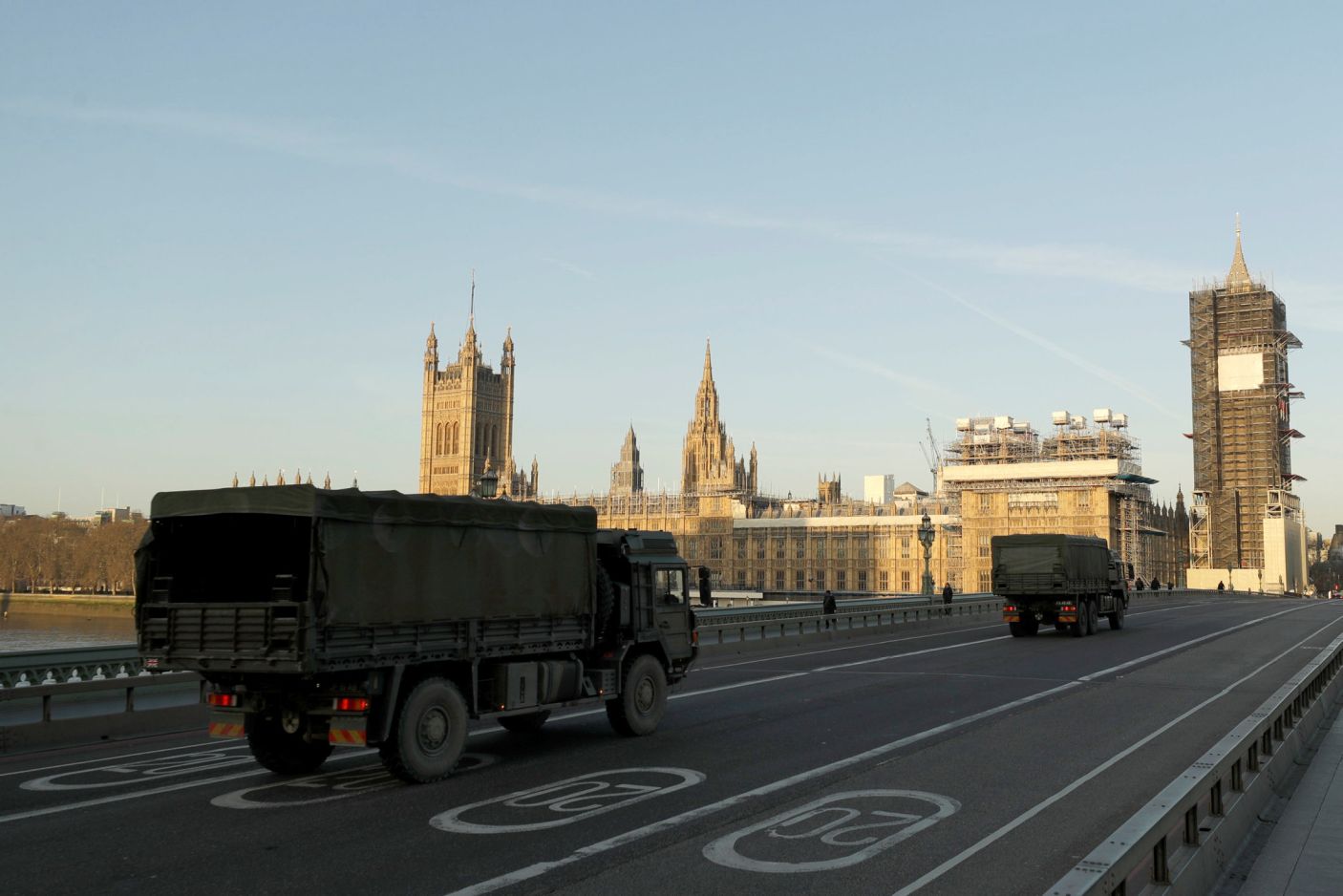
That’s why it is so difficult for us to understand that it’s not so. I think what we need to do is shift to dualistic thinking. On the one hand, we will continue to believe that we are immortal, wandering about in the world, engaging in our affairs: It’s very important that we get the contract we want, that we have pasta for supper today, that we buy a new pair of pants – everything is very meaningful.
But at the same time, we need to cling to another side as well: a side that is responsible for preparing us when the diagnosis arrives. A side that has read Buddhist writings and Stoic philosophy and has listened to Bach and gazed at the stars and knows what awaits us. And when it is required – and only when it is required – of us, we will be able to make the transition between the two types of thought and shift to tragic thinking.
A type of thinking whose center of gravity is acceptance?
Absolutely. Consider that we live in a house and spend most of our time in pleasant, illuminated, heated rooms. But there is another room in the house. We do not want to enter it, because it contains grim things. But why should we not spend an hour there? We’ll just turn on the light and see what there is. It’s not a nice room. It’s cold. It has a strange odor. But we know it’s there, and it’s worthwhile getting acquainted with it, before the time comes.
I think it genuinely helps to know that other people have taken that route. That knowledge can help when you get your diagnosis and you look out the window and see children playing soccer outside and the skyscraper going up across the way, and there’s a big party tomorrow night – but that’s precisely the point. The time comes when you need to leave the party. When it’s not your turn anymore. We don’t need to see that as a punishment. It is not a punishment.
Our fear of death has occupied many philosophers.
Spinoza, who liked the Stoics very much, said that we have the ability to examine the world from a different perspective. An eternal one. He called it, in Latin, “Sub specie aeternitatis” [roughly, something in its essential or universal form or nature.]
Philosophy can help us look at the world from that perspective. To abandon the egoistic, limited perspective through the prism of which our death is a tragedy, and to think in terms of thousands of years. The earth is billions of years old. Ninety-nine percent of the species that ever existed have long since become extinct. We are living on a far vaster canvas than we are capable of grasping or imagining. It’s hard for us to understand how small and temporary we are – but our brain is capable of grasping abstract things.
We are the only species that’s capable of understanding the universe, even if in a limited way, and I think we would do well to adhere to that perspective. To understand that this character, who is called me, who is so important in our eyes, is merely an accumulation of molecules. That on a cosmic scale, the importance of each of us, no matter what we have done in our lives, is negligible. What we have succeeded in achieving, what we failed to achieve – this has no meaning. If we can free ourselves from our ego, we will be able to adopt that point of view.
Matisse’s example
We can’t part without a little hope.
When I think of hope I think of Matisse. His life was one of protracted suffering, but his art is filled with hope. His paintings are so happy, the sun is shining, trees are blossoming, people are smiling, dancing. His are not sentimental works. Sentimental artists think life is beautiful. But realistic, hope-filled artists, like Matisse, know that life is suffering, filled with pain, and that is the reason that hope is so important. That is the reason that a painting of a lemon, or of a palm tree, is so important. It is important because the backdrop is darkness. That is the type of hope we need at this time. Not hollow hope, that rests on nothing, not people who will tell us not to worry, because everything is good and everything will be all right.
Like gallows humor, we need gallows hope. We are all going to the gallows, but along the way there are wonderful fruits and there is a cute child of 3 who’s made a painting of a duck. The child is so happy and the painting is marvelous. Maybe we’ll eat a pomegranate. Maybe we’ll look up at the sky. All those things are still possible. Beautiful things, filled with hope. We must treasure them more than ever, because more than ever, they are what make our lives worth living. Pomegranate seeds. The smile of a 3-year-old child. The seashore. Those are the things that are worth clinging to in these times.
.
.

Discussion1 comments
مترجم بد ترجمه کرده. قسمتهایی که در ترجمه فارسی با «آیلت شانی» شروع شدهاند در حقیقت عنوان و سوتیتر هستند نه سوالهای آیلت شانی! همچنین بخش آخر کامل ترجمه نشدهاست که بخش خیلی زیبایی هم هست.