Philosophy
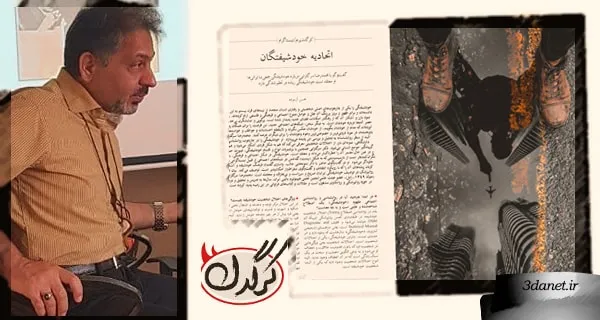
Perennial Philosophy Under Scrutiny: A Conversation Between Mostafa Malekian and Babak Alikhani
In his critique of a book on the Illuminationist mysteries of the Shahnameh, Mostafa Malekian challenges the theory of the perennial philosophy on methodological and epistemological grounds. He argues that by raising the level of abstraction and disregarding historical veracity, plurality is reduced to unity.
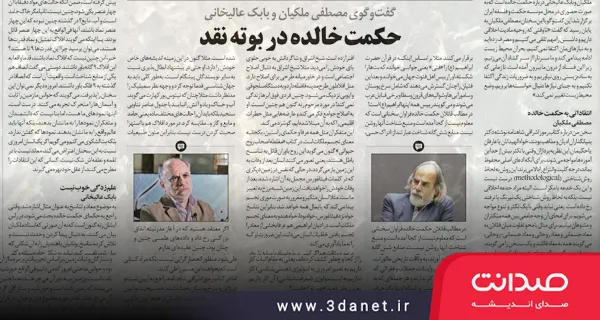
A Conversation Between Mostafa Malekian and Babak Alikhani
Perennial Philosophy Under Scrutiny
Mohsen Azmoudeh | Etemad Newspaper, Monday, December 13, 2021
The term fahlavi was used by Shahab al-Din Suhrawardi (549–587 AH), the author of The Philosophy of Illumination, in his works to refer to pre-Islamic Iranian thought, and he called the mythological and heroic figures of Iran, such as Fereydun, "al-fahlaviyun"—a reference to the Pahlavi culture and language of pre-Islamic Iran. Suhrawardi saw a similarity and correspondence between the ideas of these fahlaviyun and his own Illuminationist and esoteric views, believing that the root of mystical and arcane thoughts is one. In our time, some Traditionalists believe that this fahlavi thought can be explained by the Perennial Philosophy, or Eternal Wisdom, and they call it Khosravani wisdom or fahlavi wisdom. Babak Alikhani, a faculty member at the Iranian Institute of Philosophy, has recently written the book The Illuminationist Mysteries of Ferdowsi's Shahnameh and has sought, from the perspective of Khosravani wisdom, to highlight the Illuminationist philosophical elements in Ferdowsi's Shahnameh. On this occasion, a two-day webinar was held on Sunday and Monday, November 28 and 29, by the Iranian Institute of Philosophy, in which a number of Iranian professors of philosophy and literature participated, such as Seyyed Hossein Nasr, Jalal Khaleghi Motlagh, Nasrollah Pourjavady, Mir Jalal al-Din Kazzazi, Bijan Abdolkarimi, and others. In the fourth panel of this webinar, a heated discussion arose between Mostafa Malekian and Babak Alikhani about the Perennial Philosophy, which, due to technical difficulties, was repeated once more in person. What you are reading is a report of the conversation between Mostafa Malekian and Babak Alikhani about the Perennial Philosophy, which was held in person at the premises of the Iranian Institute of Philosophy. This conversation concluded with these words from Mostafa Malekian, who said: "As long as we have a spirit of moral materialism, consider having as important, are consumed by consumerism, and do not limit ourselves to our needs, the environmental crisis will continue, and we are barking up the wrong tree. For this corruption has emerged from within us. Until we turn to simple living, limit ourselves to the necessities of life, and pursue wants instead of needs, the state of the environment will not change."
Critiques of the Perennial Philosophy
Mostafa Malekian
My remarks concerning Dr. Babak Alikhani's book The Illuminationist Mysteries of the Shahnameh are divided into two parts. One consists of points about the book itself, and the second concerns the core idea in the context and background of which, I believe, the book emerged. Regarding the Perennial Philosophy, however, some questions come to my mind.
Theorists of the Perennial Philosophy believe that there is a set of teachings that have been common, shared, and singular among thinkers from ancient times, whether those thinkers were the founders of religions and sects, or theologians, mystics, or sages. When these theorists encounter the excessive plurality of these teachings, in order to preserve their main claim, they raise the degree of generality and abstraction. This method is not correct from a methodological standpoint; it is a ruse or a trick. Of course, I do not mean an ethical trick, but rather, methodologically, a sleight of hand or a ploy has occurred. That is, when we encounter a plurality and diversity, we should not, in order to eliminate it, find a comprehensive commonality among all the plural and diverse elements. For example, by erasing the difference between those who believe in bodily resurrection, spiritual resurrection, and bodily-spiritual resurrection, they say everyone believes in resurrection and speaks of one thing. Then, when we say that some believe not in resurrection but in reincarnation, they claim that, in any case, everyone believes in one thing, namely life after death. Thus, by raising the degree of generality and abstraction, they try to reduce all pluralities to a single unity.
The next point is that, in order to bring diverse opinions and ideas under a single thought, proponents of the perennial philosophy or eternal philosophy do not concern themselves with the historical authenticity of the traditions, transmitted reports, works, hadiths, narrations, sentences, and passages found in sacred scriptures and so forth; they accept any sentence that serves their central claim—namely, that these all say the same thing. Yet in the hadiths, narrations, and sayings not only of our own religion but of all religions, denominations, and even mystical schools, we have an abundance of statements that lack historical authenticity and, for instance, do not belong to Bayazid Bastami, Abu al-Hasan Kharaqani, or Mansur al-Hallaj. When I was working in Qom, I witnessed that it was seriously repeated among scholars specializing in hadith that at most 5 percent of the hadiths found in hadith collections are authentic. The late Mohammad Baqir al-Sadr considered even this estimate optimistic. But in the books and works of the proponents of the perennial philosophy, every statement that confirms the central claim is accepted, and any statement—indeed, any verse—that casts doubt on the central claim of the perennial philosophers is ignored. Consequently, a historical carelessness is evident in the works of the perennial philosophers. The sweeping, grand, and enormous claims made in this school rest upon the acceptance of a theory in geography, or a theory in astronomy and cosmology, or a theory in medicine. For example, because Ptolemaic astronomy and the nine spheres were accepted, a series of esoteric and symbolic interpretations are made; or theories are constructed based on moisture, heat, dryness, the humors, temperaments, and so on, which belong to ancient physics. Now that foundation has been lost, yet the superstructures built upon it are still believed by the proponents of the perennial philosophy. Or, for instance, numerous conclusions have been drawn based on the fact that the language in which Muhyiddin Ibn Arabi wrote had 28 letters. As a student, however, I cannot accept superstructures that are built upon obsolete ancient sciences.
There is a kind of anachronism in the linguistic inferences of the perennial philosophers. That is, merely because a word is used in multiple texts, they establish a connecting thread among these texts. For example, based on the fact that the Quran calls Prophet Abraham (PBUH) a fata—that is, a youth who smashed the idols—they declare him the head of the fityan (chivalrous youth) of the world, and then they expand these fityan to include the Native Americans, the Samurai, the knights of the Middle Ages, and certain Arab tribes, and say that Abraham (PBUH) is the head of all of them!
In the writings of the perennial philosophers, there are many statements whose origin is unknown and whose source of knowledge is unclear. The six sources of knowledge are: sense perception, introspection, memory, testimony, intellectual intuition, and reason or inference. By extension, we may accept that revelation and mystical unveiling and intuition are also sources of knowledge. But many of the things the perennial philosophers say do not emerge from any of these eight sources. Methodologically, my question is: Where did you get these from? Here the discussion is not about the order of reality and the truth itself; the discussion is about how these individuals discovered this truth, meaning we are concerned with the order of demonstration. In modern terms, we are not concerned with ontology (the study of being) but with the epistemology of it. That is, where is your method of understanding?
Researcher of Philosophy and Ethics
Let Us Not Make Generalizations
and Oversimplifications about the Perennial Philosophy
Babak Alikhani
In the present discussion, Professor Malekian considered the subject of the perennial philosophy in general terms. He sometimes referred to the fact that the perennial philosophy was introduced in the twentieth century by masters such as René Guénon and his students. His remarks addressed their discussions in a general way, and this generality resembles the very abstraction and generalization that is the target of his own criticism. It would be better, in a session about the book Ishraqi Symbols of the Shahnameh, not to discuss the perennial philosophy in generalities but to discuss the book itself on a case-by-case basis. That is, to discuss whether the book has succeeded in making a comparison between Iranian and Islamic culture or not. In this book, eternal wisdom is presented not in general but in a concrete manner concerning Iran and Islam.
For example, René Guénon does not express the unity of religions and paths in a totalizing and abstract manner regarding resurrection and reincarnation. Nor do his disciples. Unfortunately, in recent years they have been called fanciful and supra-historical writers who are incapable of historical studies. But in reality, this is not the case. It is not true that Guénon is uninformed about history. But where has this illusion come from? Because as a sage, he starts from particular facts but seeks meanings. Some imagine that the search for meanings means ignoring history. Whereas this is not so. Anyone who says that illumination (ishrāq) in Suhrawardī's view means thinking beyond the clouds and not seeing what is in front of one's feet has slandered him. The Shaykh al-Ishrāq and his disciples saw very well what was in front of their feet. For example, the Shaykh al-Ishrāq seeks social reform and has a plan for reform in the Middle East. Like Plato, he has a plan for a virtuous city and approaches the Seljuk and Ayyubid establishments. Such a person does not live above the clouds! The same is true of the late René Guénon. He thinks about reforming societies and points out afflictions such as the climatic dangers we have been afflicted with.
These thinkers, like all true mystics and sages, do not think one-sidedly and see both the outward and the inward, both form and meaning. Guénon and Coomaraswamy approach the reconciliation of resurrection and reincarnation through the way of the Illuminationists. Of course, the discussion of reincarnation among the Illuminationists is lengthy. But in summary, it means that reincarnation in India should not be considered in its vulgar sense; rather, one must see how the people of insight in a religion or tradition, for example Shankara in the Hindu tradition, think. Reincarnation for the people of insight means the embodiment of character traits. In the book The Fallacy of the Believers in the Animal Soul, Guénon says these spirit-believers who hold to reincarnation are invalid, meaning they imagine that a human being returns to this earth after death, whereas the soul will find itself on another earth after death, which is alluded to summarily in the words of Pythagoras. This earth is similar to what we call the barzakh (isthmus). For example, an arrogant and proud person becomes embodied in the form of an ant that will be trampled by all. Therefore, reincarnation, whether for Pythagoras, Buddha, or the Hindus, means the embodiment of character traits. In the Abrahamic religions too, mystics consider part of the resurrection to be the embodiment of human moral qualities. This reminds us of the necessity of purification.
Regarding reliability, if someone is negligent about historical documents or sources, they are open to criticism. But the ideal form is not to be content merely with gathering details and to also raise deeper issues. In the perennial philosophy, details are considered, but one does not stop at sensory perception; rather, one strives to reach its secret, and indeed the secret of the secret, and the secret of the secret of the secret. For every matter, there are its people. That is, there must be both aptitude and interest for that path to be traversed. The intention is not exclusivism, but rather it refers to those who wish to traverse this path.
But in the book Illuminationist Secrets of the Shahnameh, Shinto in Japan and the Native Americans are not discussed. There are references to Christianity and the Hindu tradition. But the Daoist tradition in China has been the focus more than anything else. However, most of the discussions concern the relationship between Iran and Islam. The question is, let us suppose I am one of those interested in the perennial philosophy; as a result of reading the works of René Guénon and his disciples like Titus Burckhardt and Professor Dr. Seyyed Hossein Nasr, has my attention been diverted, and is this book a bizarre hodgepodge?
The discussion of modern and ancient science is another important topic raised. For instance, Guénon has his own particular thoughts in this area. He is even a pioneer compared to other writers in proposing falsifiability. In general, one must pay attention to the cosmology of the ancients and keep the symbolic perspective in mind. For example, as Titus Burckhardt says, water, earth, wind, and fire should not be measured against the periodic table of elements, but rather compared to the different states of matter—solid, liquid, gas, and so on. It is also not right to speak mockingly about the celestial spheres. Therefore, the natural philosophy texts of the ancients must be reread with a symbolic view. Setting aside the natural philosophy of Avicenna and Mulla Sadra is incorrect and prevents an understanding of their philosophy. The physical model they presented was a mirror for the physical meanings they were expressing. The cosmology of the ancients is laden with metaphysical import and is important for those who take the metaphysics of the ancients seriously. Likewise, the statements of the predecessors about the movement of the sun and stars and the fixity of the earth were based on our everyday experience of them, and even today, when we know that in reality the sun is stationary and the earth revolves around it, our senses still present it to us as if the earth is fixed and the sun and stars revolve around it. However, on the subject of fata (youth/valiant youth), in the Quran, the Companions of the Cave are called fityah (youths), and it is stated: "Indeed, they were youths who believed in their Lord" (Verse 13, Surah Al-Kahf). It is true that they were young, but this does not negate the meaning of chivalrous for them, because these individuals acted heroically and chivalrously. Prophet Abraham (PBUH) also stood up against the idolaters and polytheists chivalrously and with courage.
Researcher of Philosophy and Mysticism
Anthropomorphism is Incorrect
Mostafa Malekian
Dr. Alikhani, in the discussion of abstraction and generalization, highlighted the example of resurrection and reincarnation, and said that the meaning of reincarnation is that an individual, based on their dispositions and morals, becomes embodied in a form resembling the animal that is the source of those vices. For example, if a person is deceitful, they will appear in the form of a fox. But firstly, attributing a vice to each animal is based on an unacceptable anthropomorphism (incorrect anthropomorphism). We know today through the philosophy of mind that as long as a human is human, they have no access to the interior of any non-human. So, how can one say a dog is loyal or a monkey is imitative? One cannot tunnel into the interior from external behavior. There are several philosophical problems here. The first is argument by analogy with oneself, meaning we have compared monkeys, cats, and dogs to ourselves. Being imitative or deceitful is not related to external behavior but to the inner state of the individual. Secondly, let us assume it is so. In animals, one can also find traits similar to the good qualities of humans, assuming, of course, that anthropomorphism is accepted. So, loyal humans would be reincarnated as dogs, and arrogant humans as peacocks! Why, through a kind of analogy with ourselves, should we attribute what is bad to animals? These statements are fine aesthetic preferences and are attractive to the poetic mind, but they have no relation to logical and rational argument. Another point is that these statements stem from a kind of species-level arrogance of humankind, saying that if I am resurrected in human form, it means I am good, whereas if I am resurrected in the form of a camel, I am bad. This means the human species has a species-level arrogance. Unfortunately, in our traditions, this arrogance is greatly fostered, and it is said, for example, that only humans have free will and other beings are compelled, or that only humans possess reason and others act by instinct, and so on. These arise from a kind of species-level arrogance, but no reason is offered for it. These statements are very appealing and pleasing to us that humans are free, act rationally, and so on.
اما من بارها گفتهام هر وقت سخنی ناز و نوازشمان میكند، بیشتر باید با ادله آن سخن را تشكیك كنیم. وقتی خبر بد میشنویم، دایما در مدارك و اسناد آن تشكیك میكنیم، اما وقتی خبر خوش میشنویم، سادهتر آن را میپذیریم. در حالی كه عقل بشر درست خلاف این حالت را اقتضا دارد و میگوید هر خبری كه ناز و نوازشت میكند، از آنجا كه این ناز و نوازش ممكن است علت پذیرش آن خبر باشد، بیشتر در ادله و مستندات آن خبر مداقه كن. در خبرهای بد كمتر تشكیك كن. در باوری كه انسان را بسیار ستایش میكند، بیشتر باید تشكیك كرد. نمیتوان همه خوشایندهای بشر را به عنوان امر فطری تلقی كرد. درحالی كه خوشایند بشر غیر از مصلحت است و نیاز غیر از خواسته. اما در باب اینكه خاك را جامد و آب را مایع درنظر گیریم، یعنی پذیرفتهایم كه آن طبیعیات راه بطلان را در پیش گرفته است، ضمن آنكه حالتهای مواد دقیقا با آن چهار عنصر یكی شود، چنین نیست، ثانیا مگر خاك جامد است و آب، مایع؟ در گذشته چنین نبوده كه این چهار عنصر نماد باشند، آنها فیالواقع به این چهار عنصر قائل بودند. یا اینكه میگویند افلاك تمثیل و نماد قدرتها هستند، میتوان پرسید چرا این قدرتها 9 تا هستند؟ خیر، اینچنین نیست كه افلاك نماد باشند، قدما واقعا به این افلاك 9 گانه باور داشتند. دوستی میگفت انصاف هم یكی از منابع شناخت است. واقعیت آن است كه انصافا در گذشته به 9 فلك باور داشتند. امروزه دیگر نمیتوان این سخنان را پذیرفت. میگویند كه حواس ما زمین را ثابت و آسمانها را متحرك تجربه میكنند. درست است، اینها نمودهای ما هست، اما بنا نیست كه دانشمندان و متفكران نمودها را به ما نشان بدهند، بلكه آنها باید عالم واقع را به ما نشان بدهند. نمودها كه گفتن ندارد، ما خودمان میبینیم كه خورشید در حال حركت است. متفكران و دانشمندان و فلاسفه و... قرار است ما را از نمود به بود برسانند و اشیا را كماهی به ما نشان دهند، نه اینكه نمود غلط ما را تایید كنند. نمودها كه نیاز به اثبات ندارد. آنچه اهمیت دارد این است كه بشر را از عوالم نمود به عالم وجود یا عالم حاق واقع یا عالم تحقق واقعی برساند. قصد من ایراد گرفتن یا تمسخر نیست، بلكه بثالشكوی میكنم و میگویم اگر یك انسان امروزی نسبت به این سخنان اعتراض میكند، معاند نیست یا در لقمه و نطفهاش شك نیست. كسانی كه این انتقادات را مطرح میكنند، از عقل خود بهره میگیرند.
علمزدگی خوب نیست بابك عالیخانی
به موضوع معاد و تناسخ به عنوان مثال اشاره شد. وقتی راجع به حكمای حكمت خالده بحث میشود، در راس ایشان رنه گنون است كه به آن صورتی كه استاد ملكیان بیان میكنند، به دنبال پیدا كردن وحدت نیست و تلاش كرده تناسخ یونانیان یا هندیان را به آن شكلی كه بیان شد، تفسیر كند. نباید به شكل خام دستانه و كلی راجع به حكمای حكمت خالده بحث كرد.
درباره علم گفتند كه نمودها ارزش ذاتی ندارند. اما این نمودها آینههایی برای جلوهگری بودها هستند. بحث از توقف در نمودها نیست، بلكه آنها سكوی پرشی به سمت بودها هستند. مثلا افلاك تو در تو میتوانند نموداری از محیط و محاط باشند و احاطه مرتبه بالاتر وجود نسبت به مراتب پایینتر را به ما نشان میدهند. طبق این نگاه ما زمینیها توسط حقیقت و تقدیر احاطه شدهایم. مهم تفكر در نمودها و پرواز به حقیقت است. فایده دیگر آشنایی با این طبیعیات، شناخت هنر و ادبیات و آثار دینی و عرفانی است. محسوس پایگاهی برای پرش است. كتابهای عرفا از آنچه محسوس است برای اشاره به مسائل دوردست استفاده میكنند. آنچه محسوس است، مقدمهای برای رسیدن به حقیقت است.
برای مثال طبق طرح زمین مركزی، خداوند عالم محیط بر كائنات است. یعنی احاطه خداوند را میتوان به صورت دایرهای بس بزرگ مجسم كرد. در طرح خورشید مركزی، خدای تعالی مركز است. آیا خداوند فقط محیط است یا مركز؟ در مدلهایی كه ما میسازیم، دو مدل داریم. طرز تفكری كه به تاویل فكر میكند و میخواهد صورتها را به معنا بازگرداند، در طرح خورشید مركزی، خدایتعالی در مركز عالم و چشمه نور است و در طرح زمین مركزی، محیط عالم است. در جاویدان خرد پیشنهاد شده كه دو طرح خورشید مركزی و زمین مركزی جمع شوند، یعنی میگوییم ما یك شأن حسی داریم كه آمیخته به خطاست و مطابق آن زمین را مركز میدانیم و با شأن عقلی خورشید را مركز میدانیم. هر دو را میپذیریم. نباید با حس ستیز كرد. خطای بصری كلاهی نیست كه طبیعت یا خدا بر سر انسان گذاشته باشد. این یك وضعیتی سرشار از معناست و باید معنای آن را یافت.
But if you believe that a great event occurred at the dawn of modernity and that the scientific data was such and such, I do not hold such a belief. Scientific data in itself has little epistemic value or weight. We hope that work will be done on this scientific data. The discovery of an asteroid or a nebula is, in itself, of no importance. Scientism is not good. Modern science and civilization have reached a state where they have destroyed the environment. Even environmental activists are not serious and need to become more familiar with tradition. One should not disparage the natural sciences and the books of the ancients.
.
.
Watch the video of the lecture by Mostafa Malekian and Bijan Abdolkarimi, along with a Q&A session with Babak Alikhani | 8 Azar 1400
Watch the video of the continuation of the conversation between Mostafa Malekian and Babak Alikhani from the webinar on the Shahnameh and Fahlavi Wisdom | 10 Azar 1400
.
.

Discussion0 comments
No comments yet; let yours be the first voice.