Psychology
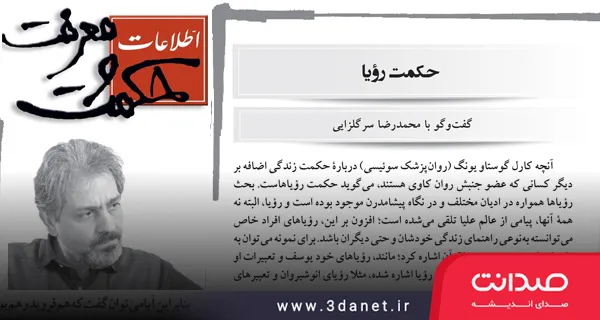
Mohsen Azmoudeh in Conversation with Mohammad Reza Sargolzaei: 'Our Collective Narcissism'
Mohammad Reza Sargolzaei sees narcissism as a personality disorder whose collective, cultural form is more dangerous. Its roots lie in repressed feelings of inferiority or learned behavioral patterns, and deconstructing the discourse is essential.
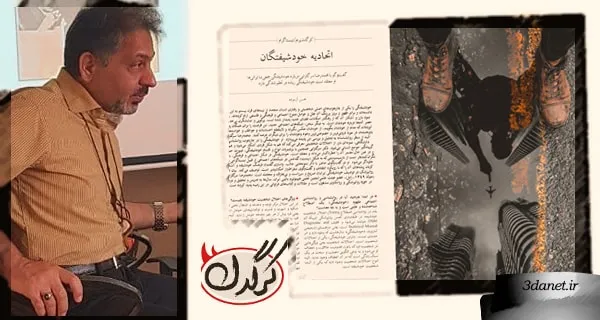
Our Collective Narcissism in Conversation with Mohammad Reza Sargolzaei
The Union of Narcissists
Source: Kargadan Weekly
Interviewer: Mohsen Azmoudeh
Introduction: Narcissism has been considered one of the principal frameworks of modern human personality and behavior since the mid-twentieth century, and various social, cultural, and philosophical causes and factors have been proposed for its prominent emergence. One clear and obvious manifestation of it, which has appeared through the affordances of the new space, is people's boundless loquacity and exhibitionism about themselves. In other words, new social networks have created the opportunity for everyone to constantly talk about themselves, take pictures of themselves, and incessantly present their feelings, emotions, desires, and beliefs about the most intimate and private aspects of their existence to others. Mohammad Reza Sargolzaei, of course, analyzes and examines this phenomenon from a psychological perspective. He introduces narcissism within the framework of academic psychology as a prominent example of personality disorders, which manifests both individually and afflicts human societies. Dr. Sargolzaei, while enumerating the various types and forms of narcissism, considers its collective yet implicit form to be more dangerous and believes that narcissism in its social and cultural form is far more concerning than the narcissism manifested in the form of 'posting' on social networks such as Instagram and the like. In the present conversation, citing interesting examples, he describes the deconstruction of the discourse of the narcissistic culture and the revelation of its roots, which is possible through a critical approach and Socratic dialogue. This psychiatrist's expression in describing the narcissism of Iranians is frank, direct, and without ceremony or pleasantry. Mohammad Reza Sargolzaei (born 1970, Zabol), a faculty member of the Iranian Scientific Association of Clinical Hypnosis, has been engaged in teaching, research, and treatment in the fields of psychiatry and psychoanalysis for many years and has produced numerous articles and books in this area:
***
- To begin with, please tell us, is the concept of 'narcissism' a recognized and scientific term in psychology and social psychology, and what does it mean?
Yes, in psychology, the term narcissistic personality disorder has existed for many years in the classification of the American Psychiatric Association, which is called the DSM, an abbreviation for the Diagnostic and Statistical Manual. It is not a new phenomenon. Therefore, narcissism is one of the personality disorders. Personality disorders are characteristics in an individual's personality that limit their creativity and flexibility, and are a kind of rigid and inflexible pattern in a lifestyle where there is no flexibility. Of course, there are various types of personality disorders, one of which is the narcissistic personality.
- What are the characteristics of narcissistic personality disorder?
In this disorder, the focus of the individual's attention, concern, and mental preoccupation is their own glory, fame, power, and capabilities—that is, the individual is concerned above all with themselves. Of course, in all of us, the drive for self-preservation is one of the fundamental drives. But usually, the drive for self-preservation is activated when we are exposed to danger, whether physical or social. In other words, the instinct of self-preservation is a fundamental instinct, because as long as we are not alive, we cannot have interest in or concern for anything else or any other subject. Therefore, when we are in danger, the most important thing for all of us is self-preservation. But those who are narcissistic do not only find concern for self-preservation in conditions of danger and threat; rather, in any condition, the most important thing for them is how much attention they receive, how popular they are, what status they hold, and they are constantly comparing themselves to others. They usually see their own capabilities, talents, and achievements in an exaggerated way. For example, if they are accepted into a university program, they consider it the best program, or if they were born in a particular city or country, they consider that city or country the best; they consider themselves the most beautiful person. Such a person, conversely, disparagingly underestimates the achievements of others, because they are in fact very envious and become upset and angry if another surpasses them. As a result, they belittle and ignore the capabilities of others. Such a person becomes severely agitated in the face of any criticism and adopts a hostile stance toward the critic, considering them an enemy, and tries to destroy and humiliate that person, and even eliminate them if possible. The narcissistic individual can only tolerate those around them who are in a state of constant praise of them, and who, when they speak of their own glory and splendor, continually affirm them or serve them. Such a person considers themselves entitled to special and exclusive rights and is not willing to stand in line with others, always considering themselves a kind of VIP who should be treated specially; and if others treat them as if they are just like everyone else, they consider those people ignorant individuals who lack the capacity to understand their status. Therefore, they only consider others to be understanding people if they are praising and commending them. Such a person easily tramples on the rights of others, exploits them, and grants them no rights.
- Why does this narcissism develop?
There are two perspectives on this matter which, despite their differences, complement each other. That is, one of these perspectives may be correct for some individuals, and the second perspective may hold true for others. The first is the psychoanalytic perspective, which says that narcissistic individuals are those who have a very strong feeling of inferiority, and because this feeling is so intense in them, they cannot tolerate it and consequently repress it unconsciously; and their method of repression, or in psychoanalytic terms, their defense mechanism, is to use reaction formation. Reaction formation means that when an individual cannot tolerate a truth, to deny it, they speak of its opposite and inverse. For example, a person who feels very abject, insignificant, and lowly constantly speaks of their great achievements and their grand, sublime status. Therefore, from the psychoanalytic perspective, narcissistic individuals are humiliated people who use the defense mechanism of reaction formation, and the reason that any criticism or reproach severely agitates them is that any criticism shatters their armor and defense mechanism, and as a result, that painful feeling of inferiority suddenly assaults them all at once, making them feel terrible, and consequently, they try to suppress any critic.
- What is the next perspective?
This is a behavioral view and says that narcissistic individuals have identified with a narcissistic pattern. This view is based on learning theory and says that narcissistic individuals are children of families that are narcissistic and consider themselves superior to others. Like this very process of aqazadegi (privileged offspring) that exists in our society, where the aqazadehs consider themselves to have good genes and have learned from the 'Aghas,' who are their fathers, that we are superior to others in both worldly and otherworldly terms, and therefore have a greater right than others. Identification (role modeling), in the behaviorists' interpretation, means we become what we are taught and rewarded for. For example, consider a child of a family that had long wished for a child, and now this child is very dear to them, and they tell him that he is a gift from God, better than other children, different from them, that God has granted you to us, that you are a chosen one, and so on... This child gradually comes to believe these things.
- In what sense are the psychoanalytic and behaviorist views complementary?
In the sense that in one person, narcissism might be the very repressed inferiority that psychoanalysts point to, and in another, narcissism might stem from learning, as behaviorists point to. For example, princes, princesses, and those considered nobility, who sometimes believed their blood was bluer than others'. Thus, noble birth or aristocracy is a type of narcissism based on behaviorist and learning theory.
- You mentioned theories about the causes of narcissism. What are the types of narcissism?
We have two types of narcissism. One group we call anti-social narcissists, and the second group we call histrionic narcissists. The characteristic of the first group is that they have a firm belief that they are better than others, and they are so steadfast and resolute in this belief that they feel no need for others' approval. Therefore, they are indifferent to the opinions of others and are not emotional people, meaning their feelings are not influenced by others' opinions. That is, neither can others' praise make them happier than they are, nor does others' criticism upset them. But histrionic narcissists are those who, for their narcissism to endure and their narcissistic beliefs to persist, need the approval of others. These are emotional narcissists, meaning if they are praised, they take great pleasure and become happy, and if they are criticized, they become very upset. These individuals have a great need to display their narcissism and constantly want to talk about their achievements and have others confirm them. Therefore, the emergence and manifestation of the narcissistic symptoms I mentioned differ depending on whether the narcissistic individual is histrionic or anti-social. Consider dictators, for example. Joseph Stalin can be considered one of the anti-social narcissists who, with complete composure and without caring what others thought of him as a bloodthirsty executioner, either killed or exiled all his political rivals. On the other hand, Muammar Gaddafi was a histrionic narcissist, which is why he had very dramatic and theatrical behaviors, from his all-female bodyguard unit to pitching a tent in New York instead of staying in a hotel, or the bizarre clothes Italian designers made for him, the cosmetic surgeries he underwent, and the long theatrical speeches, the last of which was at the United Nations where he tore up the UN Charter and spoke for two hours.
- Can we say that the narcissists we see on social networks are from this second group?
Perhaps one could say so. Those who daily post videos of themselves, their daily activities, their faces, their clothes, and their gestures, and talk about themselves, considering themselves very important and placing themselves at the center of all knowledge, speaking about everything from politics and art to philosophy and spirituality... These are exhibitionist narcissists, and the reason they post so much, promote themselves, and upload videos is to sustain their fragile narcissism; they need to receive "likes" and "comments" and so on. But antisocial narcissists simply go about their business, embezzling billions of tomans and consuming the rights of millions of people, and we only hear their names when a political scandal breaks out; beforehand, we do not know their names at all. They feel no sense of guilt or discomfort about trampling on the rights of others, and if you ask them why they do not pay workers' wages, they say, are these even human beings for me to be concerned about them? These narcissists are not seen, and in my opinion, they are also more dangerous.
- Is the phenomenon of narcissism merely an individual phenomenon?
In fact, narcissism can be examined in two forms: individual and collective. In the first, a person or individual suffers from narcissism, and narcissism for them is a personal and individual discourse, pertaining to a specific person. But there is also a narcissism arising from a "we" that considers itself superior to others. For example, suppose the Iranian nation considers itself a nation superior to others. For instance, they write that art is found among Iranians and that is all! While we know that we Iranians have not had more artistic, industrial, and scientific achievements than other nations, neither more than Indians, nor Germans, Italians, Chinese, and so on. Yet we proudly say that art is found among Iranians and that is all. This indicates a kind of cultural and collective narcissism in us. Or we readily say that the IQ of us Iranians is higher than the IQ of most people in the world. The colloquial version is that we say we have the highest IQ in the world, or we qualify it and say we are among the top ten IQs in the world. While global statistics and the only books that compare IQ among different nations show that the intelligence ranking of Iranians is between 60 and 70 in the world.
- That is below average.
It is well below average. In this intelligence ranking, the average IQ of Iranians has been classified as 89, which is lower than normal intelligence, meaning it is borderline intelligence. That is, the border between normal intelligence and mental retardation. An IQ below 90 is called borderline intelligence, meaning an intelligence that cannot manage its life without support and assistance. Those who conducted this ranking were neither American nor Zionist. Their fields of expertise were anthropology and psychology, and in the ranking, they did not classify their own country's rank as superior to other countries, and this ranking is widely referenced. Therefore, we constantly consider ourselves superior, and when we give examples, we point to Olympiad medalists. For instance, we point to Professor Hesabi or Anousheh Ansari, while there are hundreds of equivalents to Professor Hesabi in Germany, or thousands of equivalents to Anousheh Ansari, the space tourist, in the world. Our Olympiad medalists are the result of discrimination in education. That is, there is a kind of elitism in education where as much is spent on one Olympiad student as on one hundred students living in the urban middle class, and as on one thousand students living in a deprived area, so that they can enter the Olympiad and win a medal. In countries like Norway, Denmark, Finland, Japan, etc., it is never permitted to spend a thousand times more on one elite student than on another student. As a result, the medals we win every year bear no fruit for us, and 90 percent of our Olympiad medalists emigrate and go elsewhere. Therefore, these medals are not an indicator of Iranian intelligence, but rather a sign that we pay a very high price for our elites for a political display, so that our politicians can say we are doing a great job, our education system is healthy, our country is prominent, and we are at a high level in the world, and consequently, they want to illuminate their weak performance and achievements with a showcase they arrange of Olympiad gold medals or sports champions, and hide their own inefficiency in various economic, social, and cultural arenas behind this glittering and glamorous tableau. Therefore, the examples we cite to prove our superiority over other nations are open to challenge, while we readily believe that art is unique to Iranians and nothing more, or that our IQ is higher than others. In the religious sphere, we also have a narcissism and consider ourselves better and more rightful than all the world's religions. We consider a large part of the world's people to be misguided and subject to God's wrath. We see ourselves in a position where we must step forward and guide the people of the world. Whereas, whatever index we consider regarding the health of psychological and spiritual life, from statistics of violence to crime statistics and statistics of social ills like addiction, we see that our situation is not good at all compared to the people of the world. Yet, we consider ourselves more spiritual, more divine, and more ethereal than others. These are spiritual narcissisms that are far more dangerous than individual narcissisms.
- Which form of narcissism, individual or collective, is more concerning?
Definitely collective narcissism, because a narcissistic individual in a healthy society is either easily isolated or forced to change. In other words, a narcissistic individual might, for a specific period, gain power and create corruption due to high intelligence and social conditions, but in a society not suffering from collective narcissism, such an individual is very easily isolated. So, if you see that in twentieth-century Germany, an individual like Adolf Hitler was able to create such a catastrophe, it was because he rode upon a collective narcissism, and that collective narcissism was based on, for example, considering the Germanic race superior to other races and saying that we Germans must guide the people of the world, sift through humans, and eliminate those who are unhealthy. That is, in fact, the collective narcissism in Germany stemmed from the fact that before Hitler, some theorists, even in the field of philosophy, had spoken about the superiorities of the German nation, and this collective narcissism caused that narcissistic individual to create a catastrophe of this magnitude. But when a nation does not suffer from collective narcissism, a narcissistic individual cannot sustain a narcissistic discourse in the long run and, at the very least, cannot create widespread corruption and sedition. Therefore, when we have this collective narcissism, there is also the danger that a narcissistic individual will ride this narcissistic game, and consequently, society supports that individual and applauds him. For example, we remember that Mr. Ahmadinejad used the term 'the great Iranian nation' or, for instance, said that Cyrus the Great established the first human rights in Iran and is different from all the arrogant figures of history, unlike Alexander and Genghis Khan. One of his performances was to unveil the clay tablet of Cyrus the Great, drape a keffiyeh around the neck of an Achaemenid soldier, and say that we are among the ten major nuclear countries in the world and among the few major space-faring nations, and so on... Many people also applauded him and enjoyed it when he humiliated other nations and sneered at them.
- Can this be called a collective illness?
That is exactly right. More than a celebrity who suffers from narcissism harms us, cultural narcissism harms us. Those who, on a political level, ride our collective narcissisms harm us more than an individual who, for example, posts their picture on Facebook and Instagram every day and is a source of entertainment. In contrast, those in the arena of power and politics who ride our cultural narcissism pose a greater danger.
- You referred to two theories in explaining individual narcissism, namely the psychoanalytic perspective and the behaviorist perspective. What can be said about the causes and factors behind the emergence of collective narcissism?
Again, those two mechanisms can be used. That is, from a psychoanalytic perspective, a nation that is humiliated may sometimes become narcissistic for that very reason. For example, a nation that does not have the right to choose its own clothing and may easily be punished and humiliated for its manner of dress, and face reproach and obstruction for entering a public place because of a hairstyle or outfit, may become narcissistic. There is no greater humiliation than forty thousand of a nation's elites going elsewhere and pleading, 'Please allow us to live here and spend all our cultural capital here.' There are three and a half million Iranian immigration application files in Canada alone, and this shows that our situation is very dire. The fact that the judiciary itself announces that the number of judicial cases filed annually in Iran is twice the number filed in India, while India's population is twelve times that of Iran! This indicates that we commit crime 24 times more often than an Indian. We rank first in the world for drug consumption, or first in the world for road accidents, or our prisoner statistics are twice the global per capita rate. The fact that we rank eighth in the world for number of prisoners. The fact that in the last forty years our population has doubled, but our prison population has increased tenfold. And these are official statistics, which are not very reliable and in which there is always a kind of minimization of crises by official media. Such conditions show that a nation is being humiliated, its vote does not count, its choices have no value, and it must always be a criminal for membership in a social network, for having a satellite dish, and for its manner of dress, and at any moment someone may stop it, degrade it, and insult it—this is the situation that occurs. Therefore, an individual who is humiliated enjoys, for instance, reacting to a football match won by the opposing team's own goal by taking to the streets and declaring, 'We are very capable.' Or being eliminated in the preliminary round but proudly saying, 'Nothing has diminished our values,' because we managed to match a good team. That is, screaming and pouring into the streets for something in a domain where it is completely clear we have nothing to say, compensates for the fact that we have been so humiliated that we cannot choose how to walk down the street. This shows the repressed inferiority.
- From a behaviorist perspective, how can this collective narcissism be explained?
This is the very discussion of identification. That is, we are told that we are superior, and we come to believe that we are superior. For instance, we see that when Iranian translators want to translate the third verse of Surah al-Jumu'ah, which says: "وَآخَرِينَ مِنْهُمْ لَمَّا يَلْحَقُوا بِهِمْ وَهُوَ الْعَزِيزُ الْحَكِيمُ" (And others of them who have not yet joined them; and He is the Mighty, the Wise), they write in parentheses that it refers to Iranians who will later join the Muslims but are counted among the near-stationed or the vanguard. No non-Iranian exegete does this. Or, for example, when verses of the Quran speak of the Sabians, the followers of John the Baptist, as one of the divine religions alongside Christianity, Judaism, and Islam, in translation they render Sabians as Zoroastrians. So that we can say the Quran has also affirmed pre-Islamic Iranians. This shows that even Quranic exegetes alter its meaning to say that we Iranians are superior to others. When the cultural elites of a nation speak with narcissism, the nation identifies with it. In school history books, they draw maps of Iran in the Achaemenid and Sassanian eras to show us that from Egypt to India belonged to Iran. This is a form of cultural narcissism. Whereas in the Achaemenid and Sassanian times, we did not have a country in the modern sense to say this is Iran. A politically and militarily capable individual would launch campaigns, seize places, suppress them, and collect tribute from them. There was no Iranian entity. For instance, in a specific period, like 50 years during the Achaemenid era, a place like Egypt paid tribute to Iran, but that was not the case afterward. Alexander of Macedon conquered all of Iran. Therefore, we do not have this super-Iran of the Achaemenid era, or super-Iran of the Sassanian era, or super-Iran of the Ghaznavid era throughout history. Yet our education system places this in children's textbooks. We teach this to our children and teach them a sense of entitlement over others, as if all of this was ours. For example, Georgia was not ours for the Russians to take from us through the Treaty of Turkmenchay. Agha Mohammad Khan Qajar was a coercive and militarily capable individual who captured Tbilisi, Georgia. While neither the race of the Georgians is the same as the people of the Iranian plateau, nor do they share the same religion or language. Agha Mohammad Khan was powerful, but later, when his successors were weak, the Russians helped the Georgians and took action to reclaim the region, and we foolishly went to war with them and were defeated in that war. Yet we still think Georgia, Tbilisi, and Baku belong to us, when they do not. Therefore, when we claim such rights for ourselves due to a flawed understanding of history taught to us, it causes us to treat our eastern neighbors, like the people of Afghanistan, with contempt and call them 'Afghani,' thinking Afghanistan belonged to us and they were our subjects. We also call our western neighbors 'lizard-eating Arabs,' because we think Ctesiphon and Mesopotamia belonged to us and they usurped these lands. As a result, we cannot get along with those around us and consider ourselves culturally and historically superior to others. Thus, we Iranians feel from childhood that we are different human beings and cannot interact with or learn from other nations.
- You referred to the definition of narcissism, its causes and factors, and its types. You are a psychotherapist. What difficulties do you typically encounter when dealing with the treatment of such individuals?
If we return to the clinical domain, one of the characteristics of personality disorders is that the individual has no desire to seek treatment. Such people fully accept themselves and always question others, saying that it is others who must change. Thus, these individuals are satisfied with themselves and want to manipulate others. They usually seek treatment when they become entangled in conflict and friction with others and come to resolve interpersonal issues; for instance, we see them as a family, and they are the ones who introduce others as the person who has a problem and needs guidance, and they typically want to form an alliance with the therapist. That is, to tell the therapist, 'You and I, who are sensible, must guide these unreasonable people.' Therefore, therapists have great difficulty treating personality disorders, and often those with personality disorders usually develop a medical problem and visit a doctor for treatment—for example, their blood pressure is high, or they have a migraine headache, or a skin condition—and the doctor tells them they have a psychotherapeutic problem and must also see a psychologist or psychiatrist. As mentioned, it is also possible that these individuals encounter an interpersonal problem with another or others and seek help. In this case too, treating them is difficult, because as soon as the therapist criticizes them, they discard them and go to another therapist who will validate them. Thus, one of the major challenges of the therapeutic space is the difficulty of confronting a narcissistic individual with a personality disorder.
- If a person with a personality disorder agrees to treatment, what approach do you take?
Therapists usually do two things. One is the Socratic method, that is, to challenge the individual's propositions. That is, to employ counterexamples so that the individual falls into the challenge of critical thinking and once again ponders about themselves and gains a renewed reflection. Like what I did in this interview, presenting statistics about the Iranian nation. If the Iranian nation reads these statistics, they might wonder why we are like this and what has befallen us. This very act of wondering and contemplation is the beginning of treatment. Another solution is to help the individual discover what humiliations and fears exist within them and what repressions they have that compel them to conceal them with the armor of narcissism, to protect them, and to heal them. Both approaches are a kind of probing and creating a challenge. In one, the individual's official discourse is challenged, and in the other, they are assisted in discovering what lies behind that official discourse. Each of us humans has a facet that is our showcase, which Jung called the persona or mask, and a facet that is our back room, which Jung called the shadow. On one hand, we must challenge that persona, and on the other, discover threads to see our own shadow and become aware that we are not what we think we are. In such a condition, the individual begins to learn. That is, a person who imagined they had no need to learn begins to learn, and when they do so, they modify their behavior. Meaning, they understand that if they have problems interacting with others, it is not solely because others are ignorant, or their enemies, or infidels, and those who have incurred wrath and gone astray; rather, part of their difficulty with others is because they lack skills and knowledge, demand more rights for themselves than others, and ignore the realities of the world and social life. In other words, doubt and reflection are the beginning of change and treatment. Humans have a great capacity for learning; it is enough for them to know that they do not know and to know that they need to learn.
- Are these methods effective on a collective scale as well?
Yes, many other societies have undergone this process. For example, the Japanese, until their defeat in World War II, also had a discourse of self-superiority and imperialist-militarism. The emperors of Japan considered themselves superior beings, believed they were descended from the sun goddess and infallible, and the Japanese nation endorsed these emperors and this discourse. Their religion was such that it affirmed these emperors. The Japanese empires had invaded and seized large parts of China and Korea, were at war with all their neighbors, occupying territories, and it was with this same narcissistic belief that they entered World War II. World War II was initially a European war. But the Japanese Empire decided to claim a share for itself in this war, entered into an alliance with the Axis powers, and attacked America. America was not at all willing to enter World War II. Japan's attack on Pearl Harbor caused America to enter the war, and the result of that war was that two atomic bombs fell on Hiroshima and Nagasaki, and the Emperor of Japan accepted all the conditions imposed by America, and his narcissism was shattered. It was from that point that the Japanese nation learned a new way of interacting with the world. Before that, it is true that the Japanese were disciplined, intelligent, and hardworking people, but until World War II, Japan was not a superior industrial, scientific, or economic power in the world and was only striving to be superior to its neighbors in the military and militaristic sphere. All of Japan's ascendancy began when the Japanese understood that they had to learn from the world, and they rebuilt Japan's industrial, administrative, economic, and political systems after World War II with the help of the very Americans who had dropped atomic bombs on Japan. The fact that we recognize the Japanese today as leaders in economic and industrial fields came after this narcissism of theirs was broken, and the Japanese Empire, after its defeat, apologized to the people on the radio and declared that we are not descended from the sun goddess and that we are fallible human beings.
.
.
PDF file of this interview in Kargadan weekly
.
.



Discussion8 comments
دوست ارجمندی که خود را با عنوان “بی سواد” معرفی کرده چندان هم بیراه نگفته است. در روان شناسی از اختلال شخصیتی خودشیفتگی جمعی سخن به میان نیامده است. با آنکه با اصل مطالب جناب سرگلزایی مخالفتی ندارم به نظرم مطالبشان بیشتر مخاطب عام را نشانه گرفته و از مسیر علمی خارج شده است. مطلبی هم که درباره ضریب هوشی مرزی میانگین ایرانی ها گفتند مبتنی بر پژوهش و تحقیق جامع نیست.این پژوهش توسط روان شناسی بریتانیایی به نام ریچارد لین در فاصله سالهای ۲۰۰۲ تا ۲۰۰۶ انجام شده و آن پژوهش از نظر روایی مورد انتقاد قرار گرفته است. در این پژوهش فرانسه اسپانیا و امریکا نیز ضریب هوش متوسط ۹۸ یعنی زیر صد دارند.
کاملاً حق با شما است.
بسیار عالی و آموزنده درود به شما خدا قوت به گردانندگان صدانت
این روزها که سخن از «ژن خوب» و آقازاده ها نقل هر مجلسی است، البته سخن گفتن از شخصیت خودشیفته بسیار بجا و خواندنی است. آقای دکتر سرگلزایی نیز که به حق در شناخت مقتضای حال و مقال دیگر تخصصی به هم رسانیده اند باید از چنین فرصت مغتنمی بهره ببرند. البته این اصلاً بد نیست که کسی با توجه به شرایط روز سخن گوید، ولی مشکل از جایی آغاز می شود که در پوشش بحثی علمی، مطالب عامه پسندی به خورد خوانندۀ مشتاق داده شود. در این مقاله به 9 علامت تشخیصی «اختلال شخصیت خودشیفته» بر اساس DSM-5 به روشنی اشاره نشده و به جایش سلبریتی ها، که از آنها هم کمتر کسی دل خوشی دارد، به عنوان نمونه ای از شخصیت های خود شیفته سخن گفته شده که به لحاظ علمی سخن دقیقی نیست. کسی که از قیافۀ خودش نیز خوشش بیاید و مرتب از خودش سلفی بگیرد باز لزوماً اختلال شخصیت خودشیفته ندارد، هر چند ممکن است خودشیفته باشد.
دوست ارجمندی که خود را با عنوان "بی سواد" معرفی کرده چندان هم بیراه نگفته است. در روان شناسی از اختلال شخصیتی خودشیفتگی جمعی سخن به میان نیامده است. با آنکه با اصل مطالب جناب سرگلزایی مخالفتی ندارم به نظرم مطالبشان بیشتر مخاطب عام را نشانه گرفته و از مسیر علمی خارج شده است. مطلبی هم که درباره ضریب هوشی مرزی میانگین ایرانی ها گفتند مبتنی بر پژوهش و تحقیق نیست.این پژوهش توسط روان شناسی بریتانیایی به نام ریچارد لین در فاصله سالهای 2002 تا 2006 انجام شده و آن پژوهش از نظر روایی مورد انتقاد قرار گرفته است. در این پژوهش فرانسه اسپانیا و امریکا نیز ضریب هوش متوسط 98 یعنی زیر 1 دارند.
عالی بود. بلاخره یه روانشناس عاقل و باسواد هم دیدیم... بسیار مفید بود..
بسیار زیبا بود.عالی
از این عالی تر ممکنه?