Psychology
Interview with Mohammad Reza Sargolzaei: 'Inside the Kaaba, There Is No Need for a Qibla'
Rumi's transformation from jurist to lover can be examined through the lens of Jungian archetypes and the Apollonian-Dionysian struggle. Mohammad Reza Sargolzaei analyzes Rumi's trajectory from an Apollonian, duty-oriented reading to a Dionysian, love-oriented one.
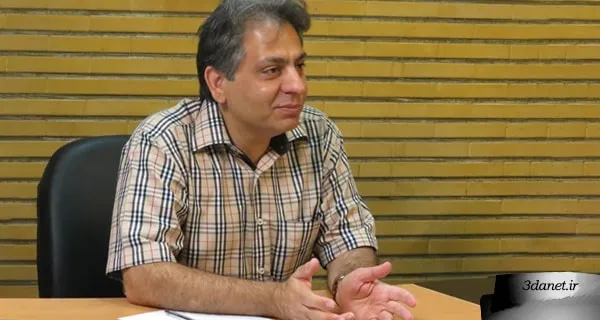
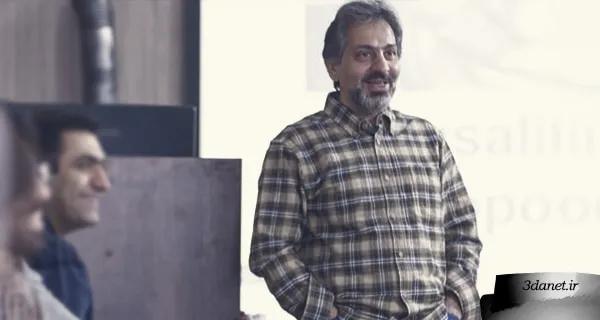
Mohammad Khorsandi: Understanding Rumi, examining his life, and how a prayer-rug-bound jurist became a gambling lover on the one hand, and on the other, that tall, bony, disheveled old man who struck the sparks of transformation in Rumi's psyche, raises many questions in our minds. What was Rumi's personality like before this transformation, and how did this transformation make Rumi the foremost of all mystics in the gamble of love? How did he spend his childhood, adolescence, and middle age? Who was Shams? Where did he come from? What path did the ability to change in Rumi take? To answer all these questions and others like them, we may need a psychoanalytic examination, and by entering the world of archetypes, we might find answers to our questions. Archetypes are fundamental patterns of thought in humans within whose framework all our behaviors, modes of perception, responses to events in the surrounding world, and also our choices throughout life can be defined and examined. Archetypes constitute the content of the collective unconscious, which falls within the domain of Carl Gustav Jung's analytical psychology. For this reason, we sat down for a conversation with Dr. Mohammad Reza Sargolzaei, a psychiatrist, Rumi scholar, and Jungian.
Khorsandi: How was the path of Rumi's life transformation traversed in its archetypal dimension? Please provide your analysis of this issue.
Mohammad Reza Sargolzaei: I want to begin the discussion with the two complementary archetypes of Apollo and Dionysus, but first, it is necessary to give a brief explanation about the nature of the archetype. Archetypes are the spiritual or cultural instincts of humans, just as instincts are the biological archetypes of humans. That is, just as we all have the instincts to eat, drink, mate, and so on, in our cultural life we also have a series of instincts. For example, at a certain age we experience "separation anxiety"; even if no one has frightened us, the fear of losing our parents overcomes us, which is a natural fear at a specific age. These are the recurring patterns of our intellectual and cultural life, which we call archetypes. Before Jung, others had alluded to archetypes, but Jung points to the narrative characteristic of the archetype. An archetype is fundamentally a story, and this story begins somewhere, reaches a climax at some point, and dissolves in some way. As I also mentioned, archetypes are the cultural and spiritual instincts of us humans and are formed without instruction. This is Jung's definition of the archetype. Therefore, belief in archetypes falls within the domain of the philosophy of rationalism, which means that the mind precedes experience, unlike the proponents of empiricism who believe that experience precedes the mind and that until experience is created in our mind, we have nothing called the mind; the mind is that blank slate upon which, based on experience, we fear something or like something. Proponents of empiricism, unlike proponents of rationalism, think that we have no instincts in our intellectual life. So the psychoanalytic perspective in general, and Jung's perspective in particular, is a rationalist perspective, meaning archetypes existed prior to our birth. Now, experience leads to some archetypes being activated within us, and we live within those archetypes. Every era and period also has its own archetypes. With such an outlook, Jung addresses the matter that archetypes are not only current in our collective life, but every nation may have archetypes that are dominant over them; every age and era also has its own archetypes; even a family or a company has archetypes that make its behavior understandable and predictable. This is a summary of what we deal with in archetypal analysis. With this introduction, what happened with Rumi is the struggle between the two archetypes of Apollo and Dionysus. Iqbal Lahori, in his book The Development of Metaphysics in Persia, quoting Heraclitus, writes that Zeus, the god of gods in the Hellenic-Olympian religion, has two aspects, the Apollonian and the Dionysian aspects. In the Hellenic-Olympian religion, the gods are archetypes, meaning the gods are symbols of styles of thinking and living. So Apollo and Dionysus represent two archetypes and two ways of thinking and lifestyles; this subject is very important in the philosophy of religion because most religions fall into one of these two categories; a series of religions are Apollonian and a series are Dionysian. The characteristic of Apollonian religions is the triad of God, human, and duty, meaning that between God and the human, there is something called duty. In Apollonian religions, God is personal and watchful, meaning He has personality and is an observer over the human, and reward or punishment is given based on the fulfillment or non-fulfillment of duty. Jurisprudential religion falls into this category of religion. Religion is a framework set for the human, and God demands those duties from the human. But the religion of mystics in most faiths is a Dionysian religion, where there is no God and human, but rather a God-human. Instead of encouragement and punishment, we have union and separation, which are two psychological states. In fact, the God-human is a perceptual state. This religion is a religion that jurists have a problem with, because the definition of divinity in the discourse of Dionysian religions is completely different from divinity in Apollonian religions. Well, the heart of the matter regarding Rumi is that he moves from an Apollonian reading towards a Dionysian reading, and its most important indicator in the Masnavi is the story of Moses and the Shepherd. In this story, Moses represents the Apollonian discourse and the shepherd represents the Dionysian discourse. The shepherd does not recognize duty, but recognizes love, recognizes unity, but Moses there is as an Apollonian prophet because he was given the Ten Commandments. From Jung's perspective, the Christian religion is a Dionysian heresy within the Jewish religion, where the rabbis, the jurists of the Jews, taught God, human, and duty with an Apollonian outlook, while Christ was a Dionysian revolutionary who said that the human should connect to God without the mediation of duty and jurist.
It was, in a sense, religion against religion, which ultimately led, in the Christian reading, to Christ being crucified. The symbols of Christianity were all Dionysian symbols, such as the fish symbol. When Moses is to meet Khidr, the sign placed between them is the spot where a dead fish is to come back to life—a story recounted in Surah Al-Kahf, verses 60 to 64. In these verses, Moses says to his companion: We must go to a place where the two seas meet. When they had gone further, he said, "Bring us our food to eat." Moses' disciple said, "I forgot to bring the fish, and it is Satan who causes man to forget." This is the place where Moses is to meet Khidr. (Although the Quran does not mention Khidr by name, it says, "one of Our servants upon whom We had bestowed mercy and whom We had taught knowledge from Ourselves.") Here you see Moses realizing that laws are relative, and Khidr becomes a "God-man," because Khidr is the issuer of law, therefore he is a God-man. This is where the meeting between the Apollonian religion and the Dionysian religion takes place. It is, of course, necessary to note that Christianity, too, later became an Apollonian religion. Despite Christ himself being a Dionysus, the religious organization, a few centuries later, turned into a masculine, Apollonian church, and the Dionysian religion within Christianity became an underground religion, which was Gnosticism—the Dionysian reading of Christianity that interested Jung. In Rumi's time as well, the religion of the jurists was the Apollonian religion, and Rumi, in the first half of his life, grows within an Apollonian framework, and after meeting Shams, discovers the Dionysian aspect of religion. In fact, the Khidr within Rumi rises up. One could say that Rumi is like Moses, and Shams is like Khidr, who, in this meeting, becomes the catalyst for Rumi's transformation, where the law-giving, jurisprudential Moses within Rumi meets the Khidr within Rumi.
Mohammad Reza Sargolzaei: From the perspective of the Greek philosopher Empedocles, we have two fundamental tendencies in cognition: the Logos (Apollonian) tendency and the Eros (Dionysian) tendency. In the Logos tendency, to know something we distance ourselves from it, divide it into its constituent parts, and understand it based on those parts. This is one type of cognition, and the other is Eros cognition. In Eros (Dionysian) cognition, when we want to know something, we draw it into ourselves or throw ourselves into it. For this cognition, distances must be removed and experienced. Thus, we cannot know something until we intermingle with it. When we look at Rumi after his meeting with Shams, we see his emphasis on a Dionysian or Eros cognition, the most important example of which, in my mind, is the story of the Elephant in the Dark. Those who tried to know the elephant with partial reason, or Apollonian reason, were unable to know it, but if they had a candle in their palms, they would have known it all at once—all at once, meaning with universal reason. This itself shows that Rumi moved from Apollonian cognition toward Dionysian cognition. Note carefully that there must be a balance between the Apollonian tendency and the Dionysian tendency. For instance, in scientific research and in managing our livelihood, we need the Apollonian (Logos) perspective, and one cannot recommend the perspective of a Dionysian Rumi in these domains! It is important to keep in mind that for a society that is overly Apollonian, we should read the Gospel to it, or the ghazals of Rumi and Hafez. These are Dionysian literatures and play the role of a reformer for that society, but for a culture that is Dionysian and has gone to extremes in its Dionysian nature, an Apollonian perspective must be injected into that society. I see our own society as suffering from an extreme Dionysian culture, and to this society, instead of reciting ghazals and performing Sama, I recommend studying mathematics and law. In ancient Greece, they had established an interesting balance between the cults of Apollo and Dionysus. In the Apollonian temples, they believed that for three months of the year, Apollo left the temple. In fact, the Greek gods are very humanistic; Apollo goes on a journey, and during these three months, Dionysus takes up residence in the temples, and other priests no longer run the temples. Women come who, instead of preaching and advising piety and the performance of duty, begin to serve wine—they essentially become cupbearers—and perform Sama. The influence of this Greek balance can also be clearly found in this verse by Hafez, who says: I do not tell you to worship wine all year long; Drink wine for three months, and be pious for nine. The next point regarding the midlife crisis is that people who have lived Apollonian lives and have known God through Apollonian religions reach a point where this religion no longer seems to answer them. That is, this duty-oriented religion was for the first half of their lives. It is here that Rumi says: When you are on dry land, you need clothing and a mount, but when you reach the water's edge, there you must abandon both mount and shoes. Inside the Kaaba, there is no rite of Qibla; What grief if the diver has no skirt to hold? When you enter inside the Kaaba, you can no longer have a Qibla, and instead of praying facing the Qibla, you whirl around yourself and perform Sama. The logic of Sama is the logic of the religion of being inside the Kaaba. One who wants to enter the sea must take off their clothes; they must engage with the water and the sea in a Dionysian way. This being a diver is, in fact, a symbol of Dionysian thought. When Rumi finds himself in a midlife crisis, it means he has reached the final Apollonian point. There he reaches the sea, so he must go and remove his skirt (the hem of his garment) and immerse himself in the water.
Khorsandi: You mentioned some excellent points regarding Rumi's Apollonian personality. From childhood, Rumi accompanied his father to his lecture gatherings; he was a studious child and, in today's terms, a
Mohammad Reza Sargolzaei: Precisely. All obedient children undergo psychological repression because, during the socialization stage, institutions of authority such as the family, education, the state, and religion, which dictate what is good and what is bad, repress the "bad me." The result is that a mask of the "good me," or persona, is formed, behind which everything bad is hidden. In any society, those who are extremely "obedient children" and comply with institutions of authority suffer the most psychological repression. Consequently, you never see a midlife crisis in sloppy, lawless, or failed individuals. The midlife crisis belongs to someone who has repressed a large part of their psyche and, as a reward for these repressions, has risen through the ranks, received medals, performed night prayers, fasted, refrained from taking people's property, avoided looking at people's womenfolk, and so on... all of this means repression. They have lived only one part of life; here, the Shadow says, 'I want my share,' and it is at this point that successful people experience a midlife crisis. It is not only Rumi who undergoes this; other figures like Imam Mohammad Ghazali, a jurist who becomes a mystic, Attar, a pharmacist who becomes a mystic, Naser Khosrow, and many others of this kind also do. The important point about these individuals is that someone came and sparked something in them and then left, and that person was not even a very important figure. So, in the meeting of Shams and Rumi, we should not look for something strange and extraordinary. It could have been anyone else who came and gave Rumi this nudge, but it was Shams who did. Shams's nudge awakened Rumi's dormant Dionysus. This Dionysus knocked the Apollonian turban from Rumi's head and turned him into a Dionysian lyric poet. Apollo and Dionysus are incompatible and in conflict: 'One side pulls toward the pleasant, one side pulls toward the unpleasant / Either it breaks or it passes, the ship in these floods.' In the struggle between the Apollonian Rumi and the Dionysian Rumi, Rumi's Hermetic aspect becomes active and mediates between these two 'incompatibles,' building a bridge—something that did not happen for Nietzsche, who suffered a psychological collapse. Rumi's Hermetic aspect awakens in the Masnavi. In the Fihi Ma Fihi, we have the Apollonian Rumi; in the Divan-e Shams, we have the Dionysian Rumi; and when we reach the Masnavi, Rumi's Hermetic aspect is completely evident. In the Masnavi, Rumi is a storyteller; a story within a story is nothing but a twist, so that the conscious mind can penetrate the unconscious mind. Hermes is penetrating and roguish. So roguish that I do not see the roguishness I see in the storytelling Rumi of the Masnavi even in Hafez. Because Hafez is Dionysus, and Dionysus is not a rogue. In my opinion, this Hermetic aspect in Rumi allowed him to find a balanced point between the Apollonian and Dionysian aspects. Hermes is the healer of all archetypes except himself. This was the story of Rumi's development.
Khorsandi: So far, it has become clear that Rumi had an Apollonian personality, meaning everything about him was on schedule and developed in line with his father's upbringing, turning him into a master preacher. Up to this point, Rumi's personality has been examined; let us leave that and see what characteristics Shams had. From childhood, Shams had problems with his family. Regarding his father, he says: 'My father was a good man, but he was not a lover; a good person is one thing, and a lover is another.' Or the arguments that would take place between Shams and his father showed that the father had no understanding of his son, and Shams was not a son who would listen to his father's words and fulfill the wishes he had for him. Shams introduced himself as a duckling of the sea of gnosis, while his father wanted him to be a domestic chick. They were in two completely different worlds. So, he had these challenges with his family, whereas Rumi did not have such challenges. On the other hand, Shams also had problems with his own teachers in school; he was a restless person who could not sit in a classroom. So, he never had the characteristics of a studious person. At a young age, around 17, he ran away from home and set out on a journey. Such a person, with the characteristics we have enumerated, is the polar opposite of Rumi.
Mohammad Reza Sargolzaei: From what you've said, I gathered that Shams never accepted the framework of socialization from the beginning, like Jesus Christ. He is an example of an absolute Dionysus. First, he is a fatherless son; moreover, he was branded with the stigma of illegitimacy and bastardy, so he speaks in the cradle, the Holy Spirit came to him before anyone else, and in his youth he is crucified. So Christ does not get caught in a midlife crisis either; he is an instance of the God-man. With this description you give of Shams, Shams was a Dionysus from the start. Now we must see what archetype he transforms into after the age of 50 and how he influenced Rumi. Did he have a Dionysian influence on Rumi, or does he exert a "Hadean" influence? In Hellenic-Olympian myths, Hades is the land of the dead, of specters, shadows, and buried treasures; therefore, one of the characteristics of Hadean personalities is the discovery of buried treasures.
Khorsandi: We cannot attribute all Hadean characteristics to Shams. It is true that he was an introverted individual, but he did set out on journeys. A Hadean person does not travel. I think Shams's Hermetic aspect was strong, and we can also accept parts of the characteristics of a Hadean person based on the explanations you gave. So wouldn't it be better to say he is a Hermetic-Hadean person whose Dionysian aspect was also strengthened and developed?
Mohammad Reza Sargolzaei: We travel in two ways. One kind is "traveling from," and another kind of travel is "traveling to." Some people travel because they want to make new friends; this is Hermetic travel. Conversely, there are travels that are for solitude. For example, René Descartes, the French philosopher-mathematician, was constantly traveling, but he traveled so that no one would recognize him and disturb his philosophical meditations. This is a Hadean journey. But someone who is Hermetic travels to experience new things. Something that exists in Hermes types is that they are beloved, and what I have heard is that Shams was not very beloved.
Khorsandi: One of Shams's characteristics is that he was an eloquent orator; he connected with others very easily, and just as he established this connection, he severed it with the same ease. Another characteristic of Shams was that he did not pursue work that created responsibility for him, and he usually worked just to cover his basic living needs. Most importantly, in the collection of articles, which is our most important reference about Shams's life, I did not observe anything indicating that Shams suffered from depression. As you know, depression lies in the realm of Hades. All of this, and the points I have raised, makes me view Shams as a Hadean archetypal personality with a bit of caution and skepticism, although some Hadean characteristics can be observed in him.
Mohammad Reza Sargolzaei: Saeedeh Qods's account of Shams Tabrizi in the book *Kimia Khatoon* is a one hundred percent Hadean narrative. The story of Kimia Khatoon reminds me of the story of Persephone in the land of Hades.
Khorsandi: The important point here is that, in my opinion, Saeedeh Ghods had no understanding of Shams's personality and projected whatever her own femininity longed for onto the story of Kimia, and there is no credible historical evidence or documentation for Saeedeh Ghods's writings in Kimia Khatun. Although I accept that Shams was irascible and hot-tempered, that is not the whole story, and what really transpired between Shams and Kimia is unclear. The injustice that Ms. Ghods has done to Shams by writing Kimia Khatun is unforgivable, so Ms. Ghods's writing is not a document proving Shams was Hadean. We could say that Shams was very close to the realm of Hades, but another characteristic of Shams is his conviviality. Conviviality belongs to Hermes. We can even attribute the quality of the eternal adolescent to Shams, a quality that shirked all responsibility. In my opinion, even if Kimia had not died, Shams ultimately could not have sustained family responsibilities and would have abandoned Kimia to her own devices and left. So here, Shams, with such characteristics, encounters a masterful preacher. What do you think happens when a disheveled old man who is Hermetic, Hadean, and Dionysian suddenly turns an Apollonian preacher upside down? As Rumi himself beautifully says: 'I was a pious man of the land, I was a master of the pulpit / Fate made my heart a lover and a clapper of hands for you.' What was this love that arose between Rumi and Shams, which not only set their own beings ablaze but also set fire to the souls of the burning ones of the world?
Mohammad Reza Sargolzaei: I cannot give a definitive answer to this matter. But the reason this explosion occurred, in my opinion, is that Rumi had reached the threshold of his inner Dionysus. I imagine that even if Shams had not been there, this event would certainly have happened through some other incident and he would have encountered a trigger from somewhere. The only thing that helps in the relationship between a master (morshed) and a disciple (morid) is that it eases the path for the disciple. In my opinion, the connecting link between Shams and Rumi was that Rumi saw in Shams what he was destined to become.
Khorsandi: I do not strongly believe in this notion that if Shams had not existed, Rumi would still have become Rumi. Rumi became Rumi because of Shams's existence, because of the love that arose between them. In my opinion, it was this love that transformed Rumi; Rumi's love for Shams.
Mohammad Reza Sargolzaei: I cannot offer an opinion on this; in this area one can only speculate and theorize. But since I am supposed to approach the issue through a Jungian lens, your reading reminds me of a piece by Dr. Ali Shariati called “The Tragic End of Jung’s Life.” I do not know from which of Jung’s books Dr. Shariati quotes what he attributes to Jung in this text, because I have not seen the material he quotes from Jung in the ten books by Jung that I have read, and in his book (which was actually a personal reflection that later became a book) he provides no citation of his source. Nevertheless, I will refer to what he quotes from Jung concerning the strange and wondrous effect of such a connection: “Jung considers the psychological signs and indications of this indwelling and absorption of another within a soul to be examinable by the psychologist, and says that while the effects of this indwelling are at times so hidden, subtle, and fleeting that they can scarcely be studied, it is nonetheless possible, and certain very clear and prominent states and characteristics, in particular, can be grasped more easily. From Jung’s account, it appears that this state resembles a kind of madness, which Jung has termed alienation by another (L’aliénation Par L’autrui Alienation). Alienation is a term that the German philosopher Hegel popularized in philosophy, and later his famous student Karl Marx introduced it into sociology, maintaining that the tools of labor and production with which a human being is in constant contact gradually and spontaneously infiltrate the person and distort his original personality. The word Alienation originally means madness and insanity, and as is also evident from the two words madness and insanity, in ancient times it was believed that this state arose from a jinn or demon entering a person and distorting his reason and soul. Jung has employed this same term in psychology, meaning that through contact, seeing, and becoming acquainted with someone’s soul, and especially through discovering its hidden paths, openings, and twists and turns, and particularly through feeling a kinship or sympathy and many sensations of mysterious and indescribable resemblance and affinity with it, and through finding hundreds of invisible threads and unseen bonds between himself and the other, a person gradually reaches a point where he senses the other within himself or himself within the other, and the two are one, for he no longer feels the difference between them and forgets the distinction between I and thou. Here, although I must inevitably sacrifice elegance of expression, I will try, for the sake of clarifying Jung’s complex and subtle statement, to present a summary of the most important issues he has raised in a didactic and pedagogical style. The alienated person—that is, one who senses another’s soul or indeed another person entirely—undergoes a startling revolution that is unpredictable and inconceivable to others who knew him. This revolution occurs intensely in his morals, behavior, sensitivities, temperaments, emotions, beliefs, thoughts, and even his lifestyle, as well as in the quality of his talents, transforming everything, so that he severs his connection with the past to such a degree that he becomes a stranger to it; he no longer bears any resemblance to his past, that is, to his former self. His mental and intellectual states and characteristics become unknown and enigmatic to all who knew him. The indwelling of another within him causes him to no longer resemble himself. With a sudden change, everything appears different in his eyes. This transformation occurs not only in his beliefs, temperaments, and thoughts but also in his outward senses; colors change, tastes, sounds, shapes, images, ugliness, beauty, evils, goods, strangers, familiars, friends, and enemies all emerge from their original molds and acquire a different quality and state, each leaving an effect on him that is different from always, and at times contrary—even, for instance, sweet things become bitter, bitter things sweet, familiars become strangers. The reaction he shows to each of these is at times irrational and unbelievable; for example, sometimes very serious and grave events have not the slightest effect on his soul, and conversely, a very small gesture, a particular state, or a sensation he derives from, say, a color, produces such indescribable suffering or joy in him that it is astonishing.” If we accept this quotation by Dr. Shariati from Jung, I can say that Rumi’s transformation under the influence of love for Shams can be analyzed in a “Jungian” manner in this way.
Khorsandi: To what extent does separation from Shams contribute to Rumi’s maturation?
Mohammad Reza Sargolzaei: A person's maturity comes into being from the moment they confront the most painful loss of their life; a loss they never thought they could endure, for instance, living without that person. Everyone has a "significant other" upon whom their identity, the meaning of their life, and their security seemingly depend. For one it is their child, for another their mother, for another their religion, for another their spouse, for another their political party, for another money, and so on. When a person loses that, they come face to face with the naked aspect of life. In fact, the pinnacle of that maturity is that we can endure this deprivation without becoming depressed, without deceiving ourselves, and without succumbing to anger, but rather be able to confront the naked reality of life and endure it, a reality whose essence, as the Buddha said, is suffering (Dukkha)! If Shams was for Rumi what Silvano Arieti calls the "significant other," then it can be said that the separation from Shams confronted Rumi with the most painful loss of his life, and this confrontation, if it does not break a person, brings them to the peak of their maturity.
.
.
Interview by Mohammad Khorsandi with Mohammad Reza Sargolzaei, titled "Inside the Kaaba, There Is No Need for a Qibla"
The interview by Mohammad Khorsandi (communications expert and Rumi scholar) with Dr. Mohammad Reza Sargolzaei was published in full in the Noavaran newspaper on Monday, 27 September 2015 (special issue commemorating Rumi).
.
.


Discussion0 comments
No comments yet; let yours be the first voice.