Sociology
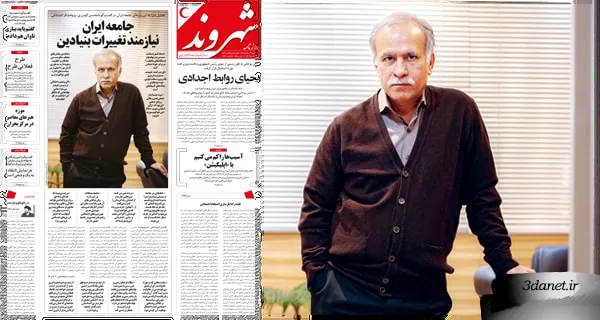
Mostafa Malekian in Conversation with Etemad Online
In a conversation with EtemadOnline, Mostafa Malekian identifies Iran's greatest affliction as 'social atomism and lack of integration,' locating Iranian identity not in race or language but in a unified political sovereignty—a reading of Iran's present condition.
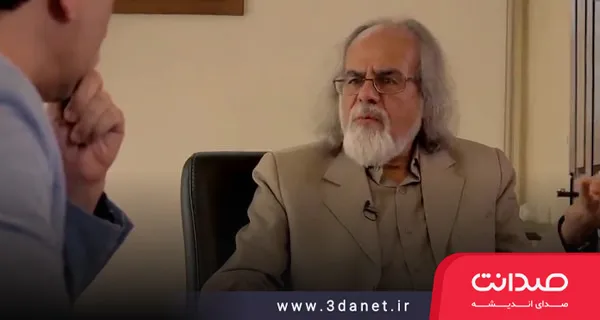
Etemad Online : Shahram Sahraei — “Why is there no consensus on the whatness, whereness, and being of Iran? Why have unity and solidarity given way to fragmentation and disconnection? Why, when Iran’s national football team emerges victorious, does everyone chant ‘Iran, Iran,’ yet no Iranian Iran exists in the social, political, economic, and cultural spheres? Why is the philosophy of life of the government and rulers different from the philosophy of life of society? What role do intellectuals play in the midst of all this? Is the greatest wealth of a nation and political system the accumulation of epistemic systems and civilizational teachings, or the range of missiles, the size of the economy, and the power of diplomacy? And perhaps the most serious question: What is the greatest affliction of Iran today?”
Answering these questions is important because it reveals the ideological and intellectual system of the rulers and the social masses, and shows how close or distant these visions are from one another. But who has the ability and technical capacity to answer these questions? The country’s officials, sociologists, people of politics and power, or intellectuals?
Undoubtedly, all Iranians, from the social masses with every vision and belief and from every class to the elites of every disposition and creed, must rise to address these questions, so that one day a national dialogue about the whatness and being of Iran and the attainment of genuine commonalities for the future of Iran and Iranians may be facilitated.
In line with its professional mission and to initiate this important event and obtain answers to these key questions, Etemad Online has approached someone whose scholarly dignity and character are evident to both the common people and the elite. An intellectual who is both a product of the university and the seminary. Someone who knows both engineering and philosophy. Someone who has sat at the feet of Ayatollahs Javadi Amoli, Misbah Yazdi, Hassanzadeh Amoli, and Seyyed Reza Baha’oddini, and also someone under whom many students have studied at the universities of Tehran, Tarbiat Modares, Imam Sadiq (AS), Qom, and the Imam Khomeini Institute.
A philosopher who has moved beyond fundamentalism, traditionalism, modernism, and existentialism, and now, with his theory of rationality and spirituality, has much to say. An intellectual who is a critic of religious intellectualism, and whose outspokenness delights many as much as it distresses and angers many others: “Mostafa Malekian.”
This Iranian intellectual and philosopher answered each and every one of Etemad Online’s questions with particular patience and composure. But perhaps, in his home, he said something that seems to occupy his mind day and night, a concern he expressed thus: “The greatest affliction facing contemporary Iran is a lack of integration and a growing kind of social atomism.”
Social atomism, in Mostafa Malekian’s interpretation, means that each person’s relationship with others is without doors or windows. More simply: each of us is an atom, thinking only of our own nature and destiny. But does this philosopher and intellectual also have a prescription for deliverance from this affliction and malady?
Read the detailed conversation with Mostafa Malekian below:
***
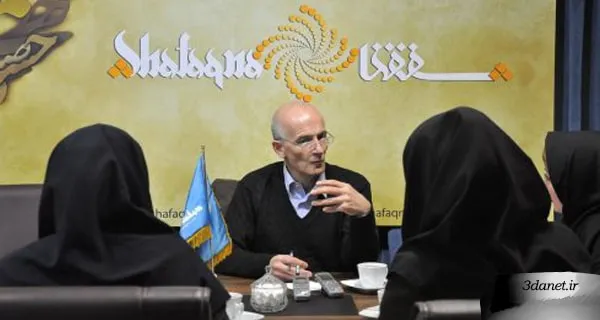
I am Shahram Sahraei, and this is the fourth episode of the Ketab-Shenakht series of programs by Etemad Online. Today I am in the presence of the esteemed and erudite master, Mr. Mostafa Malekian. I usually introduce the program’s guest very briefly, but Mr. Malekian is far more recognized and renowned than to need any definition or description from me, and I believe anyone with an interest and studies in the humanities is certainly familiar with his distinguished name, his personality, his erudition, and his mastery. In this program, unlike other programs which are usually about introducing a book or a series of books related to a field to familiarize Iran’s reading public with famous, influential, and important books, the master has honored us and given us his time to ask a few questions that perhaps these days in Iran necessitate posing such questions to him. Mr. Malekian, I am very pleased to be with you. Thank you for giving us your time, and if you permit, I will ask you these questions in order.
I am at your service.
Thank you very much. One of the questions is why there is no consensus among the elites, intellectual leaders, and institutional managers of the government about what and where Iran is?
I am very grateful to you. In my opinion, it is because whatever identity or essence we consider for Iran, we will encounter a problem. If we consider Iran and Iranians to have a specific racial identity, many of those who live in present-day Iran do not have Iranian race, and many of those who have Iranian race do not live in present-day Iran; for example, they live in Afghanistan or Tajikistan and possibly elsewhere. If we consider the concept of Iran a linguistic concept, this problem will arise: firstly, many of the people who live in present-day Iran do not speak Persian; many of those who speak Persian do not live in present-day Iran; moreover, throughout history, our language has not been the contemporary Persian language either. Our Persian language was not spoken by Iranians of 1800 years ago, and the people of Iran 1800 years ago spoke a language of which we now do not understand a single word. If we consider Iran a geographical concept, without the slightest exaggeration, throughout history, this country has undergone contraction and expansion dozens of times. Territories were separated, territories were annexed, again territories were separated and territories were annexed; there has been an astonishing contraction and expansion in the geographical borders of Iran. If we consider Iran a cultural concept, again this problem arises that pre-Islamic Iranians, assuming they all had one culture—which is itself highly doubtful—but in any case, the element of Islam did not exist in that culture at all. In post-Islamic Iranians up until 200 years ago, the cultural-Islamic element was very dominant, although elements of pre-Islamic Iranian culture also existed in this country. From 200 years ago onwards, in addition to this, modern Western culture has also entered, and we now have a culture that neither the people of Iran 300 years ago had, nor, a fortiori, the people of 1300 years ago or 2300 years ago. Therefore, we cannot consider Iran a cultural concept either. The problem is that the concept of Iran is a construct, and when you want to base this conventional and constructed concept anywhere, it is a preference without a preponderant reason. Thus, your racial concept, linguistic concept, geographical concept, and cultural concept all run into problems. This is why there is no alternative but to formulate the convention in a way that is more reconciled with our current situation. And if we want it to be more reconciled with our current situation, we have no choice but to say that Iran means the collection of human beings who currently live under a single sovereignty; that is, a single political sovereignty governs them. If we say this, it is the most compatible with our current situation. But we know that in formulating this convention, we have only considered the current political situation. We have considered neither the political situation of 300 years ago nor the political situation of 100 years from now. In my view, this is a convention. Yet, this convention is more reconciled with our current situation and has less incompatibility.
I think you have also answered my next question, because my next question was: if you were to define Iran and state the identity and essence of Iran in simple language, what definition would you offer?
In the same way you mentioned, I say in simple language that: we now apply the term Iran to the collection of human beings who all live under a single political sovereignty.
Now, this political sovereignty is the Islamic Republic of Iran. Well, if this was not the case before and if it is not the case later, these do not undermine our discussion. The geographical borders of this Iran with this political sovereignty have not changed since the beginning of Reza Shah's rule, but something that has not changed does not mean it will not change. Just as in the past, it was constantly changing in the same way, in the direction of increasing area and in the direction of decreasing area, and in this same direction and orientation.
Why is Iranian society not unified?
Integration does not have a single meaning. Sometimes when we say it is not integrated, it means that Iranian society is culturally composed of different, distinct cultural layers. This is true, of course, but it is not unique to Iran. In any country, there can be Muslims, Christians, Jews, Zoroastrians, and followers of any other religion or denomination. In this sense, of course, the matter is not specific to Iran.
Sometimes, what is meant by the absence of cultural integration is not necessarily religion or denomination; it is lifestyle. What we today call "style of life" is lifestyle. This lifestyle is indeed truly different among us. There are individuals who have a traditional lifestyle, and others whose lifestyle is modern, and this too is not unique to Iran. In many third-world countries, traditional lifestyles coexist alongside modern lifestyles, just like us. Sometimes the issue is not solidarity; the issue is solidarity in the sense that all Iranian citizens do not hold a single position toward their political government. There are individuals who are fiercely opposed and individuals who are fiercely in favor, others have moderate opposition or support, and some are completely neutral. Such a thing exists. This, however, is no longer uniformly present in the countries of the world. This issue seems more acute in a country like ours, where a wide spectrum of Iranians range from the utmost opposition to the utmost support. Each of them is at some point on this spectrum. Well, if we ask why this is, it is because the current government of the Islamic Republic is an ideological government, and all ideological governments have this condition. Any government, if it is ideological, gathers together the most stubborn antagonists and the most devoted proponents. If this type of solidarity is to emerge, the government must set aside its ideological aspects; then a kind of consensus will emerge. This consensus, of course, will not keep everyone at the same level of agreement, but it will increase their proximity to one another. But another kind of integration, which is now the most dangerous of all, is that our social bonds are weakening day by day; that is, our compassion for one another is diminishing. Our fairness and justice toward one another, our love for one another, our attention to the affairs of others, to the pain and suffering that Iranian citizens endure. In my view, this is the greatest calamity that contemporary Iran faces. This is also a type of lack of integration; it means that we are seeing a kind of social atomism growing intensely in Iran. That is, each person is without doors or windows to others. I have no doors or windows to you. I am withdrawn into myself and, at most, into my own situation and that of my family. You too are withdrawn into yourself and your own situation and family. And a kind of social atomism has emerged. Each of us is an atom and we only attend to our own nature and destiny. We do not form molecular collectives. We had this and are losing it day by day, and I do not think that if this atomism emerges, it will be easily destroyed. It would have been better if it had not emerged, and if nothing and no event had brought it about. This, of course, exists. When I see a crime taking place on the street and a witness is merely filming and does not intervene at all, I say that social solidarity has weakened here. This social atomism, that I merely retreat into my own shell, is the greatest calamity, and now if someone asks me what should be done for Iran? I say the first thing that must be done is to prevent the growth of this social atomism. Indeed, we must even reverse and eliminate this degree of social atomism. At the very least, we must stop its growth; if we cannot reverse it, we must stop its growth. Today, our social solidarity is very low in this respect.
I think, in truth, this integration was a word that had several meanings, but the absence of its latter meaning is the most dangerous and distressing of all.
Precisely. You see, when social atomism emerges in a society, in addition to severely threatening the foundation and existence of that society, it also empties individuals of both psychological health and moral virtues. Emptying them of psychological health means everyone feels loneliness and depression, and emptying them of moral virtues means they can no longer treat fellow citizens with honesty, with humility, with benevolence; they do not keep their promises, they become oath-breakers, they do not return trusts, they betray trusts. And whatever comes up, the astonishing financial corruption that exists in present-day Iran, is because the person simply sees no instance of the concept of returning a trust. They do not realize that this wealth of the people has been entrusted to them. Well, that is why you see these issues. I want to say that we see something like financial corruption, which is much larger, but we do not see many other, smaller instances of lack of integration; they too, like termites, are destroying Iran and hollowing it out from within.
Mr. Malekian, perhaps this question has also been answered. It is a question as to why, when, for example, an event like the victory of Iran's football team occurs, we see a single voice and everyone chants "Iran, Iran," but when we enter social, economic, and political spheres, everyone suddenly falls apart and we no longer see that integration?
I think there are two completely separate sets of causes. One cause, which lies on one side, should not be confused with the set of causes that lie on the other side. The cause that lies on one side is that in the winning of, say, our country's national football team, I, as a citizen, only gain benefit, but I have not paid any cost. Is that correct?
Yes.
But when I want to get involved in other affairs, well, I must constantly pay costs. Here, we reap the spoils.
And everyone shares in it.
Yes. But one who reaps the spoils must have paid some costs beforehand. Well, we are not ready for cost and expense. Let me put it more simply; when you can gain a profit without investment and without paying costs, of course, no one turns away from gaining profit, but when, in order to gain a profit, you must invest heavily and in this investment bear many costs as well, well, everyone may pull back. It is as if we seek spoils without cost, and when the national team wins, we see this spoil without cost. That is one.
But there is a set of factors on the other side, and those factors are numerous factors that provide the characteristics of our team, but are not the characteristics of our other social groupings; for example, the members of our national team are chosen regardless of religion and creed, but in other social groupings, religion and creed interfere.
It enters from the ideological issue.
Yes. The members of our national team are chosen only because they have expertise in football. But in other social groupings, they bring in individuals who lack expertise, who have loyalty to some person or persons or ideology and the like. If one day they were to say that those who are loyal to, for example, the head of Iran's football committee should enter the football team, well, it is clear what kind of football team would emerge! But they do not say that. They say those who can play football should enter. Well, this is not present there.
Meaning it is solely merit-based there?
It is purely merit-based. That is certain. The third characteristic is that when our national football team wins, we know it has won in a fair competition; it did not win for some other reason, nor did it lose for some other reason. So its victory was solely due to its merit, which is very important. The fourth point is that when you want to develop your national team, you use any expert, even a foreign expert. But in other affairs, you use any expert except a foreign one! These are very numerous factors, and one of my dear friends has actually worked on this and shown that what makes us show such loyalty, zeal, and fervor toward the national team, yet not stand behind any other social grouping, are the many characteristics that exist in a national team; these characteristics truly do not exist elsewhere, and we cannot stand behind them. If you create a grouping other than the national team in which loyalty to a person or ideology is not the criterion for membership, competence and expertise are the criterion for membership, winning and losing take place in a fair competition, you use the latest research in the sciences and human knowledge to improve the condition of that group, you extend a helping hand to any expert even from the farthest corners of the world, and the rest of the characteristics, then you will see that we will show the same fervor toward that group that we show toward the national team. But which group, apart from sports teams, has these characteristics? Of course, the characteristics I mentioned in the second part are not limited to these five.
It seemed to me that this question might be a layman's question; I was a little hesitant to raise it with you, but you gave an answer that contained many benefits, and I think it is a very technical and expert question. The next question is what can create a sense of solidarity in Iran. In fact, how do we move from this undesirable existing situation toward a desirable non-existent one?
I suppose this is not unique to Iran. In any society, if social goods are distributed justly—that is, if the distribution of social desiderata is carried out fairly—well, the psychology of the ordinary person says that social desiderata for me consist of: wealth, fame, power (meaning political power), respect, reputation, popularity, knowledge, security, welfare, freedom, and order. These are social desiderata in the sense that every individual enters social life hoping to gain a share of them. If one day people want social solidarity to be established among them, the first thing that must be done is for those who control the distribution of social goods—the political regime governing society being the foremost, and in the view of some, the only source that distributes social goods—to distribute these social goods equitably. In that case, we all feel that if a good increases in society, my share of this good will also be given, and if, God forbid, a good is lost in this society one day, I too will be deprived and harmed by its absence. This is the most important factor in social solidarity. There should not be some in society who only endure hardship and others who only enjoy benefits, and this encompasses all dimensions of social goods; from healthcare to education, recreation, travel, and all those I mentioned. This is the first thing, which, if you look closely, is a sociological matter and relates more to the political sociology of the country, because political regimes distribute social goods. When I see that someone, despite all their competence and expertise, is sidelined at home, while another, without any competence or expertise, holds 10, 15, or even 20 positions, my palate as a citizen becomes bitter, and bitter-tasted citizens can no longer have solidarity with one another. Because they say if something is gained from this solidarity, it is not distributed equally to all; for instance, someone gets two shares. And if a loss is incurred, we all share in it, yet we do not all share equally. It is quite possible that those who caused this loss suffer less than those who have borne the loss because of others. This concept is a sociological concept. The second concept that exists is the concept of mental health. It is a psychological concept. The more mental health we provide for the citizens of a society—and this mental health depends greatly on the element of education—meaning the more self-confidence the individuals who constitute the citizens of our society have within, the happier and more hopeful they are—these are components of mental health—the better they can have solidarity with one another. And they have self-satisfaction and are at peace with themselves.
But the third element is a moral one, which relates especially to an ethics like mystical ethics, which is a matter of ethics. It is that the more the flame of self-centeredness, egoism, and the ego is lowered in you and me, the more the flame of our love for our fellow human beings is raised. That which prevents me from being able to love you, and because I cannot love you, I also cannot have compassion for you, and perhaps cannot even practice justice and fairness toward you, is my own egoism. The more the flame of the self (the self in the sense of the ego, not the self in the sense of a category) is lowered in me, the more my love for my fellow human beings increases, and therefore social solidarity increases.
In simple terms, to the extent that a person is self-centered and their attention is directed toward themselves, well, naturally they do not direct attention to others. What does attention mean, after all? It means turning one's face and direction toward something. If you turn your face toward me, you have turned your back on everything other than me. So when you look at me, if you truly look only at me, everything other than me is placed behind you, because your attention and your face are toward me. If my attention is only on myself, that means I have turned my back on everything other than myself. The more my attention is diverted from myself toward others, meaning the less I attend to my own ego, well, naturally I have turned more toward others, I am more philanthropic, I practice more compassion, I practice more fairness, and mercy, affection, forgiveness, and overlooking faults increase in me. And well, social solidarity is greater.
My point was that, although I have not carried out a complete investigation in any of the three areas, I want to say that some of these problems are sociological, others are psychological, and still others are moral. I have no doubt that the primary importance belongs to the negation of egoism, yet at the same time I also have no doubt that if things are to improve, we must first distribute sociological matters and social goods fairly. The more unjustly social goods are distributed, the more people turn away from one another, and the mortar and glue of social life that connects us disappears, and we become scattered fragments that do not form a society but a crowd! That is, a number of human beings sitting together in a mass, which, in the words of David Riesman, is a lonely crowd. Our society is a lonely crowd. We are crowded; after all, we are 80 million people packed together, but we are lonely. No one feels, “I have a friend and supporter! When I am in distress, there are certainly people who will come to my aid. There are people who will not stand by, see injustice done to me, and fail to react! There are people who can look upon my children as their own.” These are the things that bring social solidarity.
To what extent is the philosophy of life of the government aligned with the philosophy of life of the people? And to what extent does it diverge, and if it does diverge, what are the consequences of this issue?
Generally speaking, because every single citizen of a society has self-love, and every single official and functionary of a society—those who have seized political power—also have self-love, one must then pay attention to the fact that any being possessing self-love seeks self-preservation. Since it loves itself, it wants to preserve itself, and any being that wants to preserve itself derives the pursuit of benefit and the repulsion of harm from this self-preservation and protection of the self. It wants to draw benefits toward itself and repel harms from itself. This being the case, we all want to draw benefit toward ourselves and repel harm from ourselves. Now, if a government wishes to be a government aligned with the people, and, in your terms, for its philosophy of life to be one with the philosophy of life of its citizens, it must share common benefits and harms. In the sense that those in government must know that if harm befalls the people, it will certainly befall them as well. And if benefit reaches the people, it will certainly reach them as well. They must feel this. If they feel this, then the philosophy of life of these two becomes aligned. Because they feel they are aboard a single ship, and if this ship sinks, we will all descend into the depths of the sea; if it reaches the shore, we will all be saved. But! And the entire 'but' lies here: if some of the inhabitants of this ship have spare boats, so that if one day the ship is sinking, each of them can jump into their own boat and save themselves, then the sense of a shared fate will be lost. Why? Because some of the ship's inhabitants no longer think that if the ship sinks, they too will sink. Because their interests are not intertwined. They do not think, 'If the ship sinks, we too will sink'; they think, 'If the ship sinks, we have tugboats and will board our own boats.' If the ship reaches the shore, of course we all benefit, but the rest of the ship's members think we only benefit if we reach the shore; otherwise, there is no doubt we will suffer harm. Here, a sense of divergence arises. To put it another way, remove the spare boats, and then you will see how much solidarity the members of a ship have with one another. Because they know that if they sink, it makes no distinction between Hasan and Hossein, Naghi and Taghi, young and old, woman and man. Therefore, for the philosophy of life of the people to become one with the philosophy of life of their political regime, the political regime must not have a spare boat, so that it too feels it shares in every benefit and harm with the people. From this perspective, for instance, in countries that possess very meager natural resources and where the government continues its existence solely through taxes collected from the people, the behavior of governments is much better, because they know that if the people lack the wealth and welfare to pay taxes, the political regime is also at risk. But if a country, suppose, has the world's second-largest gas reserves, the world's fourth-largest oil reserves, and its citizens pay no taxes at all, the political regime that sells that gas and oil to sustain its own existence therefore has a spare boat. And when it has a spare boat, it naturally does not feel solidarity. The reality now is that the philosophy of life of the political regime ruling our country, like that of any other country, is the preservation of power. And so far, there is nothing wrong with that. But when power can be preserved without preserving the people's power, that is where it becomes dangerous. Then you see what the philosophy of life of the political regime becomes, and the philosophy of life of society becomes something else. We truly must not place these spare boats at the disposal of any inhabitant of the ship, so that all can find solidarity with one another.
So its negative consequences are that solidarity decreases, atomism increases, and empathy diminishes.
Precisely, everything decreases, and if, God forbid, one day the political regime is endangered, the people do not feel much sorrow. Because they share no common interests. Therefore, as is expected of a good citizen, they cannot defend it as they should and must, and this even weakens the country's position in international political life. A country whose ruling political regime lacks popular backing is a tasty morsel for greater powers. It is a good prey and provokes their greed. It multiplies a hundredfold the greed that always exists toward the powers of other countries, because they know this solidarity between the citizen and the political system does not exist, and therefore, one can covet this political system.
What role do intellectuals play in the well-being of the government's life and the people's lives? In truth, where do intellectuals and philosophers stand in relation to people's lives and the problems of their lives?
I think we must distinguish between the political regime and the intellectuals' conduct toward the political regime, and the people and the intellectuals' conduct toward the people. Regarding the people, the same three things I was mentioning—which I said destroy social solidarity—the entire endeavor of intellectuals should be to address the citizens of their society, to elucidate these concepts and the just distribution of social goods, to argue in their favor, and to encourage the people themselves to be sensitive to social goods and their distribution. In addition to this, they must be diligent regarding the people's mental health and always tell their people how this mental health is attained, how it is lost, how it increases, and how it decreases. That is, in fact, a matter related to social psychology must constantly be part of the intellectuals' program. The third point is the discussion of ethics and diminishing the ego of us human beings. Teach us human beings how we can wither our own ego. Wither it, wither it, so that a universal love may emerge within us. This is what intellectuals do for the people. It seems that intellectuals must do three things regarding political sovereignty: first, the intellectual must not enter into political sovereignty. Because once they enter, they become psychologically allied with the government, and in that case, they can no longer fulfill their duty to their citizens as they should and must. Second, intellectuals must be critical of the political regime, but critics who are completely fair, impartial, and without self-interest; that is, if they see a strength in an activity of the political system, they must certainly bring it to the people's awareness to the exact extent it exists, no less and no more. If there is a weakness, they must inform the people without the slightest excess or deficiency, without exaggeration, without understatement. That is, the people must see the face of their political regime in the mirror of the intellectuals. Intellectuals must, just like a mirror, without distortion, without adding or subtracting, show exactly the state the political regime is in. And this is only achieved when I harbor no undue animosity toward the political regime, no undue affection toward the political regime, so that I can truly give an honest report of the state of my political regime to my people. The third point is that intellectuals must not have a rivalrous, seesaw-like stance toward the government, such that if the government goes up, we must certainly come down, and if we go up, the government must certainly come down. Therefore, if out of benevolence and well-wishing counsel they can offer help, correct an error somewhere, or present a right course of action, in my opinion, they should do so. This does not contradict my first point. In the first point, I was saying never enter into political activism in the sense of joining the government, joining the parliament, because there their interests become tied to the political regime...
And it has other exigencies.
Yes. But here I would say, at the same time, they should not think that their condition and the condition of the government is a seesaw, such that if we go up, the government must come down, and if the government goes up, we must come down! No. And in this respect, they should be able to have a kind of compassion and benevolence toward the political regime governing their society. If they do these three things there in relation to their people, and also do these three things here in relation to the political regime, I think an intellectual, insofar as they are an intellectual, has done their job. But here I must make two points: First, the intellectual must distinguish themselves from the academic. If they want to be an academic, if they want to be a university professor, if they want to be a researcher, that has its own requirements. But if they want to be an intellectual, that has other requirements. I cannot want to have both at the same time. The one who is an academic writes books, theses, and articles in the technical language of their own science, publishes papers in scientific-research journals, and this, incidentally, is a sign of their success. But the measure of an intellectual's success is in having these six functions I mentioned. Therefore, it is no shame or disgrace to be an academic. Not at all! It is itself one of society's sources of pride, and being an intellectual is also no shame or disgrace. This too is one of society's sources of pride. But if you want to have one heart and two beloveds, you can be neither a successful academic nor a successful intellectual; for example, an intellectual, unlike an academic, must have speech so refined and free of complex scientific terminology, and speak with such transparency, without ambiguity or equivocation, and with such clarity, that all ordinary people understand what they are saying. That is one point. The second point I must mention is that the intellectual must also not be ideological. Otherwise, it ultimately becomes one ideologue standing against another ideologue! The ideology of one intellectual stands against the ideology of the ruling regime of that society. No! They must, as far as is humanly possible, distance themselves from ideological thinking so that they truly speak with certainty and solidity. That is, their speech should be, as you young people say, evidence-based. It should be based on indications and proofs. It should be based on reason. In another expression, they should not declare positions. No, they must prove positions. That my position is this—well, someone else says my position is the opposite of yours! Well, that doesn't demonstrate anything. I must always say that I must first clarify my positions and then provide reasons in favor of the clarified positions.
As a final question, I ask you: Is the greatest wealth of a nation the accumulation of its epistemic system and civilizational teachings, or the range of its missiles and the negotiating power of its diplomats? Although I think your remarks have already answered this question, if you think further explanation is needed, please provide it.
I believe the greatest wealth of a society is the flourishing souls of its citizens. If we had 80 million Iranians with flourishing souls, no wealth would be comparable to our wealth! That is, if the citizens were human beings who had grown in terms of mental health, moral virtues, and epistemic development, this is the greatest wealth of a society. Although I have no doubt that the brilliant minds of a society are among its riches, I also believe that brilliant minds are not as much the capital of a society as flourishing souls are. Because a flourishing soul, in addition to thought, reasoning, and knowledge, also possesses mental health and contains moral virtues. To put it more simply: a brilliant mind might possibly one day betray its society, even if it is a brilliant mind.
It does not necessarily follow that because one is a brilliant mind, one also possesses moral virtues.
Yes. The possibility is not ruled out. But someone who has a flourishing soul—that is, is psychologically healthy, possesses moral virtues, and at the same time has been a seeker of knowledge to the extent of their capacity—is immune from betraying society, citizens, or humanity. Why? Because they truly realize with their entire being that the benefit of humanity and the benefit of the world is my benefit, and my loss is the loss of the world. It is the loss of humanity. This individual feels a sense of oneness with existence, let alone a sense of oneness with human beings, and let alone a sense of oneness with the fewer human beings who are the citizens of their own society.
and in truth, this is what guarantees the level of security and power of a society. Mr. Malekian, thank you. Thank you very much for the time you gave us, for taking the time to answer our questions, and I am grateful to everyone who paid attention to our program. Until another program, goodbye.
.
.
Watch the video of this conversation on Aparat
Download the video of this conversation (direct link)
Download the video of this conversation on Telegram
Download the audio of this conversation on Telegram
Download the audio of this conversation (direct link)
.
.
Mostafa Malekian's Conversation with "Etemad Online"
Source: Etemad Online | Published on June 13, 2019
.
.
Discussion3 comments
باسلام به نظرمن جناب استاد ملکیان به واقع "استاد اخلاق"هستند. من در سخنان ایشان عدل و راستی و صداقت می بینم. من مدت کوتاهی است که از طریق صدانت با ایشان آشنا شدم. معمولا سخنرانیها و مطالب را در کانال تلگرامی ایشان دنبال می کنم. برایم جالب بود که چقدر زيبا ,مانند یک "رهبرارکستر" پیامهای اخلاقی خودشان را به دانشجویان خودشان گوشزد می کردند,بدون آنکه شخصیت دانشجوی خود را زیر سوال برند و یا تحقیرش کنند. فقط تاسف خوردم که چرا این استاد گرامی ,در برنامه های صدا و سیما حضور رسمی ندارند. گاهی اوقات در برنامه های صدا وسیما می بینم ,که اساتیدی به عنوان "استاد اخلاق " به همه جامعه ایران معرفی می شوند ولی متاسفانه در" یک آزمون اخلاقی ساده" رد می شوند. برای ایشان آرزوی سلامتی و موفقیت روزافزون دارم..
من در سخنان ایشان عدل و راستی و صداقت می بینم. سلام. شما عدل و راستی و صداقت بین هستید؟
بحثی عالی! و مورد نیاز همگان. فارغ از تایید یا ردّ سخنان جناب آقای ملکیان. سپاسگزارم که منتشر کرده اید و دیگران را هم سهیم می کنید.