Sociology
Shafaqna Interview with Maghsoud Farasatkhah
Maqsoud Farasatkhah discusses the concept of 'moral failure' and self-centred individualism in Iran, where ethics are admired but prove useless. He attributes the shift in the perception of religion from social to individual to instability and a deficit of social capital.
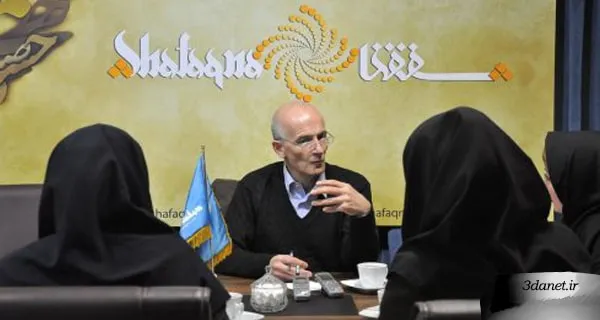
Shafaqna – Do you also think that morality is good but useless and ineffective? Do you think that honesty and fairness are admirable, but the playing field is muddy? Have you concluded from social relations that luminous values should be left to twinkle in the skies, while on earth one must be cunning, play at cronyism, flatter, lie, and look out for one's own interests?
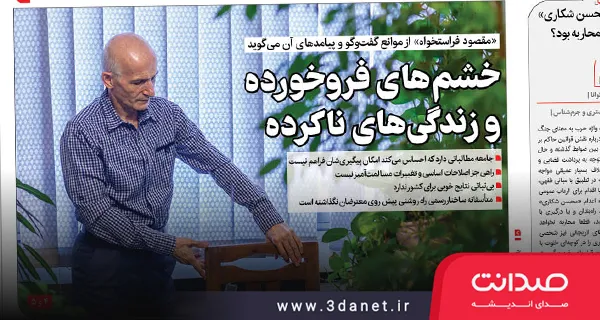
Shafaqna's Conversation with Maghsoud Farasatkhah: Iranian Individualism is Self-Centered / Religion is the Ultimate Concern of the Human Being / A Turn from “Religion” to “Faith,” “Mysticism,” and “Spirituality” is Observable
Shafaqna - Do you also think that morality is good but useless and ineffective? Do you think that honesty and fairness are admirable, but the playing field is muddy? Have you concluded from social relations that luminous values should be left to twinkle in the skies, while on earth one must be cunning, play at cronyism, flatter, lie, and look out for one's own interests?
If this is the case, you fall within the framework of Dr. Farasatkhah's idea of “moral failure.” Dr. Maghsoud Farasatkhah, although a familiar and influential name in intellectual and social spheres, has been in the spotlight more than ever over the past year due to the publication of his book “We Iranians.” This book went through its tenth printing in less than a year and became one of the best-selling books. Maghsoud Farasatkhah has spoken about the character traits of Iranians, their weaknesses, and solutions for remedying them, and of course emphasizes that “the culture of this land, in the sociological and anthropological sense of the word, is fundamentally irreducible to character traits.”
“Moral failure” is a concept that this sociologist addressed in the second edition of the book, and by it he means the failure of the institution of morality, which occurs when social groups conclude that morality is good and beautiful, but useless and ineffective, and in practice cannot be applied and yields little result.
In a detailed conversation with Dr. Farasatkhah, a Shafaqna reporter has discussed the relationship between Iranian character traits and their way of encountering religion, and how the view of religion and morality has changed or evolved.
****
*In your book “We Iranians,” you emphasize that we must not ignore the logic of social change and transformation. If we wish to address the Iranian society's mode of encountering religion and religiosity on this basis, what has happened in society can be explained based on which of the approaches of functionalism, structuralism, diffusionism, and neo-institutionalism? Do you accept that Iranian society is moving from social religion toward individualization and is giving more weight to the individual dimension of religion, and is this individualization of religion a result of the character traits of the Iranian people, and have social transformations caused a difference in the Iranian society's view of religion and religiosity?
Farasatkhah: Research findings indicate that a trend of growing individualism exists in Iran; of course, the rise of individualism is also a global "macro-trend," but the forms of individualism differ across societies. Individualism in Iran, due to our specific structural social, cultural, environmental conditions and particular social plot, has usually not been institutionalized—meaning it has typically not been the kind of individualism where the individual seeks to maximize their interests by delivering public good to society. There is a type of individualism where the individual wants to maximize their own utilities, which is rule-governed and knows that this maximization of individual interests has rules and must deliver public good to others. Adam Smith says in his book, "It is not from the benevolence of the butcher that we expect our dinner, but from his regard to his own interest." Rationality tells him that if you want sustainable interests, you must achieve your interests by helping the interests of others. When you deliver good to others, then you can promote your own interests and utilities in a sustainable way; these interests are not one-off but perpetual. This issue is different in Iran due to the specific conditions that have prevailed; for example, Iranian society is short-term. When instability is a very dominant and chronic matter in Iran, in this unstable and impermanent society—which researchers like Mr. Katouzian theorized under the title of the short-term society—it is natural that everyone pulls their own chestnuts out of the fire. So here a kind of self-centered individualism emerges, meaning the individual self-centeredly pursues their personal interests and only wants to temporarily save their own skin and does not see much opportunity to pay attention to public interests and issues because society is so short-term that in this society one can only safeguard their own interests. In fact, the individual does not see social systems as intelligent enough to care for them, and there are various other reasons as well; for instance, social capital is problematic to some extent, they cannot trust it, and bonds and participation are also weak. As a result, an atomized (particulate) society emerges. In fact, everyone is a particle moving on its own, wandering, and this society is called an "atomized society." These very particles sometimes become a mass, meaning a state usually arises where society sometimes becomes "particle-like" and sometimes "mass-like." Sometimes the particles mass together and turn into a congregate mass that, like iron filings drawn together by a magnet, are pulled together. This congregate mass is created by a wave; some ride on its waves and exploit them, and sometimes everyone retreats into their shell and sorts out their own affairs.
*Why has Iranian individualism moved toward self-centeredness?
Farasatkhah: I imagine that "individualism" in Iran has rarely transformed into institutionalized individualism; that is, it was not oriented toward the public good. The reason is the decline of social capital, the lack of intelligence in social systems, the inefficiency of social systems, and the incapacities that have existed in our institutions. Society is not intelligent, it does not support the individual, and sufficient support systems for the individual have not existed. As a result, the individual only wants to preserve themselves with their own individual rationality and their own case-by-case rational choices, and it seems individuals saw no other option before them. Consequently, according to research conducted, this issue has increased in Iran in the recent period, meaning the trend of "individualism," which is a global trend, also manifests itself in Iran and differs from the type of individualism that exists in some societies because some societies are collectivist; for example, Confucian culture in Asia is a predominantly collectivist culture. There, moving with the collective and public interests matter, but in societies like America, individualism exists, but there, individualism has its own logic where individuals pursue their interests with an institutionalized logic and rules. In the meantime, we sometimes see a kind of self-centered and non-institutionalized individualism with greater frequency in Iran, which has also increased in recent periods.
Of course, the growth of this individualism can have various other causes as well; for instance, technology can be one cause. Information and communication technology and the emergence of the virtual world have caused technology to become an intermediary between humans. Once, people socialized face-to-face, but now a kind of dispersion has almost emerged, and everyone can connect with their friends in a virtual form on their own. This issue is being discussed and studied all over the world.
* Given your reference to the issue of communication technology, in the current circumstances and the development of the online space—where people learn about different parts of the world in a fraction of a second—can we still speak of the character traits of a nation? In the past, when we spoke of the character traits of Iranians, these traits were within a specific climate with specific characteristics, history, and conditions, but today, in addition to that climate, space, and history, there is a collection of information and communications…
Farasatkhah: Like globalization…
*Yes. In this process of globalization and the close communication of the world's people with each other, can we say that if a transformation is taking place, it is in line with globalization, and the character traits of nations are being shaped under the influence of this process?
Farasatkhah: Yes! One of the influential factors in Iran's cultural changes, the national character of Iranians, Iranian character traits, and modes of social behavior is certainly globalization and information and communication technology. Media and the multimedia environment are effective in this matter, and considering the factor of dissemination that has been discussed, the scale of dissemination has increased here because the property of the butterfly effect is such that the gentle movement of a butterfly on one side of the world causes a storm on the other side. Well, it is natural that this issue affects social character traits, lifestyle, consumption patterns, sensitivities, interests, and so on. So, according to existing studies, evidence, and observations, individualism is growing to some extent; although in Iran, that oscillating state of
If we examine it in the language of Paul Tillich [the German-born theologian and philosopher], we must say that religion is the ultimate concern of human beings; that is, a person has tensions such as the tension of income, rent, social environment, education, etc., and these tensions grow larger and larger. The ultimate tension of a person is the question of salvation and redemption, meaning that when we pass through or resolve the existing tensions one after another, a tension remains. Tillich says there is an ultimate tension, which is the question of immortality, salvation, and meaning in life, the question of an existential anchor and security, or the same homeless mind that Berger proposes (The Homeless Mind)—a homeless mind that wants to have meaning. This concern, in the existential sense of the word, is with human beings, and it exists in a very powerful way in Iranian history as well. In the culture of Iranian society, religion is also a part of Iranian culture and identity; unfortunately, there is a kind of insistence in official groups and discourse that wants to reduce or refer all identity and culture to religion, which is a great error and imposes many costs on this society, but the fact that religion is a part of the culture of the Iranian people is something on which there is a degree of consensus, according to ethnographic and anthropological studies, and social and historical studies. At the same time, public religion and state religion cannot satisfy the authentic human concerns and interests of citizens and do not become satisfactory. So it is natural that it refers it to the individual level of religiosity and individual experiences of religiosity; such as trust in God, vows, hope, peace, forgiveness, joy. That I can, with faith, experience joy or, with faith, experience courage. Tillich interprets this as the courage to be, meaning that I can, with faith, have the necessary boldness to live and bear the burden of life and the necessary hope. It is here that a kind of "individual religiosity" emerges, or perhaps a turn from "religion" to "faith," and even sometimes broader and more general than that, namely "spirituality," comes into being. There is a turn from "public religion" and "state religion" to "private religion," and another turn is from "religion" to "faith"; even within this, a turn from "private religion" to "personal religion" can also occur. In fact, there is a difference between private religion and personal religion. Research has shown that in Iran, beyond the privatization of religion and a tendency toward "private religion," there are other tendencies in the form of "personal religion."
*What is the difference between "private religion" and "personal religion," and how are they defined?
Farasatkhah: "Private religion" is the religion our parents had before the revolution; with the concept that religion is something between you and God, meaning religion was a source of truth, and the rulings of religion, the principles of religion, and religious foundations held importance, authority, and influence for them. They knew what sin is and what innocence is. Some actions are sinful, some actions are obligatory, what trust in God means, and so on. They knew these things, but at the same time, they said that these have nothing to do with politics and the state, but rather it is a matter between the individual and God; of course, that religion itself held complete authority for the person.
But "personal religion" means that an individual personally likes to have religion in one instance but not in another, or to have a personal understanding of God; for example, they say we like fasting but we do not like prayer. This religion is "personal religion." This "personal religion" is, in fact, another level distinct from "private religion." So a turn is seen from "state religion" to "private religion," even to "personal religion," and from "religion" to "faith," from "faith" to "mysticism," and even from "mysticism" to "spirituality"; meaning they want religion to be less public and more private, and consequently, they think less about its institutional aspect. These trends exist in Iranian society and are understandable, and they manifest themselves with very noticeable frequencies, which could, in one respect, be a great threat.
*Why a great threat?
Farasatkhah: Sometimes the concept of the “end of society” or the “end of the social” is discussed, meaning that if, within a territorial domain, communitarianism is excessively weakened, one could say a situation has arisen which, if we express it with a bit of exaggeration, we must call the “end of the social.” That is, the individual has become so important that one could say there is no longer a society, and the social, which is the source of everything, is destroyed. This can be a territorial threat and a national threat to a society that loses the necessary social capital for establishing community and social stability, because the social is the source of norms and cooperation in economic, political, social, and cultural spheres, but this great social support is being weakened in our society.
* In fact, solidarity is decreasing. You have previously said that Iranian solidarities are usually not ethical because they are emotional and affective. Is self-centered individualism the cause of an emotional and affective solidarity and does it prevent it from reaching the ethical stage, remaining, in your words, particulate and mass-like?
Farasatkhah: People with unstable and irregular seasonal emotions may turn into a mass-like crowd, but within them there is no regular collective rationality, social rationality, or stable and intelligent social organization, and social choice gives way to the limited and case-by-case choices of individuals, meaning everyone wants to manage their own livelihood. For example, there is currently a discussion about the issue of credentialism. Many ask why credentialism is seen in society? My answer is: what are these students to do? Have we laid the tracks for people to pursue something else? We have not laid other tracks. As a result, people can only preserve themselves. So, do we want to deprive human beings of even this level of rational choice? If we want a society to emerge, and for these communities to be productive communities, then we need communicative action. For creative, productive, and constructive communicative actions, we must lay tracks, facilitate, build capacity, and create platforms. We securitized and politicized non-governmental organizations and NGOs, meaning we had a kind of political view of NGOs, whereas NGOs are a great platform and capacity for any society. Large parts of the economy of European societies are based on voluntary sectors. If you go to Canada now and seek health and medical care, you will see that the voluntary sector is a major competitor to both the public and private sectors. In fact, there are many voluntary institutions, organizations, and individuals who come to you to voluntarily help with your health. Because they have defined a set of social and value-based utilities for themselves, through which they want to voluntarily carry out service activities for society. These originate from the social and arise from “being together.” For this togetherness, we must create the necessary capacities in society, have policies, supports, cultural and social perspectives on social issues, and also create effective grounds for encouraging people’s togetherness.
For example, in my study I made a very rough calculation, counting the number of NGOs and their part-time and full-time members, then considering the total population of Iran. The result was that less than half a percent of Iran's population are part-time or full-time members of NGOs. This participatory and communal index that exists in our society is very low. When we compare it with other successful societies, the indices are very different and high, so we have in fact deprived society of many of its capacities; we have destroyed society with our illusions, dogmatisms, and ideologies. Gardner is a scientist who theorized multiple intelligences and proposed nine intelligences for humans; for example, one of the intelligences is interpersonal intelligence and another type is intrapersonal intelligence. Interpersonal intelligences include social emotions, social exchanges, ways of planning with others, working with others, team building and joint voluntary activities, doing good to others, attending to the interests of others, and so on. For interpersonal intelligence to develop, relational contexts must be created, which requires communicative action. Communicative action needs social space and an "unrestricted public sphere" so that humans can interact with one another; for instance, neighborhood groups can manage apartment buildings. There is modesty in the eye; when humans live together, they can love one another, and through this very act, trust-building and meaning-making emerge, synergy occurs, and afterward social networks come into being, and all of these can in fact create immunities and capacities for this land, making it secure against threats and giving it the potential for growth, dynamism, flourishing, self-regulation, and self-governance. But all kinds of untested policies, the inefficiency of social institutions, the weakening of social capital, political views on issues, and the flaws in the mode of governance and administration of the country have gone hand in hand and, unfortunately, have weakened the capacities and capabilities for collective work, social activities, cooperation, bonding, and participation in Iran.
* So you believe that society is suffering from a kind of passivity, and to emerge from this passivity, the infrastructure must be provided?
Farasatkhah: You used a beautiful expression. The reason is that our society has been kept small, kept in a state of minority, and has not been allowed the emergence of maturity, self-reflection, and self-management. The prerequisite for society to grow and become large is for the state to accept becoming a little smaller. The large and inefficient state is the other side of the coin of a small and powerless society. Society must find the opportunity for practice, participation, awareness, maturity, and self-regulation. A society that is passive is only looking for an opportunity to solve its daily problems, and as a result, its gatherings are also seasonal, unstable, irregular, and possibly unethical, and for intelligent, orderly, rule-based, stable, and ethical gatherings to form and not be seasonal, groundwork must be laid, and a movement must occur from centralized state institutions and bureaucracies toward strengthening local, regional, and urban levels and toward delegation of authority, resulting in the emergence of the smart city. Whereas we tend more toward having a single general intellect that fixes all of these, instead of wanting a social rationality to grow. Why don't we help and empower this system to be intelligent itself?
In Iran, there was a tradition of irrigation and water distribution. Some researchers, like Dr. Farhadi, believe that it is the recent inefficient bureaucracies that have destroyed these traditions of joint work, and they were unable to replace them with new, modern traditions. Consequently, I want to say that we do not lack a "cultural memory" for collective work, because Iranian society, to some extent, possesses a "cultural memory," "social reserve," and "cultural heritage" usable for the growth and capabilities of social work. In the meantime, globalization and virtual networks, instead of being considered merely a threat to us, can provide an opportunity and a new model of togetherness and communications, which, in my opinion, should not, of course, replace those real face-to-face connections in society.
* That is to say, can we say that this social passivity is not inherent to Iranian society, is not part of its character, and is among the characteristics imposed upon it and can be? Can this passivity be eliminated through changes in programs and planning?
Farasatkhah: I do not believe in an “essence” in Iranian culture; that is, I do not believe that Iranian society has a cultural genome and an inherent essence, but rather I believe in social learning. People can learn through social practice and change their behaviors. Although this takes some time and is long-term, it is possible nonetheless. Within the capacities of this society and this culture, there are grounds for cooperation and social activities, and if the necessary facilitation is carried out, this society has the ability to elevate itself from the level of a passive society to an active, creative, and productive one. The prerequisite is that it emerges from a chaotic society and becomes a productive and orderly society, a society that has reached a level of maturity and become rule-governed. This happens when these rules emerge from the very fabric of social practices and social participation. Not in a political form, of course. One problem that exists is that government policies are alien to the policies of people’s lives. Policy must emerge from practice.
* Here, the elites and their performance are important in being able to coordinate this matter?
Farasatkhah: Yes! Elites are agents of change, but there must also be institutional support for elites; such as intellectual freedom, rights, the existence of a public sphere, security, legal protections for expression, thought, diversity, and possibilities for the peaceful resolution of conflicts. Because the definition of an elite is clear, and you cannot say that elites all think alike. We are not even an “elite-nurturing” society. Our education system does not nurture elites; it homogenizes and wants mediocre beings. To what extent does our education system provide the grounds for training creative, rebellious, agile, bold, innovative, different, thoughtful, and critical beings?! They are suppressed. So, it is for this reason that our society does not become “elite-nurturing.” Unfortunately, our educational systems and even our social systems, cultural managements, and cultural programs have been less elite-nurturing and instead, covertly and overtly, drift toward mediocrity and homogenization; therefore, the elite is destroyed, and when the elite is destroyed, brain drain or internal migration occurs, the motivation for elite participation declines, or unresolved conflicts reach the point of complexes and explosions. Ultimately, the social agents who could mediate the change of this society and support this society step aside. These issues, in fact, strip a society of its immunity systems. We live in a high-risk world, in a very high-risk and competitive global situation. One of the consequences of globalization is that it becomes increasingly competitive day by day; there is also a scarcity of resources, and there is competition over fossil resources, non-fossil resources, and water. All of these are subjects of future competitions in this world. In addition, there are all kinds of hazards that have turned our society into a risk society, meaning a society of danger, a society that always lives in danger. In order to control this risk, we must enhance the risk-taking capacities and immunities of this society, and to enhance the capacities of immunity, appropriate policies must exist, and here, media institutions have a very significant role to play in addressing these issues. What exists in our society is that we do not turn “difficulties” into “problems.” A difficulty is different from a problem. We have many difficulties in society; a difficulty is something with which our connection is real. For example, a child has anxiety; this child’s anxiety is a difficulty for the father, but when the father takes the child to a counselor, the counselor turns that difficulty into a problem, because the connection is no longer real but conceptual. Unfortunately, our society has become a society that has many difficulties but lacks “problems.” We do not problematize difficulties. In order to problematize them, we must have social dialogue; there must be social dialogues, social capacities, civic capacities, and voluntary activities so that these difficulties become problems, and then, with the necessary research and studies, we can address the problems so that, with collective participation and in a satisfactory manner, efficient policies for supporting capacities come into being.
* From your remarks, I gathered that the problem of insecurity, disorder, and instability—which you also pointed out in your book We Iranians has influenced part of the Iranian psyche—still persists. If we want to examine the role of society—a society considered to devour its elites, and where experts have sounded the alarm over moral decline—it has not been entirely passive in the past and has made efforts to reform itself. You have an expression that our ideas have always been Ahuric, but in structural-functional contexts, we are Ahrimanic. At a certain point in history, this society wanted to reform this Ahuric and Ahrimanic realm, so it makes a revolution and wants to look at the issues of its life in an Ahuric way and overcome the duality of thought and action. Yet, years after this effort and experience, the duality in action and thought and the gap between the Ahuric and Ahrimanic realms has widened. Immoral people are considered clever, and individuals resort to hypocrisy to preserve their social standing. That is, society's effort, instead of reducing the duality in thought and action, led to its intensification. What has happened, and what has befallen this society that it thinks in an Ahuric way and acts in an Ahrimanic way, is no longer even elite-nurturing, and gets the opposite result from its efforts?
Farasatkhah: I think we need good governance, the improvement of social systems, and the creation of supports for society so that it can overcome its problem. That is, we have not created institutionalized rules for society, we have not provided the ground for the flourishing of this society's talents. Something has happened that, in the new chapter of the 9th and later editions of the book We Iranians, I have used the term "moral failure" for it. By "moral failure," I do not mean immorality in society; rather, I mean that morality as an institution fails. According to research conducted, people find themselves at life's crossroads between foolishness and virtue. They ask themselves: should we act morally? If we act morally, we will be branded as "simpletons," meaning they are placed at the crossroads of personal and rational choices. At these crossroads, everyone feels that to escape the stigma of foolishness, they must bracket virtue! "That you say, 'Shall I do this or that?' is itself proof of free will, O idol."
My personal decision regarding working children and street children is to do something for them, but my son and my wife tell me that these are employees themselves, they have managers and working hours. I tell them, why did your rationality blossom here?! They view my action as an act of foolishness, meaning they see it as naivety. But this issue is very complex; that is, it has come to a point where if you want to do a moral act, you say that society will brand you as a "simpleton"—that you are not using your intellect and are being foolish.
A myth has also emerged, and I have named it the "myth of structure." In my view, this amounts to a social paralysis. We all attribute everything to structures, and this has become the great fallacy of our most extensive external attribution in our actions and relationships. Instead of making internal attributions, and bringing our conscience and higher levels of awareness to the fore, and asking ourselves what the various modes of my action and choice could be, which are desirable and which are undesirable, and what my responsibility is, we predominantly make external attributions instead. We all say it is the structures that cause these actions of ours, and in the process, it is forgotten that human beings can, to some extent, make better, more conscious, more useful, more desirable, and more commendable choices. Currently, a situation has arisen in Iranian society that we can call social grievance, meaning that everyone is complaining and everyone speaks ill of one another, even of themselves; whatever we do, we claim that the structure is the cause of our actions and is responsible for our actions, and that we bear no personal responsibility. This means the end of social action, and that I cannot have free, conscious, and ethical social action. I must solve my problem by paying a bribe. I know that bribery is not a sustainable mechanism for solving social problems, but then I say, if I don't pay a bribe, how am I supposed to solve my personal problem? There is a meaning in my mind that social systems do not do my work and are not intelligent; so, since the system is not intelligent, be careful, look out for yourself. This means moral failure. We say lying is bad, but that remains in the heavens and in books, and in practice, it doesn't work and doesn't solve the problem. I have called this "moral failure." Every person in their life is exposed to morally wrong choices; there are immoralities in humanity that can be reduced through education and social reforms, but this is not very dangerous. The danger is when morality fails, meaning that acting morally is not considered an efficient means for living.
*What should be done at this stage?
Farasatkhah: I think we must return to strengthening the issue of social action. A return to social action.
*Meaning strengthening NGOs and so on?
Farasatkhah: Yes. We must resolve and settle the myth of structure; for example, a person gets into a taxi and must pay a fare of 1500 Tomans, they give a 2000 Toman bill and are not given the rest of their change. They protest, but the response they hear is that a lot of money is being embezzled in society! You are arguing with this driver over five hundred Tomans. This is the myth of structure. Because the structures are inefficient, therefore everyone must encroach upon the rights of the other party. This means the suspension of conscious human action, the end of ethical action, and the end of individual and personal responsibility.
Hannah Arendt has a book called Personal Responsibility in which she says personal responsibility has been lost, meaning "self-efficacy" has diminished. Bandura introduced the concept of self-efficacy—how much of a sense of self-efficacy do we have? Even in educational settings, if a student lacks a sense of self-efficacy, they will not succeed and will not study because they conclude that their actions have no effect. Albert Bandura says this sense of self-efficacy must be awakened, and we must look at ourselves, our awareness, our moral conscience, civic decency, and interpersonal intelligence as a cause. We can be the cause of our own lives; we can look at things differently, act differently, and become a source of effect. But this "self-efficacy" has diminished in our society, and as a result, the efficacy of the elite has also declined. I employed a concept I call "shelf syndrome" for my research. For example, you are a researcher and you say you are doing research, but you imagine your research will end up on a shelf because you feel that science has no social impact in this society—no policy is made based on it, no management is done, no law is changed, and no reforms are carried out. Consequently, social actors have lost their sense of "self-efficacy." In my view, this is a social crisis and a national risk. There are people who teach, but after a while, they reduce the quality of their teaching; they say, why should we teach? These students have come for a degree, not for learning. Even if they study, what good does it do? They will end up unemployed. As a result, all efficacy seems to have vanished from our sight. This is a kind of paralysis of our intellectual and decision-making muscles. Consider this loss of efficacy alongside the failure of the moral institution; the result is that public spheres become dysfunctional, and the political system comes to dominate all cultural and social sub-systems. Our very ancient cultural and social traditions are each weakened in some way. The totalizing ideology of the state, state religion, inefficient bureaucracy, technology, and other factors each destroy the important traditions of this land in their own way. For instance, now in this virtual world, we see files; it is not like the old days when we would read an entire book. Instead, a kind of superficiality and copy-paste has emerged. That is, everything has conspired to create a risk society. In my opinion, a return to action is necessary here. We say, "Networking or not Working"—meaning we will either have networks or we will not be able to do anything. I have interpreted this with our own literature, the logic of the Simorgh. That is, social collaborations, creating civic networks, voluntary institutions, neighborhood activities, friendship activities, teams, study groups, NGOs. The sum of these can create an opportunity for society to recover its capacities once again. This is why I emphasize learning and social action. This does not mean that the responsibility of public institutions and the responsibilities of the government disappear; rather, they are ultimately responsible, and fundamentally, for an actor to be active, there must naturally be institutional support, freedom, and acceptance of diversity. Indeed, it is necessary to delegate a large part of the administration of a society to social capacities themselves, to devolve regional authority, to devolve local authority, and to move beyond this authoritarianism and "omniscient rationalism."
We must pursue social rationality, not have some omniscient minds continuously and unjustly meddling in society. Social rationality is a process; that is, when you and I engage in dialogue, this social rationality emerges, and the probability of error in social rationality is minimized. These issues I have mentioned are the results of global research and are not merely my opinion; rather, there is a credible global consensus that in networks and rationality, risk and error are reduced.
* And it is in such a society that democracy becomes efficient?
Farasatkhah: Yes, it is natural, and this too requires grounds for participation and practice. We must awaken, activate, and bring into flow the dormant or silenced practices. Iranian society has this ability and these capacities. Iran still stands and has not perished. The Sialk Hills of Kashan are the best proof that our society has the competence to survive and to live; this society does not want to exempt itself from being, it says I want to be. Despite particular junctures and the dangers it has faced, this society has still endured! So this shows that these capacities exist within this civilization. If you ask whether an Iranian has the competence to survive, I say the very fact that they have endured is a sign of their worthiness for life. This nation wants to live, and the expression of this nation's state is: let us live. This society must have the necessary support systems to live; it is not a transient society. All countries are respectable, but some countries were no more than a shopping arcade that came into being and now compete with us and have the upper hand. Of course, I do not place much value on these superficial criteria for progress, but it is a reality nonetheless, and there are indicators, and when you compare yourself with the indicators of very small societies, you see how worrying the situation is.
Source: Shafaqna


Discussion0 comments
No comments yet; let yours be the first voice.