Sociology
An Analysis of the Current Conditions in Iranian Society: A Conversation with Dr. Mohsen Goodarzi in 'Shahrvand'
Mohsen Goodarzi, in his report “The Decline of Social Solidarity,” said that disintegrative processes have weakened the bonds between institutions. Individualism and a sense of decay have diminished the functions of institutions, exposing society to two possible fates.
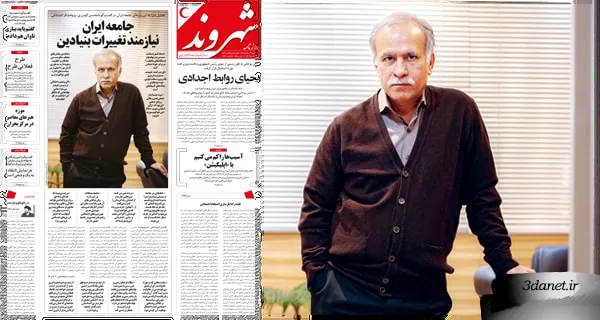
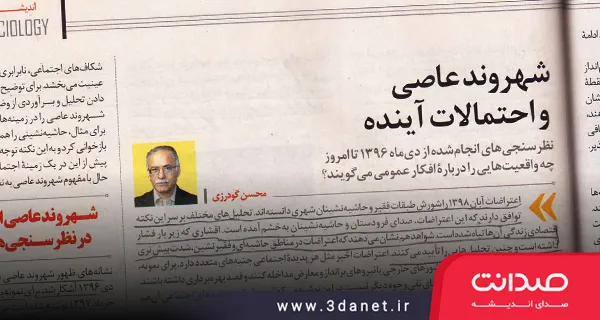
Social researcher Mohsen Goodarzi has recently prepared a report titled “The Decline of Social Solidarity,” based on statistical and survey data and evidence. In this report, processes that weaken the relationships between individuals, groups, and institutions, leading to disconnection, separation, and the intensification of conflicts, are examined as disintegrative processes. At the level of objective disintegrative factors, the shrinking of Iran’s economic pie, worsening inequalities, unemployment and job instability, corruption, and urban marginalization are addressed. At the level of attitudinal factors, the trajectory of attitudinal change, the transformation of core institutions, and the pervasiveness of a “sense of social decline” are examined. From the report author’s perspective, the growth of individualism and the dominance of material values in the value hierarchy, coupled with the weakness of the normative system, has led to the formation of a subject who pursues personal pleasures and interests free from social constraints and controls. This trend has caused the three core institutions of family, religion, and politics to be unable to properly fulfill their cohesive functions. On the other hand, a “sense of social decline” has come to dominate the collective mind. People find themselves in a society that is on a downward slope—a society whose opportunities are not distributed fairly, which is increasingly losing its moral foundations, where social trust is low, and which sees no bright future ahead. These factors have led to a growing sense of alienation from society, and feelings of despair and helplessness. Goodarzi believes that Iranian society faces two different fates. On one hand, disintegrative trends and phenomena threaten its overall existence, and on the other, new forms of solidarity are expanding among various strata and different layers of society. We have conducted a conversation with social researcher Mohsen Goodarzi about what is happening in Iranian society. The National Survey of Iranians’ Values and Attitudes, the study of structural changes in Iran’s labor market, Iran’s cultural transformations over three decades (1974–2004), and dozens of opinion polls and research projects are among Goodarzi’s works.
With the recent protests, some have turned to surveys to explain the recent events based on their data. In your view, what are Iran’s social conditions like? What does social research say about the state of society?
In analyzing protests, one must pay attention to two groups of factors: one is the direct and proximate causes that triggered the protests, and the other is the suitable environmental conditions. For example, if in a society people are hopeless about the improvement of their living conditions or see no bright prospects for changing their situation, the ground becomes fertile for protest and the expression of discontent. Survey data helps us better understand this environment. Surveys aid in understanding attitudinal or behavioral trends. When we speak of a trend, we mean a series of changes that occur over a period of time and are not short-term. For instance, when we talk about the trend of changes in the family, it means these changes have taken shape over time and have accumulated. Trends are also not quickly reversible. It is a mistaken assumption to expect that with a few immediate, so-called administrative, swift actions one can alter the course of a trend. The importance of surveys lies in the fact that they reveal these trends.
Trends are gradual. It is like when you commute daily in your own neighborhood or city and do not notice the minor changes, but when you step back or look at photos from years past, you realize how these minor changes have altered the overall face of the city. Trends are the same. We do not notice their minor changes; we suddenly come to ourselves and see, for example, how much the family has changed. Protests and any other phenomenon must be examined in light of these trends.
Did this survey provide you with results that allowed you to predict Iran’s social situation for, say, the next decade—for example, this very issue of “social disintegration” on which you have recently conducted research? Tell us more about the findings of this research.
In that report, I addressed the question of which broader problems the various issues afflicting Iranian society are symptoms or indicators of. In my view, all these problems are weakening the foundations of society and targeting its totality. What holds the individuals, sectors, and different classes of a society together is being lost. The bonds between individuals have weakened, social classes and groups are drifting apart and pursuing different fates. People's connection to public institutions has weakened. A large part of society feels that the path the country's economy is taking is not to their benefit; widespread corruption has made them feel that various institutions and apparatuses are arrayed against them. The threads that bind the individual to society have frayed. If we look at institutions as well, we see fragmentation there too. Unemployment among university graduates is rising. This shows that the education system is producing an output that is of no use to the economy and is not absorbed. There are many examples of this kind. For this reason, society does not have dozens of problems, but rather one problem, and that is the overall life of society, which is exposed to decay. I have approached the problem from this angle.
How do you define this fragmentation, and what trends have intensified it?
Some psychosocial phenomena are not directly observable, and one must look at their symptoms. If social bonds are weak, we refer to it as fragmentation. For example, a fragmented family is one whose members quarrel and have disagreements, act against each other, and feel no sense of belonging to one another. Wherever there is fragmentation, there is conflict, alienation, and a feeling of non-belonging. Hatred and malice, violence, irresponsibility, going one's own way, selfish pursuit of interest, and so on are signs of fragmentation. Wherever these signs are present, fragmentation exists. A fragmented group means a group whose members do not feel a sense of commonality with each other; a fragmented society means a society where there is conflict between its individuals, groups, classes, and institutions, and, as the saying goes, everyone and every part does their own thing and looks out for themselves.
Does social fragmentation only refer to the relationship of individuals with each other, or also the relationship of individuals with the government?
No, it is broader; signs of fragmentation can be seen both at the individual level and at the institutional level. Individuals or groups may feel that they do not belong to a group, a collective, or even society, ask themselves what this society has done for me, feel that society does not value them, and consider themselves alienated from it. This is one level of fragmentation. You see examples of it in everyday life: an individual who has no interest in their job, or is not satisfied with its income, or does not consider the job worthy of them, or feels they have been discriminated against—in this case, the individual has no attachment to this work. You have probably seen, when visiting government offices, that an employee or manager does not do your work properly, and when you object, they say, 'How much do we get paid anyway?' and reasons of that sort.
You also see fragmentation at another level: conflict between different parts of the government, between the elites and the government. It is very clear that we do not have a consensus on the most fundamental policies for running the country. In foreign policy, in economic policies, and so on. For example, a decision by one ministry is overturned by another institution. The conflicts that exist within government institutions, or the conflict that exists within society, or... are forms of social fragmentation.
The discussion you have raised about social solidarity essentially points to one of the most important concerns of recent decades: the damage to social capital. If we were to examine roughly the past three decades—in fact, the period after the end of the war and from the beginning of the 1370s [1990s] until now—from what point did the factors affecting the decline of social solidarity begin, and at what point did they intensify? In other words, has the process of the decay of social cohesion been similar over these three decades and followed a linear upward trajectory, or has it decreased at some points and intensified at others? When were those points, and what factors were influential in between?
One cannot pinpoint a moment in time and say it began at this instant. Gradual processes must be considered. From that social moment when lines are drawn in society and people are divided into two or more groups, from the time when those on one side of the line are given better positions and opportunities, and those on the other side are ignored, humiliated, or kept deprived, we are faced with fragmentation. This line can be political, where different political leanings do not have equal opportunities. It may be an economic line. We see that some classes are deprived and some are very affluent. It may be an ethnic line. We have drawn lines with various criteria and divided society. We have many such demarcations in society, and some groups are humiliated while others are esteemed, some have special privileges, and some are deprived.
What factors increase fragmentation?
Two groups of factors cause individuals or groups in society to separate or become detached from one another or to stand in opposition to each other, and also cause bonds to weaken or create conflict in society; one is objective factors and the other is subjective factors.
Could you elaborate on the objective factors?
For example, the shrinking of Iran's economic pie. Many economists believe that Iran's economic pie has shrunk and the capacity to generate wealth and welfare has decreased. When the pie shrinks, it means a smaller share reaches everyone, or in other words, the economic system cannot provide welfare for the majority of society or create jobs for everyone. When resources become limited or the pie is small, each person or group tries to take a larger share for themselves. As a result, competition also intensifies. Some people's knives are sharper, so they take a larger share, and some groups have no means at all and their share becomes smaller. When resources are limited and competition is fiercer, the likelihood of disputes and conflicts over a larger share also increases. Look at places where water is scarce and conflicts and contradictions over water lead to violence, quarrels, and murder. When resources are limited, groups with more means take a larger share. We have seen many such examples in our own society. When gasoline was rationed, the wealthier classes bought other people's fuel cards or even had the financial power to purchase unsubsidized gasoline. As a result, they could obtain a larger share of the limited resources. These groups, in the competition for a larger share, have more means, greater access to administrative officials, more connections, money, a better understanding of administrative rules, and in short, many resources, and they can take a larger share of the resources. Even larger provinces and cities can increase their share of resources. For this reason, if there are no proper policies—and there usually aren't—the limitation of resources leads to increased inequality.
If jobs are scarce, it is clear that competition for employment becomes more intense. Now, if you have connections, you can probably find a job more easily than others. Various studies have been conducted on this matter. Lower classes have more contact with people like themselves. People like themselves who are poor, struggling with unemployment, and so on. As a result, they cannot help each other in finding jobs or better economic opportunities. In other words, their social network usually cannot provide them with opportunities or resources for improving their situation or social mobility. Similar individuals reproduce themselves. The reduction in Iran's economic capacity and the shrinking of the economic pie is one of the grounds that will intensify fragmentation. From this perspective, a comprehensive social policy for the lower and poor classes of society and marginalized areas is essential; otherwise, this group will be pushed to the margins and will see no place for themselves in society. In this sense, they may feel like second- or third-class passengers in society.
Might they act against the train?
Individuals and social groups are connected to society by various threads. When the sense of belonging is low, it means those connecting threads have become loose. When the gap between the rich and the poor is widening, people feel that this train is heading to a different destination. Then they love neither the train nor its route. They develop no attachment to it. Or when they see that their values or way of life are not respected, they feel no sense of belonging to society. The feeling of discrimination and social humiliation is very destructive and is one of the main sources of conflict and social tension in Iranian society.
Apart from economic factors, what objective factors can you point to?
No, it is not just economic; it is also political and social. Inequality is another factor that intensifies rupture. Inequality does not only have an economic aspect. The political or legal aspects of inequality are very important.
You said that the shrinking of Iran's economic pie has led to a limitation of resources, such as jobs. Why do you consider jobs important in the context of rupture?
It goes back to that initial definition of rupture. An individual's belonging to a group lasts as long as they feel that being in that group is beneficial to them. People continue a friendship as long as they feel that the relationship is useful for them. And benefit is not just material. They feel that when they have a problem, they can consult with their friends, they have someone with whom they can share their problem and gain emotional support. But if, in a relationship, a person feels they are not supported or respected and their opinions do not matter to their friends, well, it is clear they have no desire to maintain those friendships. A job has the same situation. A job is one of the sources of social prestige. When someone is called idle and a loafer, their social value is questioned. Unemployed individuals face difficulties both in meeting their needs and in gaining social prestige. Consider how much a young unemployed person is humiliated for being jobless. An unemployed youth must reach out to their family for the money they need, lacks social prestige because of unemployment, and cannot organize an independent life. They have no future.
The unemployment situation is at a worrying level now.
That is correct. According to statistics from the year 1395 [2016-2017], more than 12 percent of the active population is unemployed. And this unemployment is defined as just one hour per week. We have more than 3 million unemployed people. Unemployment among the youth is 31 percent, meaning 2.5 times the overall unemployment rate, while Iranian society is in a demographic window situation.
And what age range do you consider for the demographic window?
The demographic window means the majority of society is of working age. Between 15 and 64 years old. This is the best opportunity for economic growth. The majority of the population is of working age, meaning a population that works, pays insurance premiums, has low medical needs, and as a result, society's resources can be allocated to the development of economic activity. Yet, in such circumstances, the unemployment rate is very high.
The unemployment rate among university graduates is also high. What is your opinion on this?
The issue of employment must be seen from two dimensions; one is unemployment, which is high among the youth, university graduates, and women. The second is the issue of job instability and short-term jobs. As you pointed out, unemployment among university graduates is high. When a person with a university education cannot find a job, they are humiliated even more, because they feel they have spent several years of their life learning something that is of no use to them. On the other hand, they might find a job that does not provide their social dignity. If a university graduate has a low-importance, low-status job, they must be able to explain it to themselves and convince themselves, as well as others. Let me put it this way: instead of the job elevating their status, it does the opposite and lowers it.
Another aspect is job instability, meaning a person obtains a job, but it is not permanent. The individual worries about what to do after this job, or may have a job but become unemployed for some reason. The feeling of instability, restlessness, and temporariness wears down the individual's psyche.
Do we have statistics on job instability?
I have not seen precise and comprehensive statistics on temporary jobs. A general picture might be obtained from labor force statistics. According to 2016 statistics, more than half of the unemployed, that is 54 percent, were previously employed, meaning they had a job and then became unemployed. Now consider that this individual is daily exposed to news reporting widespread corruption. These are the mechanisms that weaken the individual's bond with society.
Regional disparities are also important. Unemployment in some of the country's cities is higher than the national average. Where do these regional differences fit into your analysis?
As I said, various trends cause distance, rifts, and contradictions between different parts of society. Voluntarily or involuntarily, lines have divided society. These lines have been drawn with different pens. For example, once this line was drawn with an economic pen, another time with a regional pen. The differences between the country's regions are vast. See how much Tehran's problems are noticed and how much the problems of other cities in the country are. Right here in Tehran, we know of migrants who have come from other cities to Tehran for work, they have a car, work with it, and sleep in it at night. Go to some fixed-route taxi lines, you will see this group. These phenomena have another side, meaning these people are not even able to find a source of income in their own city to this extent. These examples are numerous. Just pay attention to the conflicts between these individuals and the fixed-route taxis on the same route. Daily conflicts and fights between these two groups, both of whom live at a minimum standard of living. Two groups who are both victims of the dire economic situation, turn on each other and, as Shamloo says, draw their knives only for the purpose of dividing bread.
The differences are not only between cities, but these differences are also seen within cities. It is as if our society has been divided into two different worlds or two different galaxies. Urban peripheries and impoverished areas, or in administrative terms, deteriorated or inefficient fabrics, are continuously increasing. About one-third of the country's urban population lives in such areas. These areas usually have inadequate urban facilities, lack access to quality education or healthcare, and so on. As a result, you observe that smaller cities have been placed on the margins of the economic and social system. Within the cities themselves, the marginalized population is also increasing. These people live in difficult conditions and feel abandoned. All these processes show that in our society, through various mechanisms, a part of the country's population is being pushed to the margins and enjoys fewer of society's benefits and privileges. They see their situation getting worse day by day, others have allocated a larger share of society's resources to themselves through back-scratching, trickery, or political and social influence, and the situation does not change. They become both angry at this situation and hopeless about changing it, meaning you see a combination of anger and frustration with a feeling of alienation. That is when they feel that nothing in this pot is boiling for them.
Well, from your remarks, I conclude that there is a kind of feeling of futurelessness among parts of society. Dr. Goodarzi, for years, groups of people have felt cheated and wronged, this feeling exists in every stratum, group, and class, a doctor, an employee, a student, a young person, and a middle-aged person, many think they have fallen behind in life, how do you assess this issue? Does it go back to people's perception of corruption? To the intensification of the class divide? To fear of the future? Individualism? To what?
One of the negative effects of corruption on people—apart from fueling a sense of discrimination, which is very important—is that they see social values have lost their credibility. When individuals or groups violate moral or legal rules and attain boundless wealth, or flee the country with that very wealth, values such as working, self-sacrifice for the homeland, and many other values lose their credibility and importance in people's minds. When news of corruption is widely disseminated and no reaction follows, the message sent to society is that corruption is a suitable method for acquiring wealth and personal advancement. People see that some have unjustly, without meeting the conditions and by trampling moral and legal rules, managed to obtain more resources and opportunities. It is here that the credibility of social values collapses. People think that perhaps anyone who has wealth, or has attained a high social position, or holds a high office, must not have done so through ethical means. In other words, it is the legitimacy of the stratification system that diminishes. What does this mean? It means that they neither attribute others' positions to their merit, nor consider their own position as their right, and they think they should have a higher status.
At the same time, corruption, as you pointed out, is one of the factors that causes individuals to become pessimistic about the future as well. In a society where there is a perception of pervasive corruption, no hope takes shape. Every path to change is blocked due to corruption. You can observe that corruption causes a set of feelings and emotions to form towards society, from feelings of anger, frustration, and discrimination to a decrease in the sense of belonging and loyalty. All of these weaken the threads connecting people to the political organization of society and social values. You have probably had the experience that sometimes when speaking with some people about social values or ethics, they say, "How much does ethics cost per kilo?" These kinds of phrases, which you probably hear a lot, are signs of a dire social situation.
Returning to the previous discussion, you were also going to mention other factors alongside the material ones.
Yes, I had referred to two groups of factors in the report on social rupture: one, objective factors, and the second, subjective and attitudinal factors. In my opinion, two important changes have occurred in social values. One is the growth of individuality and individualism, and the second is the importance of material values such as money, power, and fame.
In the current social conditions, when individuals face life's dilemmas, on what basis do they make their choices? For example, in years past, the role of families and elders in choosing a spouse was greater. Some signs of this still exist in language. We hear the phrase "with the permission of the elders" at wedding ceremonies, which has a formal meaning, but this phrase speaks of the important role of elders in the past. If you had asked about the reason for choosing a spouse in the past, they would have pointed to the role of their mother or others. Now, however, their own role has become more prominent, meaning it is the individual who is important; their criteria, tastes, and values are what matter. They refer to themselves for every choice.
Signs of individuality can be seen in various areas of life. For instance, according to census statistics, the average number of rooms is almost equal to the average number of household members, meaning, on average, each person has one room. Private space is a sign of the importance of individuality. Private space means that the individual organizes a part of their life separately and independently from others. From decorating the room and its furnishings to how they spend their time. New media have also made it possible to pursue one's entertainment or work independently and separately from others, even within the family environment. Or in another example, the growth of the novel, especially women's novels—meaning novels whose characters are women or that are written by women—is another sign of the growth of individuality. In the sociology of literature, the novel is considered an art form linked to the growth of individuality. The themes of these novels also indicate the growth of a feminine self.
I mean that the process of the growth of individuality is a long-term and stable trend and cannot be reversed. Consider how much emphasis is placed on values such as personal independence or distinctiveness. The policies promoted regarding the family in Iran advocate a type of traditional family in which the individuality of women is ignored; because these policies run counter to social trends, their likelihood of success diminishes.
Material values, meaning the materialization of people?
Social values differ, and not all of them hold the same degree of importance. Some are more important, and some less so. The degree of importance of these values changes in every society. Sometimes a value is important in a society, but over time it gives way to another value. Look at our own society: what values prevailed in the early years of the revolution, and what values prevail now. Money has now become the most important value. People's aspiration is to acquire as much money as possible; becoming wealthy is one of the important aspirations of the young generation. Most things are measured by the yardstick of money. Children are encouraged to pursue jobs and fields of study that, as the saying goes, "have money in them."
The situation is roughly the same in other societies. Why do you consider this a flaw?
It is true that we may see the same trends in other societies, but pay attention to one point. Here, the normative system is weak and does not function. If individuals consider themselves the axis and their own tastes and desires more important, and if these desires are also material, then most people will pursue their own benefit and pleasure. A simple rule states that if individuals only think of their own interests and disregard others, there will be no society. It becomes a jungle. There must be something to control people's excessive demands. It is moral and legal norms that control individuals. Let me give a simple and very common example. Suppose you want to take your car out of the parking lot, and you suddenly realize someone has parked their car in front of the exit and left. Well, this driver had an errand, had no time, there was no parking space, so they parked in front of your parking lot and blocked your way. This driver only saw themselves, their own problems, and only their own benefit. You expect this driver to adhere to ethics and not cause inconvenience to others, or you expect the law to stop them from repeating such behavior. You observe that both norms have almost ceased to function. Neither ethics nor law works. See how many conflicts, brawls, and even murders occur over parking in someone else's spot in the city. There are many such examples. You often see that when there is traffic and a jam in one direction, a group of drivers moves in the lane belonging to oncoming vehicles and blocks the way for others. How much are all our nerves frayed by seeing such incidents? It is true that such trends are also seen in other societies, but here, moral and legal norms have broken down, meaning they have lost their power to regulate and control individual behavior. As a result, we witness an unleashed individual desire in search of its own benefit and pleasure, seeing nothing but itself. It sees itself as free from law and ethics. What exists in society is a selfish, self-interested individualism.
So, what becomes of the role of the family institution in all this? Has this individualism and material values transformed the family institution?
Three institutions play an important role in our society, meaning these institutions preserve the coherence of society and keep it cohesive; one is the family, another is religion, and the third is the government, or if I speak more precisely and broadly, the institution of politics, which is beyond and larger than the government. Where do we get moral and legal norms from? A significant part of our moral upbringing takes place in the family, and the same goes for the institution of religion. Our moral values have religious backing. Politics is both an arena for creating ideals and an arena for legal and moral values and norms. All three institutions have faced serious problems and have lost their influence in transmitting values to a considerable extent.
What about education and media? Their role in transmitting values is very important.
Yes. Their role is important. The institution of education has focused most of its attention on political socialization and the propagation of official values. The same is true of official media. These institutions have been negatively affected by people's dissatisfaction with the general situation and distrust of public institutions. For this reason, their role is, to a large extent, contingent upon the reconstruction and change of official policies.
Let's return to the institution of the family. What has happened to this institution?
In the institution of the family, we see that the growth of individualistic values and the individual concept of happiness and well-being has led individuals to prioritize their own happiness and well-being over maintaining the relationship. The norms of the patriarchal family are incompatible with new values. I mentioned that the feminine self is growing and conflicts with the norms and values that have ceded control of the family and decisions to the man. Consider, for example, the requirement of a husband's permission for women to leave the country. In other words, form and content have come into conflict. In this conflict, it is the form that is transformed. Just look at the increase in divorce.
At the same time, the growth of individuality means that the role of individuals in interpreting social norms becomes important, and the interpretations of social authorities give way to individual interpretations. For instance, individuals gradually interpret religious norms themselves. In surveys, it can be seen to some extent that some individuals do not have much adherence or commitment to religious norms, yet they consider themselves religious, meaning they consider themselves religious through individual interpretation. Studies by sociologists of religion in Iran report a diversity of forms of religiosity. These forms signify the multiplicity of sources for religious interpretation and the increase in the individual's power to choose, combine, and interpret religious values and norms.
To give another example, the individual is now the center of social relationships, meaning social relationships are almost the capital and asset of the individual, not the social group. We all more or less have friends whose names our family might not know or recognize. In the past, families were aware of the network of relationships of family members, but this is not the case now. That is, even social relationships have transformed from a collective and group capital and asset into an individual capital. As a result, the control of social groups over the individual also decreases, and the individual's freedom increases. Individuality has transformed many areas, meaning the family's control over its members is decreasing. New media have also diminished the roles of the family. In short, the family is an institution whose role and power in socialization have been reduced.
Alongside the points you mentioned, can we point to some of the conflicts that inevitably exist between families and the country's official system and the atmosphere of society? That is, the lifestyle of many Iranian families is such that it diverges from what they are compelled to observe in society. A clear example is the official education system and the family. What exists in this official system conflicts with what the family believes and practices, meaning people's lifestyle diverges from the definitions that have been set for them in society. From this perspective, do some official and unofficial institutions that try to maintain their specific function and are distant from the lifestyle of many people, or even some new media spaces and virtual networks, do these issues not weaken the role of the family?
The gap between official and unofficial culture has damaged the legitimacy of socializing institutions. When individuals see that the educational system or official media emphasize norms that conflict with the norms of the family institution, it makes the individual hesitant toward various norms. This is a point to which cultural policymakers do not pay sufficient attention. In the meantime, official institutions lose more of their standing and ultimately retreat. Consider that until the early 1990s, pop music was almost prohibited. When control lessened, we were suddenly faced with a flood of various types of music and artists of this genre. This flood indicated that, beneath the surface of society, the training and production of artists had taken shape extensively, and audience tastes had aligned with it. Where did the family stand in this current, and what about the education system?
In addition to the gap between official and unofficial culture, other factors have also led to the diminished role of the family. Social tensions have spilled over into the family, and this has also damaged it.
The family institution has lost parts of its functions. Now, new media have taken over part of the family's role. People spend their time on social networks, and the family's power has diminished. Right now, due to the technological knowledge gap that has occurred between generations, some parents do not even know what their children are doing with their mobile phones, because they lack the means to control it. Families even seek advice from their own children; that is, if a problem arises for them in using software and applications, they usually ask their children.
Another point we must pay attention to is that when the economic system encounters problems, part of that burden is imposed on the family. That is, if a young person is unemployed, the duration of that young person's life within the family increases. The family must support this young person and give them money, which in this way transfers another pressure to the family and causes certain tensions within the family. The family institution is under the burden of heavy social pressure, and we observe that the rate of disintegration in this institution is increasing.
One of the most important points you mentioned in your report is the discussion of Iranian society becoming resistant to conventional policies and measures. The overt manifestations of this issue are observable in some of the people's reactions through social networks. It seems that trust in various aspects, especially "institutional trust," has been severely damaged, just as in many cases, society even reacts negatively to expert reports, ridicules them, does not believe them, or is not willing, for instance, in a crisis like the recent earthquake, to deposit its aid into the accounts of public institutions. What solutions exist to rectify these conditions or restore this lost trust?
I think the solution must be contingent upon a more precise understanding of the existing situation. When we encounter a problem, we immediately ask what the solution is. This is the culture of bureaucracy that has expanded itself and marginalizes any discussion with this question, because as soon as you propose a solution, the bureaucracy brings its own limitations into play. As a result, fundamental work cannot be done. This is one of the causes of the bureaucracy's paralysis. But apart from this issue, the matter of trust must be considered as a subset of the "feeling of social decline."
What do you mean by the "feeling of social decline"?
In conversations with people, you often hear them say that the state of society has worsened and they have no hope for its future; in other words, they feel that society is on a downward slope. You frequently hear these statements: they say the original inhabitants have left this city, and people from surrounding cities and towns have come who lack authentic urban culture, are nouveau riche, and have this characteristic and lack that characteristic. They feel their city has lost its quality and authenticity compared to the past, and people have come who have no attachment to it. This feeling of decline is more or less observed regarding society as well. People think the state of society has worsened, their hope for the future has diminished, and so on.
Based on the survey findings, I have considered four dimensions for the sense of social decline. My assumption is that when society is just, moral norms are observed, people trust one another, and they feel their future is improving, their sense of belonging to society increases. They will be attached to such a society and its institutions and will be loyal to it. Loyalty is an important element in a social relationship. If loyalty exists, the social relationship remains stable.
What is the state of these four dimensions in society?
According to people's judgment, life is becoming emptier and more impoverished in moral terms day by day, positive moral values are fading, and negative moralities such as lying, sycophancy, etc., are becoming more widespread. People imagine they live in a society where moral values are in decline. People's assessment may not correspond to reality, meaning the extent of lying may not be as great as they imagine, but this does not matter much. Individuals' perception of reality—even if it is unreal—will have a real impact. If individuals imagine that others do not adhere to moral values, they feel no obligation to observe morality themselves. They might expose themselves to exploitation by others through moral action. Consequently, this very perception can limit moral actions.
The sense of discrimination is also widespread. From the people's perspective, neither are job opportunities distributed fairly and based on merit, nor can anyone attain their rights without money and connections. The sense of discrimination is one of the most destructive feelings that can exist in a society. Various studies have shown that the sense of discrimination leads to anger, resentment, frustration, and despair. The results of surveys regarding the sense of discrimination and injustice are very alarming. Discrimination and injustice are not only economic in nature; their political and social dimensions are also very important. The fact that individuals feel they do not have equal legal standing—this feeling is intense among certain types and social groups, such as women and ethnicities.
Hope for the future is also very low. We observe despair in various reports in newspapers and other reports.
Survey results also show the same. From the people's perspective, the situation today is worse than the past and will become even worse in the future. Class divisions will widen, moral values will become weaker and more fragile, and crime will increase; that is, it is a society that believes its today is worse than its yesterday and its tomorrow will be worse than its today. As a result, they fear the future. A kind of sense of helplessness and desperation in facing the future exists among the people.
In your report, you wrote that this despair is a sign of distrust in social institutions. Why?
When people say the economic situation is worsening, it means they imagine that economic institutions have no effect on changing the situation, or they cannot, or they do not want to. The job of an economic institution is to provide wealth and welfare for the majority of society. When poverty is widespread, it means this institution is incapable of doing such a thing. If the moral situation is worsening from the people's perspective, it means the institutions entrusted with moral matters have become dysfunctional.
In fact, people see that they have no control over their own lives and the variables are beyond their grasp.
Yes. The condition of a society changes when, on the one hand, responsible organizations and institutions take action, and on the other, the people themselves set about making changes. Due to the erosion of trust, society lacks the capacity for collective action to solve problems, meaning that different groups of people cooperate with one another and themselves take on a share in solving the problem. When trust is absent, it means people are suspicious of and mistrust one another. This atmosphere is not suitable for cooperation. When public trust is low, the possibility of cooperation also diminishes. As a result, individuals feel their lives are heading in a direction they do not like. Neither can they themselves influence the course of their lives, nor can the responsible institutions and organizations. There is both a feeling of despair about taking action and a sense of helplessness, because they cannot find an institution or organization that can do something. The result is that they feel certain external forces beyond their will are shaping their lives and they have no control over this matter. They speak of a "them" who want to increase their own money and wealth, and an "us" who are captive and victim to this situation.
Well, if we want to continue within this framework, and given the subject of decline you raised, changes must logically take place in society. One of the perennial methods of policymaking and management in Iran has been the drafting of outlooks, documents, and charters to solve cultural, economic, and social problems. Well, I never recall such decisions having any manifestation in people's lives. For instance, an opening occurring in the cultural sphere, or regarding social issues, observing over a period of, say, 10 years, the disappearance of lying, a reduction in discrimination, the creation of equality, justice, a decrease in the perpetual conflicts between what happens in the government and what flows in people's lives, and cases of this sort. Has the time come for fundamental changes in policies and approaches?
Place a problem before an executive body. It says we lack sufficient resources, we have considerations, and there are external pressures preventing us from doing anything. Administrative bodies have become conservative, passive, and unmotivated. All these currents I referred to have also occurred within the human resources of these very bodies. They, too, live in this same society. The work of executive bodies has become holding meetings and drafting documents, charters, and plans. They imagine they must draft a document, whether it be a charter or a plan or anything else. They define this very act as performance, so a large portion of our administrative energy and capacity, which has also greatly diminished, is spent on drafting such documents and meetings of this kind.
And then do they refer questions, follow-ups, and the status of the program to these same documents?
Yes. They always refer back to these plans. It's like advertisements for buying property in foreign countries. It shows a dream house by the sea, large and full of luxurious furnishings and so on... What these plans do to public opinion is sell these very dreams, and of course, they don't have many buyers. If the policies we have pursued so far were supposed to be effective, we wouldn't be at this point now, so the meaning is that the policies we have adopted to solve problems lack sufficiency and efficacy. Look at the policy we have pursued regarding the administration of cities: it has been selling building density permits. Well, we can no longer administer the city with this policy. The economic issue has turned into accounting: we are short of money, so we must find sources of income; our expenses are high, so we must cut costs. In the cultural sphere, our policies have also yielded almost no results. The result of those policies is the current situation, and if we want to exit the current situation, we must reconsider these policies. Our current approaches and existing policies are not responsive to the problems; with these, we cannot confront the issue of unemployment, the inefficiency of the education system, and so on. A fundamental and serious change is necessary. Policies aimed at "reconstructing society or rebuilding social solidarity" and integrating marginalized sectors into society. If signs of serious change in policies appear and a signal of change is seen, it creates a sense of hope. This society has lost its sense of hope. Only in this case is there a possibility of exiting this situation.
Well, we can conclude that the space should be more open and the things that people want should be done, but you are aware that change, especially fundamental and non-temporary change, requires serious dialogue at the highest levels. So, if we accept that the time for change has come, to what extent are you optimistic that these changes in the country's policies and approaches will be implemented? One might say that those who believe in change lack power, those in positions of power lack courage, because ultimately any kind of change may have its own specific consequences, and some who could be influential lack hope. Does Iran's political structure even allow for change? Does the absence of a party system, the personality-centric nature of factions, and the lack of binding mechanisms for parties allow for dialogue, let alone binding dialogues?
Before answering your question, allow me to separate two terms, which might help in seeing the problem. I see optimism as a kind of psychological and vague feeling, meaning a person feels inside that good things will happen. If you ask them why, they say it's just a feeling. They have nothing more than a feeling, whereas for change, one must have evidence. For this reason, I am not concerned with this feeling of optimism; I am concerned with probabilities. What is the probability of change? Which variables have the potential for change and to what extent? That is, where is the point at which we can change the situation? And let's focus on that, instead of expressing our psychological feeling about this situation.
The point from which we must begin is accepting that we are in a dangerous situation and the foundations of society are under threat. They say danger binds societies together. We are facing fundamental problems that we cannot resolve as we did in the past. The problem of pension funds, the state of financial institutions, the polarization of social values, the gap between official and unofficial culture, poverty and distrust, the decline of moral values, and so on, cannot be resolved with past methods. It requires a 'different politics,' I think. A shared understanding of this danger is gradually growing. Even if some deny these dangers, the blow of reality will be so forceful that they too will realize it.
Another point is that no single part of society and no political tendency can confront this situation alone. Different social classes and groups must cooperate in facing the problems. Three segments of society are dissatisfied with the current situation: one is the group worried about losing traditional values. They are concerned about religious values, the state of the family, the behavior of young people, and similar issues. One segment of society is dissatisfied due to deprivation of life opportunities. This group does not have a good financial situation, lacks jobs or works in unstable and precarious jobs, and lacks adequate access to healthcare, education, and housing. One segment of society also seeks cultural and social openness, demands a more open cultural and political space, and sees business prosperity in this space and in better relations with the world. Survey results show these three sources of dissatisfaction. One cannot only see the dissatisfaction of one of these groups and be indifferent to the others. I mean that elimination is not possible. These are parts of society, and eliminating a part of society is not possible. You are quite right about this point, and indeed, my argument is precisely that without social cohesion, we fundamentally cannot confront this situation. My assumption is that the attitudinal conditions and social contexts, historical experience, and to some extent the necessary institutions for confronting this situation exist. A definition of national identity must be adopted as a basis that encompasses the cultural and social diversity of Iranian society. Otherwise, collective effort, instead of being directed towards confronting the danger threatening the foundation of society, will be directed towards competition and conflict between social groups.
If you were to draw a picture of the current factional alignments, considering that part of the change must ultimately pass through these very political forces, how do you assess the role of political factions? After all, for years we have become accustomed to factions being more involved in distributing resources and opportunities among their close circles and individuals, rather than advancing their own core policies, and directing a kind of competition for acquiring resources and benefits? How do you evaluate the performance of political factions in social solidarity, and in your opinion, can overarching political identities represent the interests of the people, or at least the interests of a large segment of the people?
My discussion has a sociological framework and distances itself from political analysis in its common, day-to-day sense, which is the competition between two factions. My argument is that major political identities, due to the process of self-interested individualism, the lack of a clear political program, and the predominance of individual politicking and activism over collective action, have given more space and opportunity for micro-identities to play a role.
Why, when one of the main factions takes control of a part of the power structure in elections, does it become entangled in the distribution of posts and positions, with each layer trying to appoint its close associates and acquaintances to these posts? I suspect that politics, under the influence of "self-interested individualism," has transformed from an arena for advancing and realizing ideals into an arena of "where's my share?" Today, a segment of political activists pursues their individual and group interests. The existing political factionalisms are a type of major political identity that can, to some extent, represent the interests of classes and social groups in Iranian society. For example, the Reformist faction is mostly recognized as the representative of the middle and upper classes. Their voter base is more or less this. Or the Principlists define themselves as the representative of the marginalized sector and supporters of traditional values. Because the factions lack clear political programs aimed at these large sectors, or let's say classes with some leniency, this representation is raised only at the level of abstract propositions. They do not have a clear program and specific policy in the economic, cultural, and social spheres; rather, they express a set of abstract, idealistic, and value-based concepts that lack specific policy implications.
So, on one hand, the process of value change has pushed politics from an idealistic arena towards the politics of acquiring individual or specific group interests, and on the other hand, the abstract nature of the slogans and their generality leaves no specific program or goal ahead for politicians. In this context, it is individuals who become active. Political activists engage in individual activity and speak their own minds, meaning these activists express their individual positions, not necessarily the positions accepted by a faction. The algebraic sum of these opinions cannot be considered equivalent to the positions of a faction. Consequently, it can be said that major identities do not act politically; therefore, micro-identities become active. For this reason, ethnic, regional, and kinship ties and relationships become active. Every person or group tries to appoint people from their own ethnicity and region to positions. You have probably also seen that the head of an organization is from a certain city or belongs to a specific ethnic and linguistic group, and the employees and workers of that organization are also from the same ethnicity and region. This is why one of the causes of intra-factional disputes is this very method of distributing posts based on micro-identities. Ethnic and regional factions operate more actively and effectively than political factions. These are all signs of the growth of this type of political identity. This mode of political organization does not produce power and capacity, and conversely, by creating grounds for corruption and inefficiency, etc., it leads to the erosion of political strength.
Well, if we see the problem this way, that is, if we agree with this analysis, then the solution is a return to defining and reviving major identities. Reconstructing these identities is an important part of the process of "reconstructing society."
Also, pay attention to the political contradictions within the government and factions; see how, in competition with each other, they fuel social rifts, oblivious to whether they have the capacity to manage them or not.
Well, you mentioned ethnic identities. How do you assess the issue of solidarity and social cohesion among ethnic groups in Iran? Has the ethnic divide in Iran intensified? Let me give an example: in the case of Sepanta Niknam or other similar instances in our country, what impact do such issues have on the sense of social solidarity?
Currently, both ethnic and regional divides exist, and collective awareness of them is also growing. The policies that have been pursued so far to maintain national unity have, to a large extent, lost their effectiveness. In the 2000s, I was researching the Sistan and Baluchestan region. In that research, I demonstrated how inequality has led to the growth of ethnic identity, shaken the foundations of ethnic policy, and produced results contrary to policymakers' expectations. Today, the foundations of such policies are facing serious questions. In the very case of Sepanta Niknam, the question can be raised: who is considered an Iranian citizen, and what are their rights and responsibilities? Why do not all Iranians enjoy equal rights? When the attribute 'Iranian' loses its significance and other attributes and identities gain importance, and groups are deprived of their rights, we witness one of the manifestations of fragmentation. Consequently, their sense of belonging to the social conditions and social order also diminishes. Various kinds of these divides exist in our society, which sometimes coincide; for instance, an ethnic divide may coincide with a regional or class divide. This degree of fragmentation and this level of social divides are unsustainable. In such a context, even economic projects may fuel the intensification of regional or ethnic conflicts. For example, the Asaluyeh project fueled ethnic, regional, and social divides because these projects are defined merely as technical operations, with a weak social perspective. Like the conflict that exists between the residents of the city of Jam and the gas company town in that region.
The foundations of the sense of deprivation among ethnic groups and the underdeveloped, marginalized regions of the country rest on real inequality. Access to the country's opportunities and resources for some regions and areas is not equal to that of the central areas. Someone who is in the center of a province or in the major cities of the country has greater access to facilities and social opportunities compared to other places. Life facilities and opportunities have accumulated in certain areas, and perhaps this is why the country's population is distributed unevenly. Almost the upper half of the country holds about 80 percent of the population, and the lower half holds about 20 percent.
Everything's locked up, isn't it?
A foreign proverb says you can't make an omelet without breaking eggs. Of course, we must understand that fundamental change is also very difficult and costly. Our problems have accumulated over many years, become intertwined, and now they have all surfaced together. There is a concern that one change might activate and set in motion a chain of changes. If this had been done sooner, it would have been simpler than it is now. Today is certainly simpler than tomorrow. Consider the probability of a Tehran earthquake. The dimensions of the Tehran earthquake have become so vast that we see ourselves as helpless in the face of it. Over the past years, not only have we not acted to counter the earthquake, but we have behaved in a way that has made the city more vulnerable to it, and the scale of damage and loss much greater. If we continue on this same path, nothing will be solved; rather, the dimensions of the earthquake will be more severe. We have had almost the same behavior in the face of other problems. Part of the despair we observe in society is due to this very helplessness in the face of the large, intertwined dimensions of the problems. Another point is that our society sees no sign of real change; when it sees no sign of change, it becomes despondent. It is this despair that has made us passive and incapacitated. The way to counter it is to show a sign of real change.
And let me ask again, is this change possible?
It is possible. That is what I imagine.
A study on poverty and inequality based on urban household income and expenditure, conducted at the Statistical Center of the Higher Institute for Social Security Research, depicts the face of poverty and the poor in today's Iran and the trends over the past 10 years. According to this research, from 2005 to 2015, the employed, the middle-aged, wage earners and salaried employees in the private sector, and households with more than five members constitute the largest portion of the poor population. The average age of the household and the age of the household head have risen, and the dependency ratio has fallen. Approximately 29 percent of Iran's population is poor—a sentence that can summarize this entire poverty study. If the industrial sectors, especially medium-sized industries, the service sector, or transportation and communications grow, we can have positive expectations. But if things continue to revolve around real estate as before, we should expect the same images of poverty depicted in the books of Dickens and Émile Zola from the early Industrial Revolution. Based on this research, what does the picture of poverty look like to you?
I share the same perception, but I don't know whether it will resemble the Industrial Revolution or not. The issue is not just poverty; as I mentioned, we must also consider the intensification of social divides alongside anger, frustration, accumulated resentments, and so on.
Dr. Goodarzi, as a sociologist, you are issuing a warning, but what has been the role of our sociologists throughout all these years? Why haven't our sociologists been as active as they should have been? I don't know to what extent I am right or wrong, but we haven't witnessed noteworthy activity from our sociologists.
In my opinion, sociologists and economists have consistently warned about these issues over the past few decades. You can find traces of today's societal problems in the speeches and writings of sociologists. Throughout all these years, sociologists have warned about the erosion of social capital, the gap between formal and informal culture, the growth of social harms, increasing inequality, and so on. The Iranian Sociological Association holds numerous specialized meetings throughout the year. Refer to the list of titles and content of these discussions, and it will become clear that sociologists have expressed their concerns about social conditions. The direction of criticism should be turned toward the audience, asking why they have not taken these warnings seriously.
Well, it is said that everyone is talking now.
That's not the case. They have been talking for years. Fortunately, these discussions have been published both on the association's website and in book form. The problem for sociologists is that when an issue has not yet become acute, they express it, but no one believes them, thinking all societies have the same problem, and they don't take it seriously. Then, when the issue becomes acute, they say these things are obvious and ask why you sociologists aren't doing anything.
You don't accept that amidst all these economic and social problems, we are witnessing less of a role played by intellectuals. Perhaps critical thought has weakened in some way, and society's elites no longer possess that same agility. In your opinion, have society's elites become worn out? People not only don't wait for them but also bypass them.
Perhaps one could say it's as if we have reached the end of an era, and the signs of the new era are not yet clear. It seems to be more or less the same in the world. It's as if we are in an ambiguous, liminal state. We look at issues with conceptual tools and frameworks and seek solutions that are no longer effective. We also lack a new perspective. Perhaps it stems from the condition of the era we find ourselves in.
In this very atmosphere, and while intellectuals and elites have become less active, we can say that a series of social movements have been formed by segments of the people. Movements for environmental protection, women's rights, children's rights, non-violence, ethnic issues, and animal welfare are all examples of these new spaces; even specific spaces for ethnic groups are an example of these signs of diversity. It seems these social movements are shouldering part of the burden of the absence of elites and intellectuals.
First, let me say that I do not accept the characterization of the absence of elites and intellectuals. Secondly, it is natural that certain segments of society react to the very dangers that threaten them. You can see this in voluntary collective activities, meaning you see populations, groups, and non-governmental organizations that strive to reduce social harms, for example, helping disadvantaged groups and defending urban spaces and their own lives. For instance, with a single urban management decision, an urban space or an important city building is destroyed or put at risk of demolition. Then, there is protest from society and efforts are made to prevent this destruction. These are signs of belonging to the city, sensitivity to the public fate, and so on. Whether these actions are transient and temporary or have taken on an institutional aspect, they are new forms of social solidarity. Understanding the foundations of these forms of solidarity and their mechanisms can be illuminating and represents one of the arenas that shows the possibility of exiting the current problematic situation. I do not see these collective activities and actions as separate from the intellectual current. A group of intellectuals, the educated class, and elites actively participate in these activities, both practically and theoretically.
Given the conditions prevailing in society and the discussion of social rupture, to what extent do you think happiness can be effective? What role can the issue of happiness play in society? As Mohammad Reza Shafiei Kadkani says, "A child named happiness has been lost for a long time." The Gallup Institute publishes a list of the world's happiest countries, and we are not among the happy ones. This is a real problem and pathology in our country, which, of course, varies greatly depending on which social conditions, which class, and which situation we are talking about. But the criterion should naturally be the condition of those who have the fewest social and material privileges, meaning minorities, the poor, the deprived, and those who have the fewest tools to defend themselves. How do you assess this issue, and where do you see the problem?
We can have two kinds of perceptions of happiness. Sometimes it is said that to create happiness, we must have cheerful programs, more comedy films, and things of that sort. This is a simplistic notion. The issue must be viewed from another angle. Look at how much stress and pressure exists in our ordinary lives. Consider an ordinary day in our lives. The danger of earthquakes threatens us; we face this danger every day. We face deadly air pollution. From the perspective of a young person and their family, see how the problem of unemployment has paralyzed life. Economic pressures have worn people down. When you visit a government office, you encounter all kinds of inappropriate treatment. A multitude of pressures exist on people, and they live under this burden. Surveys show that 68 percent of people are worried about losing their jobs, more than half are worried about contracting a debilitating illness and not being able to afford treatment. About 45 percent are worried that a family member will suffer from social harms. Put these alongside the fact that there is no clear outlook. In the people's view, the future will be worse than today. In such conditions, where the current situation is full of pressure and stress and the future is frightening, happiness has no ground to emerge. The findings of the National Mental Health Survey conducted in 2010-2011 show that 24 percent of individuals aged 15-64 in the country suffer from one or more psychiatric disorders. The feeling of happiness takes shape when a person becomes hopeful about the future and has a perspective. The absence of a collective outlook means that at one time the collective dream was to "become the Islamic Japan," now "we want not to become Syria." Happiness depends on creating a horizon for change. Happiness is not about playing cheerful music; it is, in fact, about showing a promising outlook.
Given the body of research you have conducted, how do you foresee the future of Iran? If we want to predict the future situation in Iran, we must pay attention to three factors: the economic situation, the political situation, and the elites' assessment of the country's future. Well, in the economic sphere, the situation is clear; given the limited resources, the government may struggle to get through this period, especially as we are also facing the issues of poverty and absolute poverty, widespread unemployment, and the numerous demands of the people. At the same time, we are witnessing the public's distrust and pessimism towards the institutions, organizations, and even bodies responsible for managing and improving the current situation. Not to mention political parties, groups, and even the media. As for the elites, we repeatedly see their warnings and drawing attention to the social situation. Now the question arises: what is to be done? How should statesmen define the problems of Iranian society and from what angle should they view them? Where does the path we are taking lead? Should we be worried and afraid? What is your assessment? How do you see the future?
It is natural to be worried, because the indicators do not show a good situation, but let me reframe this as: from where should we build the future? This society, under all these pressures and limitations I mentioned, is still a society that endures. It still tries to find a way to make life better. All the events that might happen to a society over a long historical period have happened to Iranian society in just a few decades, from revolution, war, earthquakes, and political conflicts to sanctions and so on... all have occurred in a compressed timeframe in society, and it still endures. This means that Iran is a powerful and capable society, backed by a long historical experience. This recent earthquake and the community's activity to help the victims show there is a high capacity for empathy and a desire for growth and progress. I want to say that society has major problems, but its capabilities are also great, so I do not see the future as dark. I am optimistic because there are many powerful social forces present in society—I don't just mean political forces—that are sensitive to society's problems and strive to improve them. On this basis, I think there is a possibility of emerging from this situation.
.
.
An Analysis of the Current Conditions in Iranian Society: A Conversation with Dr. Mohsen Goodarzi in 'Shahrvand'
Shahrvand Newspaper | Issue 1348 | Monday, 18 Bahman 1396
.
.

Discussion0 comments
No comments yet; let yours be the first voice.