Foreign thinker
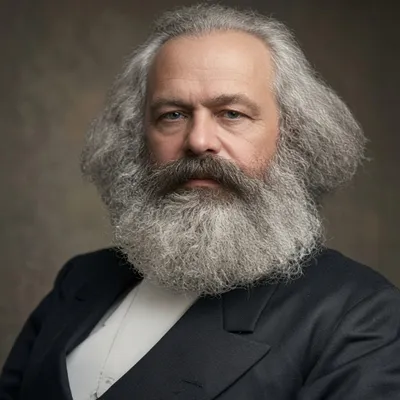
Karl Marx
Karl MarxPhilosophy, Political Economy, SociologyGerman1818–1883
The philosophers have only interpreted the world, in various ways; the point, however, is to change it.
In their times
Open in the Timeline of ThoughtInfluenced30


Influenced by6


Critics6


Same school1

Contemporaries4


Life and Thought
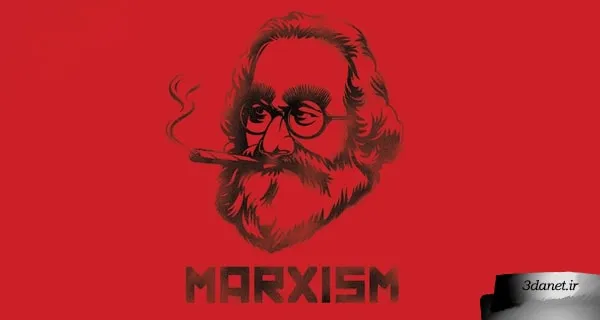
Karl Heinrich Marx (1818–1883) was a German philosopher and economist, recognized as the founder of historical materialism and one of the fathers of modern social science. His most important work is Capital, a critique of the political economy of capitalism.
Karl Heinrich Marx (5 May 1818 – 14 March 1883) was a philosopher, economist, social theorist, journalist, and one of the most significant figures in modern political thought. He was born in Trier, in the Prussian Rhine Province, and studied at the universities of Bonn and Berlin. His doctoral dissertation in philosophy was on the difference between the philosophies of nature of Democritus and Epicurus; a sign that Marx, before becoming known for his critique of political economy and theory of revolution, had emerged from the German philosophical tradition and its disputes with Hegel and the Young Hegelians.
In his youth, Marx turned to political journalism and, due to his critical stances, was forced to leave Germany for Paris and then Brussels. In Paris, he met Friedrich Engels; a friendship and collaboration that lasted until the end of Marx's life. The result of this collaboration was works such as The Holy Family, The German Ideology, and most famously, The Communist Manifesto. The Manifesto, published in 1848, is one of the most influential political texts of the modern world, explaining the history of society from the perspective of class struggle.
At the center of Marx's thought is the critique of capitalism. He believed that society should be understood not through abstract ideas, but through the mode of production, property relations, labor, and material contradictions. This view later became known as "historical materialism." According to Marx, the history of human societies progresses through the transformation of modes of production and the conflict between social classes; in capitalism, the main antagonism forms between the bourgeoisie, the owners of the means of production, and the proletariat, the sellers of labor power.
Marx's most important work is Capital; a monumental project in the critique of political economy, the first volume of which was published in 1867, with subsequent volumes published after his death through the efforts of Engels. In this work, Marx analyzed concepts such as the commodity, value, labor, surplus value, the accumulation of capital, commodity fetishism, and the internal crises of capitalism. He sought to show that capitalism is not merely an economic system, but a historical form of organizing social life.
Marx moved to London in 1849 and remained there for the rest of his life. The London years were marked by poverty, illness, grueling work in the British Museum library, and the writing of his major works. He also played an active role in the International Workingmen's Association, known as the First International. Marx died in London on 14 March 1883 and was buried in Highgate Cemetery.
Marx's legacy is vast and controversial. His thought has had a profound impact on sociology, political economy, historiography, philosophy, literary criticism, the theory of ideology, cultural studies, and political movements. Alongside Émile Durkheim and Max Weber, he is considered one of the principal founders of modern social science, and alongside Nietzsche and Freud, one of the figures who questioned the overt and hidden foundations of modern culture.