Philosophy
A Review of Marx's Thought and an Assessment of Marxism's Future
By grounding Hegel's dialectic in the material world, Marx called idealism the discourse of the master class and capitalism a system of forced labour for the worker. Through proletarian revolution and the abolition of private property, this system liberates humanity from self-alienation.
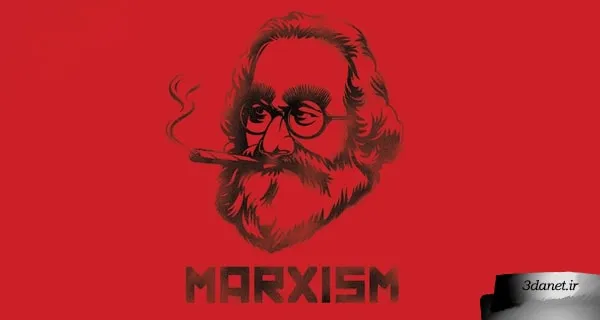
A Review of Marx's Thought and an Assessment of Marxism's Future
Esmail Noshad[*]
1) Description; Marx rightly brought Hegel's metaphysical dialectic down from heaven to earth. The ideas of Hegel's dialectic are neither born of and intrinsic to the "Absolute," nor is their emergence spiritual and idealist; rather, they are the result of the tension and struggle of social classes. Historical ideological apparatuses in all spheres are also rooted in the fault lines that have formed and continue to form between these classes. This was the beginning of the end of idealism. In his discussion of the master and the bondsman, Hegel presents an important point that inadvertently exposes idealism. The bondsman, out of fear of violence and death, is the mediator between the master's desire and harsh nature. The rough and harsh part of nature, as the thing-in-itself, is left to the bondsman, and the for-itself part of nature, through the bondsman's labor, belongs to the master's desire and pleasure. This foundational violence is the basis of the irrational class antagonism and the story of all human history. Class inequality, resulting from a foundational violence and domination, turns some people into instruments of pleasure for others. Idealism is precisely the discourse of the master class for exploiting the lower classes and reproducing these social conditions. Therefore, the inversion that Marx brought about in the dialectical process exposed and invalidated this discourse in the theoretical sphere.
2) Marx's era was an age of misery and poverty. Hunger and death, without any supportive or legal backing, gripped the throats of the workers. At the same time, as a result of the Industrial Revolution and the sudden growth of industries, workers had become the largest class with cohesive and organized formations and had adopted a revolutionary stance against these conditions. In such a situation, intellectuals only needed to fulfill their historical and inherent duty: to join a cohesive, organized, and oppressed class in the struggle against illegitimate power. This happened, and Marx was the most famous intellectual who pioneered this path.
3) Marx provided a critical description of the capitalist era that endures to this day and still heartens revolutionaries. He considered the sole aim of capitalism to be the increase of capital and its ever-greater accumulation, and he saw the source of this increase or growth of capital as the surplus value obtained from subtracting the exchange value from the intrinsic value, which is in fact the amount of labor. He deemed this profit illegitimate and derived from forced labor or the non-payment of the worker's real wage. In other words, he equated the exchange value of the commodity with the intrinsic value arising from the worker's labor, and therefore considered surplus value to be zero. Or better said, he did not believe in the market mechanism and its rule of supply and demand for determining the exchange value of commodities. By this reckoning, any acquisition of surplus value by the capitalist was a form of extracting forced labor from the worker. The ideology of the ruling class, in his view, was a conceptual apparatus for justifying and naturalizing this process. This ideology taught people to view themselves and their labor with a commodity fetishism. The worker became captive to the magic and mystery of the commodity that they themselves had produced, and came to see the sale of labor as a commodity and its appropriation by the employer as natural. Marx considered both the commodity and money to possess a kind of mystery that deceives the workers, whereas this mystery is in reality nothing but the embodiment and representation of the vast network of human social labor and activity, and the worker mistakenly attributes it to something beyond the material relations of labor. Marx says that human labor is the very essence and identity of the human being. Labor is constitutive of humans and their world, as well as the arena of their collective solidarity and bond. The bourgeoisie defines individuality only in relation to property. Historically, this was also the case; what the bourgeois meant by respecting individual rights was permission to share in the property resulting from commerce.
4) Marx focused on studying the "relations of production," one side of which was linked to the workers and the other to the capitalist. His question was why, despite the prosperity of the market and the ever-increasing growth of capital, workers were becoming poorer every day. The superstructural ideologies of the capitalist system emerge from the tension-laden fault lines between classes, yet they do not seek to resolve these contradictions but rather reproduce them in another form. The tension between the forces of production and the relations of production is the driver of the material dialectic of the structure and relations of production in society. Marx considers capitalist civilization to be the final process of this material and historical dialectic, and at the same time, he considers this phase to be even more fluid than the previous stages, viewing change and transformation as an inherent characteristic of the capitalist era. In his view, the bourgeoisie cannot continue to exist without constant revolution in the instruments of production, the relations of production, and the relations of society. The creation of these successive revolutions distinguishes the instability of this era from all previous eras. The bourgeoisie's need for a constantly expanding market drives it across the entire globe. All that is local, sacred, and stable vanishes into thin air. Marx sees the end of this process as the negation of capitalism and its contradictions and the emergence of a global, classless communist society, with the working class and its world revolution as the executor of this event.
5) The proletariat, through self-awareness of its revolutionary role, must eliminate the existing conditions of class contradictions and classes in general. Private property is abolished, and every human being should earn as much as they need. In other words, the kind of ownership that causes the worker to live only to serve capital and the capitalist system is abolished. Marx argues, of course, that private property does not even exist now, as over ninety percent of the people are tenants of a capitalist minority of less than ten percent. The abolition of property means the expropriation of the wealth that is blocked in the hands of this minority and has constricted the lives of the majority of people. In this regard, Marxism also questions the geometry of gender and especially the monogamous family, considering it a historical gendered structure that will disappear with the collapse of the capitalist system. The means of production belong to society, and humanity is reconciled with its labor and freed from alienation. Each individual receives according to their needs and works according to their abilities. Individual freedom becomes greater than ever, and each person has the ability to reveal and express their essence. The proletariat must finally abolish itself as a class, as well as the state it has formed. In this case, human labor becomes an arena of collective solidarity and the manifestation of human merits. These are, of course, the ultimate ideals. In the first phase of the revolution, called socialism, the path is paved for reaching the second phase, which is the ideal communist society. In the first phase, which is in fact the creation of a state of exception (a state of exception in the Schmittian sense, where law and rights are suspended and the police state violently drives society in a particular direction), the proletarian class must form a dictatorial state and, by changing the relations of production, abolishing the ownership of the means of production, and eradicating the ideology of class societies from minds, set society on the path toward the communist ideal. These dual phases were of great importance, especially for revolutionaries like Lenin.
6) Critical Analysis; The Marxist narrative, like other narratives of salvation (whether religious or secular, Christian or Hegelian, it makes no difference), begins from a hellish condition and promises a paradise. This pattern holds both for the cornerstone of Marxism’s historical narrative—namely the “Asiatic mode of production” or the condition of workers in the nineteenth century—and for the end of the narrative, i.e., communism, a placeless realm where all are free and everyone is able to express and manifest what their essence demands. Labor and production become the arena for the emergence of human merits, and everyone lives in a prosperous, free, classless society, free from bureaucracy and state oppression, and so on. In other words, at the beginning and the end of such historical narratives sit two ideas that have not been realized and cannot be realized—especially the idea of paradise. Various pieces of evidence may be found to justify the idea of hell, for instance in the lives of workers or in the theory of the Asiatic mode of production, but to justify the idea of a final paradise and the redemption of humanity on earth, there is nothing but wishful thinking. The reality is that the outcome of Marxist revolutions in practice was the first phase, namely socialism. Party dictatorship, the abolition of private property, the totalitarian state, endless bureaucracy, and the negation of freedoms and individual rights were all implemented with the justification of the second phase—reaching the communist paradise—but paradise never came, and these factors became trapped, making conditions in communist countries far worse than in capitalist countries; a permanent state of exception. Of course, these problems are attributable less to Marxism itself than to the meta-narrative that plays the role of the backbone of the metaphysical age, or the Iron Age—an age that began with Zoroaster and at whose end we now find ourselves. This meta-narrative superimposes an “ideational” structure as a value apparatus onto the reality of human life. Ideas such as hell, redemption, justice, freedom, equality, and so on are among the principal keywords of this value apparatus. But, as Lacan says, these signifiers are all empty and have never had, nor will ever have, any signified in reality. A meta-narrative that says we were free in “sacred eternity/the primitive commune/…,” but through “sin/oppression/profit-seeking/…” we became afflicted with “the Fall/alienation/….” We must come to our senses and “resolve” to make a new covenant for “salvation” from this “earthly world/hell/capitalist system/…” so as to attain “paradise/redemption/justice/freedom/….” These signifiers are all empty, and perhaps Marx, before examining the “surplus value” that the employer pocketed, should have clarified the status of these empty surplus values. Since the final link in such narratives is missing and unrealizable, these narratives lead only to the circulation of repressive power and its reproduction, and freedom, justice, and the other empty signifiers always remain in an absolute future. The masters of power, who are themselves the first to realize the unrealizability of the ideals, turn into contemptible players who pursue only their own personal gain—just as the senior managers of the socialist revolutions and other ideological revolutions of the twentieth century followed the same path. This statement, of course, does not mean a negation of these ideational surplus values; rather, the point is that the domain of humanistic ideas and surplus values must be distinguished from material reality, so that we at least know that we have decided to shape the world according to human ideals.
7) Some Marxists, such as Louis Althusser, opposed these surplus-values in a different language and rejected any humanist narrative of Marxism. Althusser believes in an “epistemological break” in Marx’s thought and says that from a certain stage onward Marx abandoned humanism and adopted an “objectivist” perspective and a “scientific understanding of historical relations.” Althusser was a proponent of structuralism in Marxist thought and did not believe in human freedom, considering their actions to be more dependent on historical forces and ideologies arising from tension-laden class contradictions. Every social system, for its survival, is compelled to reproduce the conditions and relations of production. Ideologies provide this essential function. Ideologies, emerging from the rift of class contradiction, transform these social contradictions into social fault lines and thereby re-impose and revive the conditions and relations of production around these social fault lines, which always carry the potential for crisis. Ideology is not a mental structure, but an institutional and bureaucratic system. Ideology is not beliefs but the actions, practices, and institutions in which the human being becomes individuated and socialized. In this way, ideology encompasses everything from school to university, from hospital to asylum and prison, and all manner of cultural and security institutions, etc., which are organized under the bureaucratic structure of the state. In Althusser’s view, Marx was overly preoccupied with the environment inside the factory and underestimated the function of ideology, which capitalism reproduces through the reconstruction of the specific subjects (minds) of this system via the external division of labor. The economic infrastructure is determinant only in the “final instance,” and ideology plays the most important role in the allocation of resources and the reproduction of the conditions and relations of production. Theoretical structures possess “ontological depth” and do not simply refer to reality. All major social changes take shape within the “scientific” process of history and from the tension-laden fault lines between classes with disparate interests, and the individual human being plays little role in this process. It cannot be said that Althusser succeeded in resolving the problem of the sixth thesis. In any case, the unrealizability of the ideals and the perpetuation of the first phase in practice remains in place in this process as well. It must also be said that Althusser correctly points to the objective, organizational, and extra-factory structure of ideology. This description transforms the audience of Marxism from the working class to the people; because ideology works on the minds of the people and is not only inside the factory.
8) Marx, for all his genius, was a child of his time. In the nineteenth century, modernism and capitalism had not yet been fully realized, and the system was still growing vigorously. Physics and technology were midway along their path, still undergoing mechanical development, and there was no sign of the electronics industry. The Industrial Revolution, the sudden growth of industry, and the shift in Europe's economic paradigm from agriculture and commerce to industry had turned the majority of people into workers, and the meaning of "workers" and "ordinary people" more or less coincided. Today, however, conditions have changed enormously, and with the full realization of modernism in all its dimensions, workers are no longer the largest and most important economic class. The growth of service industries such as tourism, banking, and financial industries, along with the expansion of markets, has given rise to important classes in the economic sphere that are not productive but play a significant role in the economy. From this situation, the American economist Daniel Bell has constructed a line of argument against Marxism, based on the premise that the primary revolutionary class of Marxist theory no longer holds its former importance, and therefore Marxism is coming to an end. On the other hand, the financial economy has become increasingly important and, in neoliberal theories, has come to dominate the productive economy. The triumph of the financial economy, which has often been adventurous and profit-seeking on the part of the banking and stockbroker classes in collusion with politicians, has created a wave of widespread financial crises with enormous losses—this time not for workers, but for all people. Marx, of course, also perceived the mysteriousness of money and the exploitation latent within it, but this line of thought never found its true place in his thinking. Today, financial structures, in conjunction with ideology, have become the primary instruments of power. Money is distributed based on ideological and blood ties among "insiders." Money that is created as a national debt, on the account of all the people, is divided among specific individuals who hold an ideological position or have blood and family ties to ideological positions, while the people become ever more indebted and must perform forced labor to pay off this national debt. This is merely the normal state of affairs; the crises that this corrupt financial structure successively creates, abandoning the middle classes on the streets, remain in place. Who has bestowed this mysterious and powerful position upon money? By what credit and backing does a tiny minority become billionaires overnight while the majority are reduced to utter destitution? The answer is clear: by the backing of the most sacred and mythologized temple in history: the State.
9) Conclusion: It is clear that orthodox Marxism can no longer continue. The entirety of the people—including farmers, employees, merchants, clerks, artisans, industrialists, workers, academics, scientists, and so on—have today taken the place of workers, and if a right is to be reclaimed from the power structure entwined around ideology and money, this right belongs to all the people, that is, 99 percent of the world's current population. In the contemporary era, most heirs to Marxism have gathered in the camp of critical theory under names such as the Frankfurt School, Derrida, Foucault, Deleuze, Althusser, Agamben, and others. These thinkers have realized the ever-greater necessity of theoretical and critical work over the crude thinking of the nineteenth century and have launched extensive and influential debates in the twentieth century, the theoretical outcomes of which have entered the twenty-first. Probably, in the future, humanity will no longer pursue the ideal of communism, but demythologization and, in Agamben's terms, the profanation of power, the state, and money, as well as Foucault's work in clarifying the concept of power and discourse analysis, Derrida's deconstruction, Deleuze's deterritorialization and superficial differences (as opposed to hierarchical differences), the phenomenology of Husserl and Heidegger, existentialist works in defense of the reality of the individual, lived being of the human against metaphysical concepts, and so on—these were schools that developed under the theories of the critical school and will, in the future, provide the ground for a rationality that will enable humanity to pass beyond the previous age, the Iron Age. We are only halfway there... the great noon!
[*] PhD candidate in Philosophy, University of Isfahan



Discussion6 comments
آقای نوشاد، آیا رویکرد انتقادی کسانی که در انتهای مطلب ازشون نام بردید رو بر ایده های خودتون درباره میراث اندیشه سکولار ایران گرای طبقه دهقانان در دوران متاخر سلسله ساسانی، قابل اطلاق میدونید یا نه؟ وقتی صحبت بر سر خام اندیشی های قرن نوزدهم و مشخصا مارکسیسم باشه، ظاهرا این رویکردهای انتقادی فوکو و دریدا و ... مفید معرفی میشند، اما در مورد وحدت ملی ایران در گذشته های دور یا به قول ایده ایرانشهر چطور؟ این وحدتی که شما براش ارج قائل هستید و یک «پیمان» معرفی اش میکنید آیا غیر از اینه که در دل خودش سلسله مراتب و فرادستی یک عده و فرودستی عده دیگر و انقیاد جمعی به دست جمعی دیگه رو پنهان کرده؟ از فوکو و آگامبن فقط برای نقد اسطوره های مارکسی کمک نگیرید. ایده های خودتون درباره تاریخ تئوریک ایران هم جای سوال دارند.
مارکس به درستی ایده های هگل را از آسمان به زمین آورد. درستی اش را چطور فهمیدید؟ چطور ثابت میکنید؟ ایده های دیالکتیک هگل حاصل تنش طبقات اجتماعیست!! عجب !! این جمله غلط نیست بلکه اساسا مهمل است. یعنی هگل خودش هم نفهمیده که مفهومی که خودش برای اولین بار برساخته حاصل چیست؟ ایده و مارکس و هگل و همه چیز فقط بهانه ای هستند که دانشجویان فلسفه فضل فروشی کنند بدون کمترین پایبندی به استدلال و یا حتی جملات نوشتن جملات معنادار!
نویسندهی گرامی، لطفا یک مرتبه متن خود را ویرایش کنید. در ضمن، تا زمانی که بند اول نوشتهتان را بنحو قابل فهم ارائه ندهید، امکان فهم باقی مطلب میسر نیست. یعنی برای من مشخص نیست که چرا به هگل تاختهاید. مبحث خدایگان و بنده در متن پدیدارشناسی هگل توسط شما و سایر مارکسیستها از باقی متن منتزع شده و جداگانه مورد داوری قرار میگیرد. این کار به فهم تلاش فکری هگل لطمه میزند. مراد شما از اینکه ایدئالیسم همان گفتمان طبقهی غالب برای بهرهکشی و... باید به مدد نوشتهای موسع و موجه بیان شود.
یه لیوان آب بخور و نفس عمیق بکش
نمی دونستم دانشکاهی به نام دانشگاه اصفهان هم وجود دارد. از معرفی دانشکاههای متفاوت و ناشناخته در خلال دیگر فعالیتهای فرهنگیتان سپاسگزارم.
به نوشته آقای نوشاد « مارکس ...تنها هدف سرمایه داری را افزایش سرمایه و تراکم هرچه بیشتر آن می داند و منشأ این افزایش یا رشد سرمایه را ارزش افزوده ای می دانست که از حاصل تفریق ارزش مبادله ای از ارزش ذاتی که در واقع همان میزان کار است، بدست می آمد.» تفریق ارزش مبادله از ارزش ذاتی ؟! کجای نوشته های مارکس چنین تعبیری آمده یا از آن قابل استنتاج است ؟!