Philosophy
The Essay “Intelligence, Mortality, and the Marx-Buddha Problem in the Philosophy of Artificial Intelligence” by Be'sat Elmi
Building human-like AI is impossible a priori: humans possess a transcendental normative dimension that cannot be formalized, intelligence only acquires meaning against the backdrop of finitude and mortality, and its common definitions are incomplete.


Besat Elmi
AuthorIntelligence, Mortality, and the Marx-Buddha Problem in the Philosophy of Artificial Intelligence
Be'sat Elmi
In this essay, after analyzing the two central concepts of “intelligence” and “problem-solving” in the philosophy of artificial intelligence, I will argue that the (construction of) human-like artificial intelligence is a priori impossible, meaning that humans inherently possess a transcendental normative dimension that can never be formalized, regardless of how much progress is made in hardware construction or even in the discovery of mental algorithms.
From the very beginning of the project of constructing human-like artificial intelligence[1], an epistemological presupposition has been the foundation of all research and innovations by scientists in this field: the “belief that everything essential to [simulating] human intelligence can be formalized[2]” (Hubert Dreyfus, 1974: 23). This belief that all functions, states, and properties[3] of human consciousness, including intelligence, emotion, will, desires, etc., can ultimately be translated into the formal language of syntactic rules and pure mathematical calculations is still the theoretical driving force of the artificial intelligence project. In contrast, some philosophers—including Hubert Dreyfus himself in the early years of the AI project in the 1970s in America—believe that reproducing human consciousness and its properties in a purely formal model is fundamentally impossible. John Searle, for example, (still) believes that no computer program can ever be a human mind because “a computer program is merely syntactic, and [while] minds are more than [syntactic] rules. Minds are semantic, meaning they have more than a formal structure, they possess [semantic] content” (John Searle, 1983: 671).
Such disputes between AI scientists and philosophers over the possibility of realizing human-like artificial intelligence have fateful consequences for philosophy itself. As Dreyfus points out, what is put to the empirical test in the AI project is the long-held conception of many rationalist philosophers of the human being “as [an entity] essentially rational—and [that] rationality itself is essentially calculation—” (Hubert Dreyfus, 1974: 23). In other words, if the project of human-like artificial intelligence succeeds—such that, according to the Turing test, distinguishing a human agent from an artificial intelligence becomes practically impossible—then one can conclude that the general conception of rationalist philosophers of the human being as an entity whose essence is, ultimately, rational and syntactic calculation has been true. On the other hand, if this project fails—as it has failed so far—then one can conclude that the general conception of idealist philosophers of the human being as an entity whose existential essence cannot be captured and contained by mathematical and syntactic calculations and rules is true; so the issue is ultimately a battle between Spinoza and Nietzsche, Leibniz and Max Scheler, Descartes and Schopenhauer, and so on...
In this essay, after analyzing the two central concepts of “intelligence” and “problem-solving” in the philosophy of artificial intelligence, I will argue that the (construction of) human-like artificial intelligence is a priori impossible, meaning that humans inherently possess a transcendental normative dimension that can never be formalized, regardless of how much progress is made in hardware construction or even in the discovery of mental decision-making algorithms.
The definitions of “intelligence” that have served as the basis for the research of artificial intelligence scientists are severely inadequate, meaning that they often fail to take into account a fundamental variable that constitutes the concept of “intelligence.” Shane Legg and Marcus Hutter, in an article, collected 72 definitions of “intelligence” that at one time formed the basis of the work of AI scientists. Some of the most important among them are: “ ‘Intelligence is the ability to solve problems, or to create products, that are valued within one or more cultural settings.’ Howard Gardner” (Legg and Hutter, 2007: 5).; “ ‘The ability to solve hard problems.’ Marvin Minsky” (Legg and Hutter, 2007: 8) ; “ ‘The ability to adapt to relatively new situations in life.’ R. Pinter” (Legg and Hutter, 2007: 6); “ ‘Intelligence is the ability to use optimally limited resources—including time—to achieve goals.’ Ray Kurzweil” (Legg and Hutter, 2007: 8) and so on.
Such definitions are inadequate for three reasons: 1) None of these 72 definitions analyzes (traces) the concept of “intelligence” down to its unanalyzable sub-concepts[4]; the concept of “problem-solving” itself, for example, can be reduced to the ability to find relationships among various types of variables. 2) Defining “intelligence” in terms of “problem-solving,” “finding a solution,” “adapting,” and so on limits the scope of the concept’s application; what exactly is the “problem” that a brilliant composer is trying to solve when composing a piece? What situation is the artist trying to “adapt” to during their artistic creation? 3) None of these definitions—except for those of Kurzweil, Lenat, and Feigenbaum, which also suffer from 1) and 2)—take the variable of time into account, whereas time is, in a way, an essential element constituting the concept of “intelligence”: in one sense, all that distinguishes a mathematical genius from an ordinary person is the ability to solve a mathematical problem more quickly.
Thus, an essential link between the concept of “intelligence” and the temporality (mortality) of the intelligent organism is revealed. In other words, “intelligence” only becomes relevant in a world with mortal humans; in a world with immortal humans, “intelligence” would not have its current value and relevance, because the hardest human problems would eventually either be solved after several million years, or their unsolvability would become apparent. In such a world, there would be no compulsion to solve a problem quickly, and one might even speculate that in such a world, no “problem” would fundamentally arise.
Douglas R. Hofstadter[5], the American physicist who has conducted fundamental interdisciplinary research in the field of artificial intelligence and consciousness, has offered a definition of “intelligence” that suffers from none of the shortcomings of 1), 2), and 3), and, in the author’s view, captures the concept of “intelligence” in its most refined and precise form: “Intelligence is the ability of an organism (including humans) to perceive an identity (or similarity) between two (or more) variables (auditory, visual, sensory, etc.) in the shortest possible time.”[6]
Now, the point is that this definition will have a fatal philosophical consequence for the project of human-like artificial intelligence, in that:
“Intelligence is the ability of an organism (including humans) to perceive an identity (or similarity) between two (or more) variables (auditory, visual, sensory, etc.) in the shortest possible time.”
Speed in perceiving identities is important for the human organism only because humans are aware of their own temporality and death—in a world with immortal humans, there would be no fundamental difference between Einstein and an ordinary person.
Therefore, the very concept of human “intelligence” finds meaning and value exclusively against the backdrop of human finitude and, ultimately, death.
Thus, for human-like artificial intelligence, it will be essential to have a conception of its own death.
Consequently, death must be a “problem” for human-like artificial intelligence!—just as it is a “problem,” and indeed the most important “problem,” for us humans.
Such a conclusion is initially fatal because it disrupts the common conception of human-like AI as an intelligent being that is at the same time abstracted and independent from the particularities (shortcomings) of the human body[7]. Not only embodiment[8] but also awareness of the inevitable fate of the “body” is a necessary condition for creating human-like artificial intelligence. The upshot is that one cannot be intelligent without the anxiety of death!
The AI scientist might respond as follows: “Even if that is the case, it is no problem; this fear of death and awareness of temporal finitude can be incorporated into the programming of said AI; one can easily make death a ‘problem’ for human-like artificial intelligence.”
And it is here that we encounter a more intractable philosophical problem: by exactly what method will human-like artificial intelligence seek to solve or even come to terms with this “problem” (death)?
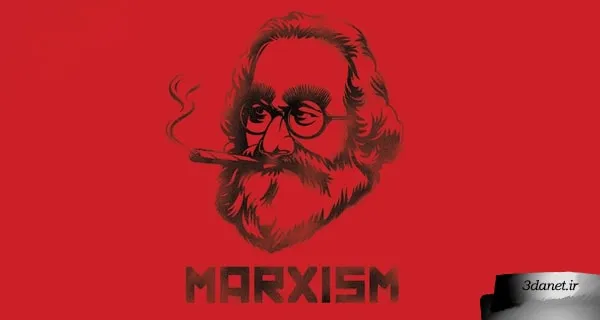
Fundamentally, not only in confronting death but in facing any other “problem,” humans always solve problems in two ways. The application of this duality to the decision-making algorithms of human-like AI creates a philosophical dilemma that I have termed the “Marx-Buddha problem.”
First, it must be noted that fundamentally three types of human “problems”[9] are conceivable:
a) Conceptual-logical-mathematical problems, whose existence is independent of human desires and fears.
b) Practical problems, which only arise when a subjective human desire encounters an objective obstacle in the external world. For example, an individual wants to attend a very important ceremony in a few minutes, but has no clean and ironed clothes (physiological problems, including itching, pain, or illness, can also be counted among this type of problem).
c) Normative problems, which only arise when two or more conflicting desires of a single human (or two conflicting desires of two humans) collide with each other. For example, an individual, while loving their spouse, is also yearning to win the heart of another woman, and this internal strife among their desires creates an acute normative problem for them.
Now, it is obvious that human-like artificial intelligence will have absolutely no difficulty in solving type (a) problems, but solving type (b) problems will be problematic.
Since “practical problems,” by definition, arise from the collision of two variables (human desire and an objective obstacle), logically their solution is also realized in two ways: either the human desire is eliminated (or changes direction) or the external obstacle is removed. We humans, in life, depending on our physiology, social upbringing, the nature of the problem itself, and most importantly our creed or philosophy of life, always solve a practical problem by one of these two methods.
Now the main question is: what method will a human-like artificial intelligence, assuming the possibility of its realization, use to solve type (b) problems? And more importantly, what method should it use?
Consider the example of a type (b) problem: assuming that in the mentioned circumstances one could both attend the ceremony in the same unironed clothes and also immediately go and buy a new set of clothes, by which method will the human-like AI solve the problem?
Will it be a Buddha at that moment, and, believing that “We are what we think. All that we are arises with our thoughts. With our thoughts, we make the world [for ourselves],” will it solve the “problem” subjectively by eliminating its human desire (to be seen with a well-groomed appearance)?—will it appear at the ceremony in the same unironed clothes?
Will he, in that moment, be Marx, and believing that “philosophers have only interpreted the world in various ways; the point, however, is to change it,” will he solve the “problem” by removing the objective obstacle (buying new clothes)?
In response to this dilemma, one could program the artificial intelligence entirely “Marxist” from the very beginning. But such an intelligent being would be extremely dangerous. Imagine if this AI were prevented from entering a place for any reason, what action would it commit to “solve the problem”! More importantly, such programming would render the said AI helpless and dysfunctional in the face of death, which is fundamentally unsolvable by objective means—and we have already seen that death must be presented to the AI as a “problem.”
On the other hand, one could program the said AI entirely “Buddhist” from the very beginning. But for such an intelligent being, there would no longer be any problem left to solve! For it would, like the Buddha himself, solve all problems by extinguishing its desires (in a subjective manner). Imagine someone attacking it with intent to kill, would it defend itself? Why should it defend itself when the “problem of death” has already been solved for it by eliminating the desire to live? In short, such a Buddhist human-like AI would pay no heed to the “problems” of our human world.
Ultimately, what seems more rational is to program the intended AI to be partly “Buddhist” and partly “Marxist.” This approach, too, will lead to another dilemma, because for this task we must either breathe an equal measure of both the “Marxist” and “Buddhist” drives into the AI’s spirit, or give one drive a degree of precedence over the other. The first approach will not lead to action, because the pull of two equally forceful drives in opposite directions will result in a balance of forces and consequently in stasis (inaction). As a result, there is no choice but to give one drive precedence over the other in programming (for instance, such that the AI acts “Buddhist” in 56% of cases and “Marxist” in the other 44%, or vice versa). But such a measure will place a normative philosophical question before us humans, the designers of the AI, a question that, in a sense, is also the question of the “meaning of life” for us humans, and that is:
How do we, the designers of this human-like AI, know (based on what reasoning) which of these drives or algorithms for solving type B problems to give precedence to over the other (during programming)? How do we know that, for example, living “Marxist” 65% of the time and only “Buddhist” 35% of the time is somehow better, truer, or more truthful(?! ) than a life in which 73% of problems are solved in a “Buddhist” way and 27% in a “Marxist” way? In a word, how do we know which (of these two ways) is the true way of living worthy of an intelligent human being?
Thus, the very problem of which method the human-like AI should adopt in solving type B problems becomes a type C (normative) problem for us humans and scientists, a problem arising from the clash of two contradictory types of desire within the human constitution—and, this is the most important conclusion of this essay—until this specific type C problem, this aporia, can be reproduced within the human-like AI itself, it can be said that the said AI has not yet become “human-like” in the fullest sense. As long as the AI, like us humans ourselves, does not live in the throes of the question of the “meaning of living,” it will not be a human being.
But yet another dilemma presents itself before us in the form of a paradox[10]: in order to give the said AI the possibility of questioning the “true way” of life, we must already incorporate the “true way” of life (whether to be more “Marxist” than “Buddhist” or vice versa) into its programming—otherwise it will exhibit no action at all!
This is that “transcendental normative domain” specific to humans which, as I have argued, in my view, will never be captured and contained by the formal calculations of an artificial intelligence.
.
.
References
Dreyfus, Hubert. (1974). “Artificial Intelligence”. The Annals of the American Academy of Political and Social Science, Vol. 412, The Information Revolution Harvard University Press. pp. 28-41 (Mar., 1974). pp. 21-23. Retrieved from: http://www.jstor.org/stable/1040396
Hofstadter, Douglas R. (2014). “Douglas Hofstadter: The Nature of Categories and Concepts”. https://www.youtube.com/watch?v=Kr3QDMkMGmQ
Legg, Shane and Hutter, Marcus. (2007). “A Collection of Definitions of Intelligence” in Frontiers in Artificial Intelligence and Applications, Vol.157, 17-24. Retrieved from: https://arxiv.org/pdf/0706.3639v1.pdf
Searle, John. (1983). “Can Computers Think?”. Minds, Brains, and Science.
.
.
[1] Human-level Artificial Intelligence
[2] Formalize
[3] Properties
[4]Sub-concept
[5] Douglas R. Hofstadter
[6] This is my more precise formulation of Hofstadter’s definition, which I shared with him via email and he confirmed. Hofstadter’s own definition, presented in a lecture titled “The Nature of Categories and Concepts,” is as follows: “Intelligence is the rapid categorization (‘making analogies’), that is, finding identities [in the shortest possible time]” (Douglas Hofstadter, 2014).
[7] Abstract Intelligence
[8] Embodiment
[9] Problem
[10] Paradox
.
.
PDF version of the essay “Intelligence, Mortality, and the Marx-Buddha Problem in the Philosophy of Artificial Intelligence” by Be'sat Elmi on Academia in English
.
.




Discussion0 comments
No comments yet; let yours be the first voice.