Philosophy
Philosophy Envy
Cognitive science's attempt to explain 'human nature' faces criticism from historicist philosophers who see humans as having a history rather than a fixed nature. This belief makes possible the freedom of self-creation without the authority of philosophy or religion.
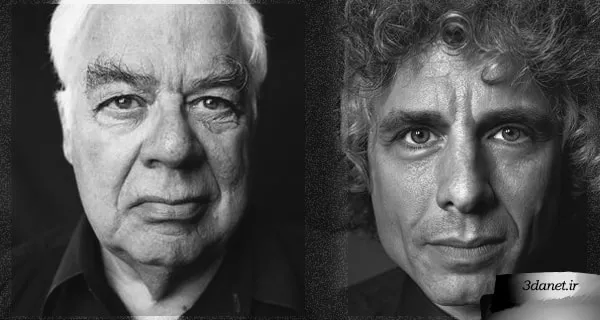
When philosophers such as Ortega y Gasset say that we humans do not have a nature but a history, they do not mean that we are blank slates (Tabula Rasa). [Such philosophers] have no doubt that biologists will eventually discover the genetic factors [involved] in autism, musical talent, lightning calculation, and many other traits that distinguish humans from one another. Nor do they doubt that, during the time our species was evolving on the plains of Africa, some genes were sifted out and others were retained. [These philosophers] happily agree with a scientist like Steven Pinker that recent genes, regardless of [the process of] enculturation, explain many kinds of behavior common to all humans.
What is doubtful for these philosophers is that specifying the role of genes in making us different from one another [and/or] tracing our commonalities to the evolutionary needs of our ancestors will yield anything called a “theory of human nature.” For such theories would have to be normative—[meaning that] they would have to offer guidance. [These theories] must tell us what to do with ourselves. They must [be able to] explain why some [forms of] life are better for humans than others and why some societies are superior to other societies. A theory of human nature must tell us what human beings we ought to become.
Philosophical and religious theories of human nature flourished precisely because they steered clear of empirical details. [These theories] did not expose themselves to the risk of refutation by [empirical] events. Plato’s and Aristotle’s theories about the parts of the soul were such theories, as are the Christian theory [that] we are all children of a loving God, Kant’s theory that we are phenomenal creatures under the sway of the noumenal self or thing-in-itself (Noumena), and the naturalizing accounts of Hobbes and Freud about the origins of sociability and morality. Such theories, despite being irrefutable and lacking predictive power, were highly useful—not because they provided adequate accounts of what humans truly were in their essence, but because these theories set forth risks to avoid and ideals to serve. [These theories] marketed useful moral and political advice in a grand and presentable package.
Steven Pinker1 attempts to recover this mold, but instead of packaging it with a conception [or ideal] of the good life or the good society, he does so by appealing to a set of empirical facts. But it is hard to see how a combination or superposition of various empirical disciplines calling themselves cognitive science could serve the purposes that religion and philosophy once served. The claim that what philosophers did in an a priori and illegitimate manner can now be done in an a posteriori and more legitimate manner by cognitive science will be mere hollow and empty rhetoric as long as its proponents are unwilling to take risks. To fulfill the promise of the phrase “a scientific theory of human nature,” they [cognitive scientists] must begin by offering a recommendation on how we might, whether individually or collectively, become better human beings. They must then explicitly state the inferences that led them from particular empirical discoveries about our genes or our brains to these particular practical recommendations.
E. O. Wilson, Pinker, and others who believe that biology and cognitive science can take over at least part of the cultural role of philosophy show no inclination to embark on such a [line of] reasoning. They remember well the end of the Eugenics movement—which claimed to have “scientifically proven” that interracial marriages or increased immigration would lead to cultural decline. The memory of this earlier, ugly example warns them against tying the prestige of their discipline to the consequences of practical recommendations. Instead, they repeatedly reiterate that as we gain more knowledge about our genes and our brains, we will achieve a better understanding of what we humans essentially are.
اما برای فیلسوفان تاریخ گرایی همچون اُرتگا [چیزی به نامِ] آنچه که ما [انسان ها] ذاتا هستیم وجود ندارد. درس ها ی زیادی برای آموختن از تاریخ هست، اما هیچ ابر-درسی نیست که بتوان از علم، دین و یا فلسفه فرا گرفت. این انگاره ی بدفرجام که فلسفه می تواند تفاوت میان طبیعت و قرارداد—میان آنچه که برای انسان بودن ضروری است و آنچه که صرفا محصول شرایط تاریخی است—را دریابد از فلسفه ی یونانی به روشنگری انتقال یافت. [این انگاره] درآنجا در نسخه ای که باعث انزجار افلاطون می شد در روسو دوباره پدیدار شد. اما طی دو قرن اخیر این انگاره که [در نهایت] در پس ِ تمامی لایه-اندودها ی فرهنگی چیزی به نام طبیعت کمین کرده است، و اینکه معرفت به این چیز رهنمود سیاسی یا اخلاقی ارزشمندی را فراهم خواهد ساخت، به بدنامی ای که سزاوارش بود دچار شده است.
دیویی حق داشت که ادعاهای افلاطون و ارسطو مبنی بر اینکه زندگی متأملانه [تنها] زندگی ای بود که به بهترین نحو قابلیت های منحصرا انسانی را به کار می گیرد را به سخره بگیرد. به باور او چنین ادعا هایی صرفا روشی بود که این فیلسوفان به خود دست مریزاد می گفتند. پس از هِردر،این ادعای روسویی که هدف تغییر سیاسی-اجتماعی باید بازگرداندن ما [انسان ها] به طبیعتی تباه نشده باشد به دست متفکرانی که مسحور گستره و ارزشِ تنوع فرهنگی شده بودند رد شد.
این انگاره ی مشترک میان افلاطون و روسو که چیزی به نام یک زندگی نیک برای انسان وجود دارد به تدریج جای خود را به این باور که بسیاری زندگی های انسانیِ به طرزی یکسان ارزشمندی وجود دارند داده است. [و] این تغییر است که منجر به باور کنونی ما شده است: که بهترین سامان سیاسی-اجتماعی آن است که افراد در آن آزاد باشند تا هر کدام از این زندگی ها را که برمی گزینند بِزیند—یا اینکه همچنان که [در مسیر زندگی] پیش می روند، بدون اینکه بپرسند در واقع «قرار بوده» چه بشوند، خود را برسازند.[ این تغییر] همچنین باعث شده است تاریخ، ادبیات و هنرها، به مثابه ی منابع [جدیدِ] خودسازی (Edification) و آرمان پردازی، دین و فلسفه را از دور خارج کنند.
کتاب در جستجوی طبیعت بشری: افول و احیای داروینسم در تفکر اجتماعی آمریکا [اثر] کارل دِگلر روایت تلاش زیست شناسان برای ورود به برخی حوزه هایی است که فیلسوفان پیشاپیش در حال عقب نشینی از آنها هستند. داروینیسم پیوستارهایی پیش-از-این-نامحتمل میان انسان و حیوان را آشکار ساخت و این [آشکارسازی] منجر به این [فکر] شد که تحقیقات زیست شناسانه ی بیشتر می تواند چیزی از لحاظ اخلاقی حائز اهمیت فراپیشِ ما نهد. در فصلی با عنوان «چرا فرهنگ غلبه پیدا کرد؟»، دِگلر توضیح می دهد که چگونه وانمودسازی ها ی گستاخانه ی بهنژادی و تلاش بیهوده ی آنها برای متوقف کردن جریان فمنیسم با توسل به حقایق زیست شناختی درباره ی «طبیعت های» متفاوت زنان و مردان، این چنین [ادعاهایی] را بی اعتبار کرده است. سپس در فصلی با عنوان « زیست شناسی احیاء شده»، او [دگلر] توضیح می دهد که چگونه زیست شناسان اجتماعی و هم پیمانان آنها از آن زمان تا کنون در صدد هستند تا جریان امور را به سمت دیگر سوق دهند.
دِگلر کتاب خود را، ضمن حمایت از آنچه که پینکر تعامل گرایی کل نگرانه (Holistic Interactionism) می نامد، با لحنی جهان گستر به پایان می رساند. اما بسیاری از خوانندگان او اینگونه نتیجه خواهند گرفت که پیام داستانی که او روایت می کند این است که «سرشت یا پرورش؟» (Nature or nurture?) هیچ وقت پرسش خوبی نبوده است. داروین تفاوت عظیمی در شیوه ی تفکر ما در باره ی خودمان ایجاد کرد، از آن روی که او روایت ها ی دینی و فلسفی [ معطوف به توجیه] شکاف میان ساحت غیر مادی و حقیقتاً انسانی ما با ساحت صرفاً حیوانی ما را بی اعتبار کرد. اما هیچ کدام از آموزه های داروین تمایز میان آنچه که می توانیم از نتایج آزمایش های زیست شناسی و روان شناسی فراگیریم و آنچه که می توانیم تنها از تاریخ فراگیریم—گواهی تاریخی آزمایشات اجتماعی و فکری گذشته—را از میان بر نمی دارد.
Pinker is right that the nature-nurture debate will not disappear as long as the question is posed in relation to a very specific type of human behavior—autism, for example. But at more abstract levels, such debates are pointless. [Such discussions] are more polemical exchanges that [themselves] are rooted in academic turf wars. The question “Is our humanity biological or cultural?” is as sterile and fruitless as the question “Are our actions determined [causally] or do we have free will?” No tangible result in genetics, physics, or other empirical disciplines will help us in answering either of these two questions. We will continue to reflect on what we ought to do and [likewise] hold one another responsible for our actions, even if [at some point] we become convinced that every thought in our heads and every move we make would be predicted by an omniscient neuroscientist. We will continue to try out new lifestyles, new ideas, and new social institutions, even if [at some point], in our hearts and minds, we have become convinced that everything somehow depends on our genetic makeup. The debate over the nature-nurture question, like the debate over the problem of free will, has no functional significance whatsoever.
Pinker rightly says that “there is a widespread desire that the whole [nature-nurture] issue will somehow go away” and an equally widespread suspicion that refuting the belief in the blank slate is [merely] “toppling a straw man.” Readers of Degler will be exposed to both this desire and this suspicion. Pinker [however] hopes to change [these readers’] views by toppling other straw men: [including] “the postmodernism and social constructionism that dominate many sectors of the humanities.” But it is hard to find a humanist—even the most heterodox Foucauldian—who would endorse the view—which Pinker attributes to Louis Menand—that “biology yields no insights into the human mind and behavior.” What Foucault, Menand, and Ortega doubt is that insights from biology will help us decide which individual and social ideals are worth striving for.
Pinker believes that where philosophy has failed, science can move things forward. Yet, to prove his claim, Pinker is forced to present a series of platitudes as astonishing scientific discoveries. He says, for example, that “cognitive science has shown that for learning and culture to be possible, complex innate mechanisms must be at work.” Who has ever doubted that this is not the case? We [humans], long before cognitive science came on the scene, knew that we cannot teach what we teach human children to the offspring of non-human animals. We realized much earlier that if an organism has one [particular] type of brain, we can teach it to speak, and if it has another type of brain, we cannot. Yet Pinker writes as if people like Menand insist on denying such obvious truths.
Once again, Pinker references recent studies, according to whose results the circle of organisms that are the object of our moral sensibilities “can expand to include those linked to us through networks of mutual trade and interdependence… and [can] contract to the point of excluding those perceived to be in deteriorating conditions.” But we did not need recent scientific research to learn something about these “possible levers for humane social change.” The involvement of interdependence in how we treat foreign merchants, and [the involvement] of degeneracy in how we treat prisoners of war, is nothing new. It has long been the case that many recommend foreign trade and interracial marriage as a way to achieve broader fellow-feeling. It has also long been the case that they recommend we avoid degrading others in order to deny ourselves a pretext for oppressing them. Nevertheless, Pinker describes truths that were familiar to Homer and Herodotus as truths that reveal “the unobservable aspects of human nature.”
Of course, it is likely that further discoveries about the workings of our brains will yield many useful ideas about changing human behavior. But [even so] imagine that nanotechnology ultimately enables us to trace the transmission of electrical charges from one axon to another within a living brain, and [also] to correlate such processes with subtle changes in [human] behavior. Imagine that we are able to alter a person’s behavioral disposition however we like, simply by tinkering with their brain cells. How would such an ability help us discern which behavior to encourage and which to discourage—[in other words] to know how human beings should live? Yet, such help is precisely what philosophical theories of human nature claim to provide.
Throughout The Blank Slate, Pinker says that everyone has, and needs [to have], a theory of human nature, and that empirical scientific inquiry will likely provide a better theory than what common sense or armchair philosophizing promises. But it is not clear that we [in fact] have such a thing or need it. Every human being has beliefs about what is of greater importance and what is of lesser importance, and consequently about what constitutes a good human life. But such beliefs need not—and should not—take the form of a theory of human nature, or a theory of anything else. Our beliefs about what matters are constantly adjusted by new experiences—[experiences such as] moving from a village to a city or from one country to another, meeting new people, and reading new books. The notion that we deduce [these beliefs] from a theory, or ought to deduce them, is a Platonic fantasy that the West has gradually left behind.
The books that change our political and moral beliefs include sacred texts, philosophical treatises, histories of ideas and socio-political histories, epic poems, novels, political manifestos, and other writings. But scientific treatises have increasingly lost their relevance to this process of change.
This is because, since Galileo, empirical science has earned its autonomy and deserved dignity by revealing the function of phenomena—and not, as Aristotle had hoped, by revealing their intrinsic natures.
Post-Galilean science does not tell us what is really real or really important. [This science] carries no metaphysical or moral implications. Instead, [this science] enables us to do things we were previously unable to do. When [science] became empirical and experimental, it lost both its metaphysical claims and its ability to set new goals for humanity. [Science] gained the ability to provide new means. Many scientists are content with this compromise. But every so often a scientist like Pinker tries to have it both ways, claiming that science can provide empirical evidence showing that some goals are preferable to others.
While physics envy is a neurosis found among those whose disciplines are accused of being soft [lacking substance], philosophy envy is found among those who pride themselves on the hardness of their disciplines. This latter type of person imagines that the superior hardness and rigor [of their field] entitles them to assume a position previously occupied by philosophers and other humanists—a position such as cultural critic, moral guide, guardian of rationality, and prophet of a new utopia. Such scientists argue that humanists have only [personal] opinions, but scientists possess [objective] knowledge. They [the scientists] ask us why we should not close our ears to cultural babble (which is really all that can be learned from these frivolous postmodernists and irresponsible social constructionists) and [instead] receive our self-image from those who know what the human kind really, truly, objectively, enduringly, and cross-culturally is?
Those who give in to such temptations are subject to bait-and-switch tactics2. They imagine that [ultimately] they will learn to be more like Antigone than Ismene, or more like Martha than Mary, or like Spinoza rather than Baudelaire, or like Lenin rather than Franklin D. Roosevelt, or more like Ivan Karamazov than Alyosha. [Such readers] want to know whether they should enter the political fray for world government, or in favor of a national minimum wage, or against inheritance tax. They hope for the same kind of guidance that idealistic first-year students still expect from their professors. Yet, when they take classes in cognitive science, this is not what they get. They [these students] gain a better understanding of how their brains work, but they receive no help in figuring out what kind of people to become or for what social movements to fight.
This bait-and-switch tactic also ensnares first-year students who, stirred by [reading] Marx, Camus, Kierkegaard, Nietzsche, or Heidegger, decide to enroll in philosophy classes. [These students] imagine that if they take a class in what is advertised as the "core areas of philosophy"—metaphysics and epistemology—they will be better able to answer the questions these philosophers raised. But what these students often get from these classes are debates about the place of things like knowledge, meaning, and value in a world composed of elementary particles. Many who wish to be students of philosophy cannot understand why they should have a view or position on this subject—why they need a metaphysics.
Ortega wrote polemical essays like the one Pinker quotes from ("History as a System" in Toward a Philosophy of History) because he considered such debates useless. Ortega writes that:
All naturalistic studies of the human body and psyche, [even] taken together, have not contributed the slightest bit to illuminating any of our specifically human emotions, to what each individual calls his or her own life—the very life that, in combination with other [lives], forms societies, and [societies] that, in turn, through their resilience, shape the destiny of humankind. The astonishing achievements of natural science in the pursuit of knowledge of things contrast horrifically with the collapse of this very same natural science when it confronts the specifically human element.
Ortega insisted that growing knowledge about the workings of things like the brain or the human genome would in no way help [answer] the question of how to envision ourselves [in the future] or what to do with ourselves. Pinker believes that he [Ortega] was mistaken. Yet only a few pages of The Blank Slate directly engage with this topic. Among them, the most notable are those in which Pinker argues that scientific discoveries provide reason to adopt a "tragic vision" of human life, rather than what he calls the "utopian vision"—a dark view of the human species' capacity to transform itself into something newer and better.
To show that our choice between these two visions should be made by reference to science rather than history, Pinker is forced to claim that "components of these visions" consist of "general claims about the workings of the mind." But this is precisely what historicist philosophers like Ortega doubt. They believe that even if it [someday] turns out that the brain functions in some bizarre way that contemporary science cannot yet map, or if new fossil evidence shows that the current narrative of our species' evolution is entirely wrong, the conflict between these two visions will [still] persist. [These philosophers] say that the debate over [the question of] what to do with ourselves is as free from the constraints of disagreements about the nature of neurons or where we came from as it is from debates about the nature of quarks or the timing of the Big Bang3.
The issue Pinker has with Ortega and many other philosophers outside the so-called analytic tradition has nothing to do with blank slates. [The issue] is whether the conversations among humanists about self-images and alternative ideals would be improved if the participants in that conversation knew more about what is going on in biology and cognitive science. Pinker argues that men and women with political and moral concerns have always relied on theories of human nature, and that empirically grounded theories are now available. But Ortega would have replied that over the last few hundred years, we [humans] have learned to replace such theories with historical narratives and utopian speculation.
Yet this historicist turn is [itself] indebted to one scientist: Darwin. Darwin helped us stop thinking of ourselves as an animal body into which something extra and specifically human has been injected—a mysterious constituent whose nature leads to philosophical problems. Darwin's critics said he reduced us to the level of animals, but in truth, he compelled us to regard the courage born of human imagination as a causal force on par with genetic mutation. By forcing us to see cultural evolution as a counterpart to biological evolution—and just as capable of creating something entirely new and better—he reinforced the historicism of Herder and Hegel. He helped poets like Tennyson and Whitman, and thinkers like Nietzsche, H. G. Wells, George Bernard Shaw, and John Dewey, to imagine utopias in which humans are as astonishingly different from us as we are from Neanderthals. The dreams of socialists, feminists, and others have wrought profound changes in Western social life and could lead to vast changes in the life of the [human] species as a whole. Nothing said or discovered by natural science should deter us from engaging in and imagining further dreams.
.
.
Endnotes:
1_ Professor of psychology at Harvard University and contemporary American thinker, author of the book The Blank Slate: The Modern Denial of Human Nature. This book has been published by Nashr-e No Andish with a translation by Behzad Sarvari and Danial Qaruni. [M]
2_ Bait-and-switch tactics, whereby some marketing companies lure customers with exaggerated advertisements and then foist an unadvertised product on them. [M]
3_ For more information on this subject, see my [Rorty's] article "The Brain as Hardware, Culture as Software" in Inquiry 47 (3) (June 2004): 219-235.
.
.
PDF file of this translation
.
.
Philosophy Envy
Richard Rorty
Translation: Be'sat Elmi
.
.





Discussion2 comments
این اعتقاد واصرار افراطی به آزادی اراده در نوع انسان نزد پراگماتیست مسلکان, گاهی بیش از حد تهوع آور مینماید
پراگماتیست ظاهرا امروزه نه تنها در ساحت عمل، که در "ساحت نظر" هم، آنچنان میاندیشد که "خوشش" بیاید.. در نظرگاه اینها، تفکر نه تنها معطوف به حقیقت، که دیر زمانیست دیگر معطوف به فهم عادی جهان و واقعیتها هم نیست.. ظاهرا تفکر تنها نوعی "بازی با لغات" است که در فرد بازیگر در سطحی ذهنی، "تنها" احساس "شعف و خوشی" ایجاد کند. گویی محتوای هر "تعمق" و تفکری که "باحال نباشد" و یا به دید اینها "بدبینانه" باشد، الزاما نادرست است ....