Philosophy
The Flame of Life [What Does a Pragmatist Turn to When Facing Death?]
When faced with death, neither philosophy nor religion offered solace; it was ancient poetry that brought peace. Poetry holds no truth beyond prose, yet its meter and rhyme fill life more fully, granting a consolation of which philosophy is incapable.
![The Flame of Life [What Does a Pragmatist Turn to When Facing Death?]](/images/w800/jpg/posts/2017/10/1720-min.webp)
In an essay titled “Pragmatism and Romanticism” I tried to restate the argument of Shelley’s “Defence of Poetry.” I wrote there that at the heart of Romanticism is the claim that reason can only follow paths that the imagination has first broken. No words, no reasoning. No imagination, no new words. No such words, no moral or intellectual progress.
I ended that essay by contrasting the poet’s ability to provide us with a richer language with the philosopher’s attempt to attain a non-linguistic access to the really real. The dream of such access was, in Plato’s case, itself a great literary achievement. We are now more able than Plato to accept our finitude—to admit that we shall never be in touch with something greater and more powerful than ourselves. We hope instead that, as the centuries go by, human life here on earth will become richer because the language used by our remote descendants will have more resources. Our vocabulary will stand to theirs as that of our primitive ancestors stands to ours.
In that essay, as in previous writings, I used the word “poetry” in an extended sense. I stretched Harold Bloom’s term “strong poet” to cover prose writers who had invented new language games for us to play—people like Plato, Newton, Marx, Darwin, and Freud, as well as versifiers like Milton and Blake. These games might involve mathematical equations, or inductive arguments, or dramatic narratives, or (in the case of the versifiers) prosodic innovations. But the distinction between prose and verse was irrelevant to my philosophical purposes.
Shortly after I finished writing “Pragmatism and Romanticism,” I was diagnosed with inoperable pancreatic cancer. A few months after hearing this bad news, I was having coffee with my elder son and a visiting cousin. My cousin (who is a Baptist minister) asked me whether my thoughts had turned to religious topics, and I said no. “Well, what about philosophy?” my son asked. “No,” I replied, neither the philosophy I had written nor the philosophy I had read seemed to have any bearing on my situation. I had no quarrel with Epicurus’s argument that the fear of death is irrational, or with Heidegger’s claim that onto-theology is rooted in the attempt to evade mortality. But neither ataraxia (freedom from disturbance) nor Being and Time (Being-towards-death) seemed to fit.
“Haven’t you read anything that has been of any use?” my son persisted. “Yes,” I said, and the word “poetry” slipped out of my mouth. “Which poems?” he asked. I quoted two hackneyed poems that I had recently dredged up from the depths of my memory, and which had oddly cheered me up: the much-quoted lines from Swinburne’s “The Garden of Proserpine”:
We thank with brief thanksgiving
Whatever gods may be
That no life lives for ever;
That dead men rise up never;
That even the weariest river
Winds somewhere safe to sea.
And also Landor’s “On His Seventy-Fifth Birthday”:
I strove with none, for none was worth my strife;
Nature I loved, and, next to Nature, Art;
I warm’d both hands before the fire of Life;
It sinks, and I am ready to depart.
I found solace in those slow meanderings and the glow of the half-burnt coals. I doubt such an effect could have been produced by [reading] prose. Not only imagery, but rhyme and rhythm were needed to create this effect. In such verses, all three factors conspire to create a degree of concision and impact that only poetry can achieve. Compared to the disciplined assaults crafted by poets, even the best prose is diffuse and slovenly.
Although various pieces of poetry have been deeply meaningful to me at particular moments in life, I myself have never been able to write a poem (except, of course, for the sonnets I wrote during tedious faculty meetings—which were more a form of doodling). Nor do I follow the works of contemporary poets. Whenever I read a poem, I usually choose [pieces] from my favorite poems of adolescence. I think my hesitant and ambivalent relationship with poetry, in this narrower sense of the word, is the result of the Oedipal complexities of having a poet for a father. (See James Rorty, Children of the Sun (Macmillan, 1926).)
At any rate, I now wish that I had spent somewhat more of my life with verse. This is not because I fear having missed out on truths that are incapable of statement in prose. There are no such [inexpressible] truths; there is nothing about death that Swinburne and Landor knew but Epicurus and Heidegger failed to grasp. It is [my wish] rather because, if I had been able to rattle off more old chestnuts, I would have lived more fully—just as I would have lived more fully if I had made more close friends. Cultures with richer vocabularies are more fully human than those with poorer ones—further removed from the animals. Individual men and women partake more richly of human life when their memories are stocked with verses.
.
.
The Fire of Life
Introduction
"I now wish that I had spent somewhat more of my life with verse. This is not because I fear having missed out on truths that are incapable of statement in prose. There are no such truths; there is nothing about death that Swinburne and Landor knew but Epicurus and Heidegger failed to grasp. Rather, it is because I would have lived more fully if I had been able to rattle off more old chestnuts – just as I would have if I had made more close friends."
In an essay called "Pragmatism and Romanticism" I tried to restate the argument of Shelley's "Defense of Poetry." At the heart of Romanticism, I said, was the claim that reason can only follow paths that the imagination has first broken. No words, no reasoning. No imagination, no new words. No such words, no moral or intellectual progress.
I ended that essay by contrasting the poet's ability to give us a richer language with the philosopher's attempt to acquire non-linguistic access to the really real. Plato's dream of such access was itself a great poetic achievement. But by Shelley's time, I argued, it had been dreamt out. We are now more able than Plato was to acknowledge our finitude — to admit that we shall never be in touch with something greater than ourselves. We hope instead that human life here on earth will become richer as the centuries go by because the language used by our remote descendants will have more resources than ours did. Our vocabulary will stand to theirs as that of our primitive ancestors stands to ours. In that essay, as in previous writings, I used "poetry" in an extended sense. I stretched Harold Bloom's term "strong poet" to cover prose writers who had invented new language games for us to play — people like Plato, Newton, Marx, Darwin, and Freud as well as versifiers like Milton and Blake. These games might involve mathematical equations, or inductive arguments, or dramatic narratives, or (in the case of the versifiers) prosodic innovation. But the distinction between prose and verse was irrelevant to my philosophical purposes. Shortly after finishing "Pragmatism and Romanticism," I was diagnosed with inoperable pancreatic cancer. Some months after I learned the bad news, I was sitting around having coffee with my elder son and a visiting cousin. My cousin (who is a Baptist minister) asked me whether I had found my thoughts turning toward religious topics, and I said no. "Well, what about philosophy?" my son asked. "No," I replied, neither the philosophy I had written nor that which I had read seemed to have any particular bearing on my situation. I had no quarrel with Epicurus's argument that it is irrational to fear death, nor with Heidegger's suggestion that ontotheology originates in an attempt to evade our mortality. But neither ataraxia (freedom from disturbance) nor Sein zum Tode(being toward death) seemed in point. "Hasn't anything you've read been of any use?" my son persisted. "Yes," I found myself blurting out, "poetry." "Which poems?" he asked. I quoted two old chestnuts that I had recently dredged up from memory and been oddly cheered by, the most quoted lines of Swinburne's "Garden of Proserpine":We thank with brief thanksgiving Whatever gods may be That no life lives for ever; That dead men rise up never; That even the weariest river Winds somewhere safe to sea.and Landor's "On His Seventy-Fifth Birthday":
Nature I loved, and next to Nature, Art; I warmed both hands before the fire of life, It sinks, and I am ready to depart.I found comfort in those slow meanders and those stuttering embers. I suspect that no comparable effect could have been produced by prose. Not just imagery, but also rhyme and rhythm were needed to do the job. In lines such as these, all three conspire to produce a degree of compression, and thus of impact, that only verse can achieve. Compared to the shaped charges contrived by versifiers, even the best prose is scattershot. Though various bits of verse have meant a great deal to me at particular moments in my life, I have never been able to write any myself (except for scribbling sonnets during dull faculty meetings — a form of doodling). Nor do I keep up with the work of contemporary poets. When I do read verse, it is mostly favorites from adolescence. I suspect that my ambivalent relation to poetry, in this narrower sense, is a result of Oedipal complications produced by having had a poet for a father. (See James Rorty, Children of the Sun(Macmillan, 1926).) However that may be, I now wish that I had spent somewhat more of my life with verse. This is not because I fear having missed out on truths that are incapable of statement in prose. There are no such truths; there is nothing about death that Swinburne and Landor knew but Epicurus and Heidegger failed to grasp. Rather, it is because I would have lived more fully if I had been able to rattle off more old chestnuts — just as I would have if I had made more close friends. Cultures with richer vocabularies are more fully human — farther removed from the beasts — than those with poorer ones; individual men and women are more fully human when their memories are amply stocked with verses.
.
.
The Flame of Life [What Does a Pragmatist Turn to When Facing Death?]
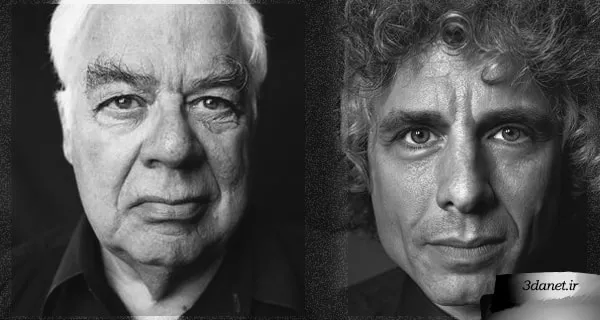
Author: Richard Rorty
Translator: Be'sat Elmi
.
.



Discussion1 comments
ممنون از ترجمه بسیار عالی..