Art
The Enviable Station of the Artist: He Who “Presents” and Dismisses the Critic
The artist’s position is enviable: they did not sell their freedom, and critics trapped in an engineering mindset are enraged by this liberty. Art is a matter of proposing, not representing; a work of art is neither correct nor incorrect, for the artist disregards all principles.
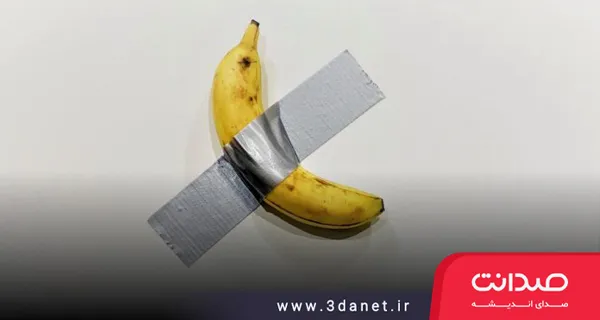
The Enviable Station of the Artist: He Who “Presents” and Dismisses the Critic
Author: Be'sat Elmi
The station of the artist is the most enviable, and the contentious “critiques” of us non-artists, trapped in soul-wearing work, reveal our resentment toward this station. We non-artists envy the artist because he did not sell the freedom of his spirit for “welfare,” for “the future,” for “a carefree life.” We envy the artist because we now know that nothing remains of life, death is knocking, and “the world and the work of the world are all vanity upon vanity,” and yet we continue to work so that we might not work! We work so that perhaps one day we too might become artists. But the artist, it seems, knew all this beforehand and did not “save up” his life. We cultured non-artists are also furious with ourselves; furious that we did not remain artists!—who was not an artist before being ruined in elementary and high school?!— But the artist remained a child: creative, innocent, without a tomorrow... free. We non-artists do not forgive the artist for this freedom, nor ourselves for this bondage of “steady work,” and one of the names for this unforgiveness is “art criticism”[1].
The presupposition of art criticism is that artistic creation, like other creations, is a kind of “engineering,” and the artist is merely a “contractor” who has undertaken to build an artistic structure based on certain mathematical-physical “principles,” a structure upon which the critic, the supervisor of the “Building Engineering System Organization,” can pronounce judgment as being well-constructed/poorly-constructed. This is not so.
But that it is thought to be so is not the critic’s fault; this “engineering” approach is the result of Plato’s fascination with the unquestionable structure of the axiomatic system of “geometry,” which has sedimented in human thought over millennia. It was Plato who first likened the branches of human knowledge to geometry, and then said, “Look! Every other knowledge is also like this: a system of propositions that are necessarily either true or false, and the criterion for the truth or falsehood of these propositions is also eternal-eternal principles.” On this basis, for centuries, albeit unconsciously, art has also been considered a kind of knowledge, such that the artwork is also thought to be a proposition that must necessarily be either true or false, and it is only the critic who will know whether a work is true or false, just as only the geometer will know whether the proof of a geometric theorem is true or false.
With the advancement of the history of thought, this Platonic metaphorical assumption (knowledge as geometry) was challenged by the proposition of other metaphors: Hegel held that knowledge is something like the growth process of a plant; Nietzsche likened knowledge to food and epistemology[2] to dietetics; Wittgenstein said that knowledge has a structure similar to language, (and language itself is a construct of interwoven “language-games”)—the later philosophy of art of all three philosophers also arises from such metaphors.
It is evident beforehand that if we now look at art from the perspective of these non-Platonic metaphors, we can no longer speak of the absolute “truth or falsehood” of an artwork; we must now say that an artwork is either flourishing/unflourishing, or tasty/tasteless, or learned/unlearned. It is also evident that the “critiques” arising from the application of these latter metaphors will no longer possess that absolute halo of the former quasi-geometric value judgments: if someone, for example following Nietzsche, deems a cinematic film “tasty,” they will no longer have reason to aggressively attack other “tasteless” films.
Nevertheless, the art critic (still) cannot think about art with such metaphors because, alas, Hegel, Nietzsche, and Wittgenstein (and others) have not yet become as ancient as Plato. The art critic is inevitably trapped in the bonds of Platonic geometric-thinking, and it is for this very reason that he always, like Plato himself, envies art and the artist.
The critic envies art, for the whatness of art never submits to the critic’s geometric demarcations: no sooner has the critic proposed a definition of art than an “avant‑garde” artwork arrives and overturns everything. On the other hand, the critic envies the artist, for he can never convict him in a manner acceptable to a court, can never compel him to follow the “principles” of artistic creation… because there is no “principle”!
It is true that in the history of the flourishing of any art form, certain principles have also evolved, but the artist, unlike the engineer, can knowingly disregard these principles and arbitrarily establish a new one; such is the nature of the work of artistic creation.
What the artist does when creating an artwork is a kind of presenting, not representing. Imagine a very large hangar full of various things, something like the great warehouse of Kane’s palace at the end of the film Citizen Kane (1941). You are outside this hangar; someone comes along and draws your attention thus: “Wait right here! I’ll go inside the hangar now and bring something out.” After a while, he brings a wooden coat rack out of the hangar and places it before you. Now, in response to this act, does it make sense to judge, for instance, “Well, that won’t do! However I think about it, I see your work is wrong; there’s a flaw somewhere; it hasn’t come out yet. Perhaps if you continue your work for a few more years, you’ll finally be able to bring out what you ought to!” It is clear that speaking so fault‑findingly here is out of place; in that implicit contract between that person (who said he would bring “something”) and you (who agreed to “wait”), it was not stipulated that the “thing” must be such‑and‑such (in Wittgensteinian terms, in this language‑game, there is no criterion at hand for measuring the correctness/incorrectness of the act. The only “wrong move” in this language‑game would be for that person to come out of the hangar empty‑handed. And only the artist knows that in the game of art, the only sin, the only “wrong move,” is not creating). Thus, that person’s presenting lies beyond correctness/incorrectness, and what he presents lies beyond being well‑made/badly‑made. Nevertheless, one must not forget that in reaction to that person’s work, you can speak freely of your sensory impression: “To be honest, I didn’t like it; I had something else in mind; I basically don’t get on with handmade wooden objects; in my opinion, it’s rubbish,” and so on.
The work of creating an artwork, in its most refined aspect, is precisely this: the artist presents something from within his mind before us, and in this process, unconscious drives, childhood traumas, memories, illuminations, dreams, mental illnesses, deliriums, and so on are the most important “principles” that assist him. Truly, how can one “criticize” an artist who presents his dream before us? Do you wish to say that Andrei Tarkovsky’s Mirror (1975) is a “badly‑made” film? That Mirror is mute? Too narrative‑averse? More poetry than cinema?! So you mean Tarkovsky dreamed an incorrect dream?! Or perhaps he didn’t dream correctly?! So Salvador Dalí painted his dreams “badly”?! Are Dream Caused by the Flight of a Bee Around a Pomegranate a Second Before Awakening (1944) and The Persistence of Memory (1931) “bad” works?! Have you seen their “good” ones?!
The critic, however, does not think so. For him, artistic creation is not “presenting.” He, trapped in Plato’s spell, still believes that the artist represents something that rests out there, in the divine sphere of the “idea,” and that he must do so. The critic, with a wooden coat rack in hand, stands outside the hangar and says to one of those who come and go into the hangar: “Go and bring something like this from the hangar!” After a while, that person brings out a long, dried‑up branch, and here the flood of the critic’s “critiques” begins: “Well, it’s not bad! But these unhewn curves damage the concept of the work; it would have been better if you had brought a handmade piece of wood; the wildness of this tree branch contrasts with the handmade quality of this coat rack!” and so on. Ashamed of what he has brought, that person returns to the hangar to perhaps find something “better” this time, something more similar to the coat rack in the critic’s hand.
The true artist does not fall into the trap of the language game that the critic sets in motion. The artist knows that in art, it is he who takes the first step, he who begins the game, he who establishes every “principle”; for what is a “principle” but the cry of “Thus I will it!” of the artist, a cry that has echoed in the minds of other artists for years?
The artist knows that in the face of hostile “critiques,” his best response is “Thus I liked it,” even if he may not possess such philosophical self-awareness as to say this openly to the critic’s face. The artist also knows that his most fitting response to laudatory “critiques” is: “I am very pleased that you liked it.” In Abbas Kiarostami’s film Close-Up (1990), there is a rather long shot in which an empty green can of insecticide spray rolls from the top of a sloping alley to the bottom. On the surface, the action that occurs in this shot neither helps advance the film’s plot, nor deepens the viewer’s understanding of one of the characters, nor even possesses any particular cinematographic beauty in itself. In other words, according to the “principles” of classical cinema, this shot is entirely superfluous. In an interview about Close-Up, Kiarostami explains this shot: “I think filmmaking, a part of it... is a reflection of our childhood. I saw a sloping alley. A can was really lying there, an empty can of insecticide, and I thought it was a good opportunity to play this game. It was an opportunity for playfulness... because I might never again have such a good street, such an empty can, and such a fine autumn evening.” Later, regarding the analyses this shot prompted, Kiarostami says: “I’ve heard many strange analyses, but the truth is it was none of those...[of course] the interpretations that were made were not far off the mark...but at the moment I rolled that can, I was just playing”[3].
The artist is thus childlike and playful. The artist is the only one who, in defense of his own creation, can unabashedly say, “Well, I liked it that way!”, even though, alas, he often, fearing the critic’s wrathful gaze, tries to cobble together a “logical” and “principled” reason for his work. What has the artist to do with reasoning?!
The artist himself is the most devastating “reason” for his art: what do we ask the artist? “What led you to create this work?”, “Why did you deliberately not adhere to the rules of this genre?”, “Why has mourning become the theme of your recent works?”, “Why are maternal motifs so prominent in your works?”, “Why the pomegranate?” and so on. And what does the artist answer? “Since childhood, I dreamed of creating such a work”, “Basically, I was very mischievous as a child”, “I recently lost a dear friend”, “I grew up without a father and my mother is everything to me”, “Our village was full of pomegranate orchards” and so on. The translation of all the artist’s “reasons” is this: “Because I present myself before you! Because this is me!”. More interestingly, we also accept these tautological and sometimes superficial answers from the artist because, when conversing with the artist, more than wanting to receive correct answers to our questions, we want to become more intimate with the artist, to love him more. We do not dispute with the artist.
But alas, the critic (as well as the engineer, scientist, athlete, chef, etc.) cannot himself be the reason for his “critique.” In defending the correctness of his “critique,” the critic is compelled to reach for something beyond-himself: a quotation from a philosopher, a work from the great masterpieces of art history, the writing of another prominent critic, a poll from this or that magazine, psychological theories, and so on. The critic’s “critique,” the more strident and outspoken, will remain vulnerable to a defense of questions such as these: “Well, how do you know?”, “Why should we consider your critique more correct than your rival’s?”, “Do you have an argument in defense of this statement of yours?”, “Isn’t this merely your personal opinion?”, “What is your criterion for judging the value of artworks, and why do you think it is the most correct criterion?”, “If the value of an artwork is an objective feature, why so many critics? And if artistic value is a subjective feature, why this critic? Why you?” and so on.
They quarrel with the critic because no one wishes to love the critic himself (just as no one loves the engineer himself; what difference does it make whether that experienced engineer builds a building or this experienced engineer? Compare this with saying, what difference does it make whether Tarkovsky makes this screenplay or Scorsese?!). The critic often wishes to, but cannot, be a lovable mischief-maker like the artist; at his best, he is a fearless insolent, a tasteful enemy in combat with whom one can learn warfare, not artistry.
The critic, worn out by a lifetime of reasoning, envies this unquestionable (reasonless) station of the artist, and it is for this reason that he wants to make the artist, like himself, a reason-giver and answerable; he wants to pin him down with "whys" as well. But the unruly spirit of the artist seems to have grasped the end of these "whys": Socrates—as reported by Plato, that most artistic enemy of art, that founder of "art criticism"—after a lifetime of seeking and giving reasons, turned to art a moment before drinking the hemlock:
I have often had a dream in the past, in various forms, in which I was always told, "Socrates, practice the arts," and I used to suppose that those dreams were urging me to do what I had made my life's work, just as people in the stadium urge on runners while they are running, and for this purpose they command me to practice the arts because philosophy is the highest of the arts, and I practiced nothing but philosophy. But from the day my death sentence was issued and the festival of Apollo postponed my death for a few days, I thought perhaps the meaning of those dreams is that I should practice what people call the arts. So I deemed it prudent to take precaution and also compose poetry, so as not to have failed in obeying the command I heard in the dream[4].
A man who passed every word through the blade of "dialectic," astonishingly now obeys "dreams" unquestioningly to "practice the arts"! And how artfully he obeyed himself—for the artist is he who obeys himself even when he wishes to obey another.
What the cup of hemlock made the aged Socrates understand, the artist grasped with his childlikeness: "Art and nothing but art! It is the great means of making life possible, the great seduction to life, the great stimulant of life. Art as the only superior counterforce against all will to the negation of life... art as the redemption of the man of knowledge—of him who sees the terrifying and questionable character of existence, and wants to see it, the tragic man of knowledge..."[5], those like Plato's Socrates who realized all too late that "art is worth more than truth"[6].
So the artist has no need of "criticism"? The true artist recognizes only one "critic": the creation of another artist. For one who, work by work, is in pursuit of exploring the freedom of the human spirit, the work of another who has reached higher shores of freedom will be the most effective "criticism," and the artist himself will recognize this freer-than-himself, this "critic" worthy of him, just as the dancer himself recognizes one lighter-footed than himself: the bird.
And now, the artist comes back to himself; he shatters that Platonic spell, that nearsighted, ill-omened metaphor. The artist now puts into words what he has unconsciously grasped for years: "No, it is not so, you unartistic fault-finders! You envious 'critics'! Art is not geometry, to be bound by 'principles'."
Now, the artist, in agreement with Nietzsche[7], will say this: "This is my art: a dish that I set before you from the depths of my soul. If this dish pleases your palate, how excellent! Let us be table-companions! But if you taste it and it does not please you, do not call spitting upon the tablecloth of my spirit 'criticism'!" Now, the artist no longer needs a guide; who would submit their own palate to questioning? (Have you ever seen anyone ask another: "Can you tell me what food I like?").
Now, in unison with Nietzsche’s artist-venerating Zarathustra, the artist’s defense against any “criticism” that leaves a bitter taste in the mouth will be this: “Very well, this—is my taste. A taste that is neither good nor bad; but my taste; a taste of which I am no longer ashamed and which I no longer conceal”[8].
Now, the artist no longer regards the critic’s spittle behind his “scientific” “critiques.” But the artist still has the strength to befriend the critic! When, like Zarathustra, he says to himself: “How grateful I am to my enemies, for on account of them I can hurl my spear!”[9].
And yet, for all this, the true artist can sometimes be even kinder to the critic: when, before the splendor of a work of art, tears well up in the critic’s eyes, only the artist knows that he weeps for two reasons!
And as for me, the artist-venerator and critic-antagonist, I lay this writing of mine before you as testimony, testimony that I have always considered myself not-yet-an-artist, and that I live in longing for the enviable station of the artist. I would love it if, should you one day find me a “critic” (or a “researcher in the philosophy of art,” “art theorist,” “philosopher of art,” etc.), you would rebuke me thus: “So you too have succumbed?! May all you wrote before this be forbidden to you!” May I not be among those who succumb; may our creation be the critique of each other’s creation[10].
.
.
Endnotes:
[1]. In this writing, “art criticism” refers to the aggressive talk and writings that seek to destroy a work of art (and its artist) through absolute value judgments. It is clear that many in the art world are called “critics,” but they engage more in “explication” or “reading” of the work than in “criticism” (in this latter sense). It is clear that such art connoisseurs are not the target of this writing.
[2] . Epistemology.
[3] .“Interview with director Abbas Kiarostami (Close Up)”
[4] . Quoted from: Guardini, Romano. The Death of Socrates: An Interpretation of Four Platonic Dialogues. Translated by Mohammad Hassan Lotfi, Tarh-e No Publications, 1398 (p. 161).
[5] . Nietzsche, Friedrich. The Will to Power. Translated by Walter Kaufmann and R. J. Holingdale, edited by Walter Kaufmann, New York: Vintage Books, 1968, (p. 452).
[6] .Ibid., p. 453.
[7] . Knowledge as nourishment (and the cognitive faculties as a digestive system) is Nietzsche’s most fundamental metaphor for proposing a different understanding of human knowledge and epistemology. Nietzsche employs this metaphor, sometimes explicitly, in almost all the works of his mature period. In Thus Spoke Zarathustra, Nietzsche repeatedly uses “Der Magen,” “the stomach,” to describe, from his perspective, the bodily mechanism of knowing (=digesting): in the third part, when Zarathustra seeks to discover the root of the nihilism of certain sages (those who preach: “Wisdom is a cause of weariness; nothing is worth anything; you shall have no desires!”), he says: “Because they learned badly and did not learn the best things, and learned everything too soon and too hastily; because they ate badly, their stomachs are upset. For their spirit is an upset stomach that counsels death. For, truly, my brothers, the spirit is also a stomach” (p. 223, from Ashuri’s translation. In the German and English texts, the word “is” in the last sentence is emphasized and italicized: “der Geist ist ein Magen!”). Zarathustra, in contrast to such sages who have “eaten badly,” describes the “rebellious, selective” “stomach” of the knower thus: “My stomach—is it not an eagle’s stomach? For it loves lamb’s flesh above all. Assuredly it is the stomach of a bird” (p. 208).
[8] . Nietzsche, Friedrich. Thus Spoke Zarathustra. Translated by Dariush Ashuri, Agah Publishing, 1399 (p. 212).
[9] . Ibid., 97
[10] . This piece is a continuation of two previous essays in the critique of “art criticism.” The first essay, titled “"The "Good" and "Bad" Film Critic in the Abyss of Philosophy,” and the second essay, titled “"Ought": The Kantian Illusion, the Wittgensteinian Liberation, and the Bullying of the Film Critic,” were previously published on Sedanet.
.
.
PDF file of this article
.
.



Discussion0 comments
No comments yet; let yours be the first voice.