Art
The Film Critic's 'Good' and 'Bad' in the Abyss of Philosophy
Film critics owe their theoretical authority to the presumed objectivity of their value judgments, yet aesthetic criteria are inherently personal and culturally conditioned. An essay on the concept of 'good' in art and the distinction between instrumental and intrinsic judgments.

The aim of this piece is the logical denial of the existence of any objective criteria for issuing aesthetic value judgments, especially in the realm of cinema. This statement in no way means a denial of the existence of any criteria whatsoever; the aim of this piece is merely to demonstrate the subjective, or in other words personal, nature of such criteria. It is only against the background of, and in relation to, the culture, prejudices, and doctrinal affiliations of the critic that the handheld camera appears "beautiful" or "obscene." And this is while the critic implicitly owes their theoretical authority to the rational and argumentative—and thereby objective—nature of their value judgments, and will naturally consider any claim of their opinions being "personal" as a kind of insult.
The Film Critic's 'Good' and 'Bad' in the Abyss of Philosophy
(The Director Becomes Bold!)
Ba'sat Elmi[1]
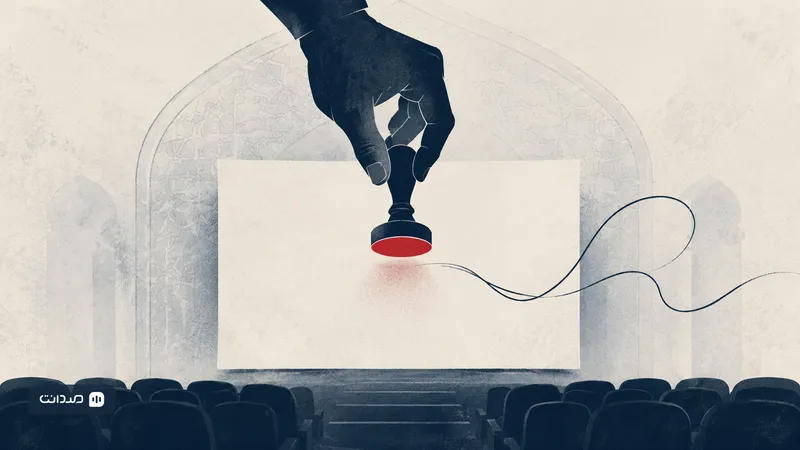
Many artists, especially filmmakers, surrender without any debate in the face of some critics' so-called scathing reviews; confronted with the bombastic sentences and sometimes intimidating tone of the critic, there is always the possibility that the director under criticism will retreat from their positions, so as to at least be honored with the title of "receptive to criticism" or "critique-comprehending" by acquiescing to the critic's views.
The fundamental presupposition that often compels us to consider the art critic's opinions as the final word is the notion that the critic has access to a set of objective, indubitable, and universal criteria regarding the value of film and art in general—criteria by which one can label a film "good," "bad," a "masterpiece," or "trash." What is meant by "objective" criteria in this context is one or more fundamental evaluative propositions that are true independently of the critic's culture, prejudices, and doctrinal affiliations: that, for example, certain camera movements like the handheld camera are not fundamentally "good" or "beautiful." It is such a judgment that is merely assumed to be self-evident in the critique session and becomes the basis for the critic's other criticisms and sometimes demolitions. In such moments, only one question from the director is enough to reveal the fallacious and irrational nature of the critic's claims (and not even arguments): "How, or through which line of reasoning, have you arrived at this seemingly indubitable belief? And if you have not arrived at this belief through reasoning, will your belief not be accused of being unjustifiable, or even worse, arbitrary? And finally, if your opinions are arbitrary, what difference (and superiority) will there be between what your heart desires and what my heart desires?"
The aim of this piece is the logical denial of the existence of any objective criteria for issuing aesthetic value judgments, especially in the realm of cinema. This statement in no way means a denial of the existence of any criteria whatsoever; the aim of this piece is merely to demonstrate the subjective, or in other words personal, nature of such criteria. It is only against the background of, and in relation to, the culture, prejudices, and doctrinal affiliations of the critic that the handheld camera appears "beautiful" or "obscene." And this is while the critic implicitly owes their theoretical authority to the rational and argumentative—and thereby objective—nature of their value judgments, and will naturally consider any claim of their opinions being "personal" as a kind of insult.
Since the issue of artistic criteria and value judgment is closely related to the definition of art, another aim of this piece will be an attempt to offer a new (albeit tentative) definition of art. The lack of a conception of the definition of art and its historical tribulations has always provided the critic with the opportunity to present their criticisms as objective and principled while insinuating an arbitrary definition of art. This new definition of art, in addition to clarifying many previous issues and disputes in the Artworld, will elevate the status and dignity of the artist and their creativity in an unprecedented way. On the other hand, as will follow, before anything else, the very entry of the critic and director into such a discussion about the definition of art (and the criteria for measuring artistic value) will add greater richness and precision to the debate, so that the discussion between the two parties is not reduced to a mere dispute over personal tastes.
I.
When a critic turns to a director and claims, for instance, “Your framing is too cluttered [bad]!” or “The protagonist’s characterization is very superficial [bad]!”, they have already taken for granted the goodness or badness of the attributes “deep” versus “superficial” and “cluttered” versus “uncluttered,” meaning the critic harbors no doubt about the correctness or incorrectness of these presuppositions.
When the critic uses the contentious word “good”—or any equivalent evaluative term such as “pleasing,” “outstanding,” and so on—they apparently hold an absolute conception of this concept in mind: “good” under any conditions and for any purpose; whereas what the critic actually seems to intend is an instrumental conception, or a “good for…”
In most cases, when we evaluate something or an action as “good” or “bad,” what is meant is that the object or action in question guarantees, in the quickest and most reliable way, our attainment of a pre-determined (and already-presumed-desirable) goal. Thus, for example, a cinematographer might evaluate the use of DSLR or Handycam cameras as “good” for shooting a scene in an inaccessible mountain range, because such lightweight cameras aid them in reaching their pre-determined goal more quickly. Therefore, in this particular situation, a discussion about “trash” versus “masterpiece” cameras will seem entirely meaningful. Such a conception of “good” is termed “instrumental good” in value philosophy, or, as the ancients said, “desirable for the sake of another.”
In contrast to this conception stands the concept of “intrinsic good,” which is when an object, phenomenon, event, or action is desired solely for possessing certain properties in its own essence, meaning the attainment of such a “desirable-in-itself” does not serve to fulfill some other need or goal. An illuminating example in this context is the mystic’s love for the essence of the Divine Holiness: for the mystic, God’s essence is intrinsically good, meaning that the attainment of annihilation in God and subsistence through God (for the mystic) in no way serves the achievement of another goal, and fundamentally, no goal beyond God’s essence is conceivable for the mystic (it should be noted that some philosophers have fundamentally questioned the very existence of such intrinsic values and appear to be attempting to reduce all values to the non-intrinsic category).
The distinction between these two axiological categories can also be summarized thus: “instrumental good” necessarily always finds meaning in relation to a pre-existing goal, whereas intrinsic good is itself the goal.
Taking this fundamental distinction in axiology and applying it to aesthetic value judgments within the artistic community, two fundamental questions arise: firstly, if the intended meaning of the attribute “good” (and its derivatives like “masterpiece,” etc.) in a sentence such as “This film is very good!” is an “instrumental” conception of “good,” then logically, an ultimate goal must be conceivable for film in particular and art in general. On the other hand, if the intended meaning in the preceding sentence is an “intrinsic” conception of “good,” the speaker must explain precisely which properties in the film in question are desirable in themselves and why. This kind of subversive questioning does not end here; even if the critic ultimately proposes an ultimate goal (or an intrinsically desirable property) for the film, they will be confronted with the more perplexing question: “How can you be so certain that the ultimate goal of film as a medium is what you say it is? What argument do you have to prove your claim? Are other goals, and consequently other conceptions of ‘good,’ not conceivable?” And it is precisely at this moment that the critic will find themselves on the threshold of a kind of aesthetic nihilism, and will necessarily require another justification for every justification, ad infinitum. And it is also precisely at this moment that we encounter one of the greatest questions of the philosophy of art: “What is the ultimate goal of art?”
II.
Tarkovsky explicitly believed that art aids man in the process of enriching his own “spiritual capacities”; Dadaists such as René Clair considered the ultimate goal of cinematic art to be the promotion of value anarchism and the struggle against modern instrumental rationality and its attendant militarism; the Surrealists, on the one hand, saw the goal of art as a search for a kind of worldly redemption through the analysis of dream revelations and unconscious illuminations, and on the other hand, cinema in their hands was a tool for fighting the bourgeois values dominating society; the goal of the Soviet montage school, for a master like Eisenstein, was explicitly and strongly the translation of socialist revolutionary thoughts and the dialectical logic supporting them into cinematic form and, consequently, the dissemination of such thoughts; Paolo Sorrentino’s goal in films like The Great Beauty and Youth, it seems, is to depict pure beauty and its redemptive power; for Béla Tarr, film is a vehicle for philosophical-existentialist explorations into the evils and ennui of “Being”; in Terrence Malick’s “Heideggerian cinema,” “existence,” with all its evils, takes on a sacred aura and is worshipped; empiricists such as Norman McLaren and Oskar Fischinger diligently explored the exclusively formal potentials of cinema and expanded its audio-visual language—among them, McLaren making films without a camera by merely painting abstract shapes onto 35mm negatives in the short film Dots, and Fischinger’s attempt to translate Franz Liszt’s classical piece Second Hungarian Rhapsody into the language of geometric images in the film An Optical Poem. And...
Now, among these, which goal (or function) is the true and singular goal of cinematic art? And fundamentally, who or what authority would have the permission and authority to determine an ultimate goal for art? The informed reader realizes that by posing such fundamental questions, we have already stepped into the dangerous terrain of the philosophy of art: from Plato’s Greater Hippias in 390 BC to Arthur Danto’s What Art Is in 2013, philosophers of art have continuously strived to present a necessary and sufficient condition or conditions for defining art and, consequently, the goal of art. Considering the multitude of disparate and sometimes contradictory personal goals of artists, especially in contemporary history, it is no surprise that a final, consensual definition of what art is still remains elusive, to the extent that some, like Morris Weitz, influenced by the later philosophy of Wittgenstein, have considered art to belong to the category of “language games” and to be a fundamentally “open” and indefinable concept.
This goal-resistant (goal as a singular and universal end) and definition-elusive nature of art becomes more apparent when compared with other spheres of conscious human activity: who can claim that the ultimate goal of the medical institution is, say, the entertainment of human beings? How can one claim that engineering has a goal other than meeting the pragmatic needs of humanity and providing a suitable material foundation for the continuation of human life? And is the ultimate goal of philosophy anything other than the pursuit of "truth," however relative or unattainable it may be? It is the existence, or the presupposition, of such pre-determined and universally agreed-upon goals that renders these spheres of human activity, on the one hand, rule-governed and, on the other, falsifiable, such that not only can one speak, for instance, of "correct" and "incorrect" plans—in accordance with the rules—in engineering or science, but one can also put their correctness or incorrectness to the test. This is while various and sometimes contradictory goals can be conceived for art; therefore, it seems, contrary to other goal-oriented spheres of human activity, in the realm of art, every artist can impose a goal upon art according to their own needs, nature, and ideals. From this perspective, Wittgenstein's remark in Lectures on Aesthetics, to the effect that speaking of "correctness" and "incorrectness" in art is fundamentally meaningless, now reveals its validity with greater clarity: how can one prove that, for example, René Clair's use of the slow-motion technique in the film Entr'acte was "correct," "incorrect," or even "good" or "bad"? On what basis can one prove that the method of depicting the weariness of existence in The Turin Horse is "wrong"? Any answer to this question will necessarily be based on a conception of the goal of art, a goal which, as has been shown, is neither objective, universal, nor even agreed upon by artists themselves; the point is that, in this position, the critic, often by resorting to the director's and the artistic community's theoretical neglect of this "goal-resistant" and "definition-elusive" nature of art, imposes their own arbitrary goal (of art) upon the discussion with rhetorical force, and then, to the extent that the story, characters, themes, music, etc., serve to advance that goal, the critic evaluates the film under review on a spectrum between "pre-film" and "masterpiece." In the absence of a philosophical-analytical atmosphere governing the discussion, the director is also overwhelmed by the critic's name-dropping and other polemical acrobatics and subsequently tries desperately to show that the elements of their film are actually somehow in the service of the critic's imposed goal or other aesthetic prejudices. The bold director, if seeking a logical defense of their artistic creation, should by no means enter such a foredoomed game.
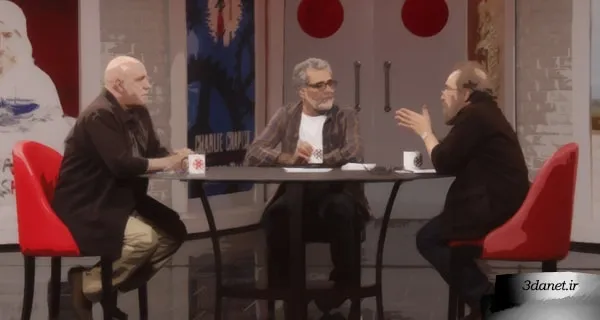
This conclusion—the "goal-resistant" and "definition-elusive" nature of art—, as will be further demonstrated, possesses extraordinary explanatory power: it is this contentious characteristic of art that explains why the critic and the director (or a critic and another critic), even after several hours of discussion about the aesthetic value of a film, reach no definite conclusion, or, in the most amicable scenario, with the mediation of the program host, it is declared that "the opinions of both esteemed individuals are respectable!" In fact, what prevents agreement and a final conclusion is the differing or even contradictory conception of the ultimate goal of art held by the two sides of the discussion: as long as the critic firmly believes that the ultimate goal of art is not entertainment, while the director (or the other critic in the discussion) strongly believes that art ultimately has no goal other than entertainment, logically no outcome to this dispute is conceivable; in other words, such discussions by no means reach a conclusion but are merely halted (with the host's mediation). And since it was previously shown that the evaluative concepts of "good" and "bad" and their derivatives in such aesthetic discussions always find meaning in relation to a pre-desired-assumed goal, what is "good" for the director, no matter how far the conversation continues, will remain "bad" or "repulsive" for the critic, and vice versa.
Thus, it seems that such philosophical-analytical reflections on art (for now) lead to the conclusion that art (and not philosophizing about art) is not in its essence a rational discourse; rationality in both its theoretical and practical aspects—and fundamentally, why should it be rational? In a rational discourse, since a definitive criterion called "correspondence with reality" (in theoretical reason) and, on the other hand, a means-end system, an end agreed upon by the wise, (in practical reason) prevails, one can speak of proving a proposition or convincing an audience: one can easily imagine that in science, engineering, medicine, history, military affairs, sports, theology, and even to some extent politics and philosophy, the "correctness" of a proposition can be objectively proven, or the "goodness" of a practical and strategic decision can be defended in a non-partisan manner. In other words, within the context of such "rational" discourses, one can imagine that an individual, after hearing arguments that a belief is "incorrect" or a practical decision is "bad," would abandon that belief and decision, even if they had spent several years of their life based on their "correctness" and "goodness." Now, if such an individual (without providing stronger counter-arguments) refuses to accept these arguments, they will, willingly or unwillingly, be ostracized from the community of the wise.
This is while in art, one cannot even imagine that a critic or director who has spent their life watching, analyzing, and making (for example) meaning-oriented films would merely upon hearing rational arguments that such works of art are "incorrect" or "bad" abandon watching, analyzing, and making them. There is no argument capable of rationally proving the "incorrectness" or "badness" of Béla Tarr's films—nor capable of proving their "correctness" or "goodness"; in no way can a fan of Tarr be discouraged from liking his filmmaking style merely by presenting rational arguments. Interestingly, unlike rational discourses, in art, the artist gains more status and prestige (within the artistic community) by resisting opposing arguments; it is the artist's defiance and obstinacy that turns them into an avant-garde hero.
Art is not a rational discourse; the artist in their creation has no need for reason, and it is fundamentally to escape the madness of reason that the artist takes refuge in art. The rationalization of art has been carried out by philosophers who considered the "anti-purpose," "definition-eluding," and consequently irrational nature of art to be an unforgivable insult to their rational philosophical system: for a philosopher like Hegel, who believes "what is real is rational," the anarchistic nature of art is certainly a serious threat that had to be contained. The contemporary critic, however, with a different motive, (implicitly) seeks the rationalization of art: the irrationality of the discourse of art endangers the critic's existence; the critic's dominance and theoretical authority rest upon the public's presupposition that their judgments, as a verdict for calling a film "good" or "bad," arise from research, study, and scientific and objective principles. And this is while, as has been shown, a bit of philosophical analysis, by questioning the rational appearance of art, reduces the value of the critic's judgments to a series of entirely "personal" opinions. It is for this reason that the sentence "That's your personal opinion!" is considered an insult to the critic—because the critic themselves also believes that the value of their judgments is objective and rational. On the other hand, this same sentence addressed to the artist will not only not be considered an insult (or should not be!) but will also be, in a way, an admiration of their creative status; the artist can (and should) boldly declare in response, "Of course this is my personal opinion! I am an artist—and not a philosopher, historian, engineer, empirical scientist, judge, sports referee, or critic—and my entire capital is my completely personal and subjective worldview."
The artist has no need whatsoever for the rationalization of art; it is the critic who needs, by fallaciously appealing to the reliability of rational propositions, to subject the artist's creation to the whip of (rational) criticism.
III.
Considering what has been said so far about the “anti-purpose,” “definition-eluding” nature and, consequently, the irrational character of art discourse, it seems we can go a step further and (in light of these three characteristics) propose a tentative definition of art, a definition that, in addition to its extraordinary explanatory power, will further clarify the relationship between art, the artist, and the critic. Initially, offering a definition for art, given its “definition-eluding” nature, appears contradictory, but it should be noted that art’s elusiveness of definition in no way means the absence or prohibition of providing definitions—there are as many definitions of art as there are artists and philosophers of art. The definition-eluding nature of art, in this sense, means that any proposed definition will necessarily have a tentative and conjectural character and will only be valid until the emergence of a more comprehensive and exclusive definition.
Defining a phenomenon is providing the necessary and sufficient conditions for that phenomenon, such that, on the one hand, the necessary condition is present in all concrete instances of the defined phenomenon, and on the other hand, the sufficient condition prevents another phenomenon from entering the definition or being confused with a similar phenomenon. It is for this reason that the necessary condition is also called comprehensive and the sufficient condition exclusive.
Many aesthetic phenomena, in this sense, lack a clear definition. For example, one of the oldest definitions considers “beauty” a function of mathematical “proportion.” Thus, everything that is beautiful must possess mathematical proportion (necessary condition), and conversely, everything that possesses mathematical proportion must necessarily be beautiful (sufficient condition). Apart from the fact that the concept of mathematical “proportion” itself requires definition in this formulation, a little scrutiny reveals that this definition does not provide a comprehensive and exclusive definition of “beauty”: we call many natural scenes, including clouds, beautiful, but it is not exactly clear in what sense these clouds possess mathematical proportion. On the other hand, not everything that possesses mathematical “proportion” is necessarily considered “beautiful”: a circle, by definition, has mathematical proportion (symmetry?)—in other words, it is the “most perfect” geometric shape!—but it is by no means evident that this circle is in itself “beautiful.” Therefore, “proportion” cannot be the necessary and sufficient condition for defining “beauty,” and this is how “beauty” remains one of the enigmatic concepts in the philosophy of art.
The concept of art itself, as mentioned earlier, also lacks a precise definition (necessary and sufficient conditions). Even cinema, as an art, does not have a comprehensive and exclusive definition; cinema’s appearance of being definable merely indicates the dominance of only one conception of cinema over other possible interpretations. The “continuity editing” style of classical Hollywood is only one of several possible methods for advancing a story—even being narrative-driven is not intrinsic to cinema.
What follows is an attempt to offer a definition of art considering its anti-purpose nature, a definition that, in addition to encompassing classical art, is also suited to the current postmodern and pluralistic era. This definition is presented in the form of three separate propositions, such that each proposition lays the groundwork for and constitutes the next.
It was shown earlier that artists (filmmakers) “impose” various and sometimes contradictory goals upon art, and it seems that the institution of art is receptive to these imposed goals. Thus, in trying to grasp what every artistic activity possesses (the necessary condition), this very anti-purpose property of art can be proposed: therefore, “Art is the only self-conscious human activity whose ultimate goal is contestable.”
Of course, it is clear that this is a purely negative definition, insofar as it defines art by resorting to what art is not. But it seems, at this initial stage, that such a negative definition succeeds in providing a condition that is simultaneously necessary and sufficient for artistic activity: the ultimate goal of every artistic activity is contestable (necessary condition), and conversely, any activity whose ultimate goal is contestable is necessarily art.
According to this definition, it is not that art is an entirely purposeless activity; what must be considered for now is that the ultimate purpose of art is, at least from a third-person perspective (others), highly contestable. Essentially, one of the indisputable truths of the art world is that an artwork is always, in principle, receptive to different purposes and, consequently, different interpretations and meanings—purposes that, by definition, will have a conjectural and propositional (rather than absolute) character.
From this perspective, a strange resemblance can be perceived between art and life, in that, like art, the ultimate purpose of human life is also "contestable": after several thousand years of philosophical, literary, and scientific inquiry, the "purposelessness" or, in the existentialists' term, the "meaninglessness" of life is as problematic for contemporary humans as it was for Gilgamesh—when he laments, "Will I too become dust?". Like life, art is also an exploration to find a purpose(s): just as every human life is an unrepeatable experiment in discovering an ultimate purpose, every artwork also seeks to discover a purpose for its own existence. Thus, one can poetically conclude that "art is life".
In the definition above, art is considered an "activity"; subsequently, presupposing the above definition, the artwork can also be defined as follows: "An artwork is a hand-made artifact or a volitional event about which, because the ultimate purpose of its existence is contestable, one cannot speak with certainty and absoluteness of the 'goodness' and 'badness' of its constituent elements ––and consequently of its existential totality as an artwork." One cannot, for example, point to a frame, shot, or scene from the film The Great Beauty and claim that "this is good (or bad)" while simultaneously expecting every other viewer to agree with this claim. What the speaker often has in mind when uttering such a value judgment is that "I like this shot, scene, etc." In other words, the concepts of "good" and "bad" in such usage lose their "instrumental" or "intrinsic" meaning and are used in place of gustatory concepts like "sweet," "pleasant," "bitter," "bland," etc. This is while one can point to one of the constituent parts of an engineering work (or a historical document, scientific experiment, military strategy, philosophical argument, athletic move, etc.) and evaluate it as "good" or "bad" and expect others to agree with the speaker.
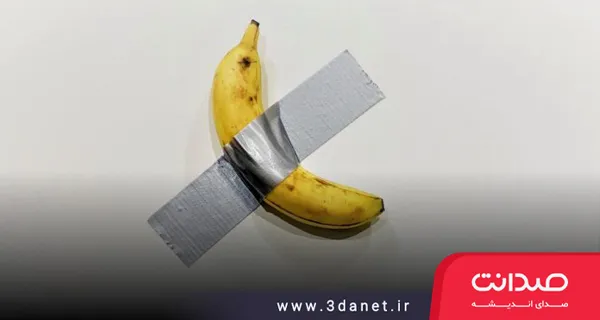
Naturally, the consequence of such a definition of art and artwork will be that there is no good and bad artwork per se! Many, including artists themselves, will consider this conclusion counter-intuitive or incorrect, but in response, it must be said that it is not clear why one should believe in the existence of good and bad artworks in the first place.—From the mere existence of a need for a criterion to compare artworks in festivals and galleries, the existence itself of criteria cannot logically be deduced. Given the internal logical inconsistency of art criticism (as will be further explained), it seems one must conclude that the concepts of "criterion," "good," and "bad" in art are fundamentally constructed by the institution of criticism, certain system-building philosophers, gallerists, and museum curators as a ploy for pricing, exchange, and sometimes the discrediting of certain artists.
What the above definitions of art and artwork do not address is the personality and subjectivity of the artist themselves; it seems as though the artist is not actively and decisively involved in the process of artistic creation. The third part of the definition proposed in this writing will, besides rectifying this deficiency, further highlight the artist's position in the creative process.
Before continuing, it is essential to address a fundamental concept that will be the presupposition of the third part of the definition. This concept will then lead to a positive definition of art—what art is.
Consulting a list of the aims and functions that filmmakers have in mind for their artistic activity (beginning of II), what at first seems impossible is finding a common characteristic among such contradictory aims: at first glance, it appears logically impossible to find common ground between an artist who has a mystical goal in engaging with cinema and another artist whose goal is entirely political and worldly. But with a closer look, one can discern a common essence among this heterogeneous multitude of aims held by artists: what is common between Tarkovsky and Eisenstein and Scorsese and so on is not necessarily their aim but rather their motive for engaging with art. The artist's motive, initially, even before adopting an aim, is self-expression, or in other words, self-revelation. The artist, agitated by mental turmoil, seeks above all to objectify their subjectivity in the form of an artistic work; accordingly, the themes and "messages" of the artistic work should be considered the sensibilities of the artist themselves and not investigations or reports seeking to discover the essence of the reality of things: after watching Through a Glass Darkly, one should not conclude that "Yes! Truly, the darkness and meaninglessness of our world drives us to madness!" but rather one should say to oneself that "Bergman feels [and does not argue] this way: that the darkness and meaninglessness of our world drives us to madness."
The sensibility-driven or self-expressive nature of the motive for artistic creation can be demonstrated with this argument: if the artist were seeking to report reality or discover the truth of matters, they could and should use other reliable and accepted methods such as historiography or science and philosophy, but the artist knows that no other domain except art provides them with the possibility of free self-expression. The sensibilities of the artist (and of any other human being) are neither "good" nor "bad," neither "right" nor "wrong," and it is only art that displays the artist as they are, far from any fear of value judgment and falsifiability. Only in art can a human being, without worrying about being "good" or "bad" or "right" or "wrong," boldly declare that "This is how I feel; this is how I am; this is how I like it!" This by no means implies that some, including the critic, will not accuse the artist of being "bad" or "wrong," but the point is that philosophical analysis (as presented in this article), despite the critic's inner desire, exposes the thoroughly personal and biased nature of such accusations—on the other hand, the true and steadfast artist must also be indifferent to their work being called "good" or "right," since such praise also stems from the critic's personal prejudices and interests. The moment the artist objectifies their self-expressive motive in the form of an artistic work, they have triumphed. Every artist has felt the indescribable ecstasy after the last brushstroke, writing the last sentence, and shooting the last take; it is the critic who, sometime later, exploiting the artist's theoretical and philosophical innocence, sours their palate. Henceforth, the artist will become bold!
The question of why the artist (solely) seeks self-expression is itself a very important and legitimate question that must be addressed in a separate article; nevertheless, to provide a clearer understanding of the nature of this self-expressive aspect of the artist, one can temporarily look at the subject from a Nietzschean perspective.
The driving force of the artist's self-expression is the eruption of his "will to power." Essentially, the motivation for every human activity, from procreation and waging war to even philosophizing, is rooted in some way in his desire to overcome the other (whether human or nature). In building a great bridge or attempting to discover a natural law, man demonstrates his power in overcoming nature to himself and others; in benevolence and giving charity, he reminds himself of his power in conquering the "self"; in professional sports, he expresses his combative instinct in the most peaceful way possible, and in waging war, in the bloodiest manner, and so on... All such arenas for the manifestation of the "will to power" are exposed to the possibility of failure: there is always the possibility that one day the "incorrectness" of a natural law or the "badness" of an engineering structure will be proven; the athlete and the military commander always harbor the fear of being defeated by their opponent.
Art, however, is invincible. It can in no way be logically proven that a painting is wrong; a film cannot be called bad. There is no good and bad film; what the speaker means is a film "liked by me personally" and a film "detested by me personally"—what factors determine a film being liked or detested by a person requires a separate discussion. One should not be overawed by the hegemony of film festivals; all valuations and awards are subject to the personal tastes and genetics of the jury members: the jurors themselves do not know exactly why, for example, "innovation in cinematic expression" should be an unquestionable criterion for rejecting or accepting a film! The jurors have merely assumed the validity of such a criterion—try it: ask a juror and critic, "From where, based on what reasoning, are you certain that x is a criterion for distinguishing between the first and third-ranked film? By what logic did you conclude that the first-ranked film performed better in fulfilling x than the third-ranked film?"
Thus, unlike the engineer (and the scientist, historian, military commander, professional athlete, merchant, politician, etc.), the artist is not defeated, but incurs wrath. This is the critic's greatest fallacy: mistaking their wrath for the artist's defeat. The filmmaker artist must be aware that, unlike other fields of human activity, being "defeated" in art solely and exclusively means that a group of critics (and perhaps audiences) have declared to him, "We do not like your work!" The artist must be aware that "We do not like it!" is in no way equivalent to "it is bad" or "it is wrong!" and perhaps other groups, at another point on the globe or after the passage of a few years, will consider this same artwork a "masterpiece." The history of art is replete with such instances. At the first private screening of 2001: A Space Odyssey, the critics present in the hall, along with some heads of film distribution companies, walked out of the theater in protest; the next day, almost all reviews took a strong stance against the film: one critic even sarcastically called the film "A Space Oddity" in an article; Kubrick, according to his wife Christiane, could not sleep for several nights from distress. To question the institution of art criticism and its personal value judgments, what greater reason is there than that the Academy did not deem the directing of Kubrick and Hitchcock worthy of an Oscar! And awarded Charlie Chaplin an honorary Oscar five years before his death—why the critics' community fundamentally reacts in this way is itself rooted in the critics' "will to power" and is a subject that must be addressed in a separate article.
Conscious artists like Terrence Malick, Kubrick, and Woody Allen even deliberately pay no heed to the honors and praises of critics, because "victory" in art also only means that (as Woody Allen says) a group, for non-rational and taste-based reasons, "liked" the artist's work. The moment the artist "expresses" "himself," as he himself pleases, in the form of an artistic act or work, he has triumphed.
Therefore, while the self-expressive impulse for many (including the artist themselves) inherently represents the transcendent and distinctive aspect of art, from the perspective of Nietzsche's "will to power" one can conclude that art is the safest, most invincible (irrefutable), and most enduring way to express the will to power.
IV.
The results of this inquiry can thus far be summarized as follows: all of our value judgments in encountering a work of art (film), knowingly or unknowingly, are necessarily based on axiological presuppositions about the "goodness" or "badness," the "rightness" or "wrongness" of certain features or contents of the artwork in question. The "goodness" of these features and components, in a very important and prominent sense in artistic value judgments, means the artwork's ability to advance or realize a "goal" deemed-desirable-in-advance. It seems that art has no specific, universal, and uncontested "ultimate goal"; consequently, artistic judgments about a work of art (as history also testifies) have no absolute and objective validity, and the debate over whether a film or any other artwork is valuable is, in fact, a struggle of the "will to power" between two people over imposing their personal conception of the goal of art and filmmaking.
It is obvious that such a ruthless philosophical investigation into art challenges our cherished intuitions about artistic value, but in any case, one should not expect philosophy, on its path to discovering the truth of matters, to respect our prejudices and biases.
Therefore, all that can be said about one's favorite film is that "this film has taken innovative and merely interesting steps toward realizing my assumed goal of filmmaking."
In the end, to rationally defend their critique, the critic might consider the very impulse of the artist's "self-expression" as the ultimate "goal" of artistic creation and then, using it as a criterion, proceed to make a value judgment about the artist's work. Apart from the fact that the concepts of "impulse" and "goal" in the philosophy of action, despite their close relationship, are completely distinct from one another—"impulse" is the conception of achieving the "goal"—even assuming such a conflation to be correct, the project of rationalizing art criticism is doomed to failure.
Suppose the critic comes to believe that the ultimate goal of art is self-expression, and then attempts, by following rational principles (the goal-means system in practical reason and truth and falsehood in theoretical reason), to prove that the artwork under critique has not succeeded in achieving or progressing toward this "goal" and is therefore "bad," "pre-cinematic," "trash," or "obscene"! The self-contradictory nature of such a judgment is evident in advance: the critic has no access, and can have no access, to the artist's "self" and their "inner states"; the "self" and its contents are, by definition, accessible only to the artist themselves. Under such circumstances, the critic calling an artwork "bad" is akin to saying, "You, the artist, have not described your inner states well"!!! A sentence that is as meaningless as the critic's other propositions. Thus, even assuming that self-expression is the ultimate goal of art, logically, only the artist themselves is capable of making a "good" or "bad" value judgment about their work—in fact, every artist makes precisely such a value judgment when they destroy a version of their work because "it did not turn out as I wanted" and creates a new one. Therefore, if and only if the sole goal of art is self-expression, there will be no "bad" artwork—because the artist themselves destroys them-- and every artwork, insofar as it is an expression of the artist's inner states, is a "good" work.
Thus, insofar as the critic, in encountering an artistic work, issues vehement value judgments while simultaneously being certain of the objectivity and rationality of these judgments, they have (vis-à-vis the philosopher) already entered a lose-lose game: since it was shown earlier in this writing that our value judgments in the form of adjectives such as "good" and "bad" always find meaning on the condition of the existence or assumption of a pre-desired-determined goal (instrumental good), the critic is logically obliged, before any value judgment, to prove that a final, singular, and universal goal (agreed upon by all artists and critics) is conceivable for art; the heterogeneous multitude of goals adopted by artists and the goal-defying nature of art will prevent this, and the critic is forced to accept that their praise and blame find meaning in line with a self-chosen and arbitrary "goal," and are, in other words, entirely personal and merely to their own liking.
On the other hand, if the critic, after hours of discussion with the philosopher, concedes to the conclusion that the singular and universal goal of art is in fact "self-expression," since they have no access to the artist's "self," to the inner sanctum of the artist's being, they logically cannot make value judgments, whether negative or affirmative, about the quality of the "expression" of that "self."
Naturally, the stubborn critic's defenses will not end here; based on experience, when faced with such a terrifying abyss, the critic will resort to three other polemical acrobatics: appealing to the consensus of the elite—that these criteria are accepted by such-and-such a prominent critic and their followers; appealing to scientism—that, for example, neuroscientists have "proven" through experiments that certain angles or camera movements cause disruption in the posterior cortex of the brain, or that it has been proven that certain scenes activate the frontal lobe and stimulate the viewers' emotional center!; and finally, appealing to the validity of aesthetic intuitionism—that, for instance, the arousal of "sensory engagement" by a film is inherently, independent of any "goal," in and of itself valuable, and therefore must be taken as a criterion for criticism.
None of these efforts, in the direction of issuing absolute value judgments about the work of art, are logically defensible, but a precise analysis and refutation of each would require another article.
[1] PhD student in English Literature, University of Tehran
.
.
PDF file of the article "The Film Critic's 'Good' and 'Bad' in the Abyss of Philosophy"
Audio file of the article "The Film Critic's 'Good' and 'Bad' in the Abyss of Philosophy"
.
.

Discussion1 comments
این متن یک artwork است.هنرمندی که این نوشته را بخواند و جسور (تر) نشود باید دوباره این نوشته را بخواند.