Art
Good, Bad, Meaningless (A Reflection on Relativist Critique)
Criticism of the program Haft has devolved into a fruitless dispute, with some critics citing the director's track record to justify every shortcoming. A look at the specters of danger serves as a reminder of relativism and underscores the need for clear criteria in evaluating works.
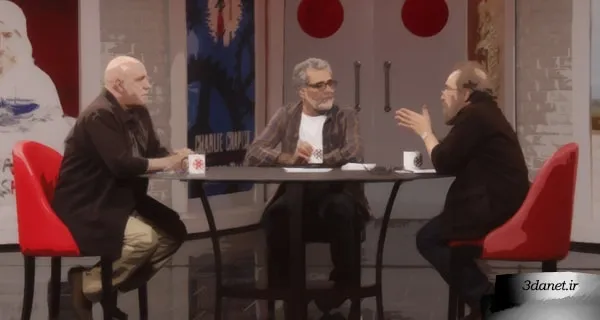
For some time now, the critique and analysis of Iranian cinema films on the program Haft has become a site of conflict and struggle between viewpoints that seem to share no common ground whatsoever. The conversations are often left truncated and fruitless, with each party to the dialogue content to merely repeat their own opinions and views, without reaching any specific point of agreement, or one side being able to convince the other even slightly, or indeed without any progress being observed in the discussions at all...
Good, Bad, Meaningless
(A Reflection on Relativist Critique)
Author: Amirreza Javadi (M.A. in Philosophy)
The following text was written concurrently with the screening of the film Ashbah (Ghosts), by Dariush Mehrjui, and its critique on the program Haft.
For some time now, the critique and analysis of Iranian cinema films on the program Haft has become a site of conflict and struggle between viewpoints that seem to share no common ground whatsoever. The conversations are often left truncated and fruitless, with each party to the dialogue content to merely repeat their own opinions and views, without reaching any specific point of agreement, or one side being able to convince the other even slightly, or indeed without any progress being observed in the discussions at all.
Regardless of the factional alignments sometimes seen among critics, it appears that a current is taking shape among younger critics that intends to critique and analyze films from a different and newer perspective, and it is in this context that phrases such as "belonging to different paradigms" and "having no understanding whatsoever of the opposing critic's words" are sometimes heard from certain individuals. Certainly, no one, upon first encounter, ever condemns or deems the adoption of a fresh and different approach to matters as reprehensible, but it is also essential to note that a lack of proper understanding of the position and method of discussion can have detrimental consequences for audiences and critical currents in Iranian cinema. Indeed, the primary motivation for this writing is a concern about the proliferation of a mode of thought and perspective that could lead to unbridled chaos in the realm of criticism, and the reason for focusing on the program Haft is consideration for the general audience of Iranian cinema, who do not necessarily possess solid theoretical foundations when confronted with the diverse opinions of critics. Whereas critics are expected to have complete mastery over the dimensions of such a discussion.
This is while it seems that the problem of determining the position of the discussion and its method requires a meta-cinematic perspective, so that by examining and reforming the critical process, it can prevent the distortion and falsification of reality, as well as the deviation of the minds of cinephiles and critics. The subject of the present writing is precisely this matter. We will endeavor, to the extent of our capacity and the space at our disposal, to raise the issue in this regard, with the hope that experts and authorities will also come to our aid and produce useful and beneficial writings in this connection.
To enter the discussion, we will draw upon a concrete example: the film Ashbah (Ghosts), directed by Dariush Mehrjui. Based on the reactions seen following the film's screening at the Fajr Film Festival and subsequently its public release, one can claim that in the opinion of many viewers (if not most of them), this film is recognized as a bad film. Nevertheless, in the clash of viewpoints between the two critics who discussed the film on the program Haft, thought-provoking points were exchanged in this regard.
What drew the most attention during the critique of this film was that the first critic (in favor of the film), in response to certain points that the second critic (opposed) cited as weaknesses of the film, posed a question in the style of a rhetorical interrogative, to the effect of: Do you think the film's director (Mehrjui) didn't understand this matter?! How is it truly possible that someone like Mehrjui, who has such a brilliant track record, would commit such mistakes(!)?!
Such an approach to the issue is truly harmful. Why? Because it justifies the occurrence of any mistake in the film. That is, every event in the film is presumed to be premeditated, and one must search for its raison d'être! But what can be done to resolve this issue and demonstrate its weakness? Perhaps the best idea is to ask, in the style of Popper: What would have had to happen in the film for you (the critic in favor of the film) to acknowledge that a flaw had occurred and a mistake had taken place? What action, had the director taken it, or what event, had it occurred in the film, would allow you to judge that this film possesses this weakness and has therefore become a bad film?
Providing such a criterion can be a very good starting point regarding the strengths and weaknesses of a film. It is clear that if the critic defending the film does not give a specific answer to the aforementioned question, they have in fact claimed that any event can occur in the film and we can still claim that it was calculated and the film is considered a good film. Under such conditions, does any criterion for evaluating the film remain?
Of course, it is certain that when encountering the work of a great director with a prolific career, we must be more careful and not overlook the occasional deconstructions, but does this mean that everything made under the name of that director is a calculated work and every moment of it is valuable, and if we do not grasp the wisdom of unusual, discordant, and disproportionate events within a film's structure, it is our problem, grappling with such a lack of knowledge? Suppose, for example, Woody Allen, as a famous director, suffers a cognitive impairment due to an accident and makes a bad film full of mistakes and deviations. A film that collective reason finds nonsensical and rubbish. Would such a film be defensible?
Let us remember that in a situation where there is no criterion for finding superiority between two works of art (in this case, film), the presence of a critic defending the film is a contradiction in terms! Except in one case, and that is if the critic claims that they intend to announce to everyone that whatever is imprinted on the negative is a good film!! Let us note that in the absence of a criterion, holding a review session and the presence of critics, both for and against, is fundamentally pointless, and thus the presence of a critic opposed to the film, just like the critic in favor, would be a contradiction in terms. We also note that this discussion can similarly be raised at different levels, in this way: What is the criterion for being a film? What is the criterion for being a cinematic film? What is the criterion for being a good cinematic film? If a child accidentally touches the record button on a camera and the camera turns on and captures footage, can one claim that this footage is a good film?
We must also know that the validity and importance of such a discussion is not contingent upon providing a comprehensive and exclusive definition of film. Let us borrow this point from Wittgenstein's philosophy: there is fundamentally no necessity to define everything! What does that mean? In brief, Wittgenstein's discussion revolves around the term "game." He shows that it is practically impossible to provide a specific definition of this word (game) and determine general limits and rules for it in a way that includes both a six-month-old child's play with a ball, hide-and-seek, football, etc. There are a series of family resemblances among these that specify the meaning of game for us. Therefore, we will not be worried if we perhaps cannot arrive at a common definition of film and cinematic film. We all have a general image and conception of film.
Although with low probability, some of us might consider the footage accidentally recorded by a child to be a film, but it is unlikely we would claim that this ten-minute footage is a cinematic film. Similarly, it is unlikely any of us would deny that "About Elly" is fundamentally a cinematic film. What about Kiarostami's "Shirin"? Is it a cinematic film? What about Lynch's "Blue Velvet"? Leaving these aside, can a ten-minute film by Woody Allen be considered a cinematic film? Can it be considered a cinematic film merely because it was made by Woody Allen? What is our criterion in this matter?
The answer to this question, which requires extensive cinematic knowledge and understanding, is the responsibility of critics and specialists in the field of cinema, who can also seek help from those in philosophy as needed. It is the critics and specialists in the field of cinema who can offer a positive discussion regarding criteria and employ various and different examples from films throughout cinema history to demonstrate what, in this context, can be recognized as a criterion. It is then that one must put pen to paper and pit various opinions, views, and counterexamples against one another to illuminate the dimensions of the subject. Something that neither constitutes the aim of this writing nor is within its capacity. Nevertheless, in the hope that it may open a door for articles to be written by professors in the field of cinema, I intend, as an example, to offer a criterion in this regard, though I am aware of its shortcomings.
In the opinion of the author of these lines, one possible answer to the question What is the criterion? could be the mode of outlook and approach of the cinematic community. In the sense that it is the dominant and prevailing views in cinema that determine what is a cinematic film and what is not. In any case, our mode of encountering, for example, Kiarostami's Shirin and the images a child has taken of family members' faces is different! What serves as the criterion and standard in this context is the way the tradition and body of the cinematic community engage with the work. But this in no way means the absence of a criterion. It is the rules governing cinematic domains, genres, and styles that, in this context, serve as criteria and play a guiding role, and while these are conventional and may undergo changes over time, they are present and form the solid foundation of cinematic activities. It is the absence of these sometimes-variable rules that will lead to unbridled chaos. Where there is no rule, not following a rule is also meaningless. In other words, this time in the realm of cinema, defending a work and striving to show its strengths and weaknesses depends on introducing and selecting a criterion for comparing the work with that criterion (here, the dominant cinematic rules). Why? Because otherwise, whatever that Khosrow (the director) does is sweet!
To clarify the matter, I will once again draw on Wittgenstein's philosophy. In his book Philosophical Investigations, Wittgenstein presents an argument known as the impossibility of a private language, a more precise understanding of which is, of course, possible in connection with other components of his philosophy; especially his critique of ostensive definition and his introduction of the use of a word as its meaning (in most cases, at least). We do not have the opportunity to delve into these matters, but his claim can be summarized as follows: something like a private language, which only one person invents, understands, and uses, and which no one else is capable of doing, is not possible. Because knowing the use of a word (which is the same as knowing its meaning) means: mastery of its correct use, and therefore means: knowing the distinction between correct and incorrect use and the ability to apply the word correctly. But how do we ourselves understand the correctness of the use?—From its conformity with the existing and current rules in the language. There are specific and definite rules in language that we call the grammar of the language, and our interaction with others through language is not possible except through familiarity with grammar and its correct application. Otherwise, even if we utter something, no one will understand it. But the key point here is that private adherence to these rules is meaningless, because in that case, there is no difference between one who follows the rule and one who thinks he follows the rule! Moreover, this impossibility of following a rule is a logical impossibility, meaning that for the aforementioned reasons, it will logically not be possible for a person to follow the rule (not that he, for example, cannot recall the distinction), since in this situation, there will fundamentally be no distinction between following and not following the rule! On this basis, language is essentially a public matter, and entering into it and undertaking to speak and exchange opinions through it (which is precisely what the critic does) is subject to rules and precepts that have a public aspect, and violating them is tantamount to stepping into the realm of meaninglessness! In fairness, this is one of the points whose acquaintance in Wittgenstein's philosophy requires far more time than this. So, if you have not been able to follow step by step up to here, accept this point from us in brief: that private adherence to a rule is impossible. Now, look for a similar thing in cinema. If there is no criterion among us for distinguishing correct and proper filmmaking from incorrect and improper filmmaking, can one critique cinematic works? Someone might claim that the director makes whatever he wants and deems correct, then presents it, and the shrapnel of his work might hit some people and attract them. We do not deny this matter either. That is, one can imagine a director who makes his own film and then makes it available to everyone via the internet, but, as soon as he steps into the arena of critiquing and analyzing the work and acts as a critic or analyst, his words will be deemed meaningless, because in the eyes of others, he does not follow any common rule that provides a criterion for correctness and gives others the possibility of comparison and scoring, for there is fundamentally no rule in place! Whatever the director makes is, in his opinion, following the rule—why? Because he thinks that is the rule! And there is no one to correct his mistake! When the legislator, the enforcer, and the judge are one person, truly, whatever that Khosrow does is sweet!
Now, in summary, if we wish to apply the above points and critique a bad and meaningless film from this perspective, we must show that the film in question neither adheres to the rules of classical cinema nor is categorized among the moderns! It is neither realist nor surrealist! Neither comedy nor serious! Neither absurdist nor parody! Neither musical nor epic nor melodrama nor psychological nor... . This film is not even close to any cinematic tradition. On this basis, as we have pointed out, although one cannot prevent the production and distribution of such films, any speech about and defense of this film is condemned to meaninglessness and failure! Let us note that if a director intends to make such films, it is certainly an unethical act to mislead a film producer—who is also pursuing their economic interests—and squander their capital without their knowledge under the guise of presenting a new and creative work! The minimum condition for presenting a new and creative work is proximity to the rules governing and dominating the cinematic community. This "being close" to a cinematic tradition, which is the source of innovations and creativity, is an important point that I will now address.
It may be objected that there are movements in the history of cinema that have confronted the rules governing dominant cinema and have now established their place. This is a valid point, but let us note that non-adherence to the dominant rules of cinema gains meaning gradually and by striking at the boundaries of the ruling and dominant cinema. In this sense, making a film that adheres to none of the rules governing cinematic films is meaningless, like a film that has neither proper sound (according to the sound recording rules currently considered correct) nor proper lighting and cinematography, nor does it have a story, and so on. This is the same necessity of proximity to the governing rules that we mentioned above. In this sense, avant-garde directors distance themselves step by step and gradually from the mainstream cinematic current so that over time they can form their own cinematic tradition, which can, gradually and over the years, distance itself greatly from the mainstream cinematic current from which it branched off. Now, can one engage in dialogue and exchange of views with such a tradition? Is it possible to understand the claims of those whose hearts are devoted to such a perspective? Conversely, is it possible for those who have now distanced themselves so much from the mainstream of dominant cinema to understand the words of those who view issues from a different perspective? In short, is dialogue possible between two currents that seem to be far apart?
An important point to know here is that being at the end of such a path does not mean the door to discussion and critique is closed. If we are seeking an answer for our discussions, what we must do is return to the starting points and commonalities. Certainly, two streams that have branched off from a full-flowing river and have distanced themselves greatly from each other along the way have no discussable common points at the end of the path, but by returning to the source of the differences and orientations, they can at least clarify the discussion to some extent. For example, when we are to critique a film, the confrontation of critics—one of whom is attached to classical cinema, another favors the perspectives of modern cinema and the French New Wave, and yet another has placed Bertolt Brecht's teachings at the forefront of their critique—certainly appears fruitless at first glance. An occurrence that has happened time and again in debates among critics, and interestingly, the critics themselves, without looking back over their shoulders, after a bit of arguing and grappling with each other's opinions, abandon its continuation.
اما به نظر میرسد طرح پرسشهایی پایهای (foundational) میتواند لااقل گرایش به یک جریان خاص را توجیه کند. فرض کنید نقد را به نقطهای بکشانیم که چنین سوالهایی طرح شود: هدف از ساختن یک فیلم چیست؟ چه فیلمی یک فیلم خوب شناخته میشود؟ چرا؟ و همینطور نخ تسبیح سوالات را بگیریم و بکشیم تا به اینجا برسیم که امر زیبا کدام است؟ و ملاک زیبایی چیست؟ زیبایی امری عینی است یا ذهنی؟ آیا میتوان مدعی شد که تابلوی عکسی از یک گل سرخ به همان اندازه زیباست که یک تابلوی عکس از مدفوع یک حیوان؟ مطمئنا پاسخ به چنین پرسشهایی از حوصلۀ چنین بحثی خارج است و البته نگارنده نیز صلاحیت کافی برای پرداختن به آن را ندارد. اما پاسخ به پرسشهایی اینچنینی تکلیف بسیاری از کسانی که در میان نظرات ضد و نقیضِ طرفینِ نقد، دست و پا میزنند را مشخص میکند و لازم به یادآوری است که این حقِّ مخاطب است که بداند رویکرد کلی منتقد به اموری کلی همچون هدف از خلق یک اثر هنری و یا معیار زیبا دانستن یک اثر و یا در مقیاسی دیگر، نحوۀ نگرش وی به سینما به مثابه صرفا سرگرمی یا... چیست. دقت کنیم که ممکن است بسیاری از چنین پرسشهایی، پاسخی روشن و مشخص به نحوی که هر پرسندهای را قانع کند و به یک جهت مشخص ترغیب نماید نداشته باشند، اما روشن شدن ابعاد مسئله میتواند تمایل ما به هر جهت را مشخص کند. برای مثال کسی که مدعیست تابلوی عکسی از مدفوع حیوان همانقدر زیباست که تابلوی گل سرخ، مسلماً رویکرد فلسفی متفاوتی به زیبایی دارد تا کسی که مدعیست: "خب واضح است که گل سرخ زیباست".و این حق مخاطب است که موضع هر منتقد را بداند و نیز بتواند از میان این دو، یکی را انتخاب کند.
اما آنچه ما را بدینجا کشاند بحثی بود که پیرامون امکان تبادل نظر و گفتگوی منتقدان مطرح کردیم. کوشیدیم تا نشان دهیم که چطور میتوان با این مدعا که "من در پارادایم الف میاندیشم و شما در پارادایم ب، پس راه گفتگو بسته است" روبرو شد. اکنون مطلب را اینگونه پی میگیریم: مدعای فوق بطور ضمنی دربردارندۀ این ایده است که پس من بنابر معیارهای خودم از این فیلم خوشم میآید و شما به عکس. و بر این اساس راه دیالوگ و گفتوگو بسته است! به این ترتیب اساساً معیاری در کار نیست و لذا هر مزخرفی میتواند فیلم باشد! اما این در حکم یک خودکشی عقلیست! آیا منتقدانی هستند که حاضر باشند زیر بار چنین مدعایی بروند؟
نکتۀ دیگر اینکه فراموش نکنیم که امکان گفتگو تنها در صورتی میسر است که طرفین بحث، فهمی (ولو حداقلی) از مفاهیم و نظریات طرف مقابل داشته باشند. در غیر اینصورت همانطور که اشاره کردیم، حتی امکان دفاع از چنین نسبیتگرایی وجود ندارد. و اگر زیر بار فهم (ولو حداقلی) برویم، درست همینجا محل شروع بحث و گفتگو است.
با این اوصاف، از منتقدان محترمی که پا به عرصۀ نقد میگذارند توقع میرود که:
- موضع فلسفی خویش را در قبال هنر و امر زیبا روشن کرده و آن را به صراحت عنوان کنند.
- بدانند که به محض ورود به بحث، در حقیقت پیشاپیش پذیرفتهاند که باب تضارب آراء و گفتگو باز است (و بر این اساس حضور در مباحثه و تن ندادن به گفتگو، امری ناپسند و غیراخلاقی است).
- در صورت برخوردن به بنبست در مباحث، آنها را به سمت ریشهها و مسائل بنیادین هدایت کنند و با تعیین تکلیف این مسائل بنیادین، با حرکتی گامبهگام و پیشرونده، به موضوع موردنظر خود برسند و موضع خود را در قبال آن مشخص کنند تا از سردرگمی خود و مخاطبانشان جلوگیری کنند.
در بین این موارد، مهمترین و در عین حال سختترین و غامضترین آنها، مورد نخست است که پرداختن به آن در عین دشواری، بسیار مهم و وظیفۀ هر منتقد متعهدی است. در مورد دوم در حقیقت بنیانی فلسفی (یعنی همان امکان بحث و گفتگو) مورد قبول طرفین فرض شده است. نکته سوم هم تذکری متودولوژیک در باب شیوۀ راهبرد مباحثه و گفتگو است که پایبندی به آن وظیفۀ هر منتقد پایبند به اخلاق است.
در پایان، معرفی منابعی برای مطالعۀ علاقهمندان :
1) فلسفۀ هنرها، گوردون گراهام، ترجمه مسعود علیا، نشر ققنوس
2) هنر چیست، هربرت رید، ترجمه نجف دریابندری، انتشارات علمی و فرهنگی
3) Philosophy of Art, Anne Sheppard, translated by Ali Ramin, Elmi va Farhangi Publications
4) Truth and Beauty, Babak Ahmadi, Markaz Publishing
5) The Meaning of Beauty, Eric Newton, translated by Parviz Marzban, Elmi va Farhangi Publications
6) Aesthetics: History and Problems, John Hospers, Monroe Beardsley, translated by Mohammad Saeed Hanai Kashani, Hermes Publications
.
.
PDF file of the article Good, Bad, Meaningless (A Reflection on Relativist Critique)
.
.




Discussion0 comments
No comments yet; let yours be the first voice.