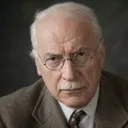
Foreign thinker
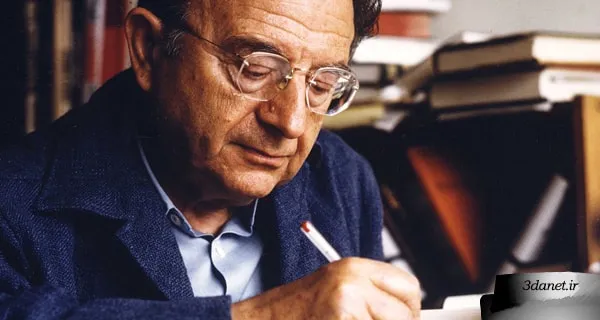
Erich Fromm
Erich FrommPsychoanalysis and Social PhilosophyGerman1900–1980
Love is the power and capacity of the human soul; it is the force that breaks down the walls separating a person from their fellow human beings and unites them with others.


Life and Thought
Erich Fromm (1900–1980) was a psychoanalyst, social psychologist, and humanistic sociologist who was among the prominent figures of the Frankfurt School. He sought to bridge psychoanalysis and sociology, and his works such as Escape from Freedom and The Art of Loving gained worldwide renown.
Erich Fromm, born March 23, 1900, and died March 18, 1980, was a psychoanalyst, social psychologist, sociologist, and humanistic thinker. He was a major figure of the Frankfurt School and one of the writers who endeavored to connect psychoanalysis, sociology, ethics, and the critique of modern culture.
Fromm was born in Frankfurt, Germany, and studied at the universities of Heidelberg and Munich, and later at the Berlin Psychoanalytic Institute. After emigrating to the United States, he worked at Columbia University and later founded the psychoanalysis chair at the National Autonomous University of Mexico. In his final years, Fromm moved to Switzerland, where he passed away.
Fromm's thought centered on the question of how human beings can live freely, healthily, creatively, and responsibly in modern society. He believed that many of humanity's psychological sufferings have cultural and social roots and cannot be understood through individual therapy alone. In his works, themes such as love, freedom, ethics, loneliness, alienation, religion, violence, consumerism, and the meaning of life hold a central place.
Fromm wrote in a clear and accessible prose for the general public, a quality that earned his works a wide readership around the world. Books such as Escape from Freedom, The Art of Loving, and To Have or to Be? have made him one of the most influential writers in the fields of cultural psychology and humanistic philosophy of the twentieth century.
Bibliography
Writings and transcribed lectures18 titles
Escape from Freedom
Man for Himself: An Inquiry into the Psychology of Ethics
Psychoanalysis and Religion
The Forgotten Language: Understanding and Interpreting Dreams, Children's Stories, and Myths
The Sane Society
The Art of Loving
The Mission of Sigmund Freud
Zen Buddhism and Psychoanalysis
The True Nature of Man
Beyond the Chains of Illusion
Christian Dogmatism and Essays on Religion, Psychology, and Culture
The Human Heart and Its Inclination Toward Good and Evil
Revolution of Hope
The Crisis of Psychoanalysis
The Anatomy of Human Destruction
To Have or to Be?
In the Name of Life
The Art of Being