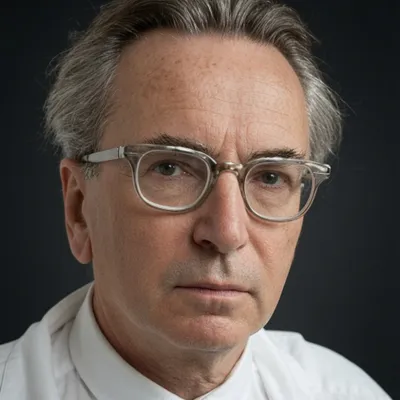
Foreign thinker
Viktor Frankl
Viktor FranklPsychology and PhilosophyAustrian1905–1997
Everything can be taken from a man but one thing: the last of the human freedoms—to choose one's attitude in any given set of circumstances, to choose one's own way.


Life and Thought
Viktor Emil Frankl was an Austrian neurologist, psychiatrist, and psychotherapist, and the founder of logotherapy. He is the author of Man's Search for Meaning, and his works have been influential in existential psychotherapy and positive psychology.
Viktor Emil Frankl (26 March 1905 – 2 September 1997) was an Austrian neurologist, psychiatrist, and psychotherapist. He was the founder of logotherapy, an approach in psychotherapy that considers the search for meaning to be the fundamental driving force of human life. Logotherapy is often referred to as the "Third Viennese School of Psychotherapy," after Freud's psychoanalysis and Adler's individual psychology.
Frankl was born in Vienna into a Jewish family. From adolescence, he was interested in philosophy, psychology, and the question of the meaning of life. During his high school years, he attended psychology lectures and corresponded with Sigmund Freud during those same years. One of his early writings was published, at Freud's suggestion, in the International Journal of Psychoanalysis. However, Frankl gradually distanced himself from Freudian psychoanalysis and moved closer to Alfred Adler's circle, though he later pursued an independent path.
Frankl studied medicine at the University of Vienna and specialized in psychiatry and neurology. From the very beginning of his professional career, he focused on the issues of suicide, despair, and existential crises. Between 1928 and 1930, he established counseling centers for youth and students in Vienna, and subsequently worked in Viennese psychiatric hospitals, particularly in the department for women at risk of suicide.
With the annexation of Austria by Nazi Germany, Frankl's living and working conditions became extremely difficult. He continued working at the Rothschild Hospital, the only hospital in Vienna that admitted Jewish patients. In 1942, he and his family were sent to Nazi camps. His father, mother, brother, and wife perished in the camps. Frankl himself survived several camps, including Theresienstadt and subcamps of Dachau.
The camp experience was later reflected in his most famous book, Man's Search for Meaning. In this book, Frankl does not merely write memoirs; he demonstrates that even in conditions where external freedom has been taken away, a person can still determine their relationship to suffering, hope, responsibility, and meaning. In his view, the primary question is not what we want from life, but what life asks of us in each situation.
After the end of World War II, Frankl returned to Vienna and assumed the directorship of the neurological department of the Vienna Polyclinic. In 1946, he wrote Man's Search for Meaning; a book that was later translated into dozens of languages and became one of the best-selling and most influential works in psychology and camp literature. Frankl also earned a doctorate in philosophy in 1948 and taught neurology and psychiatry at the University of Vienna.
Frankl's logotherapy emphasizes three main paths to finding meaning: doing something valuable, experiencing love or beauty, and adopting a responsible attitude toward suffering that cannot be changed. In this view, the human being is not merely a pleasure-seeking or power-seeking creature, but a meaning-seeking one. Frankl called this tendency the "will to meaning."
Throughout his life, Frankl wrote 39 books and delivered numerous lectures around the world. He received honorary doctorates from many universities, and his works have been influential in existential psychotherapy, positive psychology, counseling, theology, education, and studies on the meaning of life. Frankl died on 2 September 1997, at the age of 92, in Vienna.