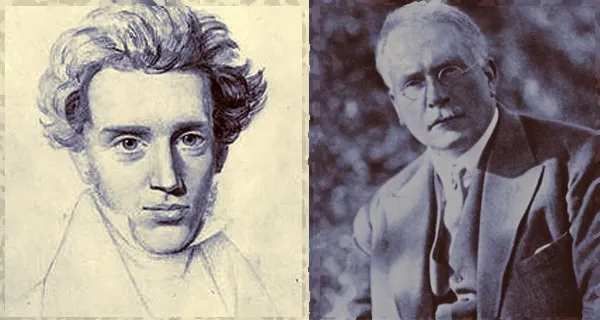
Foreign thinker
Carl Gustav Jung
Carl Gustav JungAnalytical PsychologySwiss1875–1961
As far as we can discern, the sole purpose of human existence is to kindle a light in the darkness of mere being.


Life and Thought
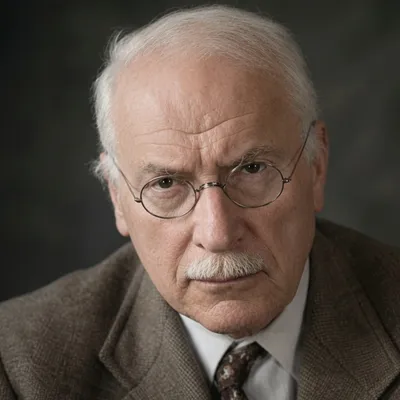
Carl Gustav Jung (1875–1961) was a Swiss psychiatrist and psychoanalyst, and the founder of analytical psychology. By introducing concepts such as the collective unconscious and archetypes, he extended the boundaries of psychology into mythology, religion, and philosophy.
Carl Gustav Jung (German: Carl Gustav Jung) (26 July 1875 – 6 June 1961) was a Swiss psychiatrist and psychoanalyst, and the founder of "analytical psychology." He is among the figures who pushed the boundaries of psychology beyond clinical treatment, linking it with mythology, religious studies, literature, alchemy, philosophy, and anthropology. Jung trained and worked at the Burghölzli Hospital in Zurich and initially collaborated closely with Sigmund Freud, but disagreements over the nature of libido and the status of the unconscious led to their intellectual separation in 1913.
Jung's thought was based on the premise that the human psyche is not constructed solely from personal experiences, but also possesses a deeper, shared layer called the "collective unconscious." Within this unconscious reside fundamental forms and patterns that Jung termed "archetypes," including the Shadow, the Persona, the Anima, the Animus, the Wise Old Man, and the Self. In his view, dreams, myths, rituals, and works of art are pathways to understanding these deep structures of the psyche.
The primary goal of analytical psychology, according to Jung, is "individuation"; a process in which the individual confronts the unconscious, repressed, or unknown aspects of their personality and achieves a more mature unity between consciousness and the unconscious. Jung also developed the concepts of "introversion" and "extraversion" in personality psychology; concepts that later proved influential in personality typology theories, including the MBTI test.
Unlike Freud, Jung did not view religion and myth merely as illusions or remnants of psychological childhood, but saw them as the psyche's symbolic language for expressing profound human experiences. This perspective led to his works gaining widespread influence in fields such as literary criticism, theology, comparative religious studies, and modern art.
Bibliography
Writings and transcribed lectures18 titles
Jung's Seminar on Nietzsche's Zarathustra
Man and His Symbols
Word Association Studies
Symbols of Transformation
Psychological Types
Two Essays on Analytical Psychology
My Relationship with the Unconscious
Archetypes and the Collective Unconscious / Archetypal Images and the Collective Unconscious
Psychology and Religion
Psychology and Alchemy
Ion
Answer to Job
Synchronicity: An Acausal Connecting Principle
Memories, Dreams, Reflections
The Red Book
Dream Analysis: Discourses on Dream Interpretation
Jung's Seminar on Nietzsche's Thus Spoke Zarathustra
The Collected Works of C. G. Jung