Foreign thinker
Abraham Maslow
Abraham MaslowHumanistic psychology, personality theoryAmerican1908–1970
"What a man can be, he must be."
In their times
Open in the Timeline of ThoughtInfluenced3


Influenced by3


Critiqued1

Same school2


Contemporaries1

Life and Thought
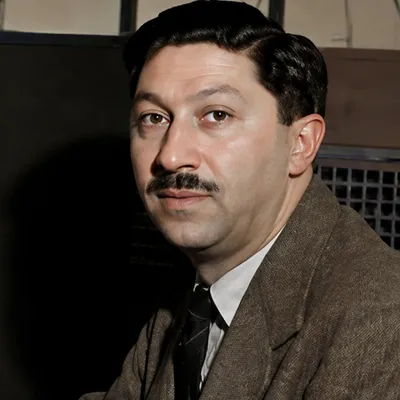
Abraham Maslow was an American psychologist and one of the main founders of humanistic psychology. By introducing the "hierarchy of human needs" and the concept of "self-actualization," he had a profound influence on psychology, the humanities, and studies of personal growth.
Abraham Maslow was born in 1908 in Brooklyn, New York, into a family of Russian Jewish immigrants. He studied at the University of Wisconsin and received his PhD in psychology in 1934. Maslow initially worked on behaviorist research and experimental psychology, but gradually moved away from a narrow focus on observable behavior and turned toward the study of human abilities, creativity, and positive capacities.
Maslow was one of the leading figures of the humanistic psychology movement in the mid-twentieth century, a movement that emerged partly in response to the strong emphasis of behaviorism on conditioning and some psychoanalytic approaches on unconscious conflicts. He believed that human beings have an innate tendency toward growth, the search for meaning, and the realization of their potentials.
His most influential idea, the "hierarchy of needs," was first presented in his 1943 paper "A Theory of Human Motivation" and later expanded in his 1954 book "Motivation and Personality." In this theory, human needs are organized from physiological and safety needs to belonging, esteem, and, at the highest level, self-actualization.
Maslow also researched self-actualizing people, peak experiences, creativity, and the meaning of life. His works influenced positive psychology, education, management, organizational studies, and contemporary ideas about human development. He died in 1970 and remains one of the best-known theorists of humanistic psychology.