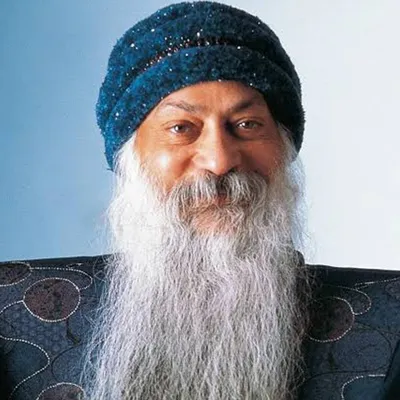
“Life is not a problem to be solved, but a mystery to be lived.”


Life and Thought
Osho, whose original name was Rajneesh Chandra Mohan Jain, was an Indian mystic, speaker, and writer who gained worldwide recognition in the second half of the twentieth century for his spiritual teachings and criticism of religious and social traditions. He founded a spiritual movement emphasizing meditation, individual awareness, and liberation from established mental patterns.
Osho, originally named Rajneesh Chandra Mohan Jain, was born in 1931 in India. He studied philosophy at Sagar University and later became known for lectures on spiritual, philosophical, and social subjects. During the 1960s and 1970s, he became recognized for discussions on awareness, individual freedom, meditation, and criticism of traditional religious and social institutions.
In his works and lectures, Osho drew from various intellectual and spiritual traditions, including Zen, Tantra, yoga, Eastern mysticism, and some Western philosophers. He emphasized direct experience, presence in the moment, and freedom from mental and cultural conditioning. His Dynamic Meditation method became one of his best-known practices.
In the 1970s, his spiritual center in Pune, India, became a gathering place for followers from different countries. Later, he moved to the United States, where Rajneeshpuram was established in Oregon and became the subject of major legal and social controversies. After returning to India, his activities continued in Pune.
Osho left hundreds of lectures and books addressing philosophy of life, meditation, love, freedom, and awareness. He remains a controversial figure: some regard him as an innovative spiritual teacher, while others criticize aspects of his teachings and organizational activities.