Until philosophers are kings, or the kings and rulers of this world truly and earnestly study philosophy, and political power and philosophy coincide in the same place... there can be no rest from troubles for cities, nor, I think, for the human race.
In their times
Open in the Timeline of ThoughtInfluenced26





Influenced by2


Students1

Teachers1

Critiqued1

Critics4


Life and Thought
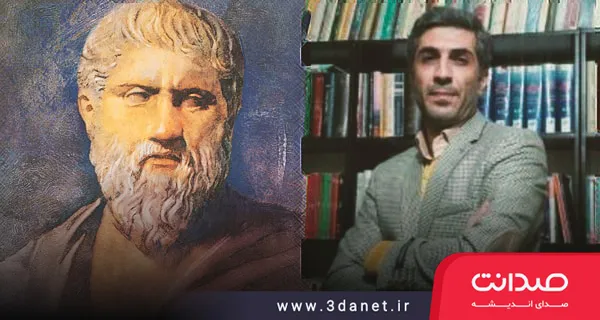
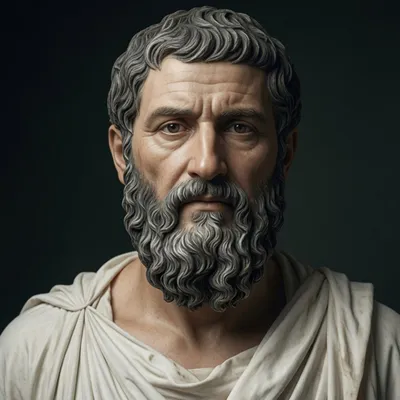
Plato was an ancient Greek philosopher and one of the principal founders of the Western philosophical tradition. He was a student of Socrates and the teacher of Aristotle, and he founded the Platonic Academy.
Plato, born around 428 or 427 and died in 348 or 347 BCE, was a great philosopher of ancient Greece and one of the principal founders of the Western philosophical tradition. He was a student of Socrates and the teacher of Aristotle, and alongside these two, he is considered one of the three central figures of classical Greek philosophy.
Plato was born in Athens or Aegina and in his youth became acquainted with Socrates—an encounter that forever transformed his intellectual path. Many of his works are written in the form of dialogues, in which Socrates plays the main character. Plato used the dialogue form to pose philosophical questions—questions about truth, justice, beauty, love, knowledge, the soul, and the right way to live.
After years of travel and study, he founded the Platonic Academy in Athens, an institution regarded as one of the earliest organized centers for the teaching of philosophy in the ancient world. The Theory of Forms is one of the most famous parts of his thought; according to this theory, the perceptible and changing world is merely a shadow of a more stable and superior reality.
The cultural significance of Plato is not confined to theoretical philosophy. He also left influential works in ethics, politics, education, art, literature, language, and cosmology. His writing style, which blends argument, narrative, myth, and dialogue, has made his works both philosophical texts and an enduring part of the world's classical literature.
Bibliography
Writings and transcribed lectures25 titles
Apology or Defense
Charmides or Temperance
Euthyphro or Piety
Gorgias or the Art of Rhetoric
Hippias Major or The Way of the Primacy of Hypothesis
Ion or Poetry
Critias or the Properties of Names
Crito or Duty
Laches or Courage
Lysis, or Friendship
Menexenus, or the Second Oration
Meno or Virtue
Phaedo or On the Soul
Protagoras or the Sophists
Symposium or Banquet / Love
Parmenides or the Forms
Phaedrus, or Beauty
The Republic or Politics / Justice
Theaetetus or Knowledge
Critias
Laws
Philebus, or Pleasure
Statesman or Kingship
Sophist or Being
Timaeus or Nature