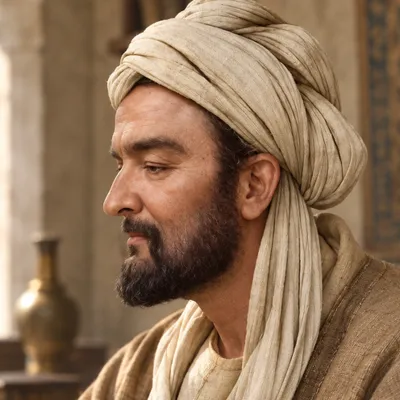
Iranian thinker
Muhammad ibn Zakariya al-Razi
Muhammad ibn Zakariya al-RaziMedicine, Philosophy, and AlchemyIranian865–925
Reason is the greatest blessing that God Almighty has bestowed upon us.



Life and Thought
Abu Bakr Muhammad ibn Zakariya al-Razi (251–313 AH / 865–925 CE) was an Iranian physician, philosopher, and alchemist, and one of the most eminent scholars of Islamic civilization, described by George Sarton as the greatest physician of the medieval period. Through works such as al-Hawi and Spiritual Medicine, he transformed clinical medicine and moral philosophy and became renowned for his fervent defense of the autonomy of reason.
Abu Bakr Muhammad ibn Zakariya al-Razi was born in Sha'ban 251 AH (September 865 CE) in the city of Rayy. According to the most reliable historical source on his life, al-Biruni's Fihrist Kutub al-Razi (Catalogue of Razi's Books), he was drawn to music and poetry in his youth and worked for a time as a goldsmith and then an alchemist; damage to his eyes from working with chemical substances, per this same source, later led him toward the study of medicine.
Razi traveled to Baghdad to study medicine and trained in its hospitals, eventually heading the hospitals of Rayy and Baghdad. His most significant medical work, the multi-volume encyclopedia al-Hawi fi al-Tibb (The Comprehensive Book on Medicine), is a vast compilation of clinical notes and excerpts from Greek, Syriac, and Indian sources that was taught in European universities for centuries. He also produced what is considered the earliest clinical description of smallpox and measles in a dedicated treatise, and in alchemy developed a classification system for minerals while describing processes such as distillation and calcination.
In philosophy, Razi proposed the doctrine known as the "five eternals" — the co-eternity of God, Soul, Matter, Space, and Time — a view shaped by Plato's Timaeus, leading him to regard himself as a follower of Plato in philosophy. In his treatise al-Sira al-Falsafiyya (The Philosophical Way of Life), he presented the life of Socrates as his model for philosophical living, though he also qualified certain aspects of Socratic asceticism. Razi's metaphysical views drew sharp criticism, notably from al-Farabi, who wrote a dedicated treatise refuting the "five eternals" theory, and from Avicenna, who challenged Razi's metaphysics and his views on the possibility of alchemical transmutation in his own philosophical and alchemical works.
In ethics, Razi's al-Tibb al-Ruhani (Spiritual Medicine) addressed the treatment of psychological ailments through the rule of reason over desire, describing reason as "the greatest blessing God Almighty has bestowed upon us." According to certain sources from Ismaili contemporaries — notably A'lam al-Nubuwwa (Signs of Prophecy) by Abu Hatim al-Razi — critical views on the concept of prophecy and religious authority have been attributed to Razi; the precise authenticity of these attributions remains debated among historians, but these accounts have nonetheless made Razi one of the most prominent rationalist and critical figures in the history of Islamic thought.