The unexamined life is not worth living.


Life and Thought
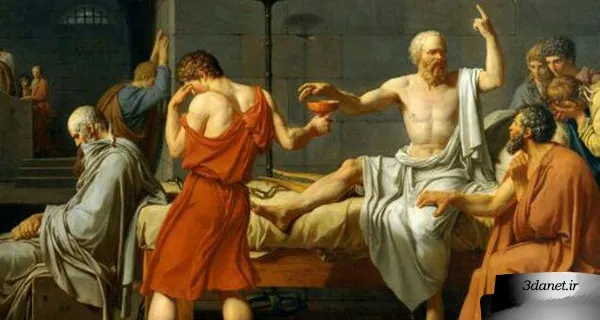
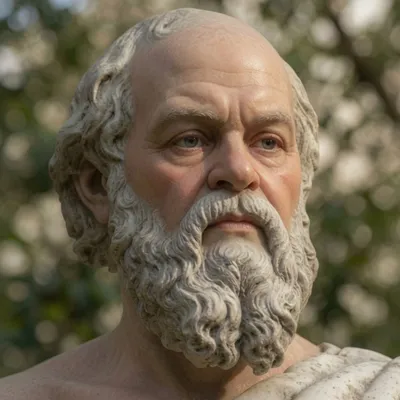
Socrates (c. 470–399 BCE) was an Athenian philosopher and one of the founders of Western philosophy. He is regarded as the first great moral philosopher in the Western tradition, placing the question of humanity and virtue at the center of philosophy.
Socrates, born around 470 and died in 399 BCE, was an Athenian philosopher and one of the founders of Western philosophy. He is generally regarded as the first great moral philosopher in the Western tradition; a thinker who, instead of focusing on nature and the cosmos, placed the question of humanity, virtue, justice, wisdom, and the right way to live at the center of philosophy.
Socrates lived in Athens and, unlike many thinkers, left behind no writings of his own. He brought philosophy to life through dialogue and question-and-answer, and with a method later called the "Socratic method," he subjected common beliefs to scrutiny. His goal was not to provide ready-made answers, but to lead his interlocutor to an awareness of their own ignorance and a search for truth.
Socrates' thought has reached us mainly through the works of Plato, Xenophon, and Aristophanes. The Stanford Encyclopedia of Philosophy also considers these three as the primary sources for understanding Socrates. From this arises a problem known as the "Socratic problem"; that is, the question of to what extent the historical Socrates aligns with the image constructed by his students and other writers.
Socrates' cultural significance lies in the fact that he turned philosophy into a dialogue about life. With simple yet fundamental questions such as "What is justice?", "What is virtue?", and "What is the good life?", he initiated a tradition that Plato and Aristotle continued, and which remains alive today in philosophy, education, ethics, and critical dialogue.
Socrates left behind no written work of his own; therefore, instead of a bibliography of direct works, one must mention the sources that have conveyed his image and thought to us: