The quality of your life depends on the quality of your thoughts.


Life and Thought
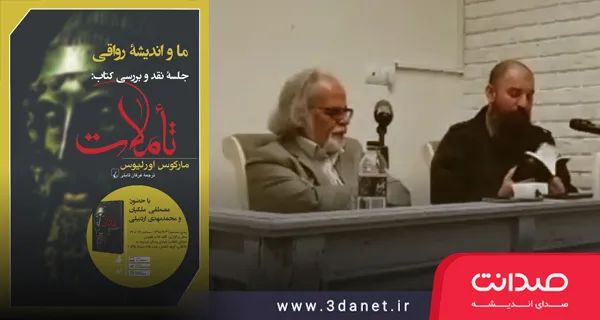
Marcus Aurelius (121–180 CE) was a Roman emperor and Stoic philosopher, recognized as one of the 'Five Good Emperors.' His work Meditations is a personal exercise in ethical self-care written amidst power and war.
Marcus Aurelius (26 April 121 – 17 March 180 CE) was a Roman emperor, Stoic philosopher, and one of the most celebrated examples of the 'philosopher-king' in the history of political thought. He was among the last prominent figures of the Nerva–Antonine dynasty and is counted as one of the 'Five Good Emperors' of Rome. His philosophical renown rests above all on the book Meditations; a work written not for publication, but as personal notes for the care of the self, the practice of ethics, and the preservation of tranquility in the midst of power and war.
Marcus was born into an aristocratic family in Rome. He lost his father in childhood and was raised under the care of his mother and grandfather. From early youth, he was drawn to a simple life, moral discipline, and philosophy. He studied language, literature, rhetoric, and philosophy under distinguished teachers, and was particularly influenced by Stoicism; a school that regarded virtue, reason, self-mastery, and harmony with nature as the foundations of the good life.
Hadrian, the Roman emperor, paved the way for Marcus's entry onto the path of succession. After him, Antoninus Pius became emperor and adopted Marcus as his son. In 145, Marcus married Faustina, the daughter of Antoninus. Following the death of Antoninus in 161, Marcus came to power jointly with Lucius Verus, and thus, for a time, Rome had two simultaneous emperors.
The reign of Marcus Aurelius was not peaceful. During his time, the Roman Empire faced prolonged wars on the eastern and northern frontiers, invasions by Germanic and Sarmatian tribes, and the Antonine Plague; an epidemic that severely reduced the empire's population. A significant part of his imperial life was spent in military camps and border conflicts. It was precisely these harsh conditions that shaped many of the notes in Meditations.
As a philosopher, Marcus Aurelius is less a theorist than a practitioner of ethical exercise and self-care. In Meditations, he repeatedly reminds himself that power, fame, the body, suffering, anger, and death are transient, and that the only thing truly within a person's control is their judgment, intention, and action. In his view, a person must see themselves as part of the whole cosmos and live with reason, justice, and kindness.
Marcus's Stoicism rests on the acceptance of fate, the mastery of emotions, and the performance of duty. He asks the individual to preserve their inner self in the face of external events; neither to flee the world nor to complain against it. For this reason, Meditations is neither a political book nor a philosophical treatise in the formal sense; rather, it is a notebook of a person's dialogue with themselves—a person situated at the center of power yet constantly contemplating the instability of power.
Marcus Aurelius died in 180 CE and was succeeded by his son Commodus. Commodus's succession is a controversial point in Roman history, as many consider it the end of the relatively stable era of the good emperors. Nevertheless, the figure of Marcus endured as an emperor of self-restraint, duty, and ethical reflection. His equestrian statue in Rome and the book Meditations are two lasting legacies of his life and thought.