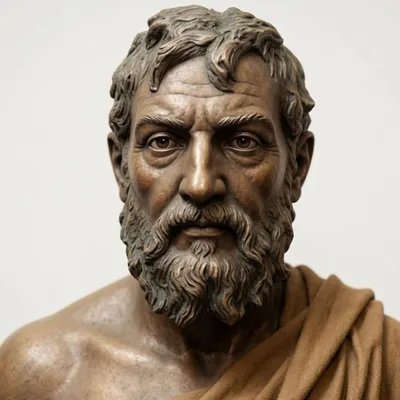
It is not events themselves that disturb people, but their judgments about them.


Life and Thought
Epictetus was a Greek philosopher and one of the prominent figures of the Stoic school, born around 55 CE and died around 135 CE. Having begun his life as a slave, he viewed philosophy as a way of living, and his teachings were recorded by his student Arrian.
Epictetus, born around 55 CE and died around 135 CE, was a Greek philosopher and one of the prominent figures of the Stoic school. He was born in Phrygia, in Asia Minor, and spent a significant part of his life in Rome and later in Nicopolis.
Epictetus was a slave at the beginning of his life, but this difficult experience later played an important role in shaping his philosophical outlook. He studied under the Stoic philosopher Musonius Rufus and, after gaining his freedom, began teaching philosophy. His thought was founded on the principle that humans do not have complete control over external events, but can master their judgments, desires, and reactions.
The cultural significance of Epictetus lies in the simplicity and practicality of his philosophy. He saw philosophy not as theoretical knowledge, but as a way of living; a way to maintain tranquility, inner freedom, self-discipline, and a wise acceptance of the world. His teachings later influenced philosophers, writers, and thinkers such as Marcus Aurelius.
Epictetus himself left behind no written work. What we have of his thought today comes from the writings and notes of his student Arrian, who recorded his sayings and lessons.
Bibliography
Writings and transcribed lectures4 titles
Discourses
Notebook or Guide to Life
Fragments
Selected Discourses of Epictetus