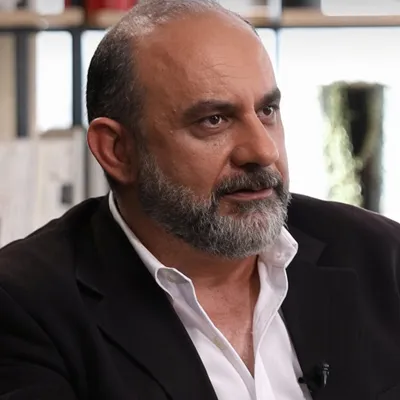
Iranian thinker
Hamed Vahdati Nasab
Hamed Vahdati NasabPaleolithic Archaeology and PaleoanthropologyIranianb. 1973


Life and Thought
Hamed Vahdati Nasab (born 1973 in Tehran) is an Iranian archaeologist and paleoanthropologist, and a full professor in the Department of Archaeology at Tarbiat Modares University. He earned his PhD in prehistoric anthropology from Arizona State University, focusing on the facial morphology of Neanderthals, and is one of the most recognized field researchers on Iranian Paleolithic sites and popularizers of human evolution for Persian-speaking audiences.
Hamed Vahdati Nasab was born in 1973 in Tehran. He completed his undergraduate and master's studies in zoology at the University of Tehran before receiving the Catherine Reynolds Fellowship from the Institute of Human Origins, which took him to Arizona State University. There he completed a master's degree in Paleolithic archaeology in 2001, and in 2006, under the supervision of Donald Johanson and Geoffrey Clark, earned his PhD in prehistoric anthropology with a dissertation on the facial morphology of Neanderthals.
Following his doctorate, Vahdati Nasab undertook two postdoctoral fellowships: first at the University of Alberta, working on the Baikal Archaeology Project with a focus on ancient DNA analysis, and then at the University of Oxford in the field of bioarchaeology. These research experiences shaped his interdisciplinary approach, bridging evolutionary biology, genetics, and archaeology.
Since 2008, he has been a faculty member in the Department of Archaeology at Tarbiat Modares University, where he now holds the rank of full professor. Since 2009 he has directed the Paleolithic Survey of the Iranian Central Desert Project (PSICDP), which has identified caves and rock shelters containing Paleolithic remains along the southern foothills of the Alborz mountains and the margins of the Dasht-e Kavir, including the site of Mirak in Semnan Province. His research has also extended to lithic technology, the symmetry of Middle Paleolithic points, geoarchaeology, and the study of the Chehrabad salt mummies in Zanjan, published in leading domestic and international journals. He has also served as president of the Iranian Scientific Archaeology Association.
Beyond his research, Vahdati Nasab has authored several books — including The Emergence of Man, Neanderthal Man, The Most Interesting Problem, Women and Gender in Prehistory, and Human Osteology — aimed at making paleoanthropology and human evolution accessible to general Persian-speaking readers, making him one of the best-known popularizers of the field in Iran.