Nature loves to hide.


Life and Thought
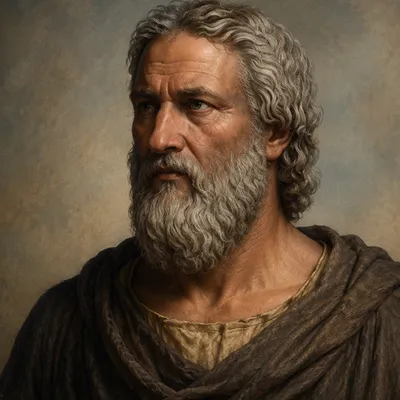
Heraclitus was an ancient Greek pre-Socratic philosopher and one of the most important thinkers of antiquity, known for his emphasis on change, becoming, and the unity of opposites. His ideas about Logos, fire as a fundamental principle of the cosmos, and the dynamic nature of existence had a profound influence on the history of philosophy.
Heraclitus was a Greek pre-Socratic philosopher who lived in Ephesus in Asia Minor around the sixth century BCE. Little is known about his life, and much of our knowledge of his thought comes from fragments preserved from a work attributed to him.
Heraclitus rejected the view of the world as fixed and motionless and emphasized continuous change and becoming in nature. He believed that opposites are essential parts of the order of the cosmos and that harmony emerges from the interaction of opposing forces.
A central concept in Heraclitus’ philosophy is Logos, a rational and common principle that explains the order of the world. He also viewed fire as a symbol of the permanent dynamism and transformation of reality. His ideas influenced later philosophers, from Plato and the Stoics to Hegel and Nietzsche.