Behold the world, it is all light and nothing else; whatever is not light is darkness and non-existence.
In their times
Open in the Timeline of ThoughtInfluenced11


Influenced by4



Critiqued1

Same school1

Contemporaries1

Life and Thought
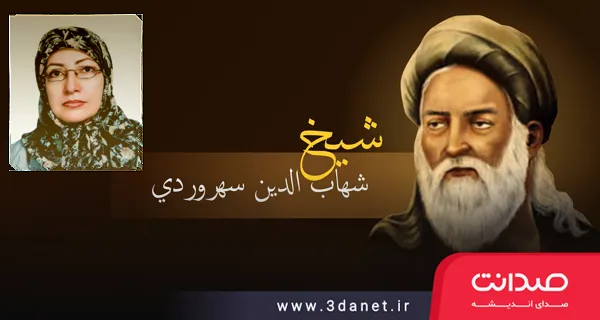
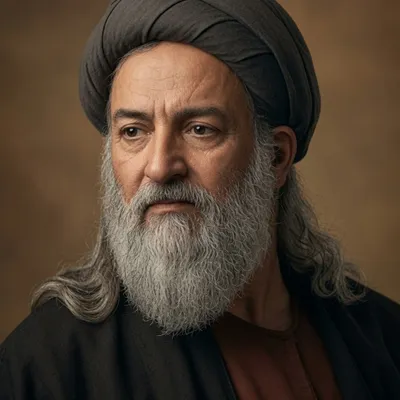
Shahab al-Din Yahya ibn Habash Suhrawardi, philosopher and founder of the Illuminationist school of thought, was born in 549 AH and died in 587 AH. He linked philosophical reason with intuition and spiritual experience, leaving behind numerous works in both Arabic and Persian.
Shahab al-Din Yahya ibn Habash Suhrawardi, known as Shaykh al-Ishraq (the Master of Illumination), Shaykh al-Maqtul (the Slain Master), and Shaykh al-Shahid (the Martyred Master), was born in 549 AH in Suhraward, Zanjan, and died in 587 AH in Aleppo. He was a philosopher, mystic, theologian, jurist, and the founder of the Illuminationist school of thought; a school that arose in opposition to Peripatetic Aristotelian philosophy and linked philosophical reason with intuition, illumination, and spiritual experience.
Suhrawardi began his early education in Maragheh under Majd al-Din al-Jili, the teacher of Fakhr al-Din al-Razi, and then completed his philosophical and religious studies in Isfahan under Zahir al-Din al-Qari. He then undertook extensive travels through Iran, Anatolia, and the Levant, meeting with Sufi masters. In Aleppo, he gained access to the court of al-Malik al-Zahir, son of Saladin, and found favor with him, but the opposition of jurists and theologians to his philosophical and esoteric views ultimately led to his imprisonment and death. Suhrawardi was around 38 years old at the time of his death.
Suhrawardi's thought is founded upon the Illuminationist wisdom; a philosophy that considers light to be the fundamental principle of existence and explains the degrees of being based on the intensity and weakness of light. In his philosophy, the 'Light of Lights' is the origin of existence, and all beings possess a degree of existence commensurate with their share of light.
Suhrawardi values both philosophical reason and mystical unveiling and intuition. In this respect, his wisdom is neither purely Peripatetic philosophy nor purely mysticism, but rather an attempt to synthesize demonstrative proof, intuition, Platonic wisdom, Islamic mysticism, and elements of ancient Persian wisdom. He also introduced new perspectives in logic and, in politics, focused on the role of the 'divine sage' and the wise ruler.
Bibliography
Writings and transcribed lectures23 titles
The Philosophy of Illumination
al-Talwihat
Al-Mashari' wa al-Mutarahat
Al-Lamaḥāt
al-Muqāwamāt (The Resistances)
Al-Alwah al-Imadiyyah
The Temples of Light
Partow Nameh
The Garden of Hearts
The Red Intellect
The Song of Gabriel's Feather
The Call of the Simurgh
The Language of Ants
On the Reality of Love, known as The Lovers' Companion
A Day with the Sufis
Treatise on the State of Childhood
The Estrangement of the West
Risalat al-Tayr (Treatise of the Birds)
Kalimat al-Tasawwuf
The Sufi Stations
The Belief of the Sages
Glorifications and Supplications
Illuminationist Supplications and Prayers
Sedanet articles about Suhrawardi