Iranian thinker
Omar Khayyam
Omar KhayyamPhilosophy, Mathematics, LiteratureIranian1048–1131
Of the past, which is gone, make no memory at all, / Of the future, not yet come, raise no cry, no call. / On what is not yet, and what is past, do not build. / Be happy now, and cast not your life to the wind.





Life and Thought
Ghiyath al-Din Abu al-Fath Omar ibn Ibrahim Khayyam Nishapuri, known as Omar Khayyam, was an Iranian philosopher, mathematician, astronomer, and quatrain poet of the 5th and 6th centuries AH. His global fame today largely rests on the quatrains attributed to him.
Ghiyath al-Din Abu al-Fath Omar ibn Ibrahim Khayyam Nishapuri, known as Omar Khayyam, lived during the 5th and 6th centuries AH, in the era of the Seljuks. He was an Iranian philosopher, mathematician, astronomer, calendar-maker, and quatrain poet. Khayyam's scientific standing in his own time was more prominent than his literary standing, but his global fame today largely rests on the quatrains attributed to him, especially after Edward FitzGerald's translation.
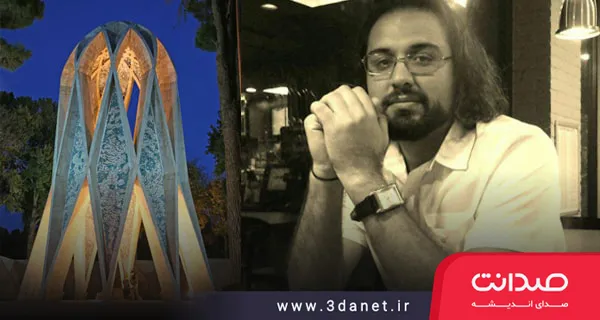
Khayyam was born in Nishapur and studied various sciences such as mathematics, philosophy, astronomy, jurisprudence, hadith, and wisdom. He had ties with Khwaja Nizam al-Mulk and was invited to Isfahan during the reign of Malik-Shah I to assist in organizing the observatory and reforming the calendar. The result of these efforts was the compilation of the Jalali calendar, which is considered one of the most accurate calendars in history. Khayyam died in Nishapur, and his mausoleum is today one of Iran's well-known cultural landmarks.
Khayyam holds a very important place in mathematics, especially algebra. He did outstanding work in solving cubic equations and examining ratios and Euclid's fifth postulate. In philosophy, he followed the Avicennian tradition and wrote treatises on existence, necessity, the hierarchy of beings, and the question of the divine.
In poetry, the quatrains attributed to Khayyam mostly revolve around the mystery of creation, the impermanence of the world, death, time, the suffering of life, criticism of hypocrisy, and an invitation to seize the present moment. Of course, the attribution of many quatrains to him is a matter of debate, and scholars consider only a portion of them to be more reliable.
Bibliography
Writings and transcribed lectures11 titles
Treatise on the Proofs of Algebra and Equations
Treatise on the Explanation of the Difficulties in Euclid's Postulates
Mizan al-Hikmah
Qistas al-Mustaqim
Problems of Arithmetic
Zij-i Malikshahi
Treatise on Existence
Treatise on the Science of the Universals of Existence
Treatise on Being and Duty
Treatise on the Necessity of Contradiction in the World and Determinism and Survival
The Rubaiyat of Omar Khayyam