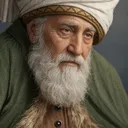
Set your foot upon the path and ask nothing; / the path itself will tell you how you must go.


Life and Thought
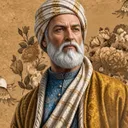
Farid al-Din Attar of Nishapur was one of the greatest mystical poets and Persian-language writers of the sixth and early seventh centuries AH. Through works such as "The Conference of the Birds," "Tazkirat al-Awliya," and "The Book of Affliction," he holds a foundational place in the mystical and literary tradition of Iran.
Farid al-Din Attar of Nishapur, known as Attar, was born in Nishapur, and his life was connected with pharmacy, medicine, poetry, and mystical practice. The exact dates of his birth and death are not certain, but most scholars consider him one of the major figures of the sixth and early seventh centuries AH. The title "Attar" refers to his profession as a perfumer and herbalist.
Attar was among the greatest mystical poets of Persian literature, and his works played an important role in developing the symbolic language of Iranian mysticism. His most famous work, "The Conference of the Birds," is an allegorical poem about the birds' journey toward the Simurgh, presenting stages of spiritual progress through poetic narrative. Other important works attributed to him include "The Book of Affliction," "The Divine Book," "The Book of Secrets," and his collected poems.
His prose work "Tazkirat al-Awliya" is a collection of accounts and sayings of Sufi masters and is an important source for understanding mystical traditions and the religious-experiential language of Persian Sufism.
Attar's thought centers on love, annihilation of the self, liberation from self-centeredness, moving beyond calculating reason, and direct experience of truth. Through stories, allegories, and poetry, he transformed complex mystical ideas into a vivid and influential expression.
Bibliography
Writings and transcribed lectures4 titles
Tazkirat al-Awliya
The Book of Affliction
The Divine Book
The Book of Secrets
.webp)