Why this book?
- To read a judicious, research-based selection of the quatrains attributed to Khayyam.
- To become familiar with the method for distinguishing authentic, probable, and rejected quatrains.
- To understand Khayyam's place in the history of the Persian quatrain and the tradition of Khayyam-esque composition.
- To access an edition based on ancient sources and clear scholarly criteria.
- To read Khayyam's quatrains alongside explanations of difficult words and terms.
About the book
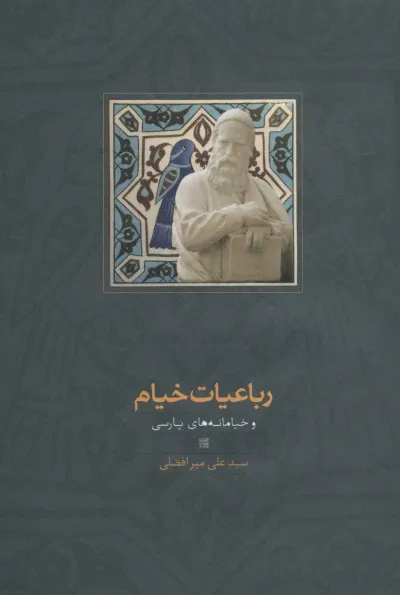
The Rubaiyat of Omar Khayyam is one of the most renowned texts of Persian poetry in the world, yet the attribution of many quatrains that have become famous under Khayyam's name has always been a subject of debate. The present book, edited by Seyed Ali Mirafzali, strives, through a judicious and text-critical method, to distinguish between authentic, probable, doubtful, and rejected quatrains.
This work is organized into two books. In the first book, the editor, relying on three main criteria, has selected Khayyam's quatrains from ancient sources: evaluating old sources and the principle of frequency of transmission, identifying the actual authors of quatrains later attributed to Khayyam, and paying attention to the four-rhyme structure of the quatrains. Based on these criteria, some quatrains have been examined as original and authentic, some as probable, and others as doubtful or rejected.
The second book is dedicated to Persian Khayyam-esque poems; quatrains from the 5th to the early 7th century AH that are close to Khayyam in their intellectual and linguistic atmosphere. This section shows that Khayyam is not merely an isolated poet, but that his name is linked to a broad tradition of quatrain composition, questioning death, the world, fortune, reason, and the enjoyment of life.