Why this book?
- To explore the intellectual and literary connections between Samuel Beckett and E. M. Cioran.
- To understand how pessimism and scepticism relate to literary form.
- To examine the role of exile, language, and identity in the works of both writers.
- To read Beckett in dialogue with one of the twentieth century’s major writers of pessimism.
About the book
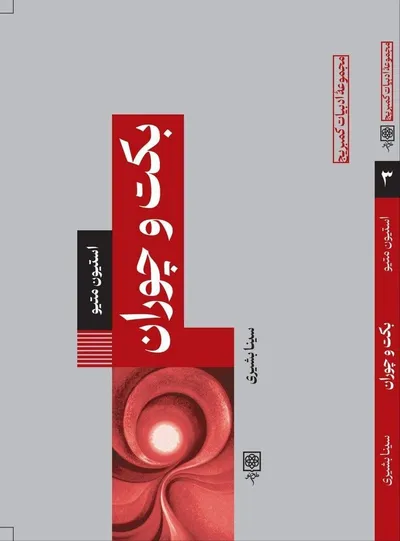
Beckett and Cioran by Steven Matthews is a comparative study of Samuel Beckett and E. M. Cioran, two émigré writers who lived in twentieth-century Paris and whose works are deeply marked by questions of pessimism, scepticism, exile, identity, and the limits of language. Rather than focusing solely on biographical parallels, Matthews traces the relationship between Beckett’s writing and Cioran’s thought.
The book does not reduce Beckett to a dramatist of “the absurd” or Cioran to a writer of despair. The more important question is how pessimism and scepticism enter the very form and practice of writing. From this perspective, Cioran’s fragments and aphorisms and Beckett’s formal experiments are not merely vehicles for expressing pre-existing ideas; form itself becomes part of their confrontation with the crisis of meaning and the possibility of understanding.
Language also occupies a central place in this comparison. Both writers were émigrés in Paris, and their relationships with French, translation, and distance from their first languages complicate questions of identity and understanding. Through this shared context, Matthews shows how exile and estrangement can move beyond biography and become problems within writing itself.
Beckett and Cioran will appeal to readers of Beckett and Cioran, students of modern literature, and anyone interested in the borderlands between literature and philosophy. It is particularly useful for understanding how pessimism in these writers is not merely a dark theme but is intimately connected with their formal and linguistic choices.