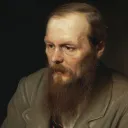
Foreign thinker
Emil Cioran
Emil CioranPhilosophy and literatureRomanian-French1911–1995
“Awareness is a wound that never heals.”


Life and Thought
Emil Cioran was a Romanian-born philosopher and essayist who spent much of his life in France. His works explore themes such as suffering, absurdity, and the fragility of the human condition through a poetic and bitter style.
Emil Cioran, born on April 8, 1911, and died on June 20, 1995, was a Romanian-born philosopher and essayist who spent a significant part of his life and writing career in France. He is considered one of the notable figures of twentieth-century philosophical literature, and his works address themes such as suffering, absurdity, death, solitude, despair, and the fragility of human existence through a condensed, poetic, and often bleak style.
Cioran began his studies at the University of Bucharest, where he became acquainted with figures such as Eugène Ionesco and Mircea Eliade. He later continued his studies in Berlin and was influenced by philosophers including Nietzsche, Schopenhauer, Kierkegaard, and Shestov. His first major work, On the Heights of Despair, was written in Romanian during his youth and reflects his distinctive perspective on anxiety, insomnia, and existential suffering.
From 1941 onward, Cioran lived in France and eventually began writing his works in French. His French prose became known for its brevity, precision, and literary power. Rather than constructing philosophical systems, he wrote mainly through short essays, fragments of reflection, and aphorisms, giving his works a deeply personal and literary character.
Cioran’s cultural significance lies in his blending of philosophical thought with literature, confession, dark humor, and existential reflection. Instead of offering definitive answers, he confronts readers with fundamental questions about life, meaning, suffering, and human impermanence.
Bibliography
Writings and transcribed lectures13 titles
قطعات تفکر
A Short History of Decline
On the Heights of Despair
The Trouble with Being Born
The Book of Deceptions
Tears and Saints
The Twilight of Thoughts
Bitter Analogy
The Temptation of Existence
History and Utopia
Fall in Time
The Evil God
Confessions and Curses




.webp)