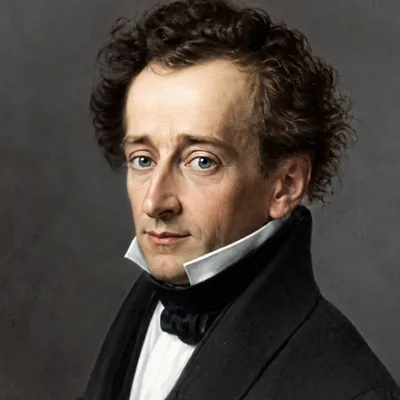
Foreign thinker
Giacomo Leopardi
Giacomo LeopardiPhilosophical pessimism, Italian poetry and literatureItalian1798–1837
"Everything in the world, except pain, is fleeting."
In their times
Open in the Timeline of Thought


Life and Thought
Giacomo Leopardi was an Italian poet, philosopher, writer, and thinker of the nineteenth century, considered one of the most important figures of Italian Romanticism and philosophical pessimism. In his works, he explored themes such as human suffering, the indifference of nature, the instability of hope, and the limitations of the human condition.
Giacomo Leopardi was born in 1798 in Recanati, Italy, into an aristocratic family. From childhood, he devoted himself to the extensive study of classical languages, literature, philosophy, and history, becoming a prolific writer at a young age. His physical difficulties and social isolation during his youth deeply influenced his view of life and the world.
Leopardi is best known as one of Italy’s greatest poets, but his philosophical writings and reflective prose also hold an important place in the history of ideas. His major intellectual work includes the Zibaldone, a vast collection of philosophical notes in which he reflected on nature, humanity, pleasure, suffering, civilization, and human illusions.
The core of Leopardi’s thought can be described as a form of philosophical pessimism. He believed that human beings possess an infinite desire for happiness, while the world and nature cannot satisfy this desire. Unlike some pessimists who considered suffering merely a result of human error or guilt, Leopardi saw suffering as a fundamental part of the structure of existence and nature.
In his famous poems, such as "Canto notturno di un pastore errante dell’Asia" and "L’infinito", themes such as loneliness, the passage of time, death, and nature’s indifference to human desires are prominent. His thought later influenced many pessimistic thinkers, including Arthur Schopenhauer and some existentialist currents.
Leopardi died in Naples in 1837. Today, he is recognized not only as one of Italy’s greatest poets but also as one of the most important modern thinkers on human suffering and the human condition.