Foreign thinker
Samuel Beckett
Samuel BeckettTheatre of the Absurd and Modern LiteratureIrish1906–1989
Ever tried. Ever failed. No matter. Try again. Fail again. Fail better.


Life and Thought
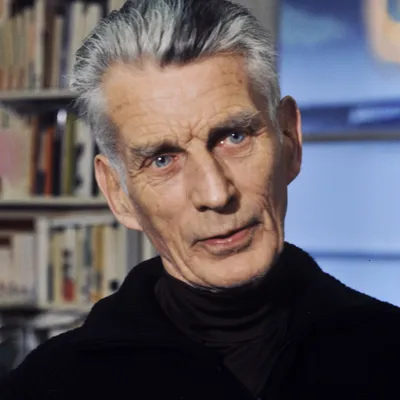
Samuel Beckett was an Irish playwright, novelist, and poet who wrote chiefly in English and French. He was a central figure in modern literature and a founder of the Theatre of the Absurd, receiving the Nobel Prize in Literature in 1969. His work is known for its themes of waiting, absurdity, the limits of language, and the human condition.
Samuel Barclay Beckett was born on 13 April 1906 in the suburbs of Dublin, Ireland. He studied English, French, and Italian literature at Trinity College Dublin and, after graduation, worked for a time as a teacher in Paris. In the 1930s, he met James Joyce and assisted him for a period. During the Second World War, Beckett remained in France and took part in the anti-Nazi Resistance. After the war, he lived mainly in Paris and wrote a substantial part of his work in French.
Beckett achieved worldwide recognition with the 1953 play Waiting for Godot, a work that helped define the Theatre of the Absurd and portrayed the human condition through endless waiting, repetition, and apparent meaninglessness. His other major plays include Endgame, Krapp’s Last Tape, and Happy Days. His novels, especially the trilogy Molloy, Malone Dies, and The Unnamable, are also key works of twentieth-century literature, marked by minimalist narration and an intense focus on consciousness and language.
Beckett’s thought revolves around existential absurdity, the failure of language to express human experience, repetition, and decline. Rather than offering meaning or redemption, he presents the human being in a stripped and unprotected condition. As his career progressed, his style became increasingly compressed and minimalist. In 1969, Beckett received the Nobel Prize in Literature for writings that, in new forms of fiction and drama, gave stature to the destitution of modern humanity. He died in Paris on 22 December 1989.