Literature
“Awaiting Meaning: Kafka, Camus, Beckett and the Crisis of Meaning” by Arash Naraghi
With the decline of belief in God, the world turned from a safe home into an abyss of nihilism, and morality lost its foundation. An examination of the experience of atheism shows how this crisis drove modern humanity to seek a this-worldly spirituality in the modern novel.

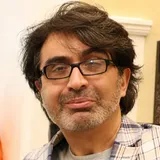
Arash Naraghi
AuthorAwaiting Meaning
(Kafka, Camus, Beckett and the Crisis of Meaning)[1]
Arash Naraghi
My central question in this discourse is: What consequences has the existential experience of atheism had for modern humanity, and how and at what level has it compelled modern humanity to seek a this-worldly spirituality?
I believe the modern novel can be considered one of the best sources for finding an answer to these questions. The existential experience of a human being who has lost their God and is desperately searching for a glimmer of hope in the darkness of a godless world is among the significant themes of the modern novel. Therefore, I endeavor here to examine the narrative of some prominent modern novelists regarding the existential experience of a godless world and to show how this existential concern spurred them to search for a new kind of meaning and spirituality.
(1)
The Western worldview in the pre-modern era primarily arose from two main sources: first, the Christian faith, which was largely based on the teachings of the Holy Scripture and the Church's interpretation of it, and second, ancient Greek philosophy, particularly the views of Aristotle. Thomas Aquinas was the principal intellectual figure in the Middle Ages who fused these two currents and shaped the worldview of his era. This worldview was founded on the assumption of the existence of a benevolent and wise God whose presence flowed through all parts of the world. His wisdom gave the structure of the world a rational and comprehensible order, and His benevolence made the terror of living in a wild and unkind world bearable. In other words, the presence and sovereignty of this benevolent and wise being made the alien world familiar and intimate with the frightened and terrified existence of humanity, and thus the world was transformed from a threatening chamber of horrors into a safe and tranquil home or refuge. Therefore, the grand religious narrative made the world akin to us, that is, it infused a kind of soul into the veins and sinews of the world's components, and made its structure appear as though it were sensitive to human actions and showed proportionate and often predictable reactions to them. Thus, within the framework of this grand narrative, humans could, by winning the favor of the wise and kind God, tame the unruly and destructive forces of the world, such as death, natural disasters, and social injustices and violence, at least to some extent.
But gradually, humanity's image of the world as a safe home or refuge changed. With the rise of the new sciences in the seventeenth century—that is, with the emergence of Copernicus, Galileo, and Newton—modern science, particularly in the realm of cosmology, obtained new data that challenged some of the most important teachings of the Bible. Later, in the nineteenth century, Darwin's findings in biology challenged humanity's centrality in the physical world and its preeminence in creation. Moreover, the tradition of biblical criticism gradually became widespread, and scholars and believers of religion became increasingly familiar with the historicity of the scriptures. The combination of these factors challenged the authority of the Bible and, consequently, the authority of the Church. Thus, traditional religions gradually gave way to rationalist conceptions of religion. Especially with the formation of Newtonian physics and the dominance of the idea that the world is organized according to a mathematical order, recourse to the argument from design for proving God's existence gained widespread acceptance. One of the most important consequences of the Newtonian worldview and rationalist faiths was that the world appeared to humanity as a kind of clock—that is, the model for understanding the world gradually became the image of a precise, well-made clock crafted by a skillful and prudent clockmaker. But if the clockmaker is adept and masterful in his work, inevitably, after making the clock, the clock becomes independent of his existence and continues to function autonomously thereafter. Since the God of the world is supremely perfect in the act of creation, the moment He creates the world, the world becomes needless of His intervention. In this way, natural or rationalist theology removed God from the fabric of the world and placed Him outside it, although His reason and wisdom were still seen as manifest in the order and design of the world. But gradually, a doubt grew in the modern human mind: what use is the hypothesis of this retired God? From the late eighteenth century onward, this conception of religion was criticized in various ways, to the point that in the late nineteenth and early twentieth centuries, while the older generation still adhered to the church and the institution of religion, a new generation emerged that increasingly distanced itself from religious institutions and official religion.
It is within this very intellectual and spiritual climate that, suddenly, in the late nineteenth century, a warning cry rises from Nietzsche: Nietzsche's Zarathustra (in the book Thus Spoke Zarathustra) descends fearfully from the mountaintop and shouts to the people that God is dead. Nietzsche's madman in The Gay Science also echoes this dreadful news. For Nietzsche, of course, the news of God's death is terrifying and unpleasant. For thousands of years, God had been the foundation of Western civilization and morality, and now Nietzsche's prophets fear that with God's departure, the world will plunge into the abyss of nihilism and human life will be utterly emptied of meaning. Nietzsche's intellectual endeavor, at least according to the analysis of some Nietzsche scholars, was to show us how the moral, intellectual, and social system of Western society was deeply formed on the basis and axis of belief in God, and how, with the destruction of that foundation, modern man suddenly finds himself caught in a devastating storm, lost and bewildered in the desert of existence, and how he might find a way to escape this lostness—if such a way exists at all.
(2)
The idea of the "death of God" confronted modern humanity with a serious moral crisis. Many moral philosophers believe that moral duty is essentially a kind of command, and the existence of a command depends on an authoritative source that issues that command. In the grand religious narrative, God is that authoritative source whose command is considered the foundation of the prescriptive aspect of morality. But with God's departure, morality, too, seems to lose its foundation. It is as if the first consequence of the idea of God's death was the destruction of the foundations of morality. Therefore, one of the most important intellectual endeavors of moral philosophers from the eighteenth century to the present day has been to provide a non-religious and independent basis for morality. For example, in the eighteenth century, Kant tried to build morality on the foundation of a kind of rational necessity, and a century after him, John Stuart Mill tried to make it binding based on the element of utility and the calculation of profit and loss.
The experience of a godless world and the crisis of human moral conscience in such a world are among the central themes of Dostoevsky's novels. Dostoevsky, through the voice of Ivan Karamazov, announces this crisis: "In the absence of God, everything is permitted." In the novel Crime and Punishment and within the life of Raskolnikov, he attempts to show us a manifestation of this painful existential crisis. Raskolnikov is a young intellectual student who has embraced the idea of the death of God, and in His absence, considers everything permissible. He places the superman in God's stead: when Napoleon sends thousands to the firing squad, people view him as a hero and a great man worthy of admiration, but when an ordinary individual murders a contemptible person, he is considered a criminal deserving of severe punishment. Raskolnikov decides, in the absence of God, to be the superman, that is, to become the legislator of morality himself and to determine the good and evil of things. And so, he murders a hated, usurious old woman. But after the crime, Raskolnikov suddenly finds himself grappling with a profound existential void, with a kind of excruciating spiritual anxiety. The heavy burden of guilt shows that his moral conscience does not deem every act permissible, and in reaction to the crime, condemns the individual to punishment. Even if the Nietzschean superman could bear the burden of experiencing a godless world, ordinary people are incapable of bearing such a weight. The news of God's death and living based on that awareness is an exceedingly exhausting task. So, what must be done to escape this devastating crisis? Dostoevsky's answer is embodied in the character of Natasha—a woman who is herself a victim of the predatory, amoral world, yet never loses the capacity for sacrifice and love—a human being whose body is defiled by the godless and amoral world, but whose purity of spirit remains untouched. Raskolnikov's attachment to Natasha reveals Dostoevsky's ultimate solution to the crisis of meaning and moral conscience: a return to a kind of simple, unadorned Christian faith.
(3)
Kafka, too, endeavors—particularly in the novels The Castle and The Trial—to show the tragicomic aspects of the "event" of God's death in the life of modern man. In the Kafkaesque world, which symbolically reflects the world of modern man, it is as if the event has already occurred, that is, God has already died, but the news of His death has not yet reached human beings, and they live as though a God still exists. For example, in the novel The Castle, the land surveyor is invited to the village by the Castle's officials to carry out a task, but his employment was apparently the result of an administrative error. The Castle, where the Count and his agents reside, is situated atop a hill, and ordinary people live in a village at the foot of the hill. The affairs of the village proceed based on decrees that seemingly come from the Castle. But no one has seen inside the Castle, and no one knows what goes on within it. Yet every day, messengers ostensibly come from the Count to the village to convey his messages and commands to the villagers, and also to report the news of the village's events to the Count and his agents in the Castle. The entire order of the village is shaped by the commands and messages that come from the Castle, although these messages have no very clear meaning and apparently untie no knots. Yet all the inhabitants of the village live as though they are under the supervision of the Castle's agents. We, the readers of the text, gradually begin to doubt whether a castle truly exists, whether the Count, the highest authority of the Castle, ever had any external existence, or if he once existed, whether he is actually alive now. The Castle and the world within it are shrouded in a thick haze of ambiguity, yet its sovereignty seems still to hold sway over the hearts and minds of the villagers and the form and order of their lives. The Kafkaesque situation in The Castle is somewhat reminiscent of the story of Solomon in the Old Testament: Solomon, on the balcony of his palace, leans upon his staff and from that height surveys the multitudes of his armies and the various creatures under his command. But the truth is that he has been dead for years, and it is merely his lifeless body that stands upright leaning upon that staff. At last, termites gnaw at the base of his wooden staff, the staff shatters, and Solomon's standing figure topples. Only then does the vast crowd realize that Solomon is dead and that their displays before his eyes were a futile and meaningless endeavor. It seems that Kafka's central idea in The Castle is precisely this: as if the world of the Castle has been rotting and crumbling from within for years, and perhaps the Count has been dead for years, but the news has not yet reached the villagers, and therefore, people still live according to the same order that was established in the Count's day. No one has yet arrived to gnaw, termite-like, at Solomon's staff and inform us of the emptiness of the world inside the Castle. Nietzsche's Zarathustra and the madman are, in fact, those very termites who are meant to make us aware of God's death—that is, to tell us that the Solomon who leans upon his staff on that high balcony above our heads has been dead for years.
In Kafka’s story The Trial, another aspect of this existential condition is depicted. In the novel The Trial, everything seems to be formed and proceeding under a powerful bureaucracy according to an ironclad order. Until one morning, Mr. K. is arrested in his own home. Everyone assumes that the judicial apparatus is at work, the accused will be informed of the charges, a court will be convened to hear the accused’s crime, the court will adjudicate the accused’s crime according to a clear and defined judicial process, and ultimately, judicial justice will be realized. But throughout the entire story, no one, including Mr. K. himself, ever finds out for what crime he has been arrested and put on trial. The court session is held, but it is unclear whether a real trial is actually underway or if everything is some kind of ridiculous charade. The accused never sees the judge of the court, meaning the judge upon whose verdict and judgment the accused’s fate depends is always absent. It is unclear which authority ultimately decides the accused’s fate, and by whose decree this alleged order is established. Mr. K. feels guilty, but he does not know what guilt his feeling truly stems from. That is, here there is a shell of a legal system on the outside and a shell of moral judgment within the individual, but we perpetually remain on the borders of doubt and ambiguity: we never find out whether the magnificent edifice of our legal system externally and our magnificent moral conscience internally are genuine and real, or a hollow shell that will collapse with a puff of wind. Our legal system externally and our moral conscience internally have been formed around the central existence of a wise, benevolent, and authoritative God, but apparently, that God has been dead for years, and that system has been hollowed out from within, and the foundations of that edifice have been eaten away by termites. But the inhabitants of that edifice are still unaware of those ruins, or pretend to be unaware, and live as if everything is as it was and as it should be. Modern man has lost his faith in God, yet still organizes his life according to a legal and moral system that is God-centered, and without the existence of that God, it is a hollow and meaningless shell.
In the final scene of the novel The Trial, as far as we know, no court has actually been held and no verdict issued, but two judicial officers come to take Mr. K. away for the execution of the sentence and lead him outside the city to find a place to carry out the sentence. Mr. K. stands motionless in a corner. An evening breeze blows, which is a little cold. One of the officers takes his arm and moves it up and down. The other officer searches the quarry for a suitable place for the execution. Finally, he signals with his hand, and the other officer brings Mr. K. there. Near the quarry wall, where a boulder lies, they lean Mr. K. against the boulder and lay his head upon the stone. But despite the trouble they take, and despite Mr. K.’s willing cooperation with them, Mr. K.’s body posture is awkwardly crooked. One of the officers asks the other to let him do the job alone. But this decision does not solve the problem either. Finally, one of them takes off his frock coat, and from a sheath attached to his belt and hanging around his waistcoat, he draws a long, thin, double-edged butcher knife. The two officers pass the knife back and forth over Mr. K.’s head, until Mr. K. thinks that he himself should take the knife from their hands and plunge it into his own chest. But he does not do this. In this struggle, Mr. K. turns his head and his gaze falls upon the top floor of the house next to the quarry. Someone is sitting in the window frame, watching the scene. Who is it? A friend? A benevolent person? Someone compassionate? Someone who wants to come to his aid? Are there reasons in that individual’s favor that he has overlooked?
Up to this point, the scene of the story is a tragic and at times comical version of the sacrifice of Isaac (according to the Old Testament narrative) at the hands of his father Abraham. Kafka takes that ancient story out of its sacred text and places it in the context of the modern world, and through his manipulations shows how, when that sacred story enters the horizon of modern man's world, it loses its sacred and meaning-giving content and turns into an absurd and tragically comical narrative. For thousands of years, Abraham was praised by the faithful in the tradition of religious texts for this scene, but when that narrative crosses the boundaries of time and enters Kafka's world, which is in a sense our world today, it takes on a strange and different character. In the biblical story, when Abraham is on the verge of sacrificing his son, an angel suddenly appears, presents a ram for sacrifice in place of the son, and saves the child from the blade. But in Kafka's narrative, when Mr. K. looks up and sees that figure in the window frame, we all expect that figure to be the angel of salvation who will stop the officers' hands and prevent Mr. K.'s death. But that hope turns to despair. In Kafka's narrative, that angel (?) remains a spectator to Mr. K.'s bitter death: one of the two officers seizes Mr. K.'s throat, and the other officer plunges the knife deep into his heart and twists it twice. In Kafka's narrative, unlike the biblical story, no savior arrives. The deed is done, and Mr. K. is sacrificed. With his eyesight failing, K. could still see the two of them, cheek to cheek, close to his face, watching the result of their work. In his final moment, K. saw his own death as being like the slaughter of a dog, and therefore his last words before dying were: "Like a dog!"
But why a "dog"? In religious literature, Jesus calls humans the lambs of God, and in the Old Testament narrative, God presents a ram to Abraham to sacrifice in place of his son. In religious literature, the lamb or the ram have been considered examples of creatures worthy of sacrifice. It is as if, to win the favor of God or the gods, one must offer a being worthy of that station to bring them into favor with you. By offering his son and ultimately sacrificing that ram, Abraham elevated the relationship between himself and God. In this narrative, the potential death of that son or the sacrifice of that ram was not absurd. But a "dog" has never been considered among the animals worthy of sacrifice. Therefore, sacrificing a dog cannot mend our relationship with the transcendent. The death of a dog has no spiritual value; if someone takes a dog to the altar and slaughters it, they have merely wasted a life. Mr. K. died like a dog, meaning his death had no spiritual value. It is as if Kafka is telling us that modern man lives under a system of beliefs and values that is, in fact, the product of a kind of theological vision. But this system has been emptied of its spirit and core, and nothing remains of it but a shell. Modern man judges himself and his actions in a court and by the standard of a justice that is irrelevant to his world and has lost its meaning for him, and his conscience bears the burden of a guilt he no longer knows what it is. It is here that death also loses its meaning and resembles more a kind of wasting away or being slaughtered. It is as if, when the world is emptied of God, that is, when the grand religious narrative loses its credibility and its power to bestow meaning, man suddenly finds himself abandoned in a mute and foggy world, that is, he faces a crisis of meaning—his life, although it appears to be a series of seemingly orderly, related, and comprehensible events, is in reality nothing but an empty shell. The phenomena of the world and the events of our lives (like the events of the village in the novel The Castle and the events of Mr. K.'s life in the novel The Trial) seemingly proceed according to a logic, but we never grasp that logic. The Kafkaesque world (which is a symbolic reflection of our world), unlike the pre-modern religious world, is not rational and comprehensible. The central core of this world is not rationality but incomprehensibility—we never understand what is happening in our village, or for what sin our conscience is tormented, or for what crime we are being punished. But this muteness, more than stemming from the inability of our understanding, arises from something more fundamental: incomprehensibility lies at the root of the world. And this is the beginning of modern man's contact with the Absurd. The experience of the Absurd is, as it were, the empty experience of the transcendent.
(4)
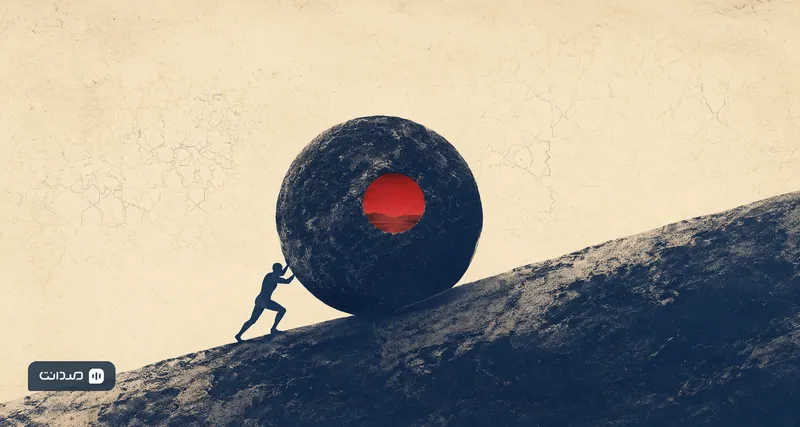
Many existentialist philosophers in the early twentieth century and after employed the concept of the “absurd” to describe the human condition in the world. Albert Camus, in his novel The Stranger, depicts the existential state of a person living in the absurd condition, and in The Myth of Sisyphus, he attempts to provide a philosophical analysis of that condition.
The foundation of the absurd condition is the experience of “distance”: the distance between me and the world, the distance between me and you, and the distance between me and myself. A distance that seems unbridgeable. And this distance is the source of alienation—my alienation from the natural world, my alienation from you, and my alienation from myself.
In the novel The Stranger, it is in the mirror of the situation of the main character—a man named Meursault—that we can see the experience of the absurd up close. According to Sartre’s analysis, Camus has laid Meursault’s mind transparently before us, but it is as if we see everything about him through a pane of glass, a glass that transmits everything except one thing: the meaning of his actions. We see all of Meursault’s movements, we observe all his mental developments, nothing is hidden from our eyes, but we do not know what those movements, developments, and events mean. It is as if the events of Meursault’s life are independent and unrelated to one another. The reader reads sentences that follow one after another, but each sentence is unrelated to the next. As if no thread of meaning connects these events. For example, in one part of the novel, a conversation between Meursault and his girlfriend is narrated by Meursault: “A moment later she asked me if I loved her. I replied that it didn’t mean anything, but that I probably didn’t love her. She looked sad, but while preparing lunch, for no reason she suddenly laughed—in such a way that I kissed her. Just at that moment, the noise of a quarrel arose from Raymond’s room.” Almost the entire first part of the novel has this structure: events arrive one after another without any logical thread linking them together. Everything on the surface seems to convey meaning and a message, but when we look closely, the events are disjointed and irrelevant, and together they create a vast meaninglessness. Meursault seems to represent the condition of modern man, whose life appears to be a meaningful narrative, but in reality is nothing but events that follow one another without any meaningful logic. The grand meaning-giving narrative of the pre-modern world has lost its life, and nothing remains of it but a lifeless shell. Modern man lives within this fragmented and lifeless narrative without feeling any sense of belonging to it. There is always a distance between him and the world around him. Events pass over him without arousing any passion in him. Camus’s The Stranger structurally resembles the narrative of the creation of man in the Bible. The narrative structure of the creation of Adam in the Old Testament has three main parts: (a) The state of innocence, in which Adam and Eve dwell carefree in paradise, unaware and untainted by sin. Their carefreeness is partly due to a lack of self-consciousness. (b) The state of descent or fall, in which Adam and Eve are driven out of the paradise of innocence and exiled to earth. The experience of the fall turns their consciousness from the “outside” and the “other” toward the “inside” and the “self,” that is, it transforms their consciousness into self-consciousness. When Adam and Eve commit sin, they suddenly perceive their nakedness and feel shame. Shame is a second-order emotion, meaning consciousness turns from the external world to the internal world: the individual does something, reflects on that action, and finally passes judgment on it. (c) Finally, the state of repentance and redemption. Self-consciousness prompts him to seek a remedy. The individual tries to find a way to return once again (but this time at a higher level) to the lost realm of innocence.
This tripartite structure can also be found in Camus's story The Stranger. In the first part of the book, Meursault lives, but he is distanced from everything: he eats, he loves, he makes love, he goes to work, but he has no existential engagement with any of these activities; nothing deeply stirs him. He smells the flowers, but as if he had not smelled them. The story of The Stranger begins when Meursault receives the news of his mother's death and is to attend her funeral. He sits all night by his mother's lifeless body without showing the slightest emotional reaction. His innocence stems from his distance from the world, from the other, and, most importantly, from himself. Meursault cannot see himself. It is this lack of self-awareness that makes him appear like an innocent child. This innocence arises, above all, from a state of self-alienation and from living in an entirely alien world. But when Meursault nonchalantly commits murder, that oblivious innocence comes to an end. He is suddenly expelled from the paradise of innocence and obliviousness, and the stage of the fall begins. In prison, and more importantly, during the process of his trial for his crime, Meursault is forced to reflect on himself and his life. Various people come to the court and present their own narratives of him and his life, and for the first time, he sees himself through their eyes. In this way, his awareness rises to the level of self-awareness. This self-awareness is his first step toward bridging the distance and overcoming self-alienation. A human being who has attained self-awareness strives to find a path to liberation and salvation. In the final scenes of the novel, Meursault's conversation with the chaplain shows that Camus does not see the path to liberation in religion. A return to the pre-modern grand religious narrative does not return Meursault to the paradise of innocence. The prison chaplain tries to move him to confession and repentance. He speaks to him about God. But Meursault does not want to waste his unique opportunity in these final moments with such discussions, and therefore, he throws the chaplain out of his cell. In the final moments of his life—before his execution—he suddenly has an experience akin to illumination: he suddenly arrives at the revelation that the world is indifferent to human beings, and he, too, is indifferent to the world and what happens in it. His moment of liberation is when he observes this characteristic of the world and accepts it with contentment and peace.
In The Myth of Sisyphus, Camus attempts to present his philosophical analysis of Meursault's existential experience and his confrontation with the absurd in the structure of the world. In his view, the experience of the absurd occurs when a human being finds themselves facing the world and realizes that there is, as it were, an unbridgeable distance between them and the world. But what is this distance? According to Camus, we humans possess consciousness, feeling, and moral agency. But the world that surrounds us lacks all these characteristics. We are strangers in the world. The existentialist philosopher challenges the important Platonic presupposition that the world is mathematical and therefore intelligible. Western civilization and culture had been shaped for centuries on the basis of this fundamental presupposition that the world is, in principle, intelligible and rational. We humans may occasionally encounter a puzzle in this world, but puzzles are all solvable—if we are incapable of solving them today, we can at least hope to solve them in the future. The existentialist philosopher does not take this presupposition for granted. In his belief, there is no reason that there should be a correspondence between our consciousness and reason on the one hand, and the foundation of existence on the other. On the contrary, our existential experience shows that there is, as it were, something at the foundation of the world that surpasses the limits of our understanding and to which human consciousness and reason have no access. The ancients, in confronting the incomprehensible, would transcend it, giving it a mystical and mysterious hue. But from the perspective of modern man, this incomprehensible thing is a window that does not open onto a garden. Beyond the window is a wall. We open the window, and beyond it we find nothing but a wall. This collision of human consciousness with the wall of incomprehensibility at the foundation of the world's structure is the basis of the experience of the absurd and the foundation of meaninglessness for modern man.
(5)
In a very short piece, Kafka tries to place before our eyes an image of the incomprehensible. His short piece goes like this: “It was very early in the morning. The streets were clean and empty. I wanted to go to the train station. I compared my watch with the tower clock and realized that it was much later than I had thought. I had to hurry. As soon as I realized this, I panicked. This panic made me doubt my route. I still did not know the city streets well. Fortunately, there was a policeman nearby. I ran to him and, breathless, asked him the way. He smiled and said: ‘You want to ask me the way?’ I said: ‘Yes! Because I cannot find the way myself.’ He said: ‘Forget it, forget it!’ and hurried away—like someone who wants to be alone with his laughter.” This strange and enigmatic piece has been the subject of various discussions and analyses. But what does it really mean? It seems that this story is, above all, a kind of metaphor. In a metaphor, the story is not meant to point to something beyond itself; the story itself is the object of reference. Kafka’s story begins in a natural and conventional way. It is early morning, the streets are empty, and someone wants to go to the train station. The first jolt comes when the individual’s watch does not match the city tower clock. But this difference does not seem very important. Of course, the protagonist realizes he is late and therefore quickens his pace. It is, of course, a little strange that the individual “panics” and consequently cannot find his way. But perhaps the reason for this slightly odd situation is that the individual is new to the city and still does not know its alleys and streets well. This state of fluster and confusion in the individual evokes a sense of being caught in a predicament. But suddenly the individual says: “Fortunately.” This phrase seems to cast a light into the story. What is this light or hope? It is the presence of a policeman on the street. The policeman can be his guide and deliver him from this bewilderment. So he goes to him to ask the way. But the policeman’s reaction is astonishing: “You want to ask me the way?” Why should the policeman be surprised by this? It is a completely natural and expected thing that if someone is lost in the city, they ask a policeman for directions. On the other hand, the individual asks the policeman to show him the way, but does not tell him the way to which destination! It is from here that the story suddenly reaches its climax and departs from the sphere of our familiar understanding. In response to that question, the policeman says, “Forget it!” Why should the individual forget his route and destination? And, more strangely, why does the policeman immediately hurry away and start laughing? What is he laughing at? What was funny in this affair? And why does he want to be alone with his laughter? What on earth is being alone with one’s laughter?! It is here that the logic of the story breaks away from the familiar and conventional logic of our world. Is this strange and incomprehensible piece meant to show us something? Is there a meaningful message hidden in the heart of this little story? The truth is that, in my opinion, the attempt to understand this piece is precisely the failure to understand it. This story is not meant to make us understand something, but rather to place us before something incomprehensible, precisely insofar as it is incomprehensible. The comprehensibility of the world is a very optimistic and hopeful idea that divine prophets and also secular sages, from Plato to Galileo, have taught us. But is there really a reason for this more or less optimistic hope? Writers like Camus and Kafka try to show us that, despite that optimistic presupposition, there are realms in this world that are fundamentally incomprehensible, meaning our cognitive apparatus is not built to understand and encompass those realms. In other words, one can never offer a grand narrative of the world that consistently reconciles all the components of the universe side by side. Every narrative of the world is inevitably fragmentary and incomplete, and an important part of the world’s structure always remains outside the umbrella of its interpretation. The incomprehensible negates the possibility of any comprehensive grand narrative of existence. And it is the lack of such a comprehensive narrative that confronts modern man with the crisis of meaninglessness. In the pre-modern world, prophets and sages tried to present an image of the world in which everything sat together in harmony, like the lines, moles, eyes, and eyebrows of a beloved’s face, and it was this very idea that considered the astonishing order of the universe as evidence for the existence of a wise and intelligent Creator God. As if, in the eyes of these sages, all the complexities of the world could be organized under a single umbrella.
اما کسانی مثل کافکا و کامو این پیش فرض مهّم را مورد تردید قرار دادند. با برچیده شدن بساط آن کلان روایتها یکباره انسان از بهشت امن جهانی معنادار و آرامش بخش به میانه بیابانی وحشت انگیز و بیگانه پرتاب شد. و در میانه وحشت این بیابان تاریک بود که خود را تنها یافت و درباره وضعیت سوگناک خویش به تأمل دوباره نشست، و در رویارویی با فهم ناپذیری امر فهم ناپذیر، یعنی در دل وضعیت عبث، بود که از خود پرسید که آیا بواقع راهی به رستگاری هست.(6)
In Waiting for Godot, at least according to some interpretations, is the modern human's wait for a savior. Beckett wrote this play in the aftermath of the Second World War, in an atmosphere where the barbarism of modern man had painfully manifested itself in the death of millions and the destruction of cities and settlements. Throughout these catastrophes, humanity desperately looked to the heavens, hoping that God would come to the aid of the victims of these atrocities. But will humanity's wait for God's arrival ever end? In the first act of the play, Estragon and Vladimir, two ragged and disheveled men, meet each other beside a leafless tree. These two men are waiting at this rendezvous point for "Godot." Neither of them is sure if they have ever seen Godot, or whether he will come to the meeting at all. A boy arrives at the end of the act, claiming to be Godot's messenger, and informs them that Godot will not come tonight. The second act of the play is more or less a repetition of the first. Nothing special happens in this act either. In the words of one Beckett critic, Waiting for Godot is a play in which "nothing happens, twice!" At the end of this act, the boy appears again and informs them that Godot will not come tonight either. The play is replete with veiled and overt allusions to biblical phrases and stories. However, it is difficult to derive a wholly religious narrative from the entirety of the play. The first question that immediately comes to mind is: Who is Godot? Is "Godot" a symbol of "God"? The boy claims that Godot is a man with a long white beard—an image reminiscent of pictorial symbols of God in Western art. In a sense, Godot gives direction and purpose to the lives of Vladimir and Estragon, a role that God and religious beliefs typically play in human life. But this inspiring and exciting presence is absent. It has long since departed the stage, although the stage's inhabitants still hope for his return. His absence has left a deep void in the lives of the stage's inhabitants. Their lives in Godot's absence are a repetitive cycle of more or less meaningless, trivial, and sometimes ridiculous events. The only thing that gives structure and meaning to all their disjointed and meaningless actions is "waiting": waiting for someone whose arrival will free those who wait from this repetitive and absurd cycle. But we never find out by the end whether Godot will come, or whether there is a Godot at all. Our existential situation as humans seems to be standing on the threshold of waiting—waiting for the arrival of a redemptive event. And in this state of waiting, "we go on circling the night and the day, the still."
(7)
Perhaps the best place where the crisis of meaninglessness in modern human life reveals itself is in the confrontation with death. When human life loses its meaning, the experience of dying transforms from a meaningful and sacred process—like the sacrifice of a ram—into an absurd and meaningless occurrence—like the perishing or miscarriage of a dog. Therefore, one way to give meaning to life is to try to give meaning to our death. The experience of giving meaning to life through giving meaning to death is, of course, not of a single type. Here, I would like to point to two different experiences in this regard: one is Tolstoy's approach in the story The Death of Ivan Ilyich, and the other is Beckett's approach in the story Malone Dies.
Tolstoy wrote the story of The Death of Ivan Ilyich in the last years of his life. In this story, two Tolstoys are in conflict: one is Tolstoy the artist, who, in the act of artistic creation, unconsciously reflects the skeptical and nihilistic spirit of his time, and the other is Tolstoy the theologian and preacher, who is devoutly attached to the simple-hearted faith of his peasants. Years earlier, in his book A Confession, he told us about the crisis of meaninglessness in his life. In describing his situation, he uses this allegorical tale: A man is traveling alone in a desert and suddenly finds a wild beast pursuing him. The only way forward is to jump into a well in the middle of the desert. In the midst of his free fall to the bottom of the well, his hand catches onto a few branches growing from the walls of the well, and thus he remains suspended in the middle of the well. He looks down and sees a dragon with its mouth open waiting for him. He looks up and sees two mice, one black and one white, gnawing together at the roots of the plant he is clinging to. In the midst of this critical and dangerous situation, he suddenly sees some honey within his reach, and instead of worrying about his critical condition, he dips his finger into the honey and amuses himself by tasting that small amount of sweet honey. Tolstoy considers the human condition in this world to be like that of the traveler in the well. We humans have come into the well of this world unwillingly, and the passage of night and day is constantly at work to sever the roots of our life, and at the bottom of the world's well, the dragon of death awaits to swallow us. And in this critical situation, we have contented ourselves with tasting a few drops of life's sweet but fleeting and transient pleasures. But if someone truly realizes that nothing remains but to fall to the bottom of the well and into the jaws of that dragon, the sweetness of life will turn bitter in their mouth. The threat of death, from Tolstoy's perspective, empties our life and, consequently, our death of meaning. Of course, the only way Tolstoy suggests for overcoming this experience of meaninglessness and confronting the absurd is a kind of return to the grand religious narrative: a return to the simple-hearted faith of his peasants. From his perspective, the crisis of meaninglessness is particular to science-struck intellectuals. The simple-hearted peasants, however, experience no such crises in their lives. And this fact can be our guide in resolving the crisis of meaninglessness.
But in The Death of Ivan Ilyich, the story's character does not simply surrender to Tolstoy the theologian and preacher. Vladimir Nabokov, in a section of his lectures on contemporary Russian literature, in his analysis of The Death of Ivan Ilyich, speaks of the confrontation between Tolstoy the artist and Tolstoy the preacher and theologian. According to Nabokov's analysis, when Ivan Ilyich realizes that he is ill and will soon die, he is suddenly seized by a deep despair. He suddenly realizes that all his life's efforts have been meaningless. His life's priorities—such as career advancement and promotion, having a comfortable life and a chic apartment, etc.—suddenly lose their meaning and importance for him. Ivan falls into a deep spiritual crisis—but this spiritual crisis was not because he saw his death approaching, but because the arrival of death showed him how meaningless and insubstantial his life (and consequently his death) had been. Here, it is Tolstoy the artist who drives the story forward. But suddenly, Tolstoy the preacher and theologian appears: Tolstoy the theologian does not want Ivan's death to be of the abortive kind. Tolstoy the theologian tries to resist the meaninglessness of Ivan's death, and therefore tries to make his life meaningful by giving meaning to his death. He does not want Ivan Ilyich to perish "like a dog," like Mr. K. It is for this reason that at the end of the story, the novel concludes with ambiguous and seemingly hopeful phrases. It is as if Tolstoy the theologian is struggling to find a remedy for the despair and hopelessness of Tolstoy the artist: "Suddenly some force struck him in the chest and side, making it even harder to breathe. He fell through a hole and there at the end of the hole was a light. Instead of death there was light. So that's what it is! Suddenly he cried out in an excited, loud voice: 'What joy!' Someone near him said: 'It is finished!' He drew a breath, and in the middle of a deep breath, stretched out his body and died." It seems the maximum hope that Tolstoy the theologian could inject into the work of the nihilistic Tolstoy the artist was the vague image of a light awaiting us at the end of the road.
اما ماجرای مرگ در داستان مالون می میرد از جنس دیگری است. بکت و قهرمان او مالون هیچ یک به کلان روایتهای دینی باور ندارند. بکت البته در خانواده ای عمیقاً مذهبی پرورده شده بود، و مادرش زنی با ایمان و دین ورز بود. اما بکت خود بعدها از سنت های دینی فاصله گرفت. کامو در افسانه سیزیف می نویسد که انسانها وقتی در تماس با امر عبث قرار می گیرند، وحشت رویارویی با فهم ناپذیری امر فهم ناپذیر را می چشند، و برای مقابله با این هراس و بازیافتن آرامش از کف رفته خود یکی از چند راه را در پیش می گیرند: برخی به آغوش دین بازمی گردند- آنچنان که تالستوی و داستایفسکی توصیه می کردند. برخی نیز معنای دینی مستقل از دین های رسمی یا نهاد کلیسا- یعنی نوعی معنویت مستقل از نهاد دین- را اختیار می کنند، مانند الهیات لیبرالی اواخر قرن نوزدهم که در آثار شلایرماخر و رودولف اوتو ترجمان فلسفی و الهیاتی یافت. برخی هم اساساً خود را اسیر هیچ یک از این «توّهمات» یا کلان روایت های به اصطلاح رهایی بخش نمی کنند، و واقعیت امر عبث را همانطور که هست می پذیرند و خود را با آن هماهنگ و به صلح می کنند. این راه آخر همان بود که مرسو، قهرمان کامو در رمان بیگانه در پیش گرفت. مرسو در پایان داستان بیگانه می گوید: «در جهانی که یکباره از نور و توّهم تهی شده است، انسان خود را بیگانه می یابد.» و در افسانه سیزیف کامو می نویسد:« این تبعید برگشت ناپذیر است. چرا که انسان هیچ خاطره ای از سرزمین موعود و هیچ امیدی به بازگشت به آن سرزمین ندارد. دلیلش این است که انسان، جهان نیست. اگر من درختی در میان درختان بودم، این زندگی معنایی داشت، چرا که من پاره ای از جهان بودم.» و در بخش دیگری از داستان بیگانه می خوانیم که چون خدا وجود ندارد، و انسان می میرد، همه چیز مجاز است. همه تجربه ها به یک اندازه خوب است. تنها چیز مهم این است که فرد تا آنجا که ممکن است بیشتر و بیشتر تجربه کند. «آرمان یک مرد عبث زمان حاضر و تعاقب لحظات زمان حاضر است در برابر یک روح همیشه هوشیار.» وقتی که او در رویارویی با مرگ واقعیت مرگ را می پذیرد و به آن تسلیم می شود، یکباره همه چیز برای او هم ارز و هم تراز می شود. و این واقعیت که در چشم او همه چیز هم ارز و هم تراز است آرامشی عمیق به او می بخشد. راه حلّ کامو در برابر بی معنایی زندگی و مرگ این بود.
In a sense, Beckett accepts this solution. Like Camus, he believes that the solution should not be sought in illusion or vain hopes. One must accept reality as it is and not try to console oneself with imaginary stories. But Beckett pursues Camus's approach with a subtle twist in the story of Malone's life. Malone, the eighty-something-year-old man in Beckett's story, is on the threshold of death. He lies in a bed in the corner of a room. But he (and consequently we) do not know where that room is: is it somewhere in a nursing home? Is it a corner of a hospital? Or a cell in a prison? His sense (and consequently ours) of place is largely foggy and ambiguous. On the other hand, Malone constantly loses consciousness, and when he comes to, he does not know how long he has been unconscious. These fluctuations of consciousness and the increasing weakness of memory distort his sense (and consequently ours) of time. In particular, the deficiency of memory severs his contact with the past and also the fluid stream of his inner consciousness. The disintegration of the "I" begins when the fabric of the individual's consciousness and their connection to the coordinates of time and space are torn apart. And the disintegration of the I is the beginning of the process of death. To postpone this gradual disintegration, the old man does two things: first, he makes an inventory of his belongings scattered around the room and periodically counts them from the list. Second, he writes memoirs (or tells stories?) in his notebook. In these notes, he narrates two stories for himself (and us): one is the story of a child named Sapo, whose life Malone recounts for himself (and us) from childhood to adolescence. The other is a story about a middle-aged man named Macmann who is in prison. We do not exactly know whether the story of Sapo and Macmann is the story of Malone's own childhood and adulthood or not—probably Malone himself no longer knows either. Malone thinks he is remembering these stories, meaning his work is memoir-writing. But it is entirely possible that all these events are the product of his imagination. In his disintegrating mind, the boundaries between reality and fantasy have become fluid. Malone, however, pursues the act of writing with a ritualistic continuity. It is as if inventory-taking and memoir-writing are a matter of life and death for him. But why has Malone turned to this ritualistic writing? It seems that this writing has two important benefits for him: one is a secondary benefit and the other is the primary benefit. The secondary benefit is that this writing provides him with some immunity against the onslaught of the demon of forgetfulness and gives him the opportunity to grapple with the problem of death. For Malone, death is not a question but a problem. Humans have always considered the phenomenon of death to be question-provoking: why do we die? What becomes of us after death? And so on. But the "problem of death" begins where the individual cannot find a satisfactory answer to the question of death. Modern man is confronted with the problem of death more than the question of death. Malone's ritualistic writing is meant to prepare him for the problem of death. And this is its primary benefit. But how? For Malone, the very principle of his situation in that room is exactly the "problem of death": a frail old man, with poor memory, sometimes unconscious, disconnected from the outside world, bewildered in the foggy inner space—without knowing exactly who he is, where he came from, and where he is. There is no coherent narrative to give meaning to his existence, thrown into this corner of the room. Everything is shrouded in a thick fog, matters are mostly vague and unclear, and the old man finds himself like a straw in the face of the tempest of death. In these circumstances, Malone's heroic act is to create a personal narrative and, within its context, make peace between the external objects and events and the scattered inner fragments and images of his existence. His stories become a fulcrum for him to build bridges between the disconnected moments of his consciousness, and in this way, to consolidate the continuity of consciousness and consequently his "I." He places himself within the context of the personal narratives he has created (the story of Sapo and Macmann, and the inventory of his room's objects), and in this way, in the sea of nothingness that surrounds him and moment by moment washes waves against the shore of his existence, eroding and carrying it away, he creates an island of stability to return to in moments of forgetfulness and disorientation, and to recover himself in that narrative. A human being who situates their existence within the context of a comprehensible and more or less coherent personal narrative gives it meaning, and within the context of a meaningful narrative, their death naturally finds meaning and will no longer be of the nature of perishing and being aborted. In this way, the old man Beckett's answer to the problem of death was something of the nature of artistic creation.
By creating a personal, particular artistic narrative suited to his own existential situation, he sought to give a kind of meaning-giving order to the fragmented and elusive components of his being, and thus overcome the terror of the meaninglessness of death. Of course, for Beckett's old man—as for Beckett himself—there is no grand, all-encompassing narrative that fits the stature of all human beings' existence equally. But through artistic creation, a person can create a personal narrative that bestows an aesthetic order upon the scattered components of his existence and transforms those dispersed parts into a coherent whole. This narrative may not be meaningful or meaning-giving for another or others, but it is entirely possible that, in the heart of the alien and terrifying world that surrounds the individual, it may create for him a safe home or a shade tailored to his measure, under which he might rest for a moment. If the individual can artistically create his own personal narrative, then, without entirely overcoming the incomprehensibility of the incomprehensible, he can lessen the poison of living in an absurd condition and restore lost meaning to his life and, consequently, to his death. This is the hope that, if it arrives, will allow a person to die, but not 'like a dog.'[1] This article is a revised version of a lecture delivered on October 18 at the University of Michigan to an audience of Iranian students and academics. It was subsequently published in the journal Andisheh Pouya, Year 9, No. 67, July 2020, pp. 68-73.
.
.
PDF file of the article “Awaiting Meaning: Kafka, Camus, Beckett and the Crisis of Meaning” by Arash Naraghi
.
.

Discussion5 comments
مفید و متناسب بود. ممنون جهان و نویسنده و این سایت. پوچی ها و نا امیدی ها؛ امید و تقلای زندگی این جهان نیک ما است. مرگ من؛ مرگ این جهان همیشگی و نامیرا نیست. و پس من جهان ؛ مرگ ندارد. ______________________ بهین اربابی 990421
شاید گابریل مارسل(فیلسوف و نمایشنامه نویس فرانسوی) بهترین فردی باشد که به صورت ایجابی به مقابله با بحران معنا پرداخت. مارسل در ایران به عنوان فیلسوف کمی شناخته شده است اما به عنوان نمایشنامه نویس و موسیقی دان اصلا شناخته شده نیست. ریکور در بحث هرمنوتیک، مرلوپونتی در بحث بدن و لویناس در دیگری از مارسل تاثیر گرفته است. او بیش از 25 نمایشنامه دارد که محتوایی فلسفی امید بخش او را ارائه می دهد.
بسیار عالی بود و پر مفهوم. ممنونم
انحطاط و سقوط انسانِ عصر مدرن به خوبی در هنر و ادبیات نمایان می شود. در دوران مدرن , انسان تلاش می کند جای خداوند بنشیند و برای خودش و جهان پیرامونش خدایی کند.انسان مدرن دنبال معنایی برای خودش در هنر و ادبیات می گردد , معنایی که بتواند او را از نهلیسم نجات بخشد.انحطاط انسان مدرن در هنر و ادبیاتِ از هم گسیخته پست مدرن هم خودنمایی می کند.
موافقم